
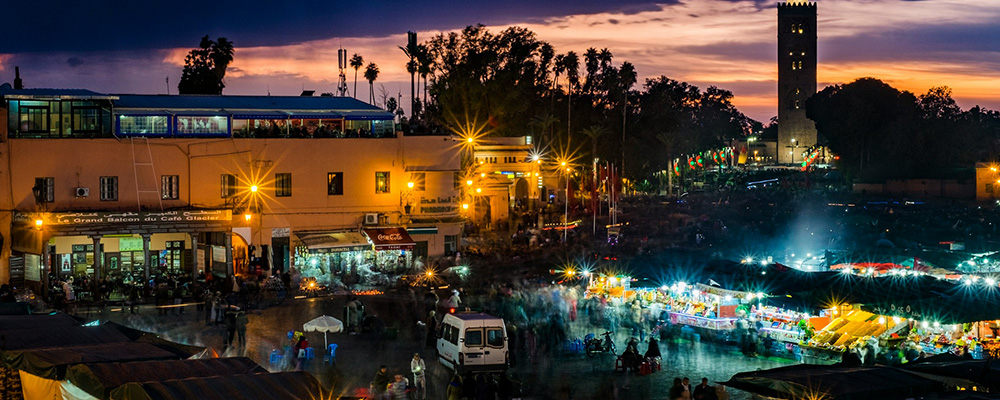
Historic Marrakech Medina Quarters
Discover the historic neighbourhoods of Marrakech Medina with our complete Marrakech Medina Guide, and explore the character of each traditional quarter with a local guide who has been walking these streets since 2004. Our guided Medina walking tours and authentic souk shopping tours introduce visitors to the real historic city. Our walking experience has been featured in The Rough Guide to Morocco, and our guiding is recommended by Rick Steves. You can contact us directly through WhatsApp or our booking form.

Understanding the Historic Neighbourhoods of Marrakech Medina
Marrakech Medina is not simply one large historic centre filled with monuments, markets and narrow streets. It is a collection of traditional neighbourhoods, known locally as quarters or houmas, each with its own history, identity, religious landmarks, commercial activities and everyday community life.
Some neighbourhoods developed around important mosques, others around royal palaces, historic markets, religious institutions or important entrances in the city walls. Their names often reflect their history, their location or the activities that once took place there.
Walking from one quarter to another reveals how the old city developed over many centuries. The atmosphere around Jemaa el-Fna is different from the residential streets of Bab Doukkala. The elegant houses of Mouassine contrast with the traditional commercial streets of Kennaria, while the Mellah and Kasbah preserve important chapters of the city's royal and cultural history.
To understand the wider layout, begin with our Complete Guide to Marrakech Medina. This article concentrates on the individual historic quarters and explains how they relate to one another.
How Were the Neighbourhoods of Marrakech Medina Formed?
Marrakech was founded by the Almoravid dynasty in 1070–1072 and developed under successive dynasties, particularly the Almohads, Saadians and Alaouites. Each period contributed new buildings, streets, religious institutions, commercial areas and residential quarters.
The historic Medina is recognised as a UNESCO World Heritage Site. Its importance comes not only from individual monuments but also from the survival of a living historic urban environment, including houses, souks, fondouks, traditional trades and interconnected streets.
Historically, a neighbourhood was much more than a collection of houses. It often revolved around several essential facilities:
- The neighbourhood mosque: A religious and social reference point for local residents.
- The fountain: A traditional source of water and an important public meeting place.
- The neighbourhood bakery or farran: Where families brought their bread dough to be baked.
- The hammam: A traditional public bathhouse serving the local community.
- The local souks and small shops: Providing everyday goods, food and services.
- The derbs: Smaller residential lanes connecting houses and community facilities.
These elements helped create neighbourhoods that functioned almost like small villages within the larger Medina. For a closer look at the traditional activities that still survive, read our deep dive into the soul of Marrakech Medina and our article about the last traditional artisans of Marrakech Medina.
1. Mouassine: An Elegant Historic Quarter
Mouassine is one of the most recognisable historic neighbourhoods in central Marrakech Medina. Situated northwest of Jemaa el-Fna and close to the main souks, it is known for its traditional houses, religious architecture, fountains and historic cultural institutions.
The neighbourhood developed significantly during the Saadian period, particularly in the sixteenth century. The Mouassine Mosque became an important religious centre, accompanied by a historic fountain, a hammam and educational facilities.
Today, visitors can discover a mixture of historic architecture, restored riads, small shops, cafés and quiet residential lanes. One of the most interesting places is the Mouassine fountain, with its carved wooden canopy and traditional decoration.
The neighbourhood also provides access to Le Jardin Secret, a restored historic garden with traditional water channels and architectural features. Dar el-Bacha, the former residence of Pasha Glaoui, is another important landmark in this part of the Medina.
From Mouassine, visitors can continue towards the central souks or walk west towards Bab Doukkala.
Explore the Marrakech neighbourhoods guide, discover the Secret Loop through Marrakech Medina, or join our historical guided tour.
2. The Kasbah: The Former Royal Quarter
The Kasbah occupies an important position in the southern part of Marrakech Medina. Historically associated with the royal administration and the sultans, it developed as a distinct area connected to the city's political and military history.
The Kasbah contains several important historic monuments, including the Saadian Tombs, the Kasbah Mosque and the monumental Bab Agnaou gate. The Royal Palace, also known as Dar el-Makhzen, occupies part of this southern area.
Unlike the busy commercial centre around Jemaa el-Fna, many streets in the Kasbah have a more residential atmosphere. Traditional houses, riads, small local shops and neighbourhood cafés remain part of everyday life.
Bab Agnaou is particularly important because it served as a monumental entrance to the royal district. Its Almohad architecture provides a visible reminder of the political importance of southern Marrakech.
The Kasbah is also closely connected to El Badi Palace and the Mellah, making it an essential part of any historical exploration of the southern Medina.
Continue reading our walking guide to the Kasbah and Mellah and our walking route from the Kasbah to the Koutoubia.
3. The Mellah: Marrakech's Historic Jewish Quarter
The Mellah is one of the most historically distinctive neighbourhoods of Marrakech. Located southeast of the central Medina, close to Bahia Palace and El Badi Palace, it was established during the Saadian period in the sixteenth century.
For centuries, the Mellah was an important centre of Jewish life, commerce and craftsmanship. Its streets developed around residential houses, synagogues, commercial buildings and traditional markets.
The neighbourhood retains important reminders of its Jewish heritage. These include the Lazama Synagogue, the historic Miâara Jewish Cemetery and traditional houses with wooden balconies overlooking narrow streets.
The Mellah is also associated with its spice market, jewellery shops and traditional commercial activities. Place des Ferblantiers, situated nearby, is known for metalworkers and lantern shops.
Its location makes it easy to combine a visit to the Mellah with Bahia Palace, Dar Si Said and El Badi Palace.
For a better understanding of this area, explore our Bahia Palace guide and our guide to the Souk des Bijoutiers.
4. Riad Zitoun el-Jdid: The Southern Route to Bahia Palace
Riad Zitoun el-Jdid is one of the important historic streets and neighbourhood areas in the southern Medina. It connects the central part of Marrakech, near Jemaa el-Fna, with Bahia Palace and the surrounding historic districts.
The name Riad Zitoun is associated with the traditional garden landscape of this part of Marrakech. The word zitoun means olives in Arabic, reflecting the area's historical association with olive trees and cultivated spaces.
Today, the streets are lined with traditional houses, riads, craft shops, small businesses and restaurants. Visitors walking towards Bahia Palace pass through an interesting mixture of residential and commercial architecture.
The area also provides access to Dar Si Said and the southern historic quarters. It is one of the most useful routes for understanding how the central Medina connects with its royal and residential districts.
For visitors interested in traditional Moroccan carpets and textiles, this southern area is also a useful starting point for exploring the city's historic craft and trading networks. Discover our Marrakech carpet and rug shopping tour.
5. Riad Zitoun el-Kedim: The Older Commercial Connection
Riad Zitoun el-Kedim is another important part of the southern Medina. Its streets connect the central area with the historic neighbourhoods further south and provide an alternative route towards the Mellah and the palace district.
Compared with some of the busier commercial streets, this area contains a mixture of smaller shops, traditional buildings, riads and local businesses.
The distinction between Riad Zitoun el-Kedim and Riad Zitoun el-Jdid is useful when navigating Marrakech. They are connected but should not be treated as exactly the same street or neighbourhood.
Walking through both areas helps visitors understand the different routes leading from the central square towards the southern historic quarters.
6. Bab Doukkala: A Traditional Neighbourhood in the Western Medina
Bab Doukkala is situated on the western side of the historic Medina. Its name comes from the monumental gate in the city walls, which historically provided access to the city from the western approaches.
The neighbourhood is known for its mosque, local market, food shops and residential streets. It offers a different experience from the main tourist areas around Jemaa el-Fna and the central souks.
Local families continue to use the market for everyday shopping, including fresh vegetables, herbs, olives, bread and other household products. Traditional bakeries and small food businesses contribute to the atmosphere of this part of the city.
The area also has historic connections with the old caravan routes and the movement of people and goods through the western gates.
Bab Doukkala is connected geographically with Mouassine and Dar el-Bacha, making it a useful area to explore when walking towards the western side of the Medina.
Visitors interested in discovering traditional markets can also read our guide to the hidden souks most tourists miss.
7. Dar el-Bacha: The Historic Quarter of the Pashas
Dar el-Bacha is closely associated with the political and administrative history of Marrakech during the twentieth century. The name refers to the residence of the Pasha of Marrakech, Thami El Glaoui, whose influence was considerable during the French Protectorate period.
The palace is situated in the western part of the Medina, close to Mouassine and Bab Doukkala. Its architecture reflects the traditional Moroccan palace style, with decorated courtyards, carved plaster, colourful zellige and cedar wood.
Today, Dar el-Bacha is known as the Museum of Confluences. It offers visitors an opportunity to understand the decorative arts and architectural traditions associated with wealthy Moroccan residences.
Its location makes it possible to combine a visit with Mouassine, Le Jardin Secret and the northern souks.
8. Kennaria: A Lively Quarter Near Jemaa el-Fna
Kennaria is one of the central neighbourhoods close to Jemaa el-Fna. It is situated east of the main square and forms part of the busy network of streets connecting the square with the central commercial districts.
The area is known for its riads, small restaurants, traditional shops and streets used by both residents and visitors. Its proximity to the main square makes it one of the most accessible neighbourhoods for exploring the Medina.
Kennaria also has an interesting relationship with the commercial streets leading towards Souk Semmarine and the surrounding markets.
Its atmosphere changes throughout the day. During the morning, the streets are active with deliveries and local shopping. Later, restaurants and cafés attract visitors returning from the souks.
To understand the central area better, read our guides to Jemaa el-Fnaa Square and things to do near Jemaa el-Fnaa.
9. Ben Youssef: The Historic Intellectual Quarter
The Ben Youssef area is one of the most important historic and educational districts in northern Marrakech Medina.
Its identity is strongly associated with the Ben Youssef Madrasa, one of the most remarkable examples of traditional Moroccan architecture and Islamic educational history.
The neighbourhood also contains the Almoravid Koubba, the Marrakech Museum and traditional streets leading towards the northern souks.
Historically, religious education played an important role in the development of this area. Students, scholars and visitors came to the madrasa, while surrounding commercial streets supported the activities of the wider Medina.
Nearby artisan areas include traditional metalworking, woodworking and other craft activities. The historic fondouks in this part of the Medina are also reminders of the commercial importance of Marrakech as a trading centre.
Discover the northern markets in our essential guide to Marrakech souks and learn more about the one-hour shopping route through the Medina.
10. Bab Taghzout: A Historic Northern Entrance
Bab Taghzout is one of the historic gates associated with the northern part of Marrakech Medina. Like other gates in the city walls, it played an important role in controlling access between the surrounding countryside and the old city.
The area around the gate is connected with the northern residential quarters and the wider network of traditional streets leading towards the religious and commercial districts.
It is particularly interesting for visitors who want to understand the Medina beyond the central tourist circuit. The northern parts of the city contain many traditional residential streets where everyday life continues away from the busiest markets.
Bab Taghzout should also be understood in relation to the historic religious institutions and neighbourhoods further south and east.
11. Sidi Bel Abbès: A Religious and Residential Quarter
Sidi Bel Abbès is associated with one of the Seven Saints of Marrakech. The zaouia, or religious complex, became an important centre of pilgrimage and religious life.
The surrounding area has a more residential character than the central commercial districts. Traditional houses, neighbourhood shops, small bakeries and local streets contribute to its identity.
The zaouia is an important reminder that Marrakech Medina developed not only around royal palaces and markets but also around religious institutions that shaped the spiritual and social life of the city.
Walking through this area offers an opportunity to see another side of Marrakech, where the rhythm of the neighbourhood is connected with local residents rather than the main tourist attractions.
12. Assouel: Traditional Streets in the Northern Medina
Assouel is one of the historic area names associated with the northern part of Marrakech Medina. Its traditional streets form part of the residential and commercial network extending beyond the busiest central souks.
The neighbourhood is best understood through its connections with nearby quarters, local religious buildings, traditional houses and small commercial activities.
Like many parts of the Medina, the precise boundaries of Assouel are not always obvious to visitors. Traditional place names can refer to a street, a local area or a group of connected residential lanes.
Exploring these areas on foot helps reveal how the old city functions beyond the main streets that visitors normally follow.
13. Riad Laarouss: Everyday Life in the Northern Medina
Riad Laarouss is situated in the northern part of the Medina. It is associated with residential streets, traditional houses and a quieter atmosphere than the busiest commercial centre.
Visitors exploring this area can discover a more local side of Marrakech, with small shops, traditional bakeries, hammams and residential derbs.
The neighbourhood also provides connections towards Sidi Bel Abbès and other northern quarters.
For visitors staying in this part of the Medina, understanding the routes towards the central souks and Jemaa el-Fna can make daily exploration much easier.
14. El Moukeff: A Historic Local Area
El Moukeff, also written El Moukef, is a traditional area name associated with the wider network of old Medina neighbourhoods.
Like several historic quarter names in Marrakech, its boundaries should not be understood as modern administrative divisions. The name belongs to the traditional geography of the city and is best considered in relation to the surrounding streets and local landmarks.
Exploring such areas gives visitors a better understanding of the Medina as a living urban environment, rather than simply a collection of famous monuments.
15. Chrifia: A Traditional Quarter of the Old City
Chrifia is another historic neighbourhood name associated with the traditional geography of Marrakech Medina.
The older residential districts of Marrakech were formed through gradual development over many centuries. Their streets, houses and small community facilities reflect different periods of the city's history.
Areas such as Chrifia are important when studying the historic structure of the Medina, even when they are not major tourist destinations in themselves.
Understanding these local names helps visitors appreciate the complexity of the old city and the way its traditional neighbourhoods connect.
16. El Mechouar: The Royal Palace Enclosure
El Mechouar is associated with the royal palace area in southern Marrakech. The word refers to a historic open space or ceremonial area connected with royal administration and public gatherings.
It is important to distinguish the Mechouar from an ordinary residential neighbourhood. It is better understood as part of the royal and administrative landscape of the southern Medina.
The wider area is connected with the Royal Palace, Place des Ferblantiers, the Kasbah and the historic palace districts.
Visitors cannot enter the working Royal Palace as an ordinary tourist attraction, but the surrounding area helps explain the historical importance of the royal quarter.
Discover more about the southern monuments in our historical walking route through Marrakech.
17. Ksour: Historic Residential Streets Near the Centre
Ksour is a traditional area name associated with the historic central Medina. It belongs to the network of residential and commercial streets that developed around the main souks and important religious institutions.
Its position within the historic city makes it useful for understanding the relationship between residential life and commercial activity.
Throughout Marrakech Medina, the distinction between a residential neighbourhood and a commercial district is not always absolute. A single street may contain family homes, workshops, small shops and traditional services.
This mixture is one of the characteristics that makes the Medina different from a modern planned city.
18. El Houcine: A Traditional Historic Area
El Houcine is another traditional geographical name found within the wider historic urban landscape of Marrakech.
Like other smaller local areas, it should be considered as part of the network of historic streets and residential quarters rather than a clearly marked modern district.
These names are useful for understanding the traditional geography of the city and the way local residents identify different parts of the Medina.
19. Bab El Khemis: The Northern Market Gate
Bab El Khemis is one of the historic gates on the northern side of Marrakech Medina. Its name is closely associated with the traditional Thursday market, as the word Khemis means Thursday.
The area around the gate has historically been associated with trade, second-hand goods, traditional objects, furniture and other market activities.
Unlike the central souks, which developed around specialised craft trades, the Bab El Khemis area is particularly associated with larger market activities and the movement of goods from outside the city.
The gate is also important for understanding how Marrakech connected with the surrounding countryside and the wider trading routes of the region.
Other Important Areas Connected to the Historic Neighbourhoods
The 19 traditional area names above are not the only places that help explain the structure of Marrakech Medina. Several other locations are essential geographical reference points when exploring the city.
Jemaa el-Fnaa: The Central Reference Point
Jemaa el-Fnaa is the most recognisable public space in Marrakech. It is a natural orientation point for visitors because several major routes and neighbourhoods connect with the square.
To the north are the central souks and the Ben Youssef area. To the west are Mouassine and the Koutoubia. To the south are the Riad Zitoun streets, the Kasbah and the Mellah.
Read our detailed Jemaa el-Fnaa Square guide to understand its importance in the life of the city.
Rahba Kedima: The Historic Spice Square
Rahba Kedima is one of the most important historic squares in the central souks. It is associated with spices, herbs, traditional herbal products and the commercial activities of the surrounding markets.
Its location makes it an important connection between the central souks, the carpet markets and the northern commercial streets.
Discover the area through our guide to Marrakech rug markets and our article about which souk sells what in Marrakech.
Souk Semmarine and the Central Commercial Network
Souk Semmarine is one of the principal commercial streets connecting Jemaa el-Fnaa with the deeper souk network. From here, visitors can continue towards different specialised markets.
The surrounding souks include areas associated with metalwork, leather, carpets, slippers, textiles, woodwork and traditional dyes.
Learn more through our complete guide to Marrakech souks and our guide to souk opening and closing times.
Bab Debbagh: The Traditional Tanners' Area
Bab Debbagh is situated on the eastern side of Marrakech Medina and is historically associated with the tanning industry.
The tanneries represent one of the traditional crafts that contributed to the economic life of the old city. Leather was processed and supplied to workshops producing bags, footwear and other products.
The area provides an important connection between the residential quarters, traditional industries and the wider leather trade of Marrakech.
How the Neighbourhoods Connect to Each Other
Understanding the connections between neighbourhoods is just as important as knowing their individual histories.
Jemaa el-Fnaa is the easiest starting point for most visitors. From the square, several routes lead towards the surrounding districts.
- North: Souk Semmarine, Rahba Kedima, the northern souks and Ben Youssef.
- Northwest: Mouassine, Dar el-Bacha and Bab Doukkala.
- West: The Koutoubia area and the western entrances of the Medina.
- South: Riad Zitoun el-Kedim, Riad Zitoun el-Jdid and Bahia Palace.
- Southeast: The Mellah, Place des Ferblantiers and El Badi Palace.
- Southwest: The Kasbah, Bab Agnaou and the Saadian Tombs.
- East: The eastern residential areas and Bab Debbagh.
- North: The traditional residential quarters around Sidi Bel Abbès, Riad Laarouss and Bab El Khemis.
These directions are useful for understanding the general layout, but the Medina is not a perfectly regular grid. Streets change direction, small derbs connect larger roads, and some lanes end in residential courtyards.
For a practical route through the central and northern areas, follow our Secret Loop walking guide. For a complete day exploring different parts of the city, see our full-day Marrakech walking itinerary.
Why the Derbs Are Important to Understanding Marrakech Medina
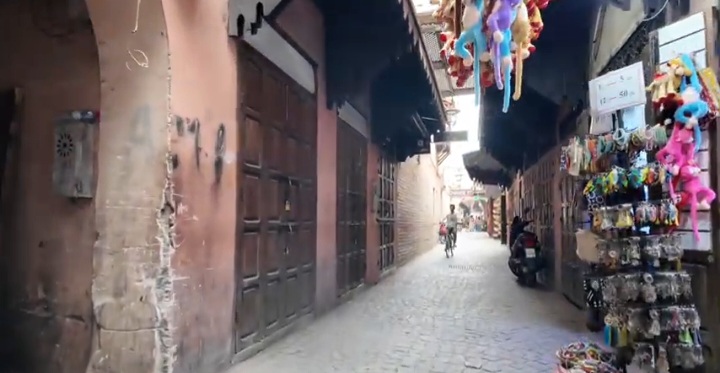
One of the most distinctive features of Marrakech Medina is its network of derbs. These narrow lanes connect houses, workshops, small squares and neighbourhood facilities.
Some derbs are busy commercial passages, while others are quiet residential streets. Their names often reflect a family, a local activity, a historic building or a geographical reference.
Many traditional houses are built around internal courtyards, with relatively simple exterior walls. This architectural arrangement creates a contrast between the quiet appearance of a street and the decorated interiors of the houses behind its doors.
Walking through the derbs also reveals the importance of local services. A traditional bakery, a hammam, a neighbourhood mosque or a small grocery shop can be more important to residents than a famous monument.
Visitors interested in this traditional way of life can discover more in our Marrakech Unwritten guide and our authentic walking route through the Medina.
How the Souks Fit Into the Neighbourhood Structure
The souks are an essential part of the geography of Marrakech Medina. They are not isolated shopping attractions but part of a much larger urban system that connects commercial streets, artisan workshops, fondouks and residential neighbourhoods.
Historically, different crafts became concentrated in particular streets or areas. This organisation allowed merchants, apprentices and artisans to work close to one another and helped visitors identify where particular products were made and sold.
Some of the most recognisable examples include:
- Souk Haddadine, associated with blacksmiths and metalworkers.
- Souk Zrabi, associated with carpets and rugs.
- Souk Cherratine, associated with leatherwork.
- Souk Smata, known for traditional Moroccan slippers.
- Souk Sebbaghine, associated with traditional dyeing.
- Souk Nejjarine, associated with woodworking.
- Souk Attarine, traditionally associated with spices and perfumes.
To explore these commercial areas in greater detail, read our hidden souks guide, our essential Marrakech souks article and our Marrakech rug markets guide.
Visitors interested in discovering the workshops and meeting the people who still practise traditional crafts can also explore our Last Artisans of Marrakech Medina article.
Exploring the Historic Neighbourhoods on Foot
The best way to understand the different neighbourhoods of Marrakech Medina is to explore them on foot. A short walk can take you from a busy commercial street into a quiet residential quarter, past a historic fountain, through a traditional market and towards an important religious monument.
However, visitors should remember that the Medina is a living city. Its streets are used by residents, shopkeepers, artisans, delivery workers and visitors. Some lanes are narrow, and the names of smaller streets are not always easy to identify.
It is therefore useful to understand the main geographical reference points before exploring the city independently.
Our complete guide to walking through Marrakech explains how the main areas connect. You can also read our first-time visitor's walking guide and our guided city tour itinerary.
Discover the Neighbourhoods with a Local Marrakech Guide
Understanding the historic quarters requires more than recognising their names on a map. Their real character becomes clearer when you walk through the streets, observe the traditional activities and learn how the different parts of the Medina developed.
At Visit Marrakech Medina, we have been guiding visitors through the historic city since 2004. Our local knowledge comes from years of walking through these neighbourhoods, discovering their hidden streets and explaining the relationship between the souks, residential quarters, monuments and traditional crafts.
We offer several ways to discover the old city:
- Private and shared Medina walking tours for visitors who want to understand the history and everyday life of the old city.
- Authentic Marrakech shopping tours for discovering the traditional souks and local craftsmanship.
- Carpet and rug shopping tours for understanding Moroccan weaving traditions and the different types of carpets.
- Luxury shopping tours for visitors interested in selected Moroccan design, quality products and higher-end craftsmanship.
- Marrakech group tours for travellers who prefer exploring with other visitors.
You can also discover our complete range of Marrakech tours or check which tours are available this week.
Our tours focus on authentic experiences, local knowledge and discovering the real Medina. There is no obligation to shop, and you do not need to pay anything in advance. You pay at the end of your tour.
Frequently Asked Questions About Marrakech Medina Neighbourhoods
How many neighbourhoods are there in Marrakech Medina?
There are numerous traditional neighbourhoods and smaller local areas within Marrakech Medina. The 19 historic area names discussed in this guide provide a useful overview, but they should not be interpreted as a definitive official administrative list. Traditional neighbourhood boundaries can overlap and vary according to local usage.
Which neighbourhood is closest to Jemaa el-Fnaa?
Kennaria and the central areas around Jemaa el-Fnaa are among the closest neighbourhoods. Mouassine is also within easy walking distance, while Riad Zitoun provides routes towards the southern Medina.
Which neighbourhoods are best for discovering traditional life?
Bab Doukkala, Riad Laarouss, Sidi Bel Abbès and the quieter residential streets around the northern Medina offer opportunities to see everyday local life away from the busiest tourist streets.
Where are the historic palaces located?
Bahia Palace and Dar Si Said are in the southern Medina around Riad Zitoun. El Badi Palace is close to the Mellah and the Kasbah, while Dar el-Bacha is in the western part of the Medina near Mouassine.
Which neighbourhoods are best for shopping?
The central souks north of Jemaa el-Fnaa are the main traditional shopping area. Mouassine and Ben Youssef provide access to several artisan markets, while the Mellah is known for spices, jewellery and traditional commercial streets.
Are the neighbourhoods of Marrakech Medina easy to explore independently?
The main streets and important landmarks are accessible to independent visitors. However, smaller residential derbs can be confusing, particularly for first-time visitors. Understanding the main geographical reference points makes exploration easier.
Can I visit several neighbourhoods during one walking tour?
Yes. A guided walk can combine several areas, depending on the duration and interests of the visitor. A typical route might include Jemaa el-Fnaa, the central souks, Mouassine, Ben Youssef and parts of the southern Medina.
Is Marrakech Medina still a living residential area?
Yes. Despite its popularity with visitors, Marrakech Medina remains home to local families, traditional businesses, artisans, religious institutions and neighbourhood services. This mixture of tourism and everyday life is one of the reasons the historic city remains so distinctive.
Continue Discovering Marrakech Medina
The historic neighbourhoods of Marrakech are best understood as parts of one connected city. Each quarter has its own history and character, but together they form the urban landscape that makes the Medina so remarkable.
From the royal history of the Kasbah to the commercial activity of Kennaria, from the traditional houses of Mouassine to the historic Jewish heritage of the Mellah, every neighbourhood adds another dimension to the story of Marrakech.
For more information about the historic city, return to our Marrakech Medina Guide and discover our complete collection of local articles and walking routes.
Explore Marrakech Medina with Us
Would you like to discover these historic neighbourhoods with a local guide? Contact Visit Marrakech Medina to arrange a private walking tour or join one of our shared group tours.
We are available throughout the year, with morning and afternoon tours. You can discuss your interests, preferred date and the areas you would particularly like to discover before booking.
Contact us directly:
- Contact us on WhatsApp for a quick reply.
- Complete our booking form to arrange your tour.
- Discover Visit Marrakech Medina and our complete range of authentic Marrakech experiences.
Discover the real Marrakech Medina with local knowledge, authentic stories and a deeper understanding of its historic neighbourhoods.