
The Most Authentic Walking Route in Marrakech | Discover the Real Medina
.jpeg)
The Most Authentic Walking Route in Marrakech
Marrakech is a city best discovered on foot. To truly understand its soul, you must wander through the labyrinth of the Medina, where every alley tells a story, every scent recalls history, and every encounter becomes a memory. The most authentic walking route in Marrakech isn’t necessarily marked on a map—it unfolds naturally, step by step, through centuries of tradition and human connection. Still, there is a perfect path that captures the city’s essence, from its ancient gates to its artisan heart, from its sacred mosques to its lively markets. This is the journey of the real Marrakech—slow, immersive, and unforgettable.
Starting Point: Bab Doukkala — The Gateway to the Local Marrakech
Begin your walk at Bab Doukkala, one of the western gates of the Medina. Unlike the tourist-heavy entrances near Jemaa el-Fna, Bab Doukkala offers a glimpse into everyday life. Here, locals buy vegetables, bread, and spices at neighborhood markets. You’ll see women carrying baskets of mint for tea, old men in djellabas chatting near small cafés, and children hurrying to school. The smells of freshly baked khobz (traditional bread) drift from the communal ovens, and the rhythm of local Marrakech life starts to reveal itself.
Spend a few minutes observing how the city wakes up. The souks here are smaller, more intimate, and filled with real crafts and essentials rather than tourist souvenirs. From this point, your walk will take you deeper into the authentic Medina—where modern and ancient Marrakech still coexist in harmony.
Step Two: The Local Bakeries and Hammams of the Medina
As you walk east from Bab Doukkala, you’ll come across small bakeries where locals bring their dough to be baked in shared wood-fired ovens. Nearby, you’ll see the entrances of traditional hammams—public bathhouses that have been part of Moroccan life for centuries. Some are centuries old, their tiled walls and stone arches whispering stories of the past. The smell of olive soap and steam mixes with the earthy scent of the alleys.
This is also a good place to pause for a mint tea. Look for a small café with a terrace, order a glass, and watch how the Medina breathes—slowly, rhythmically, like a heartbeat.
Step Three: The Hidden Artisans of Dar el Bacha
Continue your route toward Dar el Bacha, a beautifully restored palace and one of the most elegant landmarks in the old city. Before reaching it, you’ll pass through alleys lined with workshops—carpenters shaping cedar wood, brass workers polishing teapots, and women weaving baskets. These are not tourist attractions; they are living workshops, part of the city’s daily rhythm.
Dar el Bacha itself is an architectural masterpiece, once the residence of the Pasha of Marrakech. Today, it houses the Musée des Confluences, a museum celebrating Morocco’s cultural diversity. Even if you don’t enter, the surrounding area is ideal for slow exploration.
Step Four: Mouassine and the Soul of Artisan Marrakech
From Dar el Bacha, follow the narrow lanes to Mouassine, one of the oldest neighborhoods in the Medina. Mouassine is filled with artisans who keep Marrakech’s heritage alive. You’ll find leather craftsmen, silversmiths, and wood carvers still using techniques passed down through generations.
The Mouassine Mosque and Mouassine Fountain are also must-see landmarks. The fountain is a symbol of community and generosity—locals once gathered here to draw water and wash before prayers.
Nearby, the scent of argan oil, musk, and amber fills the air as perfumers prepare blends using ancestral recipes. Take time to talk to them; many will happily explain how natural essences are made. This is what makes walking through Marrakech authentic—the conversations, the handshakes, the stories.
Step Five: Rahba Kedima — The Square of Spices
Continue your walk until you reach Rahba Kedima, the old spice square. This open area surrounded by small shops and stalls is one of the most colorful and fragrant spots in Marrakech. Pyramids of saffron, cumin, turmeric, and paprika decorate the stands, while herbalists display jars filled with mysterious powders and roots used in traditional medicine.
This is where Marrakech awakens all your senses. The market is alive with the sound of bargaining, laughter, and distant calls from the muezzin. Don’t rush through; this square has been the soul of the souks for centuries. It’s the perfect place to buy authentic spices or natural cosmetics like ghassoul clay, black soap, and rose water.
Step Six: Souk Semmarine — The Heart of the Medina
From Rahba Kedima, follow the flow of people into Souk Semmarine, the central artery of the Medina’s market network. Wooden beams filter sunlight into golden stripes that dance across carpets, lamps, and jewelry. Here you’ll see artisans selling handmade babouches (Moroccan slippers), brass lanterns, colorful ceramics, and rugs.
Every corner tells a story: families who’ve been selling leather for generations, apprentices learning the art of metal engraving, and elderly shopkeepers who still welcome you with a smile and a glass of mint tea.
This part of the walk is vibrant and crowded—this is the real Marrakech energy, where chaos and beauty coexist. Take your time, and don’t hesitate to stop and admire craftsmanship.
Step Seven: Souk Cherratine — The Leather Masters
Turn slightly north to reach Souk Cherratine, famous for its leather goods. The smell here is distinctive—earthy, rich, and deeply connected to the tanneries that supply the artisans. You’ll find bags, belts, wallets, and slippers, all handmade from local leather.
Many of the craftsmen here still use natural dyes and traditional stitching methods. If you’re interested in seeing where the leather comes from, your guide can take you toward the tanneries of Bab Debbagh, where hides are washed, treated, and dyed using age-old techniques. Though the smell is strong, the process is fascinating and worth witnessing.
Step Eight: The Foundouks — Living Workshops of the Past
Scattered throughout the Medina are foundouks, old caravan inns once used by merchants who came from the Sahara or the Atlas Mountains. Many have now been transformed into artisan cooperatives. Inside, you can see weavers, blacksmiths, and potters working side by side, just as they did centuries ago.
These foundouks are among the most authentic places in Marrakech. The rhythm of hammering and weaving echoes softly under the high ceilings, and sunlight filters through wooden beams. Visiting one feels like stepping into the past, a place where trade and creativity have never stopped.
Step Nine: The Tanners’ Quarter at Bab Debbagh
If you want to continue deeper into authenticity, walk toward Bab Debbagh, the tannery gate. This is one of the oldest parts of Marrakech and home to the traditional leather tanneries. The process is ancient—animal hides are soaked in stone vats filled with lime, water, and pigeon droppings before being dyed in natural pigments.
While the smell can be strong, the experience is unforgettable. Workers use methods that have barely changed in hundreds of years. Visitors are often given a sprig of mint to hold under the nose as they tour the area. Watching the vibrant colors of red, yellow, and brown hides drying under the sun feels like witnessing a living museum of craftsmanship.
Step Ten: The Peaceful Escape to Ben Salah and the Old Mosques
After the sensory overload of the tanneries, walk west toward the Ben Salah Mosque. This area of the Medina is quieter, where local families live in traditional houses. The sound of artisans fades into the background, replaced by the voices of children and the call to prayer.
This is the perfect place to pause, reflect, and feel the spiritual heartbeat of the old city. The Ben Salah area is rarely visited by tourists, yet it’s one of the most peaceful corners of Marrakech.
Step Eleven: Ending at Jemaa el-Fna — The Heartbeat of the City
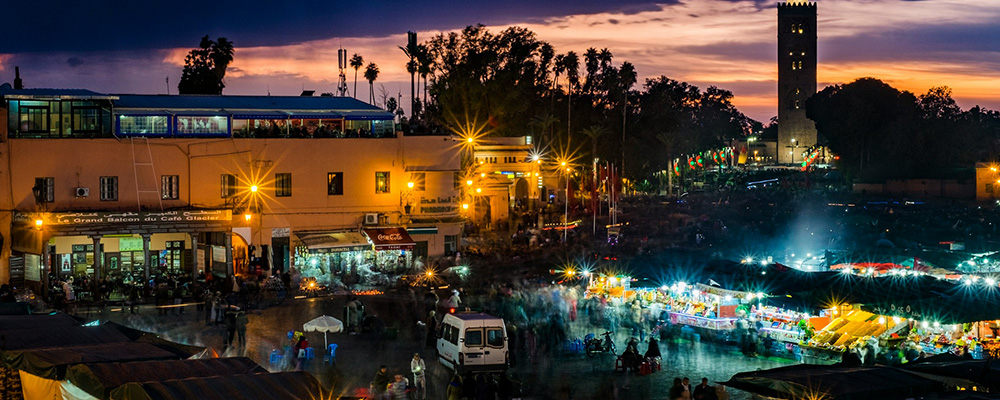
End your walk at Jemaa el-Fna, the legendary square that has been Marrakech’s center for over a thousand years. As evening falls, the square transforms into a festival of life—storytellers, musicians, snake charmers, and food vendors fill the air with sound and light. The energy is indescribable; it’s both ancient and modern, local and global, sacred and playful.
From a rooftop café, sip mint tea as you watch the scene unfold. The call to prayer echoes across the square, and smoke from food stalls rises into the twilight. You’ve just walked through the most authentic route in Marrakech—a journey from daily life to history, from craft to culture, from silence to celebration.
Tips for Following This Walking Route
1. Start Early: Begin your walk around 9:00 a.m. to enjoy the peaceful side of the Medina before the crowds arrive.
2. Dress Respectfully: Lightweight but modest clothing is best. Comfortable shoes are essential.
3. Stay Hydrated: Carry a bottle of water, especially during warm months.
4. Go With a Local Guide: A guide like Rachid Boussalem can introduce you to artisans, hidden foundouks, and safe routes away from tourist traps.
5. Take Breaks: Enjoy mint tea, local pastries, or orange juice along the way.
6. Be Curious: Greet artisans, ask questions, and engage with locals.
7. End at Sunset: Plan to reach Jemaa el-Fna around sunset for an unforgettable finale.
Why This Route Is the Most Authentic
Unlike many tourist circuits, this path passes through the true working heart of Marrakech. You’ll see how people live, work, and worship; how the city breathes beyond the postcards. You won’t just see Marrakech—you’ll feel it. The smell of cedarwood, the hammering of brass, the chants from nearby mosques, the smiles of shopkeepers—this is the real Marrakech, the one that has welcomed travelers for centuries.
Walking this route is not about distance; it’s about immersion. Every turn reveals another layer of the city’s soul.
Conclusion: Walk the Medina, Live the Story
The most authentic walking route in Marrakech isn’t about reaching a destination—it’s about living a story. It’s the story of artisans, families, traditions, and time itself. From the quiet mornings at Bab Doukkala to the fiery glow of Jemaa el-Fna at night, this route lets you walk through centuries of history in a single day.
So put away your map, slow your pace, and let the city guide your steps. Marrakech rewards those who walk with open eyes and open hearts.
Book This Tour:
Discover the most authentic walking route in Marrakech with Rachid Boussalem, one of the city’s most trusted local guides. Explore hidden corners, meet real artisans, and experience the Medina beyond the tourist path.
WhatsApp: +212 614 905 398 | ???? www.visit-marrakech-medina.com