
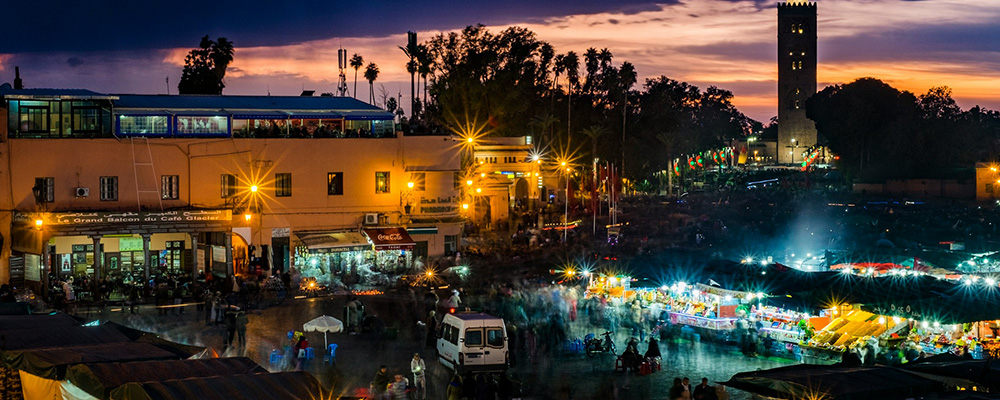
Last Artisans Marrakech Medina
.jpeg)
Who are the last artisans of the Marrakech Medina?
Somewhere behind a pile of lanterns and a man insisting his shop is "just for looking," there's a workshop where someone is actually making the thing you're about to buy. Finding him is the whole game. This page is a growing register of the last artisans of the Marrakech Medina: the dyers, babouche makers, woodturners, weavers and metalworkers who still work by hand, what they make, and where to find them.
Want to meet them in person?
Message us on WhatsApp or use our booking form.
Visit Marrakech Medina, The Best Shopping And Walking Tour Company In Marrakech, has been taking travelers into the real workshops of the souks for years. Our guiding was recommended by Rick Steves and featured by Daniel Jacobs in The Rough Guide to Morocco, and we have guided some very well known clients (we never share names). We know the makers, not just the shops.
Ways to meet the artisans with us:
Check dates for group and private tours on Marrakech Tours This Week, and before you go, see what time the souks open and close.
Why are the Medina's artisans disappearing?
For centuries, each souk in Marrakech was named after the craft practiced there. Many alleys still carry those names, but the workshops behind them are shrinking. Factory goods are cheaper and faster, young people often choose other jobs, and many stalls now sell items made elsewhere. The skills that remain are often held by older masters who learned from their fathers. When they stop, the craft often stops with them in that alley.
This register exists so travelers can find these makers, buy directly from the source, and help keep the crafts alive.
To reach the artisans' alleys around Place Ben Youssef, follow The Secret Loop Marrakech Medina. For more stories of the Medina told by locals, read Marrakech Unwritten.
The Medina Red List: which crafts are disappearing?
Inspired by the lists that track endangered species, the Medina Red List is our own classification of the traditional crafts of the Marrakech Medina, based on more than 20 years of walking these alleys and knowing the workshops personally. It is about crafts, never about individual artisans or shops: its only goal is to show which skills are becoming rare, so travelers can visit them and help keep them alive.
Each craft gets one of four statuses:
Thriving: many workshops are still active and young people are learning the craft
Fragile: workshops are fewer, and few apprentices are taking over
Endangered: only a handful of workshops remain in the Medina
Last One: a single master is still working in his alley
Current status of the crafts in our register:
Thriving: lantern and metal workers, leather workers
Fragile: babouche makers, rug weavers, handira weavers, potters and ceramic painters, silver jewelers
Endangered: dyers, woodturners
Last One: none confirmed yet. Know a master who is the last of his trade in his alley? Tell us on WhatsApp
We update the Medina Red List as we visit the workshops. Journalists and researchers are welcome to cite it with a link to The Last Artisans Of The Marrakech Medina.
The crafts in our register
Artisan profiles published so far: 2. A new profile is added regularly.
The dyers of Souk des Teinturiers: skeins of wool and silk hung above the alley in deep reds, blues and yellows, dyed in vats by hand. Red List status: Endangered. Read the profile: Watch The Dyers At Work In Marrakech
The handira weavers: the shimmering Moroccan wedding blankets woven with wool and sequins. Red List status: Fragile. Read the profile: Moroccan Wedding Blankets Handira
The babouche makers: leather slippers cut and stitched by hand. Red List status: Fragile. Profile coming soon.
The woodturners: craftsmen who turn wood on a bow lathe, often guiding the tool with their feet. Red List status: Endangered. Profile coming soon.
The lantern and metal workers: brass and iron pierced and hammered into lanterns, one hole at a time. Red List status: Thriving. Profile coming soon.
The leather workers: bags, poufs and belts made from leather prepared in the old tanneries. Red List status: Thriving. Profile coming soon.
The rug weavers: Berber rugs knotted and woven by hand, each with its own symbols. Red List status: Fragile. Profile coming soon.
The silver jewelers: traditional Berber designs shaped by hand. Red List status: Fragile. Profile coming soon.
The potters and ceramic painters: tagines and bowls painted brushstroke by brushstroke. Red List status: Fragile. Profile coming soon.
How do you know you're buying from a real artisan?
Here's the simplest test we use: look at the floor. A real workshop has shavings, offcuts, threads, tools and half-finished pieces. A reseller's shop is clean, full of identical items, and nobody is making anything. Other good signs:
The person can show you how the item is made, step by step
Pieces are slightly different from each other, never perfectly identical
Prices are usually fairer at the source. Handmade babouches, for example, are often around 70 to 120 dirhams from a maker, against much higher first prices in tourist streets
The artisan is happy to let you watch, even if you don't buy
Why visit the artisans with a local guide?
Many real workshops are hidden behind doors you would walk past without noticing, deep in alleys that change name every few steps. A guide who knows the makers takes you straight to them, explains the craft, and helps you understand fair value. You're never obliged to buy anything: shopping is always your choice. If you do want to buy, you'll know exactly who made it.
Know an artisan we should add?
This register grows with help from travelers. If you met a craftsman in the Medina who deserves a place here, send us his craft, his alley and a photo on WhatsApp. Artisans are welcome to contact us too.
Frequently asked questions
Can I visit the artisans' workshops in Marrakech?
Yes. Many artisans welcome visitors and are happy to show their work, especially when you come with someone they know.
Do I have to buy something?
No. Watching and asking questions is always fine. Buying is your choice.
Which tour is best to meet the artisans?
The Souk Shopping Tour visits the craft souks, and the Rug Shopping Tour focuses on weavers and rugs. For a tour built around specific crafts, choose the Custom Shopping Tour.
When are the workshops open?
Most workshops follow the souk hours. See what time the souks open and close.
Book your artisan visit
Book on WhatsApp or through our booking form. See this week's dates on Marrakech Tours This Week.
Have a question about your trip, even if you don't book a tour?
Ask us on WhatsApp. We're happy to help travelers plan their days in Marrakech.
Found this guide useful?
Save it for your trip or share it with a friend who's heading to Marrakech.
Writing about Marrakech?
Feel free to link to this guide, or contact us for local insights and photos.
Discover our full range of authentic Marrakech tours on our Visit Marrakech Medina homepage