
Walking Tour Marrakech: Explore the Kasbah and Mellah
.jpeg)
Discover the historic Kasbah and Mellah of Marrakech with an experienced local guide who has been exploring the Medina with visitors since 2004. Our private Marrakech walking tour introduces you to the city's history, hidden streets and authentic neighborhoods. You can also explore our Moroccan carpet and rug tour for a different experience. Our Medina guiding has been recommended by Rick Steves, and you can find our reference in the Rough Guide to Morocco. To arrange your visit, contact us on WhatsApp at +212 614 905 398 or complete our booking form. Nothing is payable upfront; you pay at the end of your tour.

Explore the Kasbah and Mellah: Two Historic Neighborhoods of Marrakech
Marrakech is much more than its famous square and colorful souks. Behind the busy streets of the Medina are historic neighborhoods where the city's royal past, religious heritage, traditional crafts and everyday life come together.
Two of the most interesting areas to explore are the Kasbah and the Mellah. Although they are close to each other, each has its own identity, architecture and history.
The Kasbah was historically associated with the royal court and the ruling dynasties of Marrakech. Here, you can discover impressive gates, historic monuments, traditional bakeries and residential streets that still preserve the character of the old city.
The Mellah is the historic Jewish quarter of Marrakech. Its history is closely connected to the Jewish community that contributed to the city's commercial, cultural and social development over several centuries.
As a local national guide who has been working in Marrakech since 2004, I enjoy introducing visitors to these neighborhoods because they offer a different perspective on the city. Rather than simply visiting monuments, you discover how Marrakech developed and how people continue to live and work in its historic center.
Starting the Walking Tour Near Jemaa el-Fna
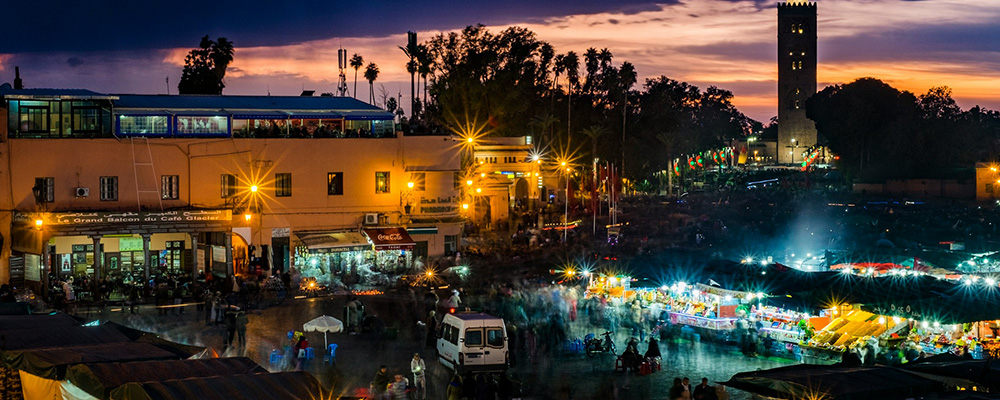
Our walking experience can begin near Jemaa el-Fna, the famous central square of Marrakech, or at another agreed meeting point depending on your accommodation and arrangements.
Jemaa el-Fna is an excellent starting point because it brings together several centuries of Marrakech history. During the day, the square is filled with juice sellers, traditional musicians, local traders and visitors. Later in the afternoon and evening, food stalls and performers create a completely different atmosphere.
From the square, we walk towards the southern part of the Medina. Within a short distance, the busy atmosphere gradually changes. We enter quieter streets, pass neighborhood shops and discover parts of Marrakech that many visitors miss when exploring independently.
This is one of the advantages of walking with a knowledgeable local guide: understanding the relationship between the different neighborhoods rather than simply following a list of monuments.
Bab Agnaou: Discovering One of Marrakech's Most Beautiful Gates
Our exploration of the Kasbah includes Bab Agnaou, one of the most impressive historic gates in Marrakech.
Dating from the 12th century, Bab Agnaou was constructed during the Almohad period. Its monumental stone arch and decorative carvings demonstrate the architectural sophistication of the dynasty that transformed Marrakech into an important imperial capital.
The gate formed part of the historic southern entrance to the royal district. Its architecture is particularly interesting because of the different decorative elements carved into the stone around the entrance.
When we stop here, I explain the importance of the Almohad dynasty, the development of the city's defensive walls and the relationship between the Kasbah and the rest of the Medina.
It is also a wonderful place for photographs, especially for visitors interested in traditional Moroccan architecture.
The Saadian Tombs: A Journey into Marrakech's Royal Past
One of the most important historical attractions in the Kasbah is the Saadian Tombs.
This remarkable funerary complex is associated with the Saadian dynasty, which ruled Marrakech during the 16th and early 17th centuries. One of its most famous rulers was Sultan Ahmad al-Mansur, whose reign represented an important period in the history of Morocco.
The tombs are particularly famous for their detailed decoration. Visitors can admire Italian Carrara marble, carved cedarwood ceilings, traditional stucco work and beautiful Moroccan zellij mosaics.
The Chamber of the Twelve Columns is especially impressive. Its proportions and craftsmanship demonstrate the artistic ambition of the Saadian rulers.
The site remained largely hidden for centuries before being rediscovered in 1917. Today, it is one of the most visited historical monuments in Marrakech.
During our walk, I explain the historical background of the Saadian dynasty and the importance of the Kasbah as a center of royal power.
Visitors who wish to enter the monument can do so according to its current opening arrangements and ticketing requirements.
Everyday Life in the Kasbah: The Marrakech Beyond the Monuments
For me, one of the most interesting parts of this walk is discovering the ordinary streets of the Kasbah.
Historic monuments are important, but the real character of Marrakech is also found in the places where residents shop, work, prepare food and meet their neighbors.
As we explore the neighborhood, we may pass traditional bakeries, small grocery shops, local cafés and workshops.
One particularly interesting Moroccan tradition is the communal bread oven, known as a farran. Families prepare their bread at home and bring it to the local baker, who cooks the loaves in a traditional oven.
This practice remains an important part of neighborhood life. Freshly baked Moroccan bread, known as khobz, is a daily staple in many households.
We also discover small squares, traditional houses and narrow residential streets where visitors can observe everyday life away from the busiest tourist areas.
These simple experiences often make a walking tour memorable because they reveal the living city, not just its historical attractions.
The Mellah: Exploring the Historic Jewish Quarter of Marrakech
Leaving the Kasbah, we continue towards the Mellah, one of the most historically significant neighborhoods of Marrakech.
The Mellah was established during the 16th century under the Saadian dynasty. It became the center of Jewish life in Marrakech and developed into an important neighborhood for merchants, goldsmiths, craftsmen and traders.
The name Mellah is traditionally associated with the Arabic word for salt. The history of the Jewish quarter is closely connected to the commercial and social development of the city.
As we walk through its streets, visitors notice differences in the architecture, including traditional houses, wooden balconies, narrow passages and historic commercial areas.
For centuries, Jewish and Muslim communities contributed to the development of Marrakech. Their commercial relationships, craftsmanship, traditions and cultural exchanges remain an important part of the city's history.
Although much of the historic Jewish population emigrated during the 20th century, the heritage of this community remains visible throughout the Mellah.
Exploring this neighborhood offers a deeper understanding of the multicultural history of Morocco and the different communities that helped shape Marrakech.
Lazama Synagogue: An Important Part of Jewish Heritage
One of the most interesting places in the Mellah is the Lazama Synagogue, a historic place of worship associated with the Jewish community of Marrakech.
Its traditional architecture and peaceful courtyard provide a contrast to the lively streets outside. Inside, visitors can discover elements of Moroccan Jewish religious and cultural heritage.
The synagogue is also an opportunity to discuss the traditions, history and daily life of Moroccan Jewish families who lived in Marrakech.
For visitors interested in religious architecture and the multicultural history of the city, this is an especially meaningful stop.
The Jewish Cemetery of Marrakech
Another important historical place in the Mellah is the Miâara Jewish Cemetery.
It is one of the most significant Jewish burial grounds in Morocco, with generations of graves reflecting the long history of the community in Marrakech.
The rows of white tombs create a peaceful atmosphere that contrasts with the activity of the surrounding neighborhood.
Visiting the cemetery helps explain the historical connection between the Jewish community and Marrakech. It is a place of remembrance and an important part of the city's cultural heritage.
The Mellah Spice Market: Colors, Aromas and Moroccan Traditions
The Mellah is also known for its traditional spice market, an interesting place to discover Moroccan ingredients and everyday shopping traditions.
Stalls display colorful spices, including cumin, turmeric, ginger, paprika, cinnamon and saffron. The aromas and colors make this part of the neighborhood particularly enjoyable to explore.
We can also discover traditional products such as argan oil, herbal preparations, aromatic waters and natural cosmetics.
During our walking tours, we sometimes visit a traditional herbalist and spice cooperative where visitors can learn about Moroccan plants, spices and traditional uses.
You can ask questions, discover different ingredients and learn about local traditions. There is no obligation to purchase anything.
For travelers who would like to spend more time discovering the markets, our dedicated Marrakech souks and shopping tour offers a more focused experience.
Traditional Moroccan Crafts and Local Artisans
Another interesting aspect of exploring the Kasbah and Mellah is discovering the craftsmanship that remains an important part of Marrakech's identity.
Moroccan artisans work with a wide range of materials, including silver, brass, copper, leather, wood, ceramics and textiles.
In traditional workshops, visitors can sometimes watch craftsmen working with techniques that have been passed down through generations.
Jewelry making, decorative metalwork and traditional weaving are particularly interesting examples of Moroccan craftsmanship.
Moroccan carpets deserve special attention. Different regions have their own weaving traditions, colors and patterns. Some carpets are made using wool from the Atlas Mountains, while others reflect the artistic traditions of different Moroccan communities.
If you are particularly interested in carpets, our Marrakech carpet and rug shopping tour provides additional time to understand the differences between handmade rugs, regional designs and weaving techniques.
We also offer a luxury shopping tour in Marrakech for visitors interested in high-quality craftsmanship and specialist shopping addresses.
Our philosophy is to explain, introduce and guide. You are always free to decide whether you want to shop or simply enjoy discovering the workshops.
Moroccan Food and Traditional Neighborhood Life
A walk through the old neighborhoods of Marrakech is also an opportunity to discover the city's food traditions.
Depending on the route, we may pass traditional bakeries, small food shops and stalls selling olives, dates, preserved lemons and Moroccan pastries.
Moroccan food culture is closely connected to everyday life. Families prepare bread, shop for fresh ingredients and use spices that have been part of local cooking traditions for generations.
We can also suggest places where you can discover traditional Moroccan food during your stay.
If you would like to explore more of the city, our guide to things to do in Marrakech offers additional ideas for your visit.
How Long Does the Kasbah and Mellah Walking Tour Last?
We generally recommend allowing approximately three hours to explore the Kasbah and Mellah comfortably.
The exact duration depends on your interests, walking pace and whether you wish to spend additional time at particular monuments or historical sites.
Some visitors prefer to concentrate on architecture and history, while others enjoy discovering traditional streets, local markets and artisan workshops.
Our private walking experiences can be adapted to your interests. We can spend more time explaining the history of the Saadian dynasty, explore the Jewish heritage of the Mellah or include additional stops along the way.
Kasbah and Mellah Walking Tour Prices
We offer private Marrakech walking tours every day, with morning and afternoon departures. Shared group walking tours are also available on selected days.
Private Walking Tour
- 1 to 2 people: 900 MAD total
- 3 to 4 people: 1,200 MAD total
- 5 to 6 people: 1,500 MAD total
Private departure times are available every day at 9:00 am and 2:00 pm.
Shared Group Walking Tour Without Shopping
- 300 MAD per person
- Monday, Wednesday, Friday and Sunday
- Departure at 10:00 am
- Meeting point: Café de France, Jemaa el-Fna
- Maximum group size: 15 participants
We also offer a separate shared shopping tour for 250 MAD per person on Tuesday, Thursday and Saturday, with a maximum of 10 participants.
Our tours are available in English and French. Italian and Spanish can be arranged on request, preferably for private tours.
There is no advance payment. You pay at the end of your experience.
Discover all our experiences on the Visit Marrakech Medina tours page or learn more about our Marrakech group tours.
Practical Advice Before Your Walking Tour
- Comfortable footwear: The old Medina has uneven surfaces, narrow streets and traditional paving.
- Water: Bring a bottle, especially during the warmer months.
- Sun protection: A hat and sunscreen are useful in summer.
- Photography: There are many interesting architectural details and traditional scenes along the route.
- Religious sites: Respect local customs and dress appropriately when visiting religious places.
- Friday visits: Some shops and workshops may close or change their hours around Friday prayers.
If you are planning to explore the markets independently, our complete guide to Marrakech souk opening and closing times will help you plan your visit.
You can also check our Marrakech tours available this week if your visit is approaching.
Why Explore These Neighborhoods with Visit Marrakech Medina?
A visit to Marrakech should be about more than taking photographs of famous monuments. The city becomes much more interesting when you understand the stories behind its streets, its communities and its traditions.
The Kasbah and Mellah are excellent examples of this. They reveal the royal history of Marrakech, the importance of its Jewish heritage, the development of traditional commerce and the everyday life of local residents.
Having worked as a national tour guide since 2004, I have spent more than two decades sharing the history and culture of Marrakech with international visitors.
Our approach is based on local knowledge, authentic experiences and personal attention. We want visitors to discover the Medina comfortably, understand its history and enjoy meeting the people who make the city special.
We do not believe that a good walking tour should be a shopping obligation. You can concentrate on history, culture and architecture, or explore traditional crafts if that interests you.
Every walk is an opportunity to discover something different.
Book Your Marrakech Kasbah and Mellah Walking Tour
Are you ready to discover the historic Kasbah and Mellah with a local Marrakech guide?
Join us for a journey through historic gates, royal monuments, traditional residential streets, Jewish heritage sites and colorful spice markets.
Whether you are visiting Marrakech for the first time or returning to discover more of the Medina, we would be delighted to show you another side of our city.
Our private walking tours are available every day, in the morning and afternoon. You can contact us before your arrival or while you are already staying in Marrakech.
Book directly with Visit Marrakech Medina:
Complete our online booking form
No advance payment is required. You pay at the end of the tour.
Discover our full range of authentic Marrakech tours on our homepage.
We look forward to welcoming you to Marrakech and introducing you to the history, culture and everyday life of its Medina.