
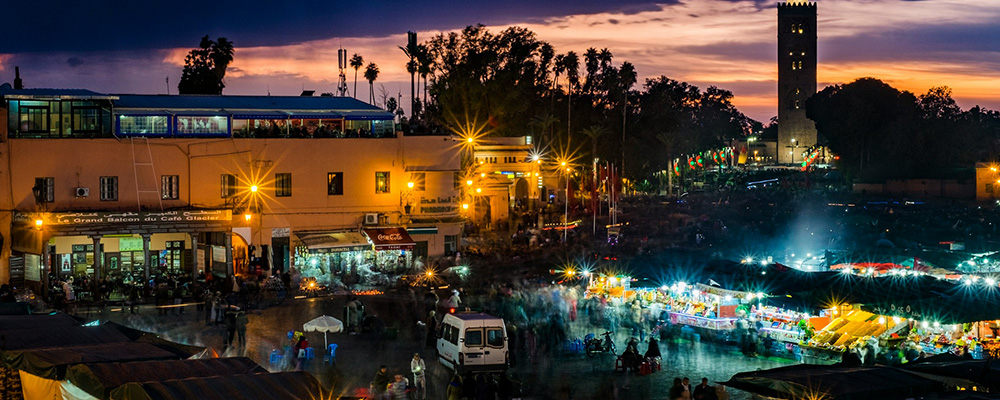
Jemaa El-Fnaa Square
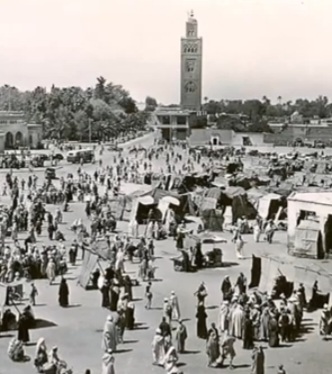
Why Is Jemaa el-Fnaa Square the Heart of Marrakech?
Jemaa el-Fna is more than a famous square. It is the meeting point between the historic Medina, its souks, food traditions and everyday street life. Our local guiding work has been featured in The Rough Guide to Morocco by Daniel Jacobs, and our Marrakech walking tour was recommended by Darren Humphrys in a January 2015 discussion on the Rick Steves Travel Forum. Since 2004, our guides have been helping visitors discover the Medina beyond the main square, including its hidden streets, traditional workshops and local neighbourhoods. You can explore these places on our Marrakech walking tour, join one of our small-group tours, or discover the markets with our Marrakech shopping tour.
For many visitors, Jemaa el-Fna is the first place they encounter in the old city. It is also an excellent starting point for exploring the surrounding streets. From here, you can walk towards the Koutoubia Mosque, enter the northern souks, visit traditional markets or continue deeper into the Medina.
Use the place links throughout this guide to open Google Maps walking directions from Jemaa el-Fna Square to the places being discussed. Google Maps can then show the available pedestrian route, distance and estimated walking time.
Where Is Jemaa el-Fnaa Square?
Jemaa el-Fna Square is located in the centre of the historic Medina of Marrakech. It sits close to the Koutoubia Mosque and connects several important pedestrian routes through the old city.
The square is easy to reach from many hotels and riads in the Medina. If you are staying in the modern part of Marrakech, you can take a taxi to the area around the square and continue on foot. Vehicles do not circulate freely through the pedestrian lanes of the historic centre.
Once you arrive, take a moment to look around before choosing a direction. The square is not simply a place to cross. It is a place to observe how the city works, how people meet and how the atmosphere changes throughout the day.
What Is the History of Jemaa el-Fnaa?
Jemaa el-Fna has been an important public space in Marrakech for centuries. Its history is connected to the growth of the city, the movement of traders and travellers, and the cultural life of the Medina.
Over generations, the square became a gathering place for storytellers, musicians, performers, food sellers and residents. It developed a character that is different from a conventional monument or historic building. Its cultural value comes from the activities and traditions that take place there.
In 2001, UNESCO proclaimed the cultural space of Jemaa el-Fna a Masterpiece of the Oral and Intangible Heritage of Humanity. This recognition reflects the importance of the traditions, performances and social practices associated with the square.
The square remains a living cultural space. It is not a museum where everything is preserved behind glass. Its atmosphere changes with the people who come here, the time of day and the seasons.
What Can You See at Jemaa el-Fnaa During the Day?
During the morning and early afternoon, Jemaa el-Fna is generally more open and less crowded than it becomes in the evening. You can see juice sellers, small groups of performers, local residents crossing the square and visitors stopping to take photographs.
Daytime is a good opportunity to understand the layout of the square and notice the surrounding buildings and streets. You can also sit at a café terrace overlooking the activity below.
Look towards the Koutoubia Mosque, one of the most recognisable landmarks in Marrakech. Its minaret provides a useful reference point when navigating the area.
If you want to understand the streets beyond the square, continue towards the souks. The nearby commercial lanes lead into a much larger network of markets, workshops and small neighbourhood streets.
What Happens at Jemaa el-Fnaa in the Evening?
The atmosphere changes considerably towards the end of the afternoon. As the light becomes softer, more performers and food sellers arrive, and the square gradually becomes busier.
In the evening, food stalls are set up and visitors can walk between the different cooking areas. The air fills with the smell of grilled meat, spices and traditional dishes. Musicians and performers attract groups of people, while families and visitors move through the square.
For many travellers, this is the most memorable time to visit. You can experience several aspects of Marrakech's public life in one place, from food and music to conversation and street entertainment.
There is no need to rush. Walk around, observe the different activities and choose a place to eat if something appeals to you. If you prefer to watch the square from above, several cafés and restaurants around its perimeter have terraces overlooking the activity.
Who Performs at Jemaa el-Fnaa?
Jemaa el-Fna is known for its traditional performers and oral culture. Depending on the day and the season, you may encounter musicians, storytellers and other forms of street performance.
Gnaoua musicians are among the performers associated with the square. Their music has deep cultural roots in Morocco and is recognised for its distinctive rhythms and instruments.
Storytelling is another important tradition. In the past, storytellers attracted audiences who gathered around them to listen to tales, local histories and popular narratives. This oral tradition is one of the cultural practices that helped make the square internationally recognised.
The exact performances are not fixed. They can change from one visit to another, so it is better to experience the square with an open mind rather than expect a scheduled show.
What Food Can You Try at Jemaa el-Fnaa?
In the evening, the food stalls become one of the main attractions. They offer a lively introduction to Moroccan street food and traditional cooking.
Depending on the stall, you may find grilled meats, brochettes, soups, traditional Moroccan dishes, bread and other local specialities. Fresh orange juice is also widely associated with the square and is available from juice sellers during the day.
Take a look at the food before choosing where to eat. Compare the menus and prices, and ask what is included before ordering. If you have allergies or dietary restrictions, explain them clearly before the food is prepared.
For a broader experience of Moroccan food, you can also explore the smaller restaurants and traditional food businesses in the surrounding Medina.
What Are the Best Places to Visit Near Jemaa el-Fnaa?
One of the advantages of visiting Jemaa el-Fna is its location. Several important landmarks, souks and historic areas can be reached on foot. You can combine a visit to the square with a wider exploration of the old city.
Koutoubia Mosque
The Koutoubia Mosque stands a short walk from the square. Its minaret is a defining feature of the Marrakech skyline and an important landmark for orientation. Non-Muslim visitors should respect the rules governing access to the mosque itself, but the surrounding gardens and exterior are worth seeing.
Souk Semmarine
From the northern side of Jemaa el-Fna, you can enter Souk Semmarine, one of the main commercial streets of the Medina. The covered market leads towards a network of smaller souks where you can find textiles, clothing, leather goods, lamps, pottery and traditional crafts.
It is a busy route, especially during the middle of the day. Take your time and explore the smaller lanes branching away from the main passage. The surrounding market streets are part of a much larger trading area, with different sections specialising in different products and crafts.
Rahba Kedima
Rahba Kedima, also known as the Spice Square, is a historic market space surrounded by shops and cafés. It is a good place to see spices, baskets, natural products and other traditional merchandise.
The square has a different atmosphere from Jemaa el-Fna. It is smaller and surrounded by the narrow commercial streets of the northern Medina. Take time to look around the square and the shops opening onto it.
Souk des Teinturiers
The Souk des Teinturiers is associated with traditional dyeing and textile work. It offers a glimpse of the craft activities that continue to give the Medina its character.
As you explore, look beyond the shop displays. Some of the most interesting details are found in the workshops and working spaces where artisans prepare, repair and finish their products. The area is particularly interesting for visitors who want to understand the traditional trades behind the goods sold in the souks.
Ben Youssef Madrasa
The Ben Youssef Madrasa is one of the most important historic buildings in the northern Medina. Its architecture includes a central courtyard, carved plasterwork, decorative wood and traditional tilework. It offers visitors an opportunity to learn about the educational and architectural history of Marrakech.
It can be combined with a visit to the nearby souks and other historic sites in the northern part of the Medina.
Bahia Palace
Bahia Palace is located in the southern part of the Medina. It is known for its courtyards, decorative plasterwork, painted ceilings and traditional Moroccan architectural details.
It is farther from Jemaa el-Fna than the nearby souks, but it can be included in a longer walking route through the southern Medina.
El Badi Palace
The remains of El Badi Palace provide a different perspective on the history of Marrakech. This historic complex is known for its large open courtyards, surviving walls and the scale of its original design.
It is worth including if you are interested in the city's royal history and historic architecture.
Saadian Tombs
The Saadian Tombs are another important historic site in the southern Medina. The complex is associated with the Saadian dynasty and is known for its decorated chambers and architectural details.
You can combine this visit with the nearby Kasbah area and other historic places in the southern part of the old city.
How Can You Explore the Medina Beyond the Main Square?
Jemaa el-Fna is a natural starting point, but it represents only a small part of the historic Medina. The streets beyond the square lead to residential areas, traditional workshops, old fondouks, neighbourhood bakeries and small businesses that are part of everyday life.
Some visitors prefer to explore independently, while others choose a local guide to help them understand the layout and history of the old city. A guide can also introduce you to the different crafts and explain how traditional workshops operate.
Our Marrakech walking tour focuses on discovering the Medina on foot, including hidden streets, artisan areas and places that many visitors would not find simply by following the busiest shopping lanes.
If you prefer to explore with other travellers, see our Marrakech group tours. For visitors interested in crafts, textiles, rugs and traditional products, our souks and shopping tour offers a different way to discover the markets.
We keep the experience relaxed. There is no obligation to buy anything, and shopping is always your choice. The aim is to help visitors understand the place, meet local artisans where appropriate and enjoy the Medina at a comfortable pace.
When Is the Best Time to Visit Jemaa el-Fnaa?
The best time depends on what you want to experience.
Visit Jemaa el-Fna in the morning if you prefer a quieter atmosphere and want to look around without the evening crowds. Late afternoon is a good choice if you want to see the transition from daytime activity to the evening atmosphere. After sunset, the square becomes much livelier, with food stalls, musicians and larger crowds.
During the hottest months, consider visiting early or later in the day. Wear comfortable walking shoes, carry water and take breaks when needed. The surrounding cafés are useful places to rest and observe the square.
For practical information about exploring the markets, read our complete local guide to Marrakech souk opening and closing times.
Is Jemaa el-Fnaa Free to Visit?
Yes. There is no general entrance fee to walk around Jemaa el-Fna Square. You can visit during the day or evening and enjoy the public atmosphere without buying a ticket.
However, food, drinks, café terraces and some performances or services may involve a cost. Always agree on a price before ordering or accepting a service, and ask politely if you are unsure.
How Long Should You Spend at Jemaa el-Fnaa?
You can see the square in a short visit, but spending one or two hours gives you more time to notice how it changes and to explore the surrounding streets.
If you are visiting Marrakech for the first time, consider returning at a different time of day. The square in the morning and the square after sunset can feel like two different places.
If you have half a day available, combine Jemaa el-Fna with the nearby souks and one or two historic sites. This gives you a more complete introduction to the Medina.
Is Jemaa el-Fnaa Safe for Visitors?
Jemaa el-Fna is one of the busiest public spaces in Marrakech and is visited by local residents and travellers throughout the day and evening. As in any crowded tourist area, keep an eye on your belongings and be aware of your surroundings.
Keep your phone and wallet secure, especially in crowded areas. If someone offers an unsolicited service, directions or a photograph opportunity, make sure you understand what is being offered and whether a payment is expected.
If you want to take photographs of performers, ask permission first and agree on any payment before taking the picture. Treat performers, vendors and animals respectfully. A polite “La, shukran” is usually enough when you do not want to accept an offer.
Discover Jemaa el-Fnaa with a Local Marrakech Guide
Jemaa el-Fna is an essential part of Marrakech, but the real depth of the Medina becomes clearer when you explore beyond the square. Its souks, workshops, residential streets and historic buildings reveal a city with many different layers.
Our guides have been exploring and explaining the Medina since 2004. We offer private walks, small-group experiences and shopping-focused tours, depending on what you want to discover and how much time you have.
You can begin with our Marrakech walking tour, explore the options on our tours page, or contact us to discuss a private experience. Shopping is never compulsory, and the route can be adapted to your interests and walking pace.
Discover our full range of authentic Marrakech tours on our homepage. Visit Visit Marrakech Medina or contact our team to arrange your visit.
Further Reading for Exploring Marrakech
To plan your time in the old city, continue with our guide to Marrakech souk opening hours, discover our walking tour of the Medina, or learn more about our Marrakech souk shopping experience.