
A Walking Route Through History | Explore the Real Marrakech
.jpeg)
From the Kasbah to the Koutoubia: A Walking Route Through History
Every stone in Marrakech tells a story, but few routes reveal the city’s soul like the walk from the historic Kasbah district to the majestic Koutoubia Mosque. This journey takes you through layers of time — from royal palaces and tombs to lively streets, traditional markets, and peaceful courtyards. Walking this path with a knowledgeable local guide transforms your visit from sightseeing into a deep exploration of Moroccan heritage, architecture, and faith.
The Starting Point: The Royal Kasbah of Marrakech
The Kasbah, or “Qasbah” in Arabic, is one of Marrakech’s oldest and most important districts. Built in the 12th century by the Almohad dynasty, it was once the political and spiritual center of the city. The name “Kasbah” refers to a fortified royal quarter — a self-contained world of palaces, mosques, baths, and gardens. As you enter, you step into a living museum of Moroccan power and tradition.
The Kasbah today remains an active neighborhood, full of daily life. Locals shop in small souks, children play in narrow alleys, and the call to prayer echoes from nearby minarets. Yet behind this vibrant life lies a deep history connected to Morocco’s golden age. Walking here, you follow the same streets once used by sultans, soldiers, and scholars.
The Saadian Tombs: A Royal Resting Place
Your first major stop in the Kasbah is the Saadian Tombs, one of Marrakech’s most beautiful historic sites. Hidden for centuries and rediscovered in 1917, these tombs are a masterpiece of Moroccan craftsmanship. Inside, intricate stucco carvings, zellij tiles, and cedar wood ceilings honor the Saadian sultans and their families.
The most famous chamber, the Hall of the Twelve Columns, contains the tomb of Sultan Ahmed al-Mansour, known as “the Golden King.” As sunlight filters through carved arches, you’ll understand why Moroccan architecture is called “frozen music.” The Saadian Tombs are not just a burial site — they’re a reflection of spiritual devotion, artistry, and royal pride.
The Moulay El Yazid Mosque: Faith and Community
Just steps away from the tombs stands the Moulay El Yazid Mosque, also known as the Kasbah Mosque. It’s one of Marrakech’s oldest and most revered mosques, built by the Almohads in the 12th century. Its tall minaret, adorned with green and white tiles, stands as a beacon of faith for the entire district.
Although non-Muslims cannot enter, your guide will explain its architectural significance. The mosque’s orientation, arches, and decorative motifs all follow precise geometric principles that represent unity and balance — essential themes in Islamic art. Around the mosque, you’ll see the rhythm of daily prayer, small shops selling religious goods, and local residents greeting each other warmly.
Through the Lanes of the Kasbah
From here, the walking route continues through the Kasbah’s lively streets. Unlike the commercial souks near Jemaa el-Fna, these lanes are quieter, filled with authentic local life. You might see women carrying bread to the communal oven, men polishing brass lamps, or barbers chatting with neighbors outside their shops.
The walls around you glow in shades of red and orange, earning Marrakech its nickname “The Red City.” As you walk, your guide shares stories about the city’s dynasties — the Almohads, Saadians, and Alaouites — each of whom left their mark on the architecture and spirit of the Medina.
The El Badi Palace: Glory and Silence
A short walk north leads you to El Badi Palace, once one of the most magnificent palaces in Africa. Built by Sultan Ahmed al-Mansour in the late 16th century, its name means “The Incomparable.” At its peak, it dazzled with Italian marble, Indian onyx, and gold leaf — treasures brought from across the world.
Today, the palace stands in ruins, yet its vast courtyards and surviving walls still inspire awe. Storks nest on the ramparts, and their gentle clatter accompanies your steps as you explore the remains of royal chambers and underground passages. From the top terraces, you can see across the rooftops of the Medina — a timeless panorama where past and present meet.
Connecting the Kasbah to the Medina
Leaving the Kasbah, you pass through one of Marrakech’s old gates, known as Bab Agnaou. This massive stone gate was the ceremonial entrance to the royal district. Its intricate blue and white decorations remain among the finest examples of Almohad architecture.
Beyond the gate, the Medina opens up — a labyrinth of narrow alleys, markets, and hidden courtyards. As you walk toward the Koutoubia, the city’s pulse quickens. Here, history blends with modern life: donkey carts carry goods, scooters hum past, and the scent of spices fills the air. Your guide leads you safely through this maze, explaining the meaning behind street names, local customs, and the invisible order within the chaos.
Markets and Everyday Life
Along the route, you encounter small souks dedicated to specific crafts. There’s Souk El Kebir, known for textiles and perfumes; Souk El Jdid, where blacksmiths work in the heat of their forges; and Souk El Kchachbia, famous for traditional slippers called babouches. Each market reflects a different aspect of Moroccan life — creativity, skill, and community.
You might pause for a glass of mint tea or to taste a freshly baked msemen pancake. Conversations with shopkeepers reveal Marrakech’s legendary hospitality. They are not just vendors but storytellers, proud to share their heritage with visitors who take the time to listen.
Architectural Highlights Along the Way
As you approach the center, you’ll notice how the architecture changes. Palaces, riads, and caravanserais mix with mosques and schools. Each building reflects Marrakech’s layered history — from Andalusian influence to Berber roots and French colonial touches. The combination creates a unique visual harmony found nowhere else in the world.
Your guide may stop by a restored riad to show how these traditional homes functioned. With central courtyards, fountains, and open skylights, they are designed to balance privacy and openness, heat and coolness, noise and tranquility. The architecture of Marrakech is not random — it’s a science of beauty perfected over centuries.
Arriving at the Koutoubia Mosque
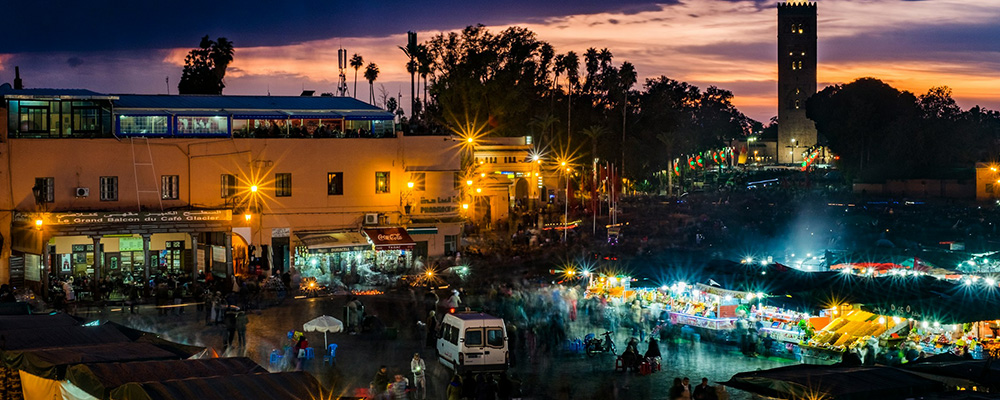
Finally, the Koutoubia Mosque rises before you — the crown jewel of Marrakech and one of the greatest achievements of Almohad architecture. Its 77-meter minaret dominates the skyline, guiding travelers from every direction. Built in the 12th century, it inspired later masterpieces such as the Giralda in Seville and the Hassan Tower in Rabat.
The name “Koutoubia” comes from the Arabic word for bookseller, as a book market once surrounded the mosque. Even today, the area retains a scholarly and spiritual aura. The gardens around the mosque, known as Lalla Hasna Park, provide a tranquil setting to rest and reflect on your journey. As you sit under the palm trees, listening to the call to prayer, you’ll feel the heartbeat of Marrakech — steady, timeless, and full of grace.
The Stories Behind the Stones
Every monument on this route tells a piece of a larger story. The Almohads built the Kasbah and Koutoubia as symbols of unity and faith. The Saadians added their royal tombs and palaces, expressing Morocco’s golden era of art and architecture. The locals, generation after generation, kept these places alive through everyday devotion. Walking this route is like reading a living book — one written in stone, wood, and human spirit.
Walking Through Time
The beauty of exploring Marrakech on foot lies in the rhythm of discovery. When you walk, you notice details easily missed from a car — the scent of jasmine, the sound of craftsmen working, the laughter of children echoing down an alley. A walking route from the Kasbah to the Koutoubia connects you not just with places but with time itself. It’s a journey through centuries compressed into a few unforgettable hours.
Photography and Memories
For travelers who love photography, this route offers endless inspiration. Morning light brings soft gold to the red walls of the Kasbah, while late afternoon creates long shadows around the Koutoubia. Markets burst with color, and doorways reveal geometric patterns of perfect symmetry. Yet beyond the visuals, what makes the experience special is emotion — the feeling of walking where history lives.
Tips for This Historical Walk
To make the most of your experience, wear comfortable shoes, carry water, and start early before the heat rises. Dress modestly to show respect for local culture, and always ask permission before photographing people. Traveling with a licensed guide ensures not only safety but also deeper understanding — you’ll learn meanings hidden behind symbols and stories passed down orally through generations.
Why Choose a Local Guide
A local guide like Rachid Boussalem doesn’t just lead the way — he brings Marrakech to life. His knowledge, experience, and relationships within the Medina open doors that remain closed to most visitors. You’ll be introduced to artisans, hear authentic stories, and discover places no map can show. With a guide, you move beyond sightseeing into connection — understanding how the past continues to shape the present.
A Route of Reflection
As your walk ends at the Koutoubia, take a moment to look back at where you started. From the Kasbah’s ancient walls to the mosque’s towering minaret, you’ve traced a path through the evolution of Marrakech — from royal power to spiritual grace. You’ve walked in the footsteps of sultans, scholars, and saints, and along the way, you’ve glimpsed the eternal spirit of Morocco.
Book Your Historical Walking Tour Today
This route is more than a sightseeing itinerary — it’s a passage through time. Feel the echoes of history under your feet, admire masterpieces of Islamic art, and meet the people who keep Marrakech’s traditions alive. Let your next journey be one that connects your heart to the city’s soul.
Book Now WhatsApp Morocco +212614905398