
Jemaa El-Fna Koutoubia Walk
Walking From Jemaa el-Fna to Koutoubia Mosque: Discover the Streets, Cafés and Hidden Corners of Marrakech
Walking from Jemaa el-Fna Square to the Koutoubia Mosque is one of the easiest and most rewarding ways to discover the centre of Marrakech. But the experience goes far beyond the short walk between these two famous landmarks. The surrounding streets connect historic cafés, traditional neighbourhoods, Rue des Princes, Riad Zitoun Lakdim, Riad Zitoun Jdid, Kennaria, Derb Dabachi and the entrance to the great souks. At Visit Marrakech Medina, The Best Shopping and Walking Tour Company in Marrakech, we have been guiding visitors through these streets since 2004. Our local guiding is recommended by Rick Steves, and our Medina walking tour was featured in The Rough Guide to Morocco. You can ask about a guided walk directly through WhatsApp or use our booking form. You can also discover our private Medina walking tour, Marrakech souks shopping tour and carpet and rug shopping tour.

Where Does the Walk From Jemaa el-Fna to Koutoubia Mosque Begin?
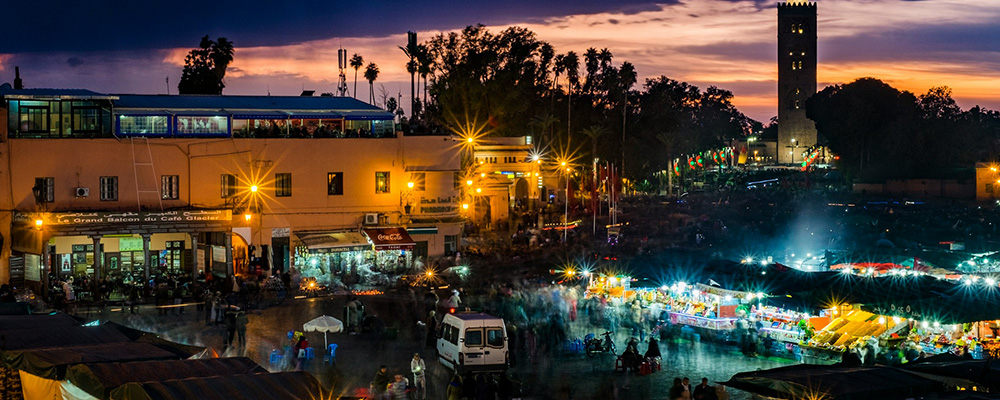
The natural starting point is Jemaa el-Fna, the central square of the old city. It is a meeting place, an open-air market, an entertainment area and one of the most recognisable public spaces in Morocco.
During the morning, the square gradually fills with orange juice sellers, small food stands, local traders, visitors and people going about their daily business. Later in the day, performers, musicians, storytellers and other traditional entertainers bring a different atmosphere. As evening approaches, food stalls appear and the square becomes one of the liveliest places in Marrakech.
Jemaa el-Fna is not simply a tourist attraction. It has been an important meeting and trading place for generations. Its oral traditions and cultural activities are recognised by UNESCO as part of the intangible cultural heritage of humanity.
To understand the square properly, it is worth exploring its different sides rather than remaining in the middle. The cafés, surrounding streets, entrances to the souks and neighbouring residential quarters each reveal another part of the Medina.
Read our detailed guide to things to do near Jemaa el-Fna and our article about the stories and local knowledge behind Marrakech.
The Cafés Around Jemaa el-Fna Square
One of the most enjoyable ways to understand the geography of Jemaa el-Fna is to visit its traditional café terraces. Several well-known cafés occupy different sides of the square, each offering its own view of the surrounding activity.
Café de France
Café de France is one of the best-known meeting points on Jemaa el-Fna. It stands near the corner of Rue des Banques and the square, close to the entrance of the main souk streets.
Its upper terrace offers a wide view across Jemaa el-Fna. From here, visitors can observe the movement of the square, the surrounding rooftops, the changing activity of the food stalls and the Koutoubia minaret rising above the city.
The café is also an excellent geographical reference. When you stand facing the square, you can understand the relationship between the main square, the eastern streets leading towards Kennaria and Derb Dabachi, and the northern entrances to the souks.
For many walking tours, Café de France is a convenient meeting point because it is easy to recognise and centrally located.
Café Glacier and Its Rooftop View
Café Glacier, particularly its well-known Grand Balcon terrace, is another familiar address around Jemaa el-Fna. It is situated close to the Derb Sidi Bouloukate side of the square.
Its elevated position makes it a popular place to observe the square from above. Visitors can watch the movement of people, the activity of the performers and the gradual transformation of Jemaa el-Fna throughout the afternoon and evening.
The terrace also provides a different perspective of the surrounding buildings and the open space of the square. It is especially interesting for visitors who want to photograph the atmosphere of Marrakech without constantly moving through the crowds.
Café Argana
Café Argana is another prominent café facing Jemaa el-Fna. Its position on the square makes it easy to recognise when exploring the surrounding terraces and buildings.
Like the other rooftop cafés, it is part of the everyday landscape of the square. The terraces offer visitors an opportunity to sit, observe the activity below and appreciate the relationship between the historic Medina and its busiest public space.
These cafés are useful landmarks when navigating the area. Rather than thinking of Jemaa el-Fna as one large open space, consider it as a central point surrounded by different streets, commercial entrances and neighbourhoods.
Rue des Banques, Rue de la Koutoubia and the Streets Around the Square
The streets around Jemaa el-Fna form several important connections. Some lead towards the Koutoubia Mosque, others towards the historic souks, while others continue south into the Riad Zitoun neighbourhood.
Rue des Banques is particularly important because it runs alongside the square and connects the area around Café de France with the eastern and southern parts of the Medina.
Rue de la Koutoubia leads visitors towards the mosque and its surrounding gardens. It is one of the most recognisable directions to follow when walking from the square towards the Koutoubia.
Other nearby streets include Rue Bani Marine and Rue des Princes. These streets have their own shops, cafés and local activity and help connect Jemaa el-Fna with the area around Bab Agnaou.
For visitors who want to understand how these streets fit into the wider historic city, our Marrakech neighbourhood guide explains the different quarters and their geographical relationships.
Rue des Princes and Café Mabrouka
Another interesting address close to Jemaa el-Fna is Café Mabrouka, located around Rue des Princes, in the area of Rue Bani Marine and Bab Agnaou.
Rue des Princes is a lively pedestrian street with shops, cafés and everyday commercial activity. It has a different atmosphere from the main tourist-facing shopping streets. Local residents, young people, visitors and shoppers all use this area.
Café Mabrouka is a familiar meeting place where people can sit and watch the movement along the street. It is an interesting stop for visitors who want to see another side of the neighbourhood around Jemaa el-Fna.
It is important to distinguish this central Café Mabrouka from Hay Mabrouka, a separate residential district elsewhere in Marrakech. Here, we are referring to the café near Bab Agnaou, within walking distance of the main square.
From this area, you can continue towards Bab Agnaou and the southern historic quarters, or return towards Jemaa el-Fna and explore the other streets around the square.
Riad Zitoun Lakdim: The Old Street of the Olive Gardens
South of Jemaa el-Fna, visitors can discover Riad Zitoun Lakdim, one of the historic streets connecting the central square with the southern Medina.
The name Riad Zitoun is traditionally associated with olive gardens. Lakdim means old, distinguishing this street from Riad Zitoun el Jdid, meaning new.
Riad Zitoun Lakdim has a different atmosphere from the large commercial souks north of Jemaa el-Fna. Its character comes from small traditional shops, workshops, local businesses, residential entrances and the daily activity of people living and working in the neighbourhood.
As you walk along the street, pay attention to the traditional doors, the narrow passages and the small commercial spaces. Some buildings conceal traditional riads behind simple exterior walls.
The street also offers connections to other southern Medina routes. Visitors interested in exploring further can continue towards the historic Mellah and the surrounding commercial streets.
To understand how the different quarters of Marrakech developed, read our Marrakech Medina Guide, which explains the geography, history, architecture, traditional markets and local crafts of the old city.
Riad Zitoun el Jdid: The New Olive Garden Street
Riad Zitoun el Jdid is another important historic street south of Jemaa el-Fna. Although its name resembles Riad Zitoun Lakdim, the two streets should not be confused.
Riad Zitoun el Jdid is particularly interesting because it connects the central Medina with some of Marrakech's most important historic monuments and traditional neighbourhoods.
Walking south along this street, visitors encounter traditional shops, small workshops, restaurants, riad entrances and buildings that reflect the architectural character of the old city.
One of the most important destinations in this direction is Bahia Palace, a remarkable nineteenth-century palace known for its courtyards, carved plaster, decorative cedar ceilings, zellige and gardens.
Nearby, visitors can also discover Dar Si Said, historically associated with Moroccan decorative arts and now known for its collections connected with weaving and carpets.
The streets around Riad Zitoun el Jdid eventually connect with the old Jewish quarter, known as the Mellah. This area has its own history, traditional markets, religious heritage and architectural characteristics.
For visitors interested in traditional jewellery and the historic commercial districts, our guide to Souk des Bijoutiers explains the location of the jewellery market near Place des Ferblantiers and the Mellah.
Kennaria and Derb Dabachi: The Eastern Side of Jemaa el-Fna
While Riad Zitoun extends south from the square, Kennaria and Derb Dabachi belong to the eastern side of the area around Jemaa el-Fna.
These streets are important because they connect the famous square with traditional residential neighbourhoods, local businesses, small food shops, riads and the wider Medina.
Kennaria
Kennaria is one of the well-known neighbourhood areas close to Jemaa el-Fna. Its streets are busy with local activity, small shops, traditional accommodation and restaurants.
Walking through Kennaria gives visitors an opportunity to see how the commercial and residential parts of the Medina exist alongside one another. A few steps away from the square, the atmosphere can change considerably, especially when you move away from the main tourist routes.
The name Kennaria has several explanations in local tradition. Some accounts associate it with the Amazigh word for prickly pear, while other interpretations connect it with plants and the agricultural history of the area.
These different explanations are part of the local stories that make Marrakech interesting. You can discover more in our article about Marrakech's unwritten history and local traditions.
Derb Dabachi
Derb Dabachi is one of the important streets and neighbourhood areas on the eastern side of Jemaa el-Fna. It is not simply one narrow passage but part of a wider network of traditional derbs.
The name is commonly associated with an administrative or military title from the Saadian period. The surrounding quarter contains smaller streets, local businesses, residential entrances and traditional commercial activity.
Walking through Derb Dabachi allows visitors to move away from the open square and discover a more intimate part of the Medina.
You can find traditional food businesses, small shops, workshops and entrances to residential riads. It is also a useful connection for continuing towards the northern souks and the older commercial heart of Marrakech.
For a detailed route beginning near Café de France and continuing towards the oldest parts of the Medina, see our Secret Loop Marrakech Medina Walk.
From Derb Dabachi Towards the Traditional Souks
One of the most interesting things about walking around Jemaa el-Fna is discovering how quickly the streets connect with the traditional souks.
North of the square, the commercial network becomes increasingly specialised. Instead of one large market, Marrakech has many smaller souks, streets and workshops historically associated with particular products and professions.
Some streets are mainly commercial, while others contain active workshops where artisans continue to work with traditional materials and techniques.
Visitors can explore these areas independently, but understanding the connections between the different souks makes the experience much more rewarding.
Souk Semmarine
Souk Semmarine is one of the principal commercial streets in Marrakech Medina. It begins close to Jemaa el-Fna and continues north towards the deeper shopping areas.
It is one of the busiest shopping streets in the city. Visitors find clothing, leather goods, textiles, traditional slippers, lamps, decorative objects and many other Moroccan products.
Souk Semmarine is also an important geographical reference because several smaller markets and specialised shopping streets branch away from it.
For visitors who have limited time, our one-hour Marrakech shopping route explains how to explore some of the principal shopping areas without unnecessary backtracking.
Rahba Kedima: The Traditional Spice Square
Rahba Kedima, also known as the old spice square, is one of the most recognisable open spaces inside the northern souks.
Unlike the narrow covered shopping streets, Rahba Kedima is an open square surrounded by shops and traditional sellers. Visitors will find spices, dried herbs, baskets, woven objects, traditional hats and various natural products.
The square has long been associated with commercial activity and traditional products. It is also an excellent place to observe the relationship between the different souks.
From Rahba Kedima, you can continue towards the rug markets, the metalworkers' streets and other specialised shopping areas.
Our detailed guide to the rug markets of Marrakech explains the traditional carpet-shopping areas around the Medina.
Souk Haddadine: The Blacksmiths and Metalworkers
Souk Haddadine is one of the most interesting traditional craft areas in Marrakech. The name refers to blacksmiths and metalworkers.
Here, visitors can discover metal workshops producing traditional objects, decorative ironwork, lamps, lanterns, gates and other metal products.
The sound of metal being worked, the movement of artisans and the sight of finished objects hanging outside the workshops make this area particularly interesting.
Some craftsmen continue to use traditional techniques, while others combine older skills with more modern tools and designs.
For a closer look at the people behind the traditional trades, read The Last Artisans of the Marrakech Medina and our guide to the hidden souks most tourists miss.
Souk El Attarine: Spices, Perfumes and Traditional Products
Souk El Attarine is historically associated with perfumers, spices, herbal products and traditional commercial activities.
Visitors can discover the colourful displays of spices, aromatic products, traditional cosmetics and decorative objects. The surrounding streets also contain shops selling lamps, metal products and other Moroccan crafts.
Traditional herbal knowledge has long been part of commercial life in Marrakech. Products such as black soap, rose water, natural oils and aromatic herbs remain familiar features of the Medina.
Souk Smata: Traditional Moroccan Babouches
Souk Smata is particularly associated with Moroccan babouches, the traditional leather slippers worn by men and women.
Different styles, colours, materials and decorative details can be found throughout the area. Some slippers are simple everyday footwear, while others are more elaborate and intended for special occasions.
Understanding the differences between handmade products and mass-produced merchandise is useful when exploring this part of the souks.
Souk Chouari: Woodworking and Traditional Crafts
Souk Chouari is associated with woodworking, carpentry and traditional wooden objects.
Here, visitors can discover carved pieces, decorative wooden objects, small furniture and products made using traditional woodworking skills.
Woodworking is closely connected with other Moroccan crafts, including the decoration of doors, ceilings, furniture and traditional interiors.
The Dyers' Souk
The traditional dyers' area is another interesting part of the Medina's craft network.
Dyed wool and textiles are associated with the production of Moroccan carpets, clothing and other traditional products. The colours used in these crafts are an important part of the visual identity of Marrakech.
When artisans are working, visitors may see the preparation of materials, the colouring process and the different stages involved in textile production.
Our articles about the essential Marrakech souks and the less familiar craft markets explain how these specialised areas connect.
Walking From Jemaa el-Fna to Koutoubia Mosque
After discovering the streets and cafés around the square, it is time to walk towards one of the most important monuments in Marrakech: the Koutoubia Mosque.
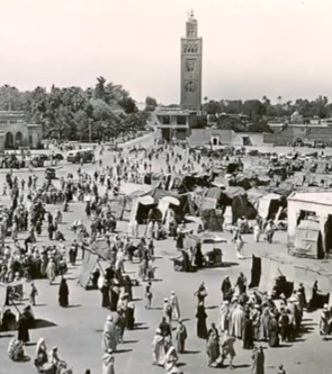
The mosque stands southwest of Jemaa el-Fna and is easily recognisable by its impressive minaret. It is one of the defining landmarks of the city and can be seen from many different parts of the Medina.
From the square, follow the western side towards Rue de la Koutoubia and the open area surrounding the mosque. The walk is short, although visitors who stop for photographs, cafés and the surrounding gardens will naturally spend longer exploring the area.
The History of Koutoubia Mosque
The Koutoubia Mosque dates from the twelfth century and was developed during the Almohad dynasty.
Its name is commonly connected with the Arabic word for booksellers, reflecting the historical association of the area with book traders.
The mosque became one of the most important religious and architectural landmarks in Marrakech. Its minaret, approximately 77 metres high, is one of the most recognisable examples of Almohad architecture in Morocco.
The minaret is not only an architectural monument. For centuries, it has served as an important visual reference for people moving around the city.
The Koutoubia Minaret
The minaret is the main feature visitors notice when approaching the mosque.
Its proportions, decorative details and architectural design make it one of the finest historic towers in Morocco. The structure combines geometric decoration, carved details and traditional architectural elements characteristic of the Almohad period.
At the top are the familiar spherical ornaments that have become part of the visual identity of the Koutoubia. Several traditional stories are associated with these golden spheres, making them a subject of local legends.
One particularly interesting detail is the relationship between the Koutoubia and the Giralda in Seville. The Almohad minaret tradition influenced later architectural developments in the western Islamic world.
The First Koutoubia Mosque and Its Ruins
Another interesting feature of the Koutoubia complex is the presence of archaeological remains associated with the earlier mosque.
The first construction was replaced by the present mosque during the Almohad period. The remains beside the existing building provide an opportunity to understand how the religious complex developed.
These ruins are particularly interesting for visitors who want to understand the historical development of Marrakech rather than simply photograph the famous minaret.
The Koutoubia Gardens
After admiring the mosque, take time to explore the surrounding gardens.
The Koutoubia gardens provide a peaceful contrast to the busy activity of Jemaa el-Fna. Their pathways, trees, flowers and open spaces make them a pleasant place to walk and relax.
From different points in the gardens, visitors can admire the minaret from several angles. The gardens are also a popular place for photographs, particularly when the light changes towards the end of the afternoon.
The prayer hall is generally not open to non-Muslim visitors, but the exterior architecture and gardens offer plenty of opportunities to appreciate the monument.
For more historical context about the monuments and dynasties of Marrakech, see our historical guided tours of Marrakech Medina.
How the Koutoubia, Jemaa el-Fna and the Souks Connect
One of the most interesting aspects of this part of Marrakech is the way different areas meet around the same central point.
Jemaa el-Fna is the main public square. The Koutoubia stands southwest of it. The main souks extend north, while Kennaria and Derb Dabachi occupy important parts of the eastern side. Riad Zitoun Lakdim and Riad Zitoun el Jdid extend south towards the Mellah and the historic palaces.
This means that visitors can explore several different environments within a relatively small geographical area.
- West and southwest: Koutoubia Mosque, its minaret, gardens and surrounding open spaces.
- North: Souk Semmarine, Rahba Kedima and the traditional craft markets.
- East: Kennaria, Derb Dabachi and connections towards the deeper Medina.
- South and southeast: Riad Zitoun Lakdim, Riad Zitoun el Jdid, the Mellah and Bahia Palace.
- Near the square: Café de France, Café Glacier, Café Argana and the streets around Rue des Princes and Rue Bani Marine.
Understanding these directions makes it easier to plan a visit and avoid treating each attraction as an isolated destination.
Our guide to navigating the Marrakech souks provides additional advice for exploring the streets and passages of the old city.
Can You Explore This Area on Your Own?
Yes. The main streets around Jemaa el-Fna and the Koutoubia are accessible on foot, and visitors can comfortably explore the square, the cafés, the mosque gardens and the principal commercial streets independently.
However, the Medina becomes more complicated when you move away from the main routes. Smaller derbs change direction, streets divide into narrow passages and the names of different areas are not always obvious to first-time visitors.
This is particularly true around Kennaria, Derb Dabachi and the traditional souks. Knowing which passage leads to which neighbourhood can save considerable time.
A local guide can also explain the historical importance of the streets, the organisation of the souks, the traditional trades and the everyday life of the neighbourhoods.
For visitors who want to discover more than the main monuments, our deep-dive Medina walking experience explores traditional streets, artisans, workshops and neighbourhood life.
You can also read our guide to an authentic Marrakech walking route and our best walking routes between the souks and palaces.
When Is the Best Time to Walk Around Jemaa el-Fna and Koutoubia?
The area can be visited throughout the day, but the atmosphere changes considerably depending on the time.
Morning: The square is generally calmer, making it a good time to observe the architecture, visit the Koutoubia gardens and explore the streets before the busiest shopping hours.
Midday and afternoon: The surrounding cafés, commercial streets and souks become increasingly active. This is a good time to discover the different shopping areas and observe everyday life in the Medina.
Late afternoon: The light becomes particularly attractive around the Koutoubia minaret and the rooftops surrounding Jemaa el-Fna.
Evening: The square becomes a lively gathering place, with food stalls, musicians, storytellers and visitors from around the world.
Before planning a shopping visit, consult our guide to the main shopping route and check the practical information about prices in the Marrakech souks.
Discover More of Marrakech Medina Beyond the Main Square
The walk between Jemaa el-Fna and Koutoubia Mosque is an excellent introduction to the old city, but it is only a small part of what the Medina offers.
Visitors who have more time can continue towards the Mellah, Bahia Palace, the Saadian Tombs, the northern artisan districts, the historic fountains and the traditional residential neighbourhoods.
Each area has its own character. The souks are associated with commerce and craftsmanship, while the quieter derbs reveal the residential structure of the old city. The palaces and historic monuments provide another perspective on the dynasties that shaped Marrakech.
To discover more places and experiences, explore our complete local guide to things to do in Marrakech and our full-day walking itinerary.
For a broader introduction to the city's history, traditional streets, monuments and commercial areas, return to our Marrakech Medina Guide.
Explore Jemaa el-Fna, Koutoubia and the Real Medina with a Local Guide
At first sight, the area around Jemaa el-Fna and Koutoubia Mosque may seem easy to understand. The square is visible, the minaret rises above the rooftops and the main streets appear to connect everything.
But the real character of Marrakech is found in the connections between these famous places: the small streets, the traditional neighbourhoods, the workshops, the cafés, the local markets and the historic passages that visitors often overlook.
Visit Marrakech Medina specialises in authentic walking and shopping experiences through the old city. We help visitors discover the traditional souks, hidden streets, family workshops, local artisans and historic neighbourhoods without pressure to buy anything.
If you would like to discover the area with a knowledgeable local guide, explore our private Marrakech Medina walking tour. If shopping is part of your visit, you can also discover our souks shopping tour, carpet and rug shopping tour or luxury shopping experience.
We also welcome visitors interested in joining our Marrakech group tours. If you are arriving soon, see which tours are available this week, or browse our complete range of authentic Marrakech tours.
Discover our full range of authentic Marrakech tours on our homepage.
For questions or to arrange your visit, contact us directly on WhatsApp or complete our booking form. You do not need to pay anything upfront. We look forward to showing you the real Marrakech Medina.