
Marrakech in a Day: Ultimate Self-Guided Walking Tour of the Medina
.png)
Discover Marrakech in one day with this self-guided walking tour of the historic Medina.
Follow a route through the famous Jemaa el-Fna Square, the Koutoubia Mosque, historic palaces, the old Mellah and the traditional souks. If you would prefer to explore with a local guide, discover our private Marrakech Medina walking tour or explore our Marrakech souks and shopping tour. You can also discover all our Marrakech tours. For information or to arrange a tour, contact us directly on WhatsApp or use our booking form. Our local Medina walking experience has also been featured in The Rough Guide to Morocco.
Marrakech in a Day: A Self-Guided Walking Tour of the Medina
Marrakech is a city best discovered on foot. Behind its historic walls, the Medina is a living network of narrow streets, traditional markets, old neighbourhoods, workshops, mosques and beautiful courtyards. Every turn reveals another part of the city's history and everyday life.
If you have only one day in Marrakech, a well-planned walking route can help you experience many of its most important sights. This itinerary combines famous landmarks with traditional souks and neighbourhoods, giving you a practical introduction to the old city.
Allow approximately seven to nine hours if you want to visit the main monuments, explore the souks, stop for lunch and enjoy the atmosphere without rushing. The exact time depends on how long you spend inside each attraction and whether you choose to visit every site.
Before You Start: How to Organise Your Day
Start your walk in the morning, when the streets are generally quieter and the temperature is more comfortable. Wear comfortable walking shoes, carry drinking water and keep some Moroccan dirhams in small denominations.
Marrakech's Medina is a working neighbourhood, not simply an open-air museum. People live and work in its streets, and many of the small workshops and shops follow their own daily routines. Some attractions have different opening times, particularly during religious holidays, so check their current visitor information before setting out.
The route below is a suggested itinerary rather than a fixed guided route. You can shorten it by skipping one or two monuments or spend longer in the souks if traditional crafts and shopping interest you most.
1. Start at Jemaa el-Fna Square
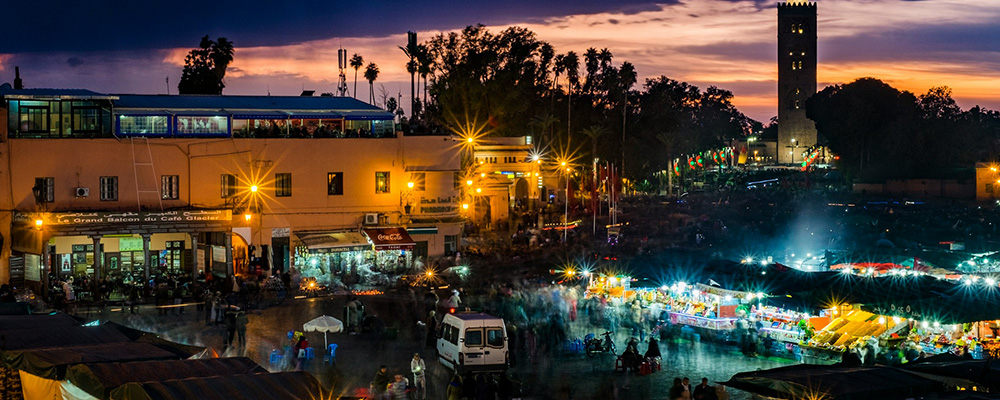
Jemaa el-Fna is the natural starting point for a first visit to Marrakech. Located at the heart of the Medina, this famous square has been a meeting place for residents, traders, storytellers and visitors for generations.
In the morning, the atmosphere is usually more relaxed. You will find juice stalls, small food vendors and people crossing the square as they go about their day. Later in the afternoon and evening, the square becomes much busier, with food stalls, musicians, performers and storytellers creating a lively scene.
What to see and do
- Walk around the square and observe the different activities.
- Look towards the surrounding rooftops to appreciate the traditional architecture of the Medina.
- Stop for a fresh orange juice or a Moroccan breakfast.
- Notice how the atmosphere changes from morning to evening.
Take your time here, but remember that the square is only the beginning of your day. You will return to this area later if you follow the suggested route.
2. Visit the Koutoubia Mosque and Gardens
From Jemaa el-Fna, walk towards the Koutoubia Mosque, one of the most recognisable landmarks in Marrakech. Its impressive minaret dates from the Almohad period and has become one of the defining features of the city's skyline.
The mosque is an important place of worship, and entry to the prayer hall is generally reserved for Muslims. Visitors can admire the exterior architecture and enjoy the surrounding gardens and pathways.
What to see and do
- Admire the tall minaret and its architectural details.
- Walk through the gardens surrounding the mosque.
- Take photographs from the public areas around the monument.
- Enjoy a short break before continuing towards the historic southern part of the Medina.
The Koutoubia is particularly impressive when viewed from the gardens, where you can appreciate its proportions and its relationship with the surrounding city.
3. Explore the Saadian Tombs
Continue towards the Kasbah district to visit the Saadian Tombs, one of Marrakech's important historic monuments. The tombs are associated with the Saadian dynasty, which ruled Morocco during the sixteenth and seventeenth centuries.
The complex is known for its decorated chambers, carved plasterwork, marble columns and detailed zellige tilework. It offers a different experience from the busy streets outside, with a quieter atmosphere and an opportunity to appreciate traditional Moroccan craftsmanship.
What to see and do
- Look closely at the colourful geometric tilework.
- Admire the carved details and decorative features.
- Learn about the Saadian dynasty and its place in Moroccan history.
- Allow time for queues and visitor arrangements, particularly during busy periods.
Check the current visiting arrangements before your visit, as opening times and admission conditions can change.
4. Discover Bahia Palace
From the Kasbah area, continue towards Bahia Palace, one of the best-known historic residences in Marrakech. Built during the nineteenth century, the palace was designed to showcase refined Moroccan architecture and decorative craftsmanship.
Its rooms, courtyards and gardens feature painted ceilings, carved cedarwood, traditional plasterwork and colourful zellige mosaics. The name Bahia is often translated as brilliance or beauty, and the palace gives visitors a good impression of the artistic detail found in traditional Moroccan buildings.
What to see and do
- Explore the courtyards and their decorative tilework.
- Look at the carved wooden doors and ceilings.
- Notice the combination of Moroccan architectural elements throughout the palace.
- Take your time in the gardens and shaded areas.
Bahia Palace can become busy, especially during the middle of the day. If you want to visit the interior, allow enough time for queues and the visitor route.
5. Walk Through the Mellah and Place des Ferblantiers
After Bahia Palace, explore the nearby Mellah, the historic Jewish quarter of Marrakech. This neighbourhood has its own character, with narrow streets, traditional houses, local shops and markets.
The Mellah is an important part of the city's history and reflects the long-standing presence of different communities in Marrakech. As you walk through the area, you can observe the architecture and everyday activities that make this part of the Medina distinctive.
Continue towards Place des Ferblantiers, traditionally associated with metalworkers and craftsmen. The square and its surrounding streets offer an opportunity to see local trade and traditional work in a more everyday setting.
What to see and do
- Explore the streets of the old Mellah.
- Look for traditional shops and local market activity.
- Visit Place des Ferblantiers and observe the metalwork around the square.
- Take a break at a nearby café before continuing towards the souks.
6. Explore the Traditional Souks of Marrakech
No visit to Marrakech is complete without exploring its traditional souks. These markets form a large network of streets and small commercial areas in the heart of the Medina. Each area has its own history, trades and specialities.
Rather than being one single market, the souks are made up of different sections where you can find metalworkers, leather goods, textiles, spices, pottery, carpets, lamps, traditional clothing and many other products.
Souk Semmarine
Souk Semmarine is one of the main commercial streets of the Medina. It is a useful starting point for exploring the markets and discovering the variety of goods sold in the traditional souks.
As you walk through, look beyond the shop displays. You will notice the changing architecture, covered passages, small side streets and the movement of local traders and residents.
Souk Haddadine: The Metalworkers' Souk
Souk Haddadine is traditionally associated with metalworkers. Here you can find artisans working with metal to create lanterns, decorative objects and other products.
When workshops are active, you may hear the sound of hammering and see craftsmen shaping and finishing their work. This is one of the most interesting ways to understand the traditional trades that continue to form part of Medina life.
Souk Ableuh: Olives and Local Produce
Souk Ableuh is known for its food stalls and displays of olives, preserved products and other local specialities. The colours and aromas make this part of the market particularly enjoyable to explore.
Take a moment to observe the different varieties of olives and preserved vegetables that are part of everyday Moroccan food culture.
Souk Zrabi and the Carpet Market
The carpet and rug market is another interesting part of the souks. Traditional Moroccan carpets vary by region, weaving technique, materials, colours and patterns. Some are made by hand using techniques passed down through generations.
If you are interested in learning more about Moroccan rugs, their designs and how to recognise different styles, see our Marrakech carpets and rug shopping tour.
Rahba Kedima: The Spice Square
Rahba Kedima is a historic square surrounded by shops selling spices, baskets, natural products and traditional goods. It is a good place to pause and enjoy the atmosphere of the Medina.
Look at the colourful displays of spices and the traditional products arranged around the square. You can also find cafés nearby where you can rest and enjoy a drink.
Tips for Exploring the Souks
- Wear comfortable shoes because the streets are uneven in places.
- Take your time and explore the smaller side streets as well as the main market routes.
- If you are shopping, ask questions about the materials, origin and production of an item.
- Agree on a price before purchasing when prices are not displayed.
- Be respectful when photographing artisans or their workshops and ask permission first.
The souks are a living part of Marrakech. Some workshops are more active in the morning and during the working week, while Friday prayer times and local holidays can affect business hours.
If shopping is an important part of your visit, you can find more information about our guided Marrakech shopping tour and our luxury shopping experience.
7. Visit Ben Youssef Madrasa
Continue towards the northern part of the Medina to reach Ben Youssef Madrasa, one of Marrakech's most remarkable examples of traditional Islamic architecture.
For centuries, the madrasa served as a centre of religious learning. Today, visitors come to admire its courtyard, carved cedarwood, decorated plasterwork and intricate zellige tilework.
What to see and do
- Spend time in the central courtyard.
- Admire the detailed geometric patterns and carved decoration.
- Look at the traditional architectural features throughout the building.
- Learn about the history of education and religious scholarship in Marrakech.
Allow enough time to appreciate the details rather than simply walking through the building. Check the current opening hours and admission information before visiting.
8. Finish at Maison de la Photographie
If you still have time and energy, continue to Maison de la Photographie, a cultural space dedicated to historical photography of Morocco.
The collection offers a different perspective on the country, with photographs showing Moroccan people, landscapes, architecture and everyday life from earlier periods.
The rooftop terrace is also a pleasant place to pause and enjoy views across the Medina, depending on the current visitor arrangements.
What to see and do
- Explore the historical photographic collection.
- Discover images documenting Moroccan life and landscapes.
- Enjoy the different perspective on Marrakech's history.
- Take a break if the rooftop area is open to visitors.
Check the museum's current opening arrangements before making it your final stop.
Optional Visit: Dar Si Said Museum
If you have additional time, you may also consider visiting Dar Si Said, a historic building associated with Moroccan decorative arts and craftsmanship. Its collections have included traditional woodwork, carpets, textiles and other objects.
Museum arrangements and access can change, so confirm that it is open to visitors before adding it to your itinerary. If you are short on time, you may prefer to enjoy the souks and the other monuments rather than trying to fit in another museum.
Suggested One-Day Walking Route
For a practical day in Marrakech, you can organise the itinerary in the following order:
- Jemaa el-Fna Square
- Koutoubia Mosque and Gardens
- Saadian Tombs
- Bahia Palace
- Mellah and Place des Ferblantiers
- Traditional souks, including Souk Semmarine, Souk Haddadine, Souk Ableuh and Rahba Kedima
- Ben Youssef Madrasa
- Maison de la Photographie, if time allows
This is a full day of walking, and you may want to adjust the order depending on monument opening times, the weather and your interests. Allow time for lunch, refreshments and breaks. You do not need to visit every attraction to enjoy Marrakech.
Practical Tips for a Self-Guided Walk in Marrakech
Start Early
Beginning in the morning gives you more time to explore and can make walking more comfortable, especially during warmer months. It also gives you a better chance of seeing some workshops while artisans are working.
Check Monument Opening Times
Historic attractions and museums can have different opening hours, admission arrangements and occasional closures. Check the latest information before setting out, especially if you are visiting during a public holiday or religious period.
Take Breaks
The Medina can be busy and lively. Stop for a Moroccan mint tea, enjoy lunch in a traditional restaurant or take a short rest in one of the squares. A relaxed pace will make the day more enjoyable.
Respect Local Customs
Marrakech is a living city with active religious, residential and commercial areas. Dress comfortably and respectfully, ask permission before photographing people and be considerate around places of worship and working spaces.
Keep Your Route Flexible
The Medina is a historic network of streets, and the most interesting discoveries are not always on the main route. Give yourself time to explore, but keep track of your main landmarks so you can return to your planned itinerary.
Is It Better to Explore Marrakech Alone or With a Local Guide?
A self-guided walk gives you freedom to choose your own pace, spend longer at the places that interest you and decide when to stop. It can be a good option if you enjoy independent exploration and have enough time to find your way around.
However, the Medina is much more than a collection of monuments and shops. Its history, traditional trades, small workshops, local neighbourhoods and hidden streets are easier to understand when someone who knows the area explains what you are seeing.
A local guide can also help you organise the route, understand the history behind the buildings, discover traditional workshops and make better use of your time. This can be particularly useful if you have only one day in Marrakech.
At Visit Marrakech Medina, our local guiding experience goes back to 2004. We focus on authentic Medina life, traditional souks, local craftsmanship and the history of Marrakech. Our aim is to help visitors discover the city without pressure or forced shopping.
If you would like to explore with a guide, discover our private Medina walking tour or see our complete range of Marrakech tours.
Frequently Asked Questions About Visiting Marrakech in One Day
Can you see Marrakech in one day?
Yes. One day is enough to visit several of the main attractions in the Medina and explore some of the traditional souks. However, you will need to plan your route and accept that you cannot see everything in a single day. If you have more time, two or three days will allow you to explore at a more relaxed pace.
How long does this self-guided walking tour take?
Allow approximately seven to nine hours for the full itinerary, including monument visits, souk exploration, lunch and breaks. You can shorten the route by choosing fewer attractions.
Is Marrakech Medina easy to explore on foot?
The main attractions are within walking distance of one another, but the Medina has many narrow streets and small passages. It is helpful to have a map and keep track of familiar landmarks. A local guide can make navigation easier and explain the history and daily life of the neighbourhoods.
What should I wear for a day of walking in Marrakech?
Wear comfortable walking shoes and light, breathable clothing suitable for the season. Respectful clothing is recommended, particularly when passing through residential areas and near religious buildings.
Are the souks open every day?
Many shops and workshops operate throughout the week, but opening times vary. Friday prayer times, religious holidays and individual business schedules can affect activity. Some artisan workshops may be quieter or closed at certain times.
For more detailed information, read our complete local guide to Marrakech souk opening and closing times.
Can I visit the palaces and museums on the same day?
It is possible to combine several attractions in one day, but you should check current opening times and allow for queues. If you want to explore the souks properly as well, you may need to choose which monuments are most important to you.
Is a guided walking tour worth it if I only have one day?
A guided walk can help you understand the Medina, discover traditional crafts and make better use of limited time. It is especially useful if you want to learn about the city's history and see parts of the souks that you might otherwise pass without noticing.
Discover More of Marrakech with Visit Marrakech Medina
A day in Marrakech can introduce you to the city's most famous landmarks, but the real character of the Medina is also found in its smaller streets, traditional workshops, markets and everyday neighbourhoods.
Whether you choose to explore independently or with a local guide, take your time and enjoy the experience. If you would like help discovering the authentic Medina, our local guiding team has been welcoming visitors since 2004.
Explore our private Marrakech walking tour, discover the traditional souks and shopping tour, or browse all our Marrakech tours.
There is no need to pay upfront for your tour. Contact us to discuss your plans and arrange your visit.
Contact us on WhatsApp or send your request through our booking form.