
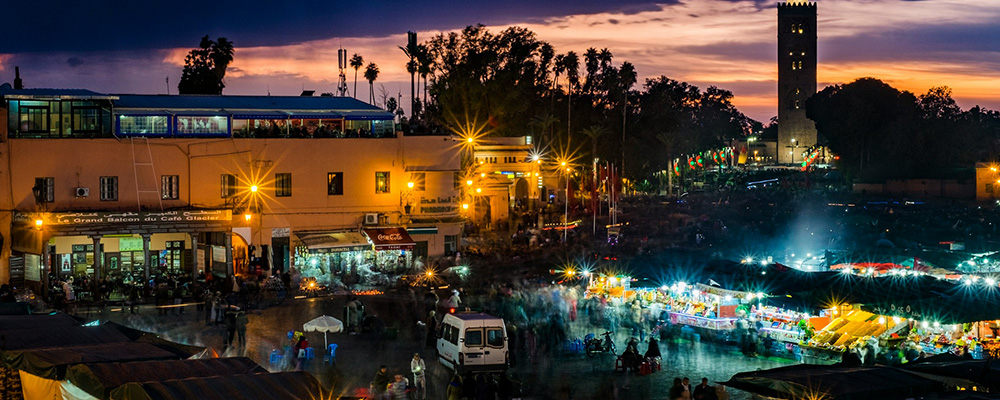
Souk Semmarine
.jpeg)
Souk Semmarine Marrakech: Complete Guide to the Medina's Main Souk
If the Marrakech Medina were a body, Jemaa el-Fnaa would be the loud, slightly chaotic mouth, and Souk Semmarine would be the main artery pumping everyone (and every rug seller's best smile) north into the heart of the souks. Almost every visitor walks it. Very few actually understand it. Most people stroll in, get offered a lamp, a carpet and a glass of mint tea within three minutes, then walk back out wondering where the "real" souks were.
This guide fixes that. It is written from years of guiding travelers through these exact lanes, so you get the practical side: where Souk Semmarine starts, how to use it to explore the souks, what to buy, what to pay, when to go, and where the interesting stuff really begins.
Want a local to show you Souk Semmarine?
Visit Marrakech Medina runs:
All with independent local guides. We can pick you up at your hotel or riad, and for last minute plans, a guide can meet you in the Medina within an hour. Message us on WhatsApp to book.
What Is Souk Semmarine?
Souk Semmarine is the main covered shopping street of the Marrakech Medina. It runs north from Jemaa el-Fnaa and acts as the spine of the whole souk network: dozens of smaller, specialized souks branch off it, each dedicated to a craft such as leather, rugs, spices, metalwork or dyed wool.
It is a real, clearly identified place, not just a label used by travel websites. Souk Semmarine appears on Google Maps and Tripadvisor as a traditional market and tourist attraction (address: Souk Semmarine, Marrakech 40000), and the major travel guides, from Time Out to Rough Guides, describe it the same way: the main artery of the Marrakech souks. You will also see it called Souk Semmarine Market, Semmarine Souk or Rue Semmarine.
The name is usually translated as "the market of the farriers" (the horseshoe makers who once worked near the city's busy streets), although some historians translate it as "the brokers' souk". Historically a fabric and wool market, Semmarine now sells a bit of everything, and it is often described as the largest and most famous souk in Morocco.
The best way to think about it: Souk Semmarine is not the whole souk experience, it is the starting point. Once you understand how it connects to the souks around it, the Medina suddenly makes sense.
You may also see the name spelled Souk Smarine, Souk Semarine or Souk Sammarine. They all refer to the same street.
Where Is Souk Semmarine?
Souk Semmarine sits in the heart of the Medina, just a few steps north of Jemaa el-Fnaa.
• Start: from the northeast side of Jemaa el-Fnaa, you enter through the lane known as Souk Kchachbia (also spelled Qassabine or Kassabine). Semmarine begins where this lane meets the covered street heading north.
• Direction: it runs north, toward the Ben Youssef Madrasa, about 15 minutes away on foot if you do not stop (good luck with that).
• End: at its northern end, Semmarine becomes Souk Nejjarine, then splits in two. The left branch leads to Souk el Attarine (spices, perfumes, metalwork). The right branch becomes Souk el Kebir (leather goods), which continues toward Ben Youssef.
• Next door: Rahba Kedima, the small open square known as the Spice Square, opens off its east side.
Souk Semmarine Map: How to Use It to Explore the Marrakech Souks
The easiest way to picture the souks is as a tree. Jemaa el-Fnaa is the base, Souk Semmarine is the trunk, and the specialized souks are the branches. Here is a simple route that uses Semmarine the way locals do:
1. Start at Jemaa el-Fnaa. Enter the souks from the northeast side of the square and follow the lane until you reach the covered street of Souk Semmarine.
2. Walk north along Semmarine. Take your time: clothing, antiques, jewelry, lanterns and babouches. This is the window display of the souks.
3. Detour right into Rahba Kedima. The open Spice Square sits off the east side of Semmarine, with spices, apothecaries and baskets, and the carpet souk just behind it.
4. Come back to Semmarine and continue north. The street becomes Souk Nejjarine and reaches a fork.
5. At the fork, choose your branch. Left is Souk el Attarine, toward spices, perfumes, metalwork and the Dyers' Souk. Right is Souk el Kebir, toward leather, Souk Cherratin and eventually the Ben Youssef Madrasa.
Lost? Use Semmarine as your lifeline. Find the main covered street, walk south, and you will come out at Jemaa el-Fnaa.
Open Souk Semmarine on Google Maps. Tip: save it offline before you go. GPS works in the souks, but the signal can jump around under the covered roofs.
This is the difference between walking down Semmarine and turning around, and actually exploring the souks of Marrakech. It is also the route our Marrakech Souk Shopping Tour is built around.
Insider Tips for Souk Semmarine from a Local Guide
After years of walking these lanes with travelers, these are the tips we find make the biggest difference:
• Look first, buy on the way back. Use your first walk up Semmarine to compare. Prices and quality become much clearer once you have seen the same item in five shops.
• The best shops often do not shout. The shopkeepers calling loudest at the entrance are rarely the ones with the finest pieces. The quiet shops, where someone is working or sitting with tea, are often the interesting ones.
• Go early for the first sale. Many traders believe the first sale of the day brings good luck, so the morning can be a good moment to negotiate.
• Ask to see the workshop. In the side souks, many sellers are also the makers, or know who made the piece. Asking how it was made tells you a lot about its quality.
• Look up. The striped light from the roof, the old wooden doors and the carved entrances above the shops are easy to miss when you are watching the lanterns.
• Do not show love at first sight. If you fall for something, stay calm. Excitement is the most expensive thing you can bring into a negotiation.
• Keep Semmarine as your compass. Wander into the side souks freely: as long as you know how to find the main covered street again, you can always walk south back to the square.
Common Mistakes Visitors Make on Souk Semmarine
• Walking only the main street and turning back. The real souk starts where Semmarine ends.
• Buying in the first ten minutes. The first lantern you see is almost never the best one.
• Following "friendly helpers". Someone offering directions for free usually expects a commission or a tip later.
• Going at noon in summer. Crowded, hot and the least relaxed time of the day.
• Carrying only big notes. It slows everything down and weakens your bargaining.
• Feeling obliged after tea. Hospitality is part of the culture, not a contract.
• Agreeing on a rug before agreeing on shipping. Always settle the total cost, delivery included.
• Rushing a big purchase. It is completely normal to say you will think about it and come back.
The History and Character of Souk Semmarine
Marrakech was founded by the Almoravids in the 11th century, and trade around Jemaa el-Fnaa is as old as the city itself. Traders from the desert and the Atlas Mountains came here to sell their goods, and the souks grew around the square.
According to UNESCO, Marrakech was founded in 1070 to 1072 by the Almoravids and became a major political, economic and cultural center whose influence reached from North Africa to Andalusia. The Medina, souks included, has been a UNESCO World Heritage Site since 1985. UNESCO describes its 700 hectares as an outstanding example of a living historic town, with its tangle of lanes, souks, fondouks (old merchant inns), artisan workshops and traditional trades. In other words, when you walk Souk Semmarine, you are not visiting a museum: you are walking through a working market that has been trading for nearly a thousand years.
The souks were traditionally organized by trade, with each street named after the craft practiced there. That structure still survives today, even if souvenirs have crept into almost every corner.
A few details that give Semmarine its character:
• The roof: the street is covered by a slatted roof, originally made of cane and later replaced with iron to reduce the risk of fire. On a sunny day, it throws stripes of light all over the street.
• The gates: there are gates at each end of the souk that can be closed at night. Nobody lives in the souks; they empty out every evening.
• The shops: alongside souvenir stands, Semmarine has some of the more upmarket shops of the souks, specializing in antiques, jewelry and fine clothing.
• Rahba Kedima: the square next door once hosted weekly auctions of wool, carpets and, until around 1920, enslaved people. Today it is full of spice stalls, apothecaries and basket weavers.
What Is Souk Semmarine Like?
By Medina standards, Semmarine is wide, busy and fast. Expect:
• Movement: a constant flow of visitors, locals cutting through, handcarts and the occasional motorbike. When you hear "balak!", it means "watch out", so step aside.
• Shopkeepers calling out: friendly invitations to "just look", in English, French, Spanish, Italian and whatever language they guess you speak.
• Color everywhere: lanterns hanging from ceilings, babouches stacked in pyramids, kaftans on display, rugs folded at shop entrances.
• Mostly retail: this is the important part. Semmarine itself is mainly a shopping street. The workshops, the dyers, the blacksmiths and the craftsmen are in the side souks. Walking Semmarine and turning back means seeing the shop window, not the house.
Walking Souk Semmarine Section by Section
Souk Semmarine changes as you walk north, so it helps to know what is coming:
• The southern entrance: the street opens with patisseries and pottery. This is where Marrakchis stop for Moroccan pastries, and where you will smell almond and honey before you see any lanterns.
• The middle stretch: the shops move upmarket, with fine fabrics, traditional clothing, jewelry and antiques. This is the best part of Semmarine for kaftans and textiles.
• The northern end: the street becomes Souk Nejjarine and forks toward Souk el Attarine and Souk el Kebir. From here, the specialized souks begin, and the craftsmanship really starts.
Around Souk el Kebir, look for the kissarias, covered side markets selling clothing and fabrics, a favorite with local shoppers.
What Can You Buy in Souk Semmarine?
Practically everything Marrakech is known for. Here is what to look for, and where it is often better to look.
Rugs and Carpets
You will see plenty of rugs in Souk Semmarine itself, but serious rug shopping happens in the carpet souk (Souk des Tapis, also called the Criee Berbere), just off Rahba Kedima. Common styles include Beni Ourain (thick cream wool), Azilal (colorful and soft), kilims (flat woven) and boucherouite (recycled fabric rugs).
Quality varies a lot. Wool vs. synthetic, knot density, natural vs. chemical dyes, handmade vs. machine made: all of this changes the price enormously. If a rug is a serious purchase for you, our Marrakech Rug Shopping Tour is built exactly for that.
How to Spot a Real Handmade Moroccan Rug
• Flip it over. On a handmade rug, the pattern shows clearly on the back, with visible knots or weave. A plain or latex-covered back usually means machine made.
• Look for small irregularities. Slightly uneven knots and tiny variations in the pattern are a good sign: they mean human hands.
• Feel the wool. Good wool feels soft, springy and slightly oily from natural lanolin. Stiff, shiny or plastic-like fibers are a warning sign.
• Do the tissue test. Rub a damp white tissue on the colors. If dye comes off easily, the colors may run when the rug is cleaned.
• Ask where it comes from. A serious seller can tell you the region, the weaving tradition and roughly how old the rug is.
• The burn test: some sellers will burn a loose fiber to prove it is wool. Real wool chars and smells like burnt hair; synthetic melts. Only do this if the seller offers.
Leather and Babouches
Leather bags, belts, jackets, poufs and wallets are everywhere, but the biggest concentration is in Souk el Kebir and the neighboring Souk Cherratin. Babouches (traditional slippers) have their own souk just off Semmarine.
Tip: check the stitching, the inside lining and the sole. Real leather has a strong natural smell; very cheap leather often does not.
Textiles and Moroccan Clothing
Kaftans, djellabas, scarves, hand woven blankets and bed throws. Semmarine has some of the finer clothing shops of the souks, so this is a good street for traditional clothing.
Lamps, Brass and Metalwork
Pierced brass and metal lanterns are one of the best buys in Marrakech. You will find them along Semmarine and Souk el Attarine, but to see them being made, head toward Souk Haddadine, the blacksmiths' quarter.
Spices and Other Moroccan Products
For spices, go to Rahba Kedima and the Attarine area. Look for ras el hanout (the famous spice blend, every shop has its own recipe), cumin, saffron, argan oil, black soap, rose water and traditional cosmetics. Many spice shops double as apothecaries.
Tip: real saffron is expensive. If it is very cheap, be careful.
Other Moroccan Handicrafts
Ceramics, wooden boxes, jewelry, mirrors, baskets and decorative items. Jewelry has its own souk (Souk des Bijoutiers), and woodwork is concentrated in Souk Chouari.
There are no official opening hours, because Semmarine is a street made of independent shops. In practice:
• Most shops open: around 9:00 to 10:00 am. The Google Maps listing shows 9 am, which matches what you see on the ground: the first shutters go up around 9:00, and by 10:00 the street is in full swing.
• Most shops close: around 7:00 to 8:00 pm, some a bit later
• Open every day, including weekends
• Friday: quieter around midday prayer, and some shops close for a while
• Ramadan: hours shift; shops often open later and stay busy into the evening
Entry is free. You only pay for what you buy. For more detail on the whole Medina, see our guide to the souks' opening and closing hours.
Best Time to Visit Souk Semmarine
• Best: 9:00 to 10:30 am. Shops are opening, tour groups have not arrived yet, and shopkeepers are relaxed.
• Also good: 4:30 to 6:30 pm, when the midday rush fades and the temperature drops.
• Busiest: late morning to mid afternoon.
• Best days: any regular weekday. Avoid Friday midday if you want every shop open.
• Summer: the roof gives some shade, but the side souks can get hot. Go early.
What Are the Prices in Souk Semmarine?
Most items in Souk Semmarine have no fixed price, and anyone giving you a universal price list is guessing. Prices depend on:
• Material: real leather vs. imitation, wool vs. synthetic, solid brass vs. thin metal
• Workmanship: handmade pieces take days or weeks; machine made copies take minutes
• Size and finish
• Location: the main artery has higher rents and more tourists, so asking prices are often higher than in the side souks
• You: the first price depends partly on how much the seller thinks you will pay
Items sold by weight, like spices, tend to have more stable prices. For everything else, the first price is an opening move, not the final price.
Check Prices at the Ensemble Artisanal First
Our favorite trick for first-time visitors: before shopping in the souks, visit the Ensemble Artisanal on Avenue Mohammed V, a few minutes' walk from the Koutoubia Mosque. It is a government-run crafts complex with nearly forty shops and workshops selling babouches, lanterns, leather, jewelry, rugs and more at fixed prices, with no pressure and no haggling.
Prices there are usually a bit higher than what a good negotiator pays in the souks, which makes it the perfect benchmark. Note the price of what you like, then head to Souk Semmarine knowing exactly what a fair deal looks like.
Bargaining in Souk Semmarine: How Much Should You Pay?
Bargaining is normal and expected in the souks. Done well, it is friendly and even fun. Here is what actually works:
1. Greet first. A "salam" or "bonjour" before asking the price changes the tone completely.
2. Decide your maximum before you ask. Know what the item is worth to you.
3. Only ask the price if you are interested. Asking opens a negotiation.
4. Counter low, move up slowly. Many visitors counter at a third to half of the first price, but in very touristy spots asking prices can be inflated much more, so treat that only as a starting point.
5. Stay relaxed and smile. Pressure and anger never get good prices.
6. Buy several items in one shop for a better overall deal.
7. Walk away politely if the price is not right. Sometimes you will be called back; sometimes you will not, and that is fine.
8. Mint tea is hospitality, not a contract. Accepting it does not oblige you to buy.
9. Negotiate and pay in dirhams.
So how much should you pay? The honest answer: a price that matches the quality and that you are happy with when you leave. The goal is not to "win", it is not to regret it later. This is exactly where a good local guide helps, because they know what the quality is really worth.
Useful Darija Words for Shopping in Souk Semmarine
Most sellers on Semmarine speak English, French and more, but a few words of Darija (Moroccan Arabic) instantly change the mood. Sellers love it, and it shows you are not on your first hour in Marrakech.
• Salam alaikum: hello (reply: wa alaikum salam)
• Shukran: thank you
• La, shukran: no, thank you (the most useful phrase in the souks)
• Bshhal?: how much?
• Ghali bzaf!: too expensive!
• Nqess shwiya: lower it a little
• Akhir taman?: what is your last price?
• Safi: okay, that is enough, deal
• Mezyan: good, nice
Insider tip: older sellers sometimes count prices in ryals instead of dirhams. One dirham equals 20 ryals, so "a thousand" might mean 1,000 ryals, which is only 50 dirhams. If a number sounds strange, ask "dirham?" to be sure.
Buying a Rug Near Souk Semmarine: Carrying or Shipping It Home
Rugs are the biggest purchase most visitors make in the souks, and the first question is always: how do I get it home?
• Carry it: many flat woven rugs and smaller pile rugs fold or roll tightly enough to fit in a suitcase or a separate bag. Shops can usually wrap them for you.
• Ship it: many rug shops offer international shipping, often with express couriers like DHL or FedEx. Ask for the shipping cost before you agree on the final price, not after.
• Protect yourself: get a written receipt with the size, description, price and shipping cost, take photos of the rug, and keep the seller's contact details.
• Take your time: our clients often like to sleep on a big purchase and come back later in their stay. A good shop will not mind.
If you want an expert eye on quality and price, our Marrakech Rug Shopping Tour takes you to the carpet souk and explains exactly what you are looking at.
Is Souk Semmarine Too Touristy?
The main strip? Yes, a bit. It is the busiest, most visited street in the souks, and plenty of products are aimed squarely at tourists.
But it is also where locals cut through the Medina, where some of the more serious shops are, and above all, it is the door to everything else. Walk two minutes into the side souks and the atmosphere changes: workshops, dyers hanging wool, blacksmiths hammering metal, fewer tour groups. Semmarine is the entrance, not the destination.
The Souks Around Souk Semmarine
This is where the Medina gets interesting. The main souks branching off Semmarine:
• Rahba Kedima (Spice Square): spices, apothecaries, baskets, knitted hats
• Souk des Tapis / Criee Berbere: the carpet souk, off Rahba Kedima
• Souk el Attarine: spices, perfumes, essential oils, metalwork
• Souk el Kebir and Souk Cherratin: leather goods
• Babouche souk: traditional slippers by the thousands
• Souk des Teinturiers (Dyers' Souk): dyed wool hanging over the lane, one of the few places where production still happens on site
• Souk Haddadine: blacksmiths and metalworkers
• Souk des Bijoutiers: jewelry
• Souk Chouari: woodwork and carpentry
Also worth finding: Souk Nejjarine, known for its woodwork, and Souk Kimakhine, where traditional Moroccan and Gnaoua musical instruments are sold.
Souk Semmarine vs. Other Marrakech Souks
• Souk Semmarine: wide, covered, easy to find, mixed products, more upmarket shops, busiest and most touristy
• Specialized side souks: narrower, focused on one craft, more workshops and artisans at work, often better for comparing quality, sometimes better prices
• Rahba Kedima: open air, the best place for spices and a breather from the crowds
• Carpet souk: where serious rug buying happens
In short: start at Semmarine, buy in the side souks.
What to See Near Souk Semmarine
Souk Semmarine is surrounded by some of the best sights in the Medina, all within walking distance:
• Jemaa el-Fnaa: the main square, right at the southern entrance. Quiet in the morning, spectacular at night.
• Rahba Kedima: the Spice Square, just off the east side of Semmarine.
• Ben Youssef Madrasa: a 16th-century Saadian Quranic school with one of the most beautiful courtyards in Morocco, at the northern end of the souks. It usually opens from 9:00 am to 7:00 pm, with tickets around 50 dirhams, paid at the entrance. Hours and prices can change, so check before you go.
• Le Jardin Secret: a restored palace garden in the middle of the Medina, with an Islamic garden and an exotic garden. Perfect for a quiet break from the souks.
• La Maison de la Photographie: a small museum with thousands of historic photos of Morocco, including images of the Medina as it looked over a century ago.
• Marrakech Museum: close to Ben Youssef, in a historic palace.
• Koutoubia Mosque: the city's landmark minaret, a short walk southwest of Jemaa el-Fnaa.
Where to Eat and Drink Near Souk Semmarine
• Moroccan pastries on Semmarine: the patisseries at the southern end of the street are a local favorite. Grab a few almond pastries for the walk.
• Tangia and mechoui: the small grill restaurants around Derb Semmarine and Mechoui Alley, near the souk entrance, are famous for tangia (slow cooked beef) and mechoui (lamb roasted over coals). Go at lunchtime, when it is freshest.
• Rooftop cafes: several cafes around Rahba Kedima and Jemaa el-Fnaa have rooftop terraces with views over the Medina. Perfect for a mint tea between shopping sessions.
• Street food: in the evening, Jemaa el-Fnaa fills with food stalls, just a few minutes from Semmarine.
A Perfect Half Day Around Souk Semmarine
For a first visit, this route works beautifully:
1. 9:00 am: start at the Ben Youssef Madrasa at opening time, before the crowds.
2. 10:00 am: walk south through Souk el Kebir or Souk el Attarine, stopping at the leather and metalwork shops.
3. 11:00 am: detour to the Dyers' Souk or Le Jardin Secret.
4. 12:00 pm: come down Souk Semmarine toward Rahba Kedima for spices and a rooftop mint tea.
5. 1:00 pm: lunch near the souk entrance, then out onto Jemaa el-Fnaa.
Walking north to south like this means you finish at the square, and you never have to find your way back through the souks.
How to Get to Souk Semmarine from Jemaa el-Fnaa
1. Go to the northern side of Jemaa el-Fnaa, toward the northeast corner.
2. Enter the lane leading into the souks (Souk Kchachbia).
3. Follow it a short distance until it meets the wide covered street heading north. That is Souk Semmarine.
It takes about 2 to 5 minutes on foot. If someone tells you "the souk is closed today" or "this way is shorter", smile and keep walking: it is a classic trick to lead visitors to a shop or the tanneries.
Coming from outside the Medina? Take a taxi to Jemaa el-Fnaa (cars cannot enter the souks) and walk from there. Agree on the fare before getting in, or make sure the meter is on.
How Long Should You Spend at Souk Semmarine?
• Walking end to end without stopping: about 10 to 15 minutes
• Browsing Semmarine itself: 1 to 2 hours
• Semmarine plus the surrounding souks: half a day
• Buying a rug: add time. A good rug purchase is never rushed.
Visiting Souk Semmarine with Kids, Strollers or Limited Mobility
• The main street is the easy part: Souk Semmarine is one of the widest and flattest streets in the souks, and it is covered, so it is manageable with a stroller or a wheelchair, especially early in the morning.
• The side souks are harder: lanes get narrow, crowded and uneven, with handcarts and motorbikes passing through. A baby carrier is often easier than a stroller.
• Go early: 9:00 to 10:30 am is calmer, cooler and much easier with children.
• Kids usually love it: the colors, the dyers' wool, the blacksmiths and the lanterns are a real show. Just keep little ones close in the crowds.
• Traveling solo as a woman: the souks are generally fine, but expect some comments from sellers. Dress modestly, walk with confidence and a firm "no, thank you" is enough.
Souk Semmarine Shopping Tour with a Local Guide
You can absolutely visit Souk Semmarine on your own. A local guide simply makes it easier and more interesting:
• A smart route: past the main strip and into the workshops and specialized souks most visitors miss
• Quality checks: how to spot real leather, good wool, real saffron and handmade pieces
• Help with bargaining: knowing what things are really worth
• Less hassle: fewer "friendly helpers" when you are with a local
• No pressure: you buy only what you want, or nothing at all
Visit Marrakech Medina is an independent local guide service. We can meet you at your hotel or riad, and for last minute plans, a guide can join you in the Medina within an hour. The easiest way to book or ask a question is WhatsApp.
Over the years, we have noticed how most of our guests like to shop: they ask lots of questions, look carefully, take time to compare, and often come back to buy at the end of their stay once they have seen enough of the souks. That is exactly how we like to work too. No rushing, no pressure, just honest advice so you go home with pieces you love.
You can read real reviews from our guests on our Google profile.
Why Travelers Choose Visit Marrakech Medina
• Independent local guides: we are an independent guide service, not tied to any hotel, so our only job is giving you a great day in the Medina.
• We come to you: your guide can meet you at your hotel or riad, so you do not have to find your way through the Medina alone.
• Last minute? No problem: decided this morning? A guide can join you in the Medina within an hour.
• Italian-speaking guides on request: tours run in English, and we can arrange an Italian-speaking guide if you prefer.
• Easy booking on WhatsApp: message us, ask your questions, and book in a few minutes. No forms, no waiting.
• No pressure to buy: you shop only if you want to. Our role is to show you the best of the souks and help you understand quality and prices.
• Tours built around the souks: souk shopping, rug shopping and Medina walking tours, all designed by people who know these lanes inside out.
Staying Near Souk Semmarine?
Tours from Your Hotel or Riad
Many of the Medina's riads are just a few minutes from Souk Semmarine, especially around Rahba Kedima, Mouassine and the lanes near Jemaa el-Fnaa. If you are staying in one of them, your guide can meet you at the door and walk you straight into the souks, no taxi, no getting lost on the way.
Staying further away, in Gueliz, the Hivernage or the Palmeraie? No problem: we pick you up at your hotel and start the tour at Jemaa el-Fnaa.
We have dedicated pages for tours from many of Marrakech's hotels and riads such as La Mamounia Hotel, Royal Mansour Hotel, Four Seasons, Riad Yasmine, La Sultana and more. So you can see exactly how your day would start from where you are staying. Have a look at our Marrakech Tours page to find yours, or simply send us your hotel name on WhatsApp.
Visiting other monuments too? Our tours also start from the major sights of the Medina, including the Bahia Palace, so you can combine Souk Semmarine with the rest of your sightseeing.
Excellent Souk Semmarine and Moroccan Rug Shopping Experience
Here are just a few reviews from our happy clients. See our Google Business Profile for more reviews and experiences.
Michael — New York, USA
Our shopping experience in Marrakech was much better than we expected. We started around Souk Semmarine and then explored several of the smaller souks and artisan areas nearby. We were particularly interested in buying a Moroccan rug, but we didn't know enough about rugs to feel comfortable making the decision on our own.
Our guide was extremely knowledgeable and explained the differences between the various styles, materials, and workmanship. He gave us plenty of time to compare different rugs and didn't pressure us to buy anything. He also helped us understand the negotiation process, which made a big difference.
We eventually found a beautiful rug that we love, along with a few other Moroccan handicrafts. More importantly, we felt that we had actually discovered the Medina rather than simply being taken shopping. A great experience.
2. Emma — London, UK
We wanted to explore the Marrakech souks but were slightly worried about getting lost and not knowing where to shop. Having a guide who knew the Medina so well made the whole experience completely different.
We walked through Souk Semmarine and then continued through a number of surrounding souks. We saw textiles, leather goods, spices, lamps, pottery, and traditional handicrafts, as well as several rug shops.
The rug shopping was the highlight for us. Our guide explained what to look for and helped us compare several different pieces before we made our choice. We never felt rushed or pushed into buying anything.
It was a very relaxed and enjoyable way to experience the souks, and we came away with a beautiful Moroccan rug and some wonderful memories of Marrakech.
3. Luca — Milan, Italy
This was one of the best experiences we had in Marrakech. We wanted to see the famous souks but also wanted to do some serious shopping, especially for a Moroccan carpet.
We started at Souk Semmarine and went through the surrounding souks with our guide. He knew the area extremely well and could explain the history of the different crafts and the way the products are made.
When we started looking at rugs, his advice was very useful. We saw many different styles and qualities and had time to compare them before deciding. He also helped us negotiate the price, which was something we would not have felt comfortable doing alone.
The tour was informative without being boring and the shopping felt much less stressful. We were very happy with our purchases and would happily do it again.
4. Claire — Paris, France
Une très belle expérience dans les souks de Marrakech.
Nous avons commencé notre visite dans le Souk Semmarine avant de continuer dans plusieurs souks et petites ruelles de la Médina. Nous souhaitions notamment acheter un tapis marocain, mais nous voulions surtout éviter d'acheter quelque chose simplement parce qu'un vendeur nous le recommandait.
Notre guide nous a expliqué les différents styles de tapis, les matières et certains détails permettant de mieux juger la qualité. Nous avons pu prendre notre temps, comparer plusieurs tapis et poser toutes nos questions.
Nous avons finalement trouvé un très beau tapis ainsi que quelques autres objets artisanaux. Nous avons particulièrement apprécié le fait de ne jamais nous sentir obligés d'acheter.
Une excellente manière de découvrir les souks tout en faisant ses achats avec beaucoup plus de confiance.
5. Thomas — Geneva, Switzerland
We had heard that shopping in the Marrakech Medina could be overwhelming, so we decided to explore the souks with a local guide. It turned out to be one of the best decisions of our trip.
We spent time around Souk Semmarine and then went into several of the surrounding souks. Our guide showed us areas we would never have found by ourselves and explained the different types of Moroccan handicrafts.
We were mainly looking for a good-quality rug. Instead of simply taking us to one shop, he helped us understand the differences between the rugs we were seeing. We looked at several options and eventually found one that was exactly what we wanted.
The negotiation was also much easier with someone experienced beside us. We were very pleased with the final purchase and really enjoyed the whole experience.
6. Jennifer — Los Angeles, USA
We loved this tour because it was much more than a shopping trip.
We began around Souk Semmarine, which was fascinating on its own, but then our guide took us deeper into the Medina through different souks and artisan areas. We saw people working on traditional crafts and learned about the products we were seeing instead of simply walking past shops.
We did want to buy a rug, and our guide was incredibly helpful. He explained the different styles and qualities and gave us honest advice while we were deciding. There was no pressure to purchase anything.
We eventually bought a beautiful rug and several smaller items. The entire experience felt personal, relaxed, and authentic. If you're interested in both the Medina and shopping, we would definitely recommend doing it with someone who really knows the souks.
7. James — Manchester, UK
We had visited Marrakech before, but this was the first time we really understood the souks.
Our guide took us through Souk Semmarine and then through the many smaller souks around it. We were surprised by how different each area could be and how much there was to discover beyond the busiest streets.
We were particularly interested in Moroccan rugs, and our guide spent a lot of time helping us understand what we were looking at. We saw different styles and qualities, compared several pieces, and eventually found a rug that we absolutely love.
What made the experience special was that the guide didn't make us feel like we were simply being taken from one shop to another. We learned about the crafts, the Medina, and the people behind the products.
Explore our tours:
• Marrakech Souk Shopping Tour: the souks, the side lanes and the best places to shop
• Marrakech Rug Shopping Tour: for anyone serious about bringing home a Moroccan rug
• Marrakech Medina Walking Tour: the history, monuments and hidden corners of the old city
• Things to Do in Marrakech: ideas for the rest of your trip
Discover our full range of authentic Marrakech tours on our homepage
What to Know Before Shopping in the Marrakech Souks
• Bring cash. Dirhams are king in the souks. Some bigger shops accept cards, but most small purchases are cash only. ATMs are available around Jemaa el-Fnaa.
• Carry small notes. Paying 40 dirhams with a 200 note does not help your negotiation.
• Paying by card? Always choose to pay in dirhams (MAD), not your home currency, for a better exchange rate.
• Watch your pockets. Violent crime against tourists is rare, but pickpockets like crowds. Keep your phone and wallet in front.
• Ignore unofficial guides. Spontaneous offers of help, especially "tanneries, tanneries!", are best politely declined.
• Ask before taking photos of people or shop displays.
• Dress comfortably and modestly, and wear good shoes.
• Do not panic about getting lost. Ask a shopkeeper for "Jemaa el-Fnaa" and they will point you back.
Frequently Asked Questions About Souk Semmarine
Is Souk Semmarine open every day?
Yes. Most shops open every day from around 9 or 10 am until 7 or 8 pm. Friday midday is quieter because of prayer, and hours change during Ramadan.
Is Souk Semmarine free to visit?
Yes. There is no entrance fee. You only pay for what you buy.
Where does Souk Semmarine start?
Just north of Jemaa el-Fnaa. From the northeast side of the square, take Souk Kchachbia into the souks and you will reach the covered street of Semmarine within a couple of minutes.
Is Souk Semmarine on Google Maps?
Yes. It is listed as Souk Semmarine, Marrakech 40000, under traditional market. Searching for Jemaa el-Fnaa first and walking north is often the easiest way to find it. Map
Is there a map of Souk Semmarine?
The simplest map to remember: Jemaa el-Fnaa at the bottom, Souk Semmarine running north, Rahba Kedima on its east side, and a fork at the top with Souk el Attarine on the left and Souk el Kebir on the right.
What should I buy in Souk Semmarine?
The best buys in Marrakech are leather goods, babouches, brass lanterns, rugs, textiles, spices, argan oil and ceramics. Semmarine is especially good for traditional clothing; for rugs, leather and spices, explore the specialized souks around it.
Can you bargain in Souk Semmarine?
Yes, bargaining is expected. Greet the seller, know your budget, counter lower than the first price and stay friendly.
Can I pay by card in Souk Semmarine?
Some larger shops accept cards, but most of the souk works in cash. Bring dirhams, ideally in small notes.
Is Souk Semmarine safe?
Yes, it is generally safe and well patrolled. The main risks are pickpockets in crowds, pushy sellers and fake guides. Keep your belongings close and decline unsolicited help.
How far is Souk Semmarine from Jemaa el-Fnaa?
Very close: about 2 to 5 minutes on foot from the northern side of the square.
How long do I need at Souk Semmarine?
Plan 1 to 2 hours for Semmarine itself, or half a day if you want to explore the surrounding souks.
What does Semmarine mean?
It is usually translated as "the market of the farriers", although some sources translate it as "the brokers' souk".
Is Souk Semmarine covered?
Yes. The street is covered with a slatted roof, which provides shade and creates its famous striped light.
Can I book a Souk Semmarine tour?
Yes. Visit Marrakech Medina offers a souk shopping tour that starts on Semmarine and continues into the specialized souks, workshops and side lanes, with a local guide who can meet you at your hotel or riad.
Should I visit Souk Semmarine with a guide?
Not necessary, but helpful, especially for a first visit, for bargaining, or for buying a rug. A local guide takes you beyond the main street into the workshops and specialized souks most visitors never see.
Is Souk Semmarine open on Fridays?
Yes. Most shops open on Fridays, but some close for a while around midday prayer, so the morning and late afternoon are best.
Is Souk Semmarine open at night?
The shops close in the evening, usually around 7 or 8 pm, and the souk empties out. For nightlife, head to Jemaa el-Fnaa, which gets busier after dark.
Can I visit Souk Semmarine during Ramadan?
Yes. Shops usually open later in the day and stay busy into the evening after sunset. Daytime can be quieter than usual.
Is Souk Semmarine the same as Jemaa el-Fnaa?
No. Jemaa el-Fnaa is the big open square; Souk Semmarine is the covered shopping street that starts just north of it and leads into the souks.
Is Souk Smarine the same as Souk Semmarine?
Yes. Smarine, Semarine and Sammarine are just different spellings of the same souk.
What is near Souk Semmarine?
Jemaa el-Fnaa, Rahba Kedima, the Ben Youssef Madrasa, Le Jardin Secret, La Maison de la Photographie and the Marrakech Museum are all within walking distance.
Where can I eat near Souk Semmarine?
Try the patisseries at the southern end of the street, the tangia and mechoui grills near the souk entrance, a rooftop cafe around Rahba Kedima, or the food stalls of Jemaa el-Fnaa in the evening.
Can shops in Souk Semmarine ship a rug home?
Many rug shops offer international shipping. Agree on the shipping cost before the final price, and get a written receipt with the rug's size, description and total cost.
Is Souk Semmarine good for kids?
Yes, most children love the colors and the craftsmen at work. Go in the morning when it is calmer, and keep them close in the crowds.
Can I visit Souk Semmarine with a stroller or wheelchair?
The main street is wide, flat and covered, so it is manageable, especially early. The side souks are narrower and more uneven.
Is Souk Semmarine part of a UNESCO World Heritage Site?
Yes. Souk Semmarine is inside the Medina of Marrakech, which has been a UNESCO World Heritage Site since 1985. UNESCO specifically mentions its souks, workshops and traditional trades.
Are there fixed price shops near Souk Semmarine?
Yes. A few shops in and around the souks show fixed prices, and the Ensemble Artisanal on Avenue Mohammed V is a government-run crafts complex where everything has a fixed price. It is a great place to check fair prices before bargaining.
How do you say "how much" in Moroccan Arabic?
"Bshhal?" Add "ghali bzaf" (too expensive) and "la, shukran" (no, thank you), and you are ready for the souks.
How can I tell if a rug from Souk Semmarine is handmade?
Turn it over: a handmade rug shows its pattern and knots on the back, with small irregularities. Ask the seller where it was made, and check that the dye does not come off on a damp tissue.
Where is Souk Semmarine on Google Maps?
Search "Souk Semmarine Marrakech" in Google Maps. It is listed at Souk Semmarine, Marrakech 40000, just north of Jemaa el-Fnaa.
WhatsApp Morocco +212 614905398