
Rue Sidi Bouloukat: Discover the History and Everyday Street Life of Marrakech
Just a short distance from the famous Jemaa el-Fna square, Rue Sidi Bouloukat reveals a side of Marrakech that visitors can easily overlook. While the main square attracts attention with its performers, food stalls and constant movement, the surrounding streets tell quieter stories about the people who live, work and travel through the historic Medina.
Rue Sidi Bouloukat is one of those streets. Its importance is not based on a magnificent palace or a famous monument. Instead, it belongs to the everyday geography of Marrakech: the network of streets where local commerce, neighborhood relationships, historical memories and modern city life meet.
Walking here provides an opportunity to understand how the streets surrounding Jemaa el-Fna have connected the city's commercial heart with its residential neighborhoods for generations.
For travelers who want to discover more than the familiar tourist attractions, Rue Sidi Bouloukat offers a useful introduction to the living history of the Medina.
Would you like to explore the historic streets of Marrakech with a local guide? Discover our private Marrakech Medina walking tour, where you can learn about the city's history, neighborhoods and everyday traditions without compulsory shopping stops.
Book your private experience: Message us on WhatsApp or use our online booking form.
1. Where Is Rue Sidi Bouloukat in Marrakech?
Rue Sidi Bouloukat is situated in the historic central area of Marrakech, close to Jemaa el-Fna, the city's best-known public square.
This location places the street within one of the most important pedestrian environments in the Medina.
Jemaa el-Fna has long served as a meeting place, commercial center and point of orientation. The streets surrounding it connect the square with nearby markets, traditional neighborhoods and routes leading toward other parts of the old city.
Rue Sidi Bouloukat forms part of this urban setting.
It is best understood not as an isolated attraction but as one element of the wider street network around the square.
For visitors unfamiliar with the city's layout, our guide to Marrakech neighborhoods explains how the different areas of the Medina connect.
2. The Historical Origins of Rue Sidi Bouloukat
One of the most interesting aspects of Rue Sidi Bouloukat is that its name can be traced through historical documentation.
A Moroccan official property notice published in December 1924 refers explicitly to Rue Sidi Bouloukat in a description of land boundaries near Jemaa el-Fna.
The notice identifies the street alongside other nearby properties and routes, providing documentary evidence that Rue Sidi Bouloukat was an established place name more than a century ago.
This is an important distinction.
It does not prove when the street was first created, how old its buildings are or whether its name originated in a particular century. But it does establish that the street formed part of the recognized urban geography of Marrakech during the early twentieth century.
The document also illustrates how streets were described through neighboring properties and recognizable local landmarks.
For anyone interested in the history of Marrakech, such records offer a fascinating reminder that the city's streets have individual histories beyond the famous monuments.
To understand the wider historical development of the old city, explore our guide to the historical heritage of Marrakech Medina.
3. Who Was Sidi Bouloukat?
The name Sidi Bouloukat naturally raises a question: who was the person remembered in the street's name?
In Morocco, the honorific "Sidi" is commonly used as a respectful form of address and can be associated with religious figures, respected individuals and local historical personalities.
Many streets and neighborhoods in Moroccan cities preserve names linked to people who held importance within their communities.
However, a street name alone is not sufficient evidence to identify a particular person's life, occupation or historical period.
For Rue Sidi Bouloukat, the available documentary reference confirms the street name but does not establish a verified biography of the individual behind it.
It would therefore be misleading to invent a story about a specific saint, scholar or founder without supporting historical evidence.
What the name does reveal is the importance of personal and local memory in the traditional geography of Marrakech.
Street names can preserve fragments of history even when the full stories behind them are no longer widely known.
4. Marrakech Before the Modern Street Map
To understand Rue Sidi Bouloukat, it helps to imagine how Marrakech developed before modern street signs, printed maps and digital navigation.
The city was founded in the eleventh century under the Almoravid dynasty and expanded under successive Moroccan rulers.
Its neighborhoods developed around religious buildings, commercial routes, water sources, public facilities and residential communities.
Many streets were identified through nearby mosques, gates, markets, families or respected local figures.
Unlike a modern city designed around a rectangular street grid, Marrakech grew through interconnected neighborhoods and routes that reflected practical needs.
The result is the intricate urban fabric visitors encounter today.
For a broader perspective, read Walking Through Time: Marrakech's History Revealed.
5. The Relationship Between Rue Sidi Bouloukat and Jemaa el-Fna
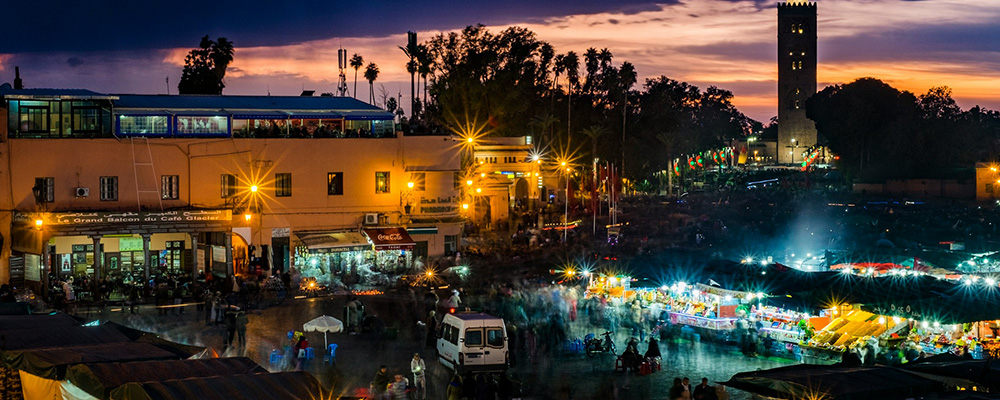
Jemaa el-Fna is one of the defining landmarks of Marrakech.
Throughout the day, the square changes character as vendors, pedestrians, visitors and performers occupy its open spaces.
In the morning, the atmosphere is often comparatively calm. Later, the square becomes busier, and toward evening its food stalls and entertainment traditions become increasingly visible.
The streets around Jemaa el-Fna play a different but equally important role.
They provide connections between the public square and the smaller commercial and residential environments surrounding it.
Rue Sidi Bouloukat belongs to this relationship between open public space and the more intimate street life of the Medina.
A visitor who spends all their time in the square may see the most famous image of Marrakech without understanding how the surrounding neighborhood functions.
Walking through nearby streets offers a more complete picture.
Discover how Jemaa el-Fna connects with the rest of the old city in our ultimate walking tour of Marrakech.
6. Why Small Streets Matter in the History of Marrakech
Travel guides naturally concentrate on famous landmarks such as the Koutoubia Mosque, Bahia Palace and the Saadian Tombs.
These monuments are essential for understanding the city's political, religious and architectural history.
But they tell only part of the story.
The history of a city is also shaped by ordinary streets.
These are the places where residents buy everyday necessities, workers travel between neighborhoods, shopkeepers maintain businesses and generations of families develop connections with their surroundings.
Rue Sidi Bouloukat is interesting precisely because it invites visitors to think about this less monumental form of heritage.
Its historical significance should not be measured only by the presence of grand buildings.
The continued use of an established street name is itself part of the city's urban memory.
For more examples of how everyday life reveals the Medina's history, read Walking Through History: Ancient Traditions of Marrakech Medina.
7. Everyday Street Life Near Rue Sidi Bouloukat
The streets surrounding Jemaa el-Fna are places of constant movement.
People walk to work, deliver goods, visit nearby shops, meet friends and make their way between the square and the surrounding neighborhoods.
Small commercial activities are an important part of this environment.
Depending on the time of day and the particular stretch of street, visitors may encounter local services, food businesses, shops and people going about their daily routines.
The exact mix of businesses changes over time, which is why it is better to observe what is present than to assume that every establishment has existed for generations.
One of the pleasures of walking through Marrakech is noticing these ordinary details.
A short conversation between neighbors, the arrival of a delivery cart or the preparation of a small shop for the day's customers can reveal more about the city than a hurried photograph of a famous landmark.
Our deep-dive walking tour through the Medina focuses on precisely this relationship between people, neighborhoods and local traditions.
8. The Morning Atmosphere Around the Street
Morning is often one of the most rewarding times to explore the central Medina.
Before the busiest hours, visitors can observe how commercial areas prepare for the day.
Shopkeepers may be opening their premises, deliveries arrive, and residents begin their usual routines.
Near Jemaa el-Fna, the atmosphere can feel noticeably different from the evening crowds.
This is a good time to pay attention to architecture, shopfronts and the way the streets connect.
Instead of rushing from one attraction to another, take a few minutes to observe the neighborhood.
Notice how people use the street, where pedestrians naturally gather and how businesses relate to the surrounding public spaces.
For visitors who enjoy discovering Marrakech at a slower pace, our guide to walking tours in Marrakech explains why exploring on foot is so rewarding.
9. How the Street Changes During the Afternoon
As the day progresses, the streets around Jemaa el-Fna often become busier.
Visitors move between the square, the souks and nearby restaurants, while residents continue their normal activities.
The rhythm of the street depends on the season, weather, weekday and local business schedules.
During warmer months, shaded areas become especially valuable.
People may pause in doorways, gather near shops or choose routes that provide relief from the sun.
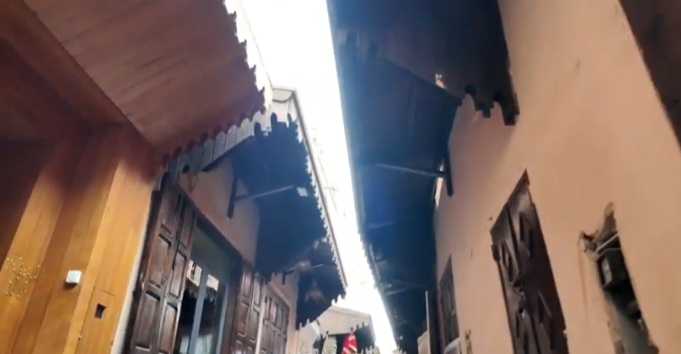
The Medina's narrow streets have an important environmental quality: buildings can provide shade and create more sheltered pedestrian spaces than large open squares.
These features are part of the practical architecture of traditional Moroccan cities.
To explore the wider relationship between architecture and daily life, see our complete guide to walking through Marrakech.
10. Evening Life Near Jemaa el-Fna
Evening brings one of the most recognizable transformations in central Marrakech.
Jemaa el-Fna becomes a lively gathering place where food, conversation, music and public entertainment share the same urban space.
Nearby streets experience the movement of people arriving at and leaving the square.
The contrast between the open square and the surrounding lanes is part of what makes the area interesting.
One moment, you may be standing in a broad public space filled with activity. A short walk later, you can find yourself on a smaller street with a very different atmosphere.
These changes help visitors understand why the Medina cannot be reduced to a single tourist attraction.
It is a connected network of public, commercial and residential spaces, each with its own daily rhythm.
If you enjoy exploring after sunset, consider combining your visit with a walk through the central streets and a meal near the square.
11. Traditional Commerce and the Streets Around Jemaa el-Fna
Commerce has shaped Marrakech for centuries.
Historically, the city connected trade routes, agricultural regions, craft production and wider commercial networks.
The souks became important places where merchants and craftspeople exchanged goods and services.
However, not every street near Jemaa el-Fna is a specialized artisan souk.
Some streets primarily serve local movement, everyday shopping and neighborhood businesses.
Rue Sidi Bouloukat should be appreciated within this broader commercial landscape rather than described as a traditional craft market without evidence.
Visitors interested specifically in artisan workshops can explore the better-known craft quarters farther into the Medina.
For a guided shopping experience, see our private Marrakech souks shopping tour.
12. The Difference Between a Souk and a Neighborhood Street
The word "souk" generally refers to a market or commercial area.
In Marrakech, many historic souks developed around particular trades, including metalworking, leatherworking, textiles and other crafts.
A neighborhood street may contain shops and services without being identified as a specialized souk.
This distinction matters because it helps visitors understand the city's urban organization.
Rue Sidi Bouloukat is best approached as a historic street within the central Medina.
Its appeal comes from its location, documentary history and relationship with everyday city life.
For traditional artisan shopping, visitors can continue toward Souk Semmarine and the more specialized market quarters.
Our Marrakech souks shopping guide explains how to explore these markets with local assistance.
13. Street Names and Local Identity in Marrakech
Street names are an important part of urban heritage.
They can preserve references to families, occupations, religious figures, landmarks and historical events.
In an old city such as Marrakech, these names often reflect layers of history that are not immediately visible in the architecture.
Rue Sidi Bouloukat offers a good example.
The documented use of its name in 1924 shows that it was already part of the recognized urban landscape at that time.
Yet the available evidence does not provide a complete explanation of its origins.
This uncertainty is not a reason to ignore the street.
Instead, it is a reminder that local history is often reconstructed through a combination of archival documents, maps, oral traditions and careful observation.
Visitors interested in the evolution of Marrakech can explore more historical context in our Marrakech history tours guide.
14. What Can Historic Property Records Tell Us?
Old property documents may seem uninteresting at first glance.
But they can reveal how streets were named, where important boundaries lay and which landmarks were used to identify locations.
The 1924 reference to Rue Sidi Bouloukat is particularly valuable because it appears in a formal description of property near Jemaa el-Fna.
The notice refers to the street as part of the surrounding geography rather than explaining its history.
This is typical of many archival sources.
They often preserve small but reliable details that help historians reconstruct the past.
Such documents should be interpreted carefully. A property notice can confirm the existence of a street name at a particular date, but it cannot by itself establish the age of the street or the history of every building along it.
For travelers, this is a fascinating way to look at Marrakech: even an ordinary street can have a documented history extending back many decades.
15. How Marrakech's Streets Connect Different Neighborhoods
The historic Medina is composed of interconnected neighborhoods rather than one uniform district.
Each area has developed its own character through religious institutions, markets, housing and local activities.
Jemaa el-Fna is one of the principal reference points for understanding this layout.
To the north lie major souk areas and routes leading toward the Ben Youssef quarter.
To the south are streets leading toward the palace districts, the Mellah and the Kasbah.
Other routes connect the square with the Koutoubia and surrounding central streets.
Rue Sidi Bouloukat belongs to this larger network of movement around the historic center.
For a fuller explanation, explore our local guide to the neighborhoods of Marrakech.
16. From Rue Sidi Bouloukat Toward the Koutoubia
The Koutoubia Mosque is one of the most important landmarks near Jemaa el-Fna.
Its monumental minaret dates from the Almohad period in the twelfth century and remains one of Marrakech's defining architectural features.
The streets around the square provide convenient access to the wider Koutoubia area.
Visitors can combine an exploration of the central street network with a walk toward the mosque's exterior and surrounding gardens.
This offers a useful contrast between ordinary street life and monumental architecture.
The Koutoubia represents the political and religious ambitions of medieval Marrakech, while the nearby streets reveal the practical spaces through which the city continues to function.
For a longer historical route, read From the Kasbah to the Koutoubia: A Walking Route Through History.
17. Discovering the Southern Medina
Visitors who want to continue exploring beyond the central streets can head toward the southern part of the Medina.
This area contains several of Marrakech's best-known historical attractions.
The Bahia Palace is celebrated for its nineteenth-century architecture, decorative courtyards and traditional craftsmanship.
The Mellah preserves important elements of the city's Jewish heritage.
Farther toward the Kasbah, visitors can discover Bab Agnaou, the Saadian Tombs and other landmarks connected with Marrakech's royal history.
These attractions are not located on Rue Sidi Bouloukat itself, but they can form part of a broader walking itinerary through the old city.
For detailed information about one of the most important monuments in this area, read our Bahia Palace Marrakech guide.
18. Why Walking Is the Best Way to Discover Historic Streets
The Medina is best experienced on foot.
Many of its streets are narrow, and their character is difficult to appreciate from a vehicle.
Walking allows visitors to notice architectural details, traditional doorways, changes in street width and the relationship between public and private spaces.
It also makes it easier to observe the rhythm of everyday life.
Near Rue Sidi Bouloukat, a short walk can reveal the contrast between the busy central square and the surrounding streets.
But walking slowly is important.
Visitors who rush from one famous attraction to another may miss the very details that make the historic city distinctive.
Our full-day Marrakech walking itinerary offers ideas for connecting different areas of the Medina.
19. What Should Visitors Notice on Rue Sidi Bouloukat?
Instead of looking for a single famous attraction, approach the street as an opportunity to observe Marrakech's urban life.
Pay attention to the following details:
- Street layout: Notice how the street connects with neighboring routes.
- Building facades: Observe the relationship between shopfronts, entrances and upper floors.
- Commercial activity: See how different businesses use the street.
- Pedestrian movement: Notice how residents and visitors share the space.
- Street names: Look for signs that preserve local geographical identity.
- Changing atmosphere: Compare the street in the morning and later in the day.
- Everyday interactions: Observe how neighborhood life continues alongside tourism.
These details may seem ordinary, but together they reveal how the historic Medina functions as a living city.
20. The Architecture of Ordinary Marrakech Streets
Traditional Moroccan urban architecture often places greater emphasis on interior privacy than on elaborate street-facing facades.
Many historic houses are organized around internal courtyards, while the exterior walls may appear relatively simple.
This contrast between public street and private interior is an important feature of Medina architecture.
However, visitors should not assume that every building on Rue Sidi Bouloukat is historic or that all its architectural features date from the same period.
Buildings are repaired, altered and sometimes replaced over time.
The street's historical character comes from the accumulated development of its urban environment, not necessarily from the age of every individual structure.
For a broader look at the hidden architectural character of the old city, see Hidden Marrakech: A Walking Tour Through Secret Streets and Stories.
21. The Social Importance of Neighborhood Streets
Traditional streets are not simply routes between destinations.
They can also function as social spaces.
People recognize neighbors, exchange greetings, make purchases and maintain relationships through everyday encounters.
In many parts of Marrakech Medina, neighborhood life has historically been organized around shared facilities such as mosques, communal bread ovens, fountains and hammams.
These institutions help explain how residential communities developed within the old city.
Rue Sidi Bouloukat should be understood within this broader social context.
Even when visitors cannot see every traditional institution nearby, the surrounding street network belongs to a city shaped by generations of neighborhood relationships.
Our Medina deep-dive walking experience explores how these everyday traditions contribute to Marrakech's identity.
22. Traditional Food and the Central Medina
The area around Jemaa el-Fna is also closely associated with Moroccan food culture.
Visitors can discover a wide range of local dishes and snacks in the surrounding commercial streets and market areas.
Popular Marrakech foods include msemen, harcha, harira, grilled meats and the city's famous tangia.
Fresh orange juice and Moroccan mint tea are also familiar parts of the central Medina experience.
However, the presence of a particular food stall or restaurant on Rue Sidi Bouloukat should always be checked locally, as businesses and opening hours change.
For visitors, the best approach is to explore the area with curiosity, choose clean and busy food establishments and ask local people for recommendations.
Our complete Medina walking guide also introduces traditional Moroccan foods you may encounter while exploring.
23. Street Photography on Rue Sidi Bouloukat
Historic streets near Jemaa el-Fna can offer interesting opportunities for travel photography.
Rather than focusing only on monuments, photographers can look for compositions involving doorways, street signs, textures, shopfronts and the changing light.
Morning often provides a different atmosphere from the busy afternoon and evening periods.
Photographing ordinary street life can produce meaningful images, but visitors should respect the privacy of residents and workers.
Always ask permission before taking close-up photographs of people.
Avoid blocking narrow streets or interfering with commercial activities.
Remember that the Medina is a residential and working environment, not an outdoor film set.
Respectful photography makes the experience more pleasant for everyone.
24. Is Rue Sidi Bouloukat a Tourist Attraction?
Rue Sidi Bouloukat is not a conventional attraction in the same sense as Bahia Palace or the Saadian Tombs.
Visitors should not expect an entrance gate, a museum ticket or a major monument dedicated to the street's history.
Its interest is more subtle.
It offers an opportunity to experience an established street near one of Marrakech's most famous public spaces.
The documentary reference from 1924 also gives the street a historical dimension that is easy to miss.
For travelers interested in local culture, urban history and photography, these qualities can make the street worth noticing during a wider walk.
If you are looking for an itinerary that combines famous landmarks with less obvious corners, consider our complete Marrakech old-city walking route.
25. A Suggested Walking Experience Around Rue Sidi Bouloukat
You can incorporate Rue Sidi Bouloukat into a relaxed exploration of central Marrakech.
Stop 1: Begin at Jemaa el-Fna
Start by observing the square and understanding its role as a central meeting place.
Stop 2: Explore Rue Sidi Bouloukat
Locate the street and take time to observe its present-day character, businesses and pedestrian activity.
Remember that the street's name appears in a historical document from 1924.
Stop 3: Continue Through the Surrounding Streets
Explore the neighboring public routes without entering private residential passages.
Stop 4: Walk Toward the Koutoubia Area
Use the central Medina's pedestrian connections to continue toward the mosque and its surrounding public spaces.
Stop 5: Return to Jemaa el-Fna
Finish by returning to the square, where you can compare its atmosphere with that of the smaller surrounding streets.
This is a flexible neighborhood walk rather than a precisely timed route. Allow additional time if you want to stop for photographs, refreshments or explanations.
For a more extensive walk through the old city, see our Secret Loop Marrakech Medina walking guide.
26. Can You Explore Rue Sidi Bouloukat Independently?
Yes. Rue Sidi Bouloukat is part of the central street network of Marrakech and can be explored as part of an ordinary walk through the area.
You do not need a guided tour simply to walk along a public street.
However, a knowledgeable local guide can provide additional historical context and explain how the surrounding neighborhoods developed.
A guide can also help you connect the street with Jemaa el-Fna, the Koutoubia and other areas of the Medina.
For travelers visiting Marrakech for the first time, this can make the experience more informative.
Our Marrakech Medina walking tour is designed for visitors who want to understand the city beyond its most photographed landmarks.
27. The Best Time to Visit Rue Sidi Bouloukat
The best time depends on what you want to experience.
Morning
Morning can be a good choice for observing the neighborhood before the busiest tourist hours.
Afternoon
The afternoon provides an opportunity to see the commercial activity of the central Medina, although the heat can be significant in summer.
Early Evening
Early evening is interesting because the surrounding streets become part of the movement toward Jemaa el-Fna.
As with any public street, the atmosphere can change from day to day.
There are no fixed visiting hours for walking along the street itself, although individual businesses operate according to their own schedules.
28. Practical Tips Before Visiting
- Wear comfortable shoes: The historic Medina is best explored on foot.
- Carry water: Marrakech can be very warm, especially in summer.
- Use a reliable map: Street names and pedestrian routes may be confusing to first-time visitors.
- Respect residents: Avoid entering private doorways or residential passages without permission.
- Ask before photographing people: Not everyone wishes to appear in travel photographs.
- Watch for traffic: Pedestrians may share some streets with motorcycles and delivery vehicles.
- Keep valuables secure: Use ordinary precautions in busy public areas.
- Allow extra time: Exploring slowly is often more rewarding than following a rigid schedule.
- Check local conditions: Construction, business activity and pedestrian access can change.
29. Rue Sidi Bouloukat and the Changing Identity of Marrakech
Marrakech is a city where historic traditions and contemporary life exist together.
Tourism, commerce, transportation and changing lifestyles continue to influence the Medina.
Some traditional businesses adapt to new customers, while others continue to serve local residents.
Buildings are renovated, shopfronts change and streets take on new functions.
Yet older place names often survive these transformations.
Rue Sidi Bouloukat is an example of how a historical name can remain part of the city's identity even as the surrounding environment evolves.
Its documented appearance in the early twentieth century offers a connection between the Marrakech of the past and the city experienced by visitors today.
To explore how Marrakech has changed across generations, read Walking Through Time in Marrakech.
30. Why Rue Sidi Bouloukat Deserves a Place in a Medina Walking Tour
Not every meaningful stop on a walking tour needs to be a famous monument.
Sometimes, an ordinary street can provide the starting point for a conversation about history, urban development and local identity.
Rue Sidi Bouloukat offers exactly this opportunity.
Its location near Jemaa el-Fna connects it with one of the city's most important public spaces.
Its appearance in a 1924 property notice provides a documented historical reference.
Its present-day surroundings illustrate the continuing role of central Medina streets in commercial and pedestrian life.
These different elements make the street a useful subject for travelers who want to understand Marrakech more deeply.
A private walking tour can connect this kind of local history with the city's larger historical story.
Discover our private Marrakech walking tour and explore the old city with an experienced local guide.
Frequently Asked Questions About Rue Sidi Bouloukat
Where is Rue Sidi Bouloukat in Marrakech?
Rue Sidi Bouloukat is located in the central Medina area near Jemaa el-Fna, the famous public square in Marrakech.
Is Rue Sidi Bouloukat a historic street?
The street name is documented in a Moroccan official property notice published in December 1924. This confirms that the name was in use more than a century ago, although the precise date of the street's origin has not been established here.
Who was Sidi Bouloukat?
The available documentary evidence confirms the street name but does not provide a verified biography of the person behind it. The honorific "Sidi" is commonly associated with respected individuals in Moroccan naming traditions.
Is Rue Sidi Bouloukat near Jemaa el-Fna?
Yes. The street belongs to the central area surrounding Jemaa el-Fna.
What can visitors see on Rue Sidi Bouloukat?
Visitors can observe the everyday character of a central Marrakech street, including its urban layout, local commercial activity and connections with surrounding neighborhoods.
Is there an entrance fee?
No. Rue Sidi Bouloukat is a public street, not a ticketed monument.
How much time should I spend there?
A short visit can be incorporated into a longer exploration of the streets around Jemaa el-Fna. The amount of time depends on your interest in local history and street life.
Can I visit in the evening?
Yes. The central area around Jemaa el-Fna is active during the evening, although individual businesses may have different opening hours.
Is Rue Sidi Bouloukat a traditional souk?
It is better described as a street in the historic central Medina rather than as a specialized artisan souk.
Can I combine the visit with the Koutoubia Mosque?
Yes. The Koutoubia area is close to Jemaa el-Fna and can be included in a broader walk through central Marrakech.
Can I combine it with Bahia Palace?
Yes. Bahia Palace can be visited as part of a longer itinerary through the southern Medina. Read our Bahia Palace visitor guide for more information.
Is the street suitable for photography?
Yes. Visitors interested in street photography can observe architecture, street details and everyday activity, while respecting people's privacy.
Do I need a local guide?
No, but a local guide can explain the surrounding neighborhoods, historical context and cultural traditions.
Is Rue Sidi Bouloukat suitable for families?
Yes, as part of a family walk through central Marrakech. Children should remain close to adults because some streets are busy.
What is the best time to explore the area?
Morning is often pleasant for a quieter walk, while late afternoon and early evening offer a busier atmosphere around Jemaa el-Fna.
Are there restaurants near Rue Sidi Bouloukat?
The central Jemaa el-Fna area offers numerous food and refreshment options. Specific businesses and opening hours should be checked locally.
How can I learn more about the history of Marrakech Medina?
A guided walking tour is a good way to connect historic streets with monuments, neighborhoods and local traditions. You can also read our historical guide to Marrakech Medina.
Can I book a private walking tour?
Yes. Contact Visit Marrakech Medina through WhatsApp or the online booking form to discuss your preferred date and interests.
Explore Rue Sidi Bouloukat and the Real Marrakech with a Local Guide
Rue Sidi Bouloukat reminds us that the history of Marrakech is not limited to palaces, mosques and famous monuments.
It also lives in ordinary streets, historical place names and the daily activities of the people who use them.
Its documented presence in a 1924 property notice offers a small but meaningful connection with the city's past.
Its location near Jemaa el-Fna places it within one of the most dynamic parts of the Medina.
For travelers who enjoy discovering the stories behind places, this combination makes Rue Sidi Bouloukat worth including in a broader exploration of Marrakech.
At Visit Marrakech Medina, we believe that a memorable walking tour should go beyond a checklist of attractions.
Our private tours introduce visitors to the history, architecture, neighborhoods and everyday traditions that make the old city special.
There is no compulsory shopping. You can communicate directly with your guide, ask questions and discuss which areas interest you most.
Ready to discover Marrakech beyond the usual tourist routes?
Explore our private Marrakech Medina walking tour, or read more about discovering the soul of Marrakech on foot.
Book directly: WhatsApp +212 614 905 398 or use our booking and contact form.
Tell us your preferred date, group size and interests. We will help you arrange a private walking experience through the historic heart of Marrakech.
About the Author: Visit Marrakech Medina
This guide was prepared for Visit Marrakech Medina, a local walking and shopping tour service introducing travelers to the history, culture and everyday life of Marrakech.
Our guiding experience dates back to 2004, and our approach emphasizes personal attention, cultural understanding and the freedom to explore without compulsory shopping.
Our Medina walking tour has been mentioned in The Rough Guide to Morocco, and our guiding service has also been discussed in the Rick Steves travel community.

For more ideas about exploring the city, discover our Marrakech walking tours guide and our Secret Loop through the Medina.