
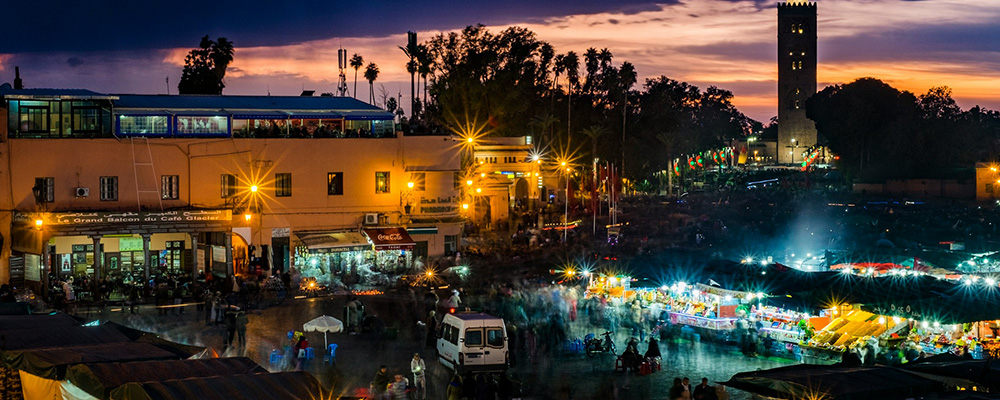
Jemaa el-Fna Bab Doukkala Walk
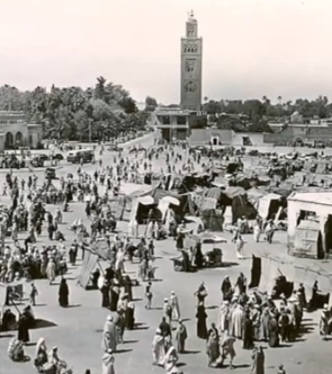
Walking from Jemaa el-Fna to Bab Doukkala
This is one of the most interesting ways to discover the different sides of Marrakech Medina. This route takes you away from the busy central square, through traditional streets, historic neighbourhoods, artisan areas and the elegant quarter of Mouassine, before reaching Bab Doukkala, one of the historic western gates of the old city. At Visit Marrakech Medina, we have been guiding visitors through these streets since 2004. Our private Medina walking tour introduces travellers to the real historic city, while our Marrakech souk shopping tours reveal its traditional markets and workshops. Our guiding is featured in The Rough Guide to Morocco and recommended by Rick Steves. To arrange your walk, contact us through WhatsApp or use our booking form.

Walking From Jemaa el-Fna to Bab Doukkala Through the Real Marrakech Medina
Jemaa el-Fna and Bab Doukkala are two very different places within the same historic city. Jemaa el-Fna is the famous meeting point at the heart of Marrakech, where visitors discover the food stalls, musicians, storytellers and traditional atmosphere of the square. Bab Doukkala, on the western side of the Medina, is a more local area where daily shopping, neighbourhood activities and traditional community life remain important.
The walk between them offers an opportunity to discover what lies between these two well-known locations. Rather than simply following the busiest tourist streets, visitors can explore Mouassine, traditional residential derbs, historic buildings, small markets and the area around Dar el-Bacha.
This is not just a walk between two points. It is an introduction to how Marrakech developed, how its neighbourhoods connect and how traditional life continues behind the famous streets.
For a broader understanding of the old city, start with our Complete Marrakech Medina Guide and our guide to Marrakech's historic neighbourhoods.
How Much Does a Guided Walking Tour Cost?
If you would like to explore this route with a local guide, our current private walking tour prices are as follows.
Private Medina walking tour
1 to 2 people, 700 MAD in total.
3 to 4 people, 900 MAD in total.
5 to 6 people, 1100 MAD in total.
Private tours are available every day at 9 am and 2 pm. English and French are available, with Italian and Spanish on request, preferably for private tours.
There is nothing to pay in advance. You pay at the end of the tour.
Where Does the Walk Begin? Jemaa el-Fna Square
Our starting point is Jemaa el-Fna, the most famous square in Marrakech and one of the most important public spaces in Morocco.
During the morning, the atmosphere is relatively calm. Orange juice sellers prepare their stalls, small cafés serve breakfast and local residents cross the square on their way to work or the souks.
As the day progresses, the square becomes increasingly active. Traditional performers, musicians, henna artists and storytellers attract visitors, while food stalls begin preparing for the evening.
Jemaa el-Fna has always been more than a tourist attraction. It is a meeting place where different generations, professions and communities come together.
Before starting the walk, take a moment to look towards the surrounding buildings and identify the Koutoubia Mosque minaret. Its position is an important geographical reference point when exploring the western side of the Medina.
For more information, visit our detailed Jemaa el-Fnaa Square guide and our article about things to do near Jemaa el-Fnaa.
Step 1. Leaving the Square and Entering the Historic Streets
After exploring Jemaa el-Fna, the walk moves away from the open square and into the narrower streets of the Medina.
This transition is one of the most interesting parts of the experience. Within a few minutes, the atmosphere changes from the open public space to a network of traditional streets where shops, houses, workshops and small businesses occupy the same narrow lanes.
Depending on the precise route, visitors can pass through the streets connecting the central square with Kennaria, Derb Dabachi and the Mouassine area.
These streets reveal the commercial and residential character of the Medina. Some businesses serve visitors, while others supply local families with everyday necessities.
Look at the traditional doors, the small entrances to residential derbs and the upper floors of the old buildings. Much of the historic character of Marrakech is found in these details rather than in the major monuments alone.
Our Marrakech streets explained guide explores how the traditional streets developed and why understanding their layout makes walking through the Medina easier.
Step 2. Discovering Kennaria and the Streets Around the Central Medina
Kennaria is one of the neighbourhood areas close to Jemaa el-Fna. It has a mixture of traditional riads, small shops, restaurants and residential streets.
Its position makes it an interesting transition between the central square and the deeper parts of the historic city.
Unlike the large open square, Kennaria is a collection of connected streets where everyday activities take place alongside tourism. Small grocery shops, local cafés and traditional buildings provide a different picture of Marrakech.
Look beyond the shopfronts. Some of the most interesting architectural details are found above street level, where traditional wooden balconies, old windows and decorative entrances can still be seen.
From this area, the route can continue towards the western and northwestern neighbourhoods, depending on which streets you want to explore.
To understand the character of these smaller residential areas, read our deep dive into the soul of Marrakech Medina.
Step 3. Mouassine and Its Traditional Architecture
Mouassine is one of the most interesting historic neighbourhoods on the western side of the central souks.
The quarter is known for its traditional houses, beautiful riads, historic mosque, public fountain and cultural buildings. It developed particularly during the Saadian period and remains one of the most recognisable areas of the old city.
One of the important landmarks is the Mouassine Mosque, an architectural reference point for the surrounding neighbourhood.
Nearby, the historic Mouassine Fountain demonstrates how important public water facilities were to the traditional organisation of Marrakech. Before modern water supplies reached individual homes, fountains provided an essential service to residents.
As you walk through Mouassine, notice how the larger streets connect with smaller residential lanes. These lanes, known as derbs, often lead towards family houses, small workshops and neighbourhood facilities.
The area also contains beautiful restored riads. Their simple exterior entrances often hide courtyards decorated with zellige, carved plaster, cedar wood and traditional Moroccan architectural details.
Visitors can also explore Le Jardin Secret, a restored historic garden with traditional Islamic garden design and water features.
Discover more about this neighbourhood through our Secret Loop Marrakech Medina walking guide and our best walking routes in Marrakech.
Step 4. Traditional Derbs and Residential Life
One of the main reasons to explore the Medina on foot is the opportunity to discover the residential streets that most visitors overlook.
Between Mouassine and the western part of the old city, there are numerous smaller lanes connecting houses, workshops and neighbourhood facilities.
A traditional Medina neighbourhood is not simply a collection of tourist attractions. Historically, its organisation revolved around a mosque, a fountain, a communal bakery, a hammam and a small religious school.
The communal bakery, known locally as a farran, remains particularly interesting. Families prepare their bread dough at home and bring it to the neighbourhood oven for baking. The baker manages the process, and the smell of freshly baked khobz is still part of everyday life in many parts of Marrakech.
Traditional hammams are another important feature of residential neighbourhoods. They have served local families for generations and remain part of Moroccan social and bathing traditions.
These details help explain why the Medina is considered a living historic city rather than an outdoor museum.
For more about these traditions, visit our Marrakech Unwritten guide and our authentic walking route through the real Medina.
Step 5. Dar el-Bacha and the Historic Pasha Quarter
Continuing towards Bab Doukkala, another important landmark is Dar el-Bacha, the historic palace associated with Thami El Glaoui, Pasha of Marrakech.
The palace reflects the wealth and architectural traditions of an important period in the city's political history.
Its decorated courtyards, carved wooden ceilings, intricate plasterwork and colourful zellige provide an excellent example of traditional Moroccan craftsmanship.
Today, Dar el-Bacha houses the Museum of Confluences, making it an interesting cultural stop for visitors who want to understand the artistic and historical heritage of Marrakech.
The streets around the palace also deserve attention. They contain traditional houses, restored riads, small businesses and narrow residential passages.
Dar el-Bacha is particularly useful as a geographical reference point because it connects the Mouassine area with the western neighbourhoods.
It is worth spending some time exploring the surroundings rather than visiting only the palace itself.
Continue discovering the city's historic buildings through our walking guide to Marrakech's UNESCO heritage.
Step 6. The Artisan Streets and Traditional Workshops
As you continue towards Bab Doukkala, pay attention to the small workshops and traditional businesses that form part of the working Medina.
Marrakech has a long history of specialised craftsmanship. Metalworkers, carpenters, leatherworkers, weavers and dyers have all contributed to the commercial development of the old city.
Some artisan activities are concentrated in specialised souks, while others take place in smaller workshops spread across the neighbourhoods.
Traditional craftsmen often work with techniques learned through family experience. Watching a metalworker shape a piece of iron or a carpenter prepare a wooden object gives visitors a better understanding of the work behind traditional Moroccan products.
One of the best-known artisan areas in the wider Medina is Souk Haddadine, associated with blacksmiths and metalworkers.
The northern souks are also connected with the traditional craft areas of Souk Semmarine, Souk Cherratine and the dyers' streets.
For a deeper understanding of the people behind these crafts, explore our guide to the last traditional artisans of Marrakech Medina and our Marrakech Medina walking tour highlights.
Step 7. Approaching Bab Doukkala Through the Western Medina
As the walk continues towards the western side of Marrakech Medina, the surroundings gradually become more local in character.
Bab Doukkala is one of the historic gates in the old city walls. It is an important entrance connecting the Medina with the areas outside the western ramparts.
The gate takes its name from Doukkala, a historical region in Morocco. Its location reflects the historic relationship between Marrakech and the surrounding regions through which people, traders and goods travelled.
Unlike the central entrance areas around Jemaa el-Fna, Bab Doukkala is closely associated with everyday local activities.
The surrounding neighbourhood contains food shops, small restaurants, local markets, traditional bakeries and residential streets.
This is an excellent place to observe the daily rhythm of Marrakech away from the busiest tourist routes.
Our local guide to Marrakech neighbourhoods explains how Bab Doukkala fits into the wider historic geography of the Medina.
Step 8. Discovering the Bab Doukkala Market
One of the most interesting parts of reaching Bab Doukkala is exploring the local market area.
Here, the shopping experience is different from the central tourist souks. The market serves local residents who come to buy everyday food and household products.
Depending on the time of day, you may see fresh vegetables, herbs, olives, bread, fruit and other daily necessities being sold.
Local families use these shops and market streets as part of their normal routine. This is an opportunity to see a side of Marrakech that is not always included in standard sightseeing itineraries.
The market is particularly interesting in the morning, when the neighbourhood is active and local shopping is underway.
Take your time, observe the activity and remember that this is a working residential area. Be respectful when taking photographs, especially of local people.
Visitors who enjoy discovering the traditional food culture of Marrakech can also explore our essential guide to exploring the Medina on foot.
Step 9. Bab Doukkala Mosque and the Local Neighbourhood
Bab Doukkala is also associated with its historic mosque, an important religious landmark in the western part of the Medina.
As with other traditional neighbourhoods, the mosque has played an important role in the organisation of local community life.
Religious buildings in Marrakech are often surrounded by residential streets and small businesses that serve the people living nearby.
Non-Muslim visitors should remember that most mosques in Marrakech are not open to general tourist entry. However, their exterior architecture and their relationship with the surrounding neighbourhood can still be appreciated.
Walking around the area also reveals traditional architectural details, including old entrances, residential doors, small shops and the characteristic red walls of Marrakech.
For visitors interested in the city's historic streets and religious landmarks, our complete guide to walking through Marrakech provides further ideas.
What Makes the Walk From Jemaa el-Fna to Bab Doukkala Special?
The main attraction of this route is the contrast between its starting point and its destination.
Jemaa el-Fna is internationally famous and attracts visitors from all over the world. Bab Doukkala, by comparison, offers a more local atmosphere where the daily needs of residents remain central.
Between these two locations, visitors discover several layers of Marrakech history and culture.
They encounter the commercial streets around the central square, the elegant architecture of Mouassine, the historic palace of Dar el-Bacha, traditional residential derbs and the local markets near the western gate.
The walk also demonstrates that Marrakech Medina is not one single shopping district. It is a complex historic city made up of interconnected neighbourhoods, each with its own character.
To understand the relationship between these areas, read our complete walking itinerary through Marrakech and our guide to the perfect Marrakech walking tour.
Can You Walk From Jemaa el-Fna to Bab Doukkala Independently?
Yes. Visitors can walk between these two locations independently, and the route can be explored at their own pace.
However, the Medina has a complex network of streets and smaller derbs. Some streets change names, some lanes lead into residential areas, and GPS directions can become unreliable between the high buildings.
For this reason, it helps to understand the main geographical reference points before starting.
Jemaa el-Fna provides an easy starting point. Mouassine and Dar el-Bacha are useful intermediate landmarks, while Bab Doukkala is the final destination.
It is also important to remember that the shortest route is not necessarily the most interesting one. Taking time to explore the neighbourhoods, observe the architecture and visit local markets makes the walk more rewarding.
Read our article about finding your way through the Marrakech Medina and our guide to understanding Marrakech streets.
What Is the Best Time to Walk This Route?
Morning is generally a good time to explore the Medina. The temperature is often more comfortable, the markets are active and traditional workshops are beginning their daily activities.
Starting around 9 am allows visitors to explore the streets before the busiest parts of the day.
The afternoon is another possibility, particularly during cooler months. However, in summer it is better to avoid the hottest hours when possible.
Friday requires a little more flexibility because some shops and artisan workshops may close or reduce their activity around midday prayer.
For more practical advice, see our local guide to the best time to visit Marrakech and our complete guide to Marrakech souk opening and closing times.
Can You Combine This Walk With Shopping?
Yes. Although this route focuses on the geographical connection between Jemaa el-Fna and Bab Doukkala, it can also be combined with a visit to some of the traditional shopping areas.
The central souks are located north of Jemaa el-Fna and contain specialised markets for textiles, leather, metalwork, spices, carpets and other Moroccan products.
Visitors interested in traditional rugs can explore our Marrakech carpet and rug shopping tour.
Those interested in a broader shopping experience can discover our authentic Marrakech souk shopping tour.
For visitors looking for selected Moroccan design and higher-quality products, we also offer a luxury shopping tour in Marrakech.
If you have limited time, our one-hour shopping route provides another way to discover the central commercial streets.
Our tours are designed to help visitors understand the products, meet traditional artisans and explore the markets without pressure to buy anything.
Explore More Walking Routes Around Marrakech Medina
The walk from Jemaa el-Fna to Bab Doukkala is only one of several interesting ways to discover the old city.
Visitors who have more time can explore the northern Medina and its traditional craft areas, including the historic Ben Youssef quarter, the artisan souks and the old commercial streets.
Another possibility is to explore the southern Medina, where the Mellah, Bahia Palace, El Badi Palace and the Kasbah reveal a different side of Marrakech's history.
For further inspiration, explore our walking routes from souks to palaces, our Marrakech walking tours guide and our UNESCO heritage walking route.
You can also discover our guide to attractions near Jemaa el-Fna and our Marrakech Unwritten collection.
Discover the Real Medina With a Local Guide
Walking from Jemaa el-Fna to Bab Doukkala is an excellent introduction to the historic neighbourhoods of Marrakech. It combines famous landmarks with everyday local life and reveals how different parts of the Medina connect.
At Visit Marrakech Medina, we believe that understanding the city requires more than visiting monuments or following the main shopping streets. It means discovering the small derbs, understanding traditional neighbourhood life, meeting artisans and learning about the history behind the buildings.
Our local guides have been walking through Marrakech Medina with visitors since 2004. We adapt our routes to the interests of each visitor, whether you are interested in history, architecture, local life, traditional crafts or shopping.
We also offer shared Marrakech group tours and private experiences. Discover our complete range of Marrakech tours or check our available tours this week.
Frequently Asked Questions About Walking From Jemaa el-Fna to Bab Doukkala
How far is Bab Doukkala from Jemaa el-Fna?
Bab Doukkala is within walking distance of Jemaa el-Fna. The exact distance and walking time depend on the streets chosen and the number of stops along the way. Exploring Mouassine and Dar el-Bacha makes the journey more interesting than simply following the shortest route.
Which neighbourhoods can I discover along the way?
The route can include the central area around Jemaa el-Fna, Kennaria, Mouassine and the historic quarter around Dar el-Bacha before reaching Bab Doukkala.
Is Bab Doukkala a tourist area?
Bab Doukkala is a historic entrance and an active local neighbourhood. It receives fewer sightseeing visitors than Jemaa el-Fna and the central souks, which makes it interesting for discovering everyday life in Marrakech.
What can I see around Bab Doukkala?
You can discover the historic gate, the mosque, the local food market, small shops, traditional bakeries and residential streets. The area also provides access to the western side of the Medina.
Is Mouassine on the way to Bab Doukkala?
Mouassine is an interesting western and northwestern detour from the central square when heading towards Bab Doukkala. It offers beautiful traditional architecture, a historic mosque, a fountain and restored riads.
Can I visit Dar el-Bacha during this walk?
Yes. Dar el-Bacha is a useful cultural stop on a route connecting the central Medina with Bab Doukkala. Visitors can explore the museum when it is open and enjoy the historic architecture of the surrounding streets.
Is it better to walk in the morning or afternoon?
Morning is generally recommended because the markets and workshops are active and the temperature is often more comfortable. Afternoon walks are also possible, particularly outside the hottest months.
Can I do this walk with a private guide?
Yes. A private walking tour allows you to explore at your own pace, ask questions and adapt the route to your interests. Contact us to discuss your preferred starting point and destination.
Do I have to buy anything during the walking tour?
No. Our walking tours focus on discovering the Medina, its history and its traditional neighbourhoods. There is no obligation to purchase anything.
Do I need to pay in advance?
No. You do not need to pay anything in advance. You pay at the end of the tour.
Continue Exploring Marrakech Medina
From the famous atmosphere of Jemaa el-Fna to the traditional local life around Bab Doukkala, this walk reveals several different sides of Marrakech.
Along the way, you discover historic streets, traditional houses, artisan workshops, neighbourhood markets and important architectural landmarks. These places help explain why the Medina is much more than a shopping destination.
For an even deeper understanding of the old city, return to our Marrakech Medina Guide and explore the other geographical and historical articles on our website.
Discover our full range of authentic Marrakech tours on our homepage.
Book Your Marrakech Medina Walking Tour
Would you like to discover the route from Jemaa el-Fna to Bab Doukkala with a local guide? We would be happy to help you explore the historic streets, traditional neighbourhoods and hidden corners of Marrakech Medina.
Choose a private walking tour or join one of our shared group experiences. Tell us when you are visiting and what you would like to discover, and we can help you arrange the right experience.
Contact Visit Marrakech Medina
Contact us directly on WhatsApp for a quick reply and to discuss your walking tour.
Complete our booking form to arrange your visit.
Discover the real Marrakech Medina with local knowledge, authentic experiences and more than 20 years of guiding experience.