
Walking Tour Through Marrakech’s UNESCO Heritage | Explore on Foot
.jpeg)
A Walking Tour Through Marrakech’s UNESCO Heritage Sites
Marrakech, often called the Red City, is one of Morocco’s most captivating destinations. Known for its vibrant culture, ancient architecture, and bustling medina, Marrakech draws travelers from around the world. Its medina was declared a UNESCO World Heritage site in 1985, preserving the historic core of the city and its centuries-old traditions. Exploring Marrakech on foot allows visitors to immerse themselves fully in its sights, sounds, and stories, providing an authentic and unforgettable experience.
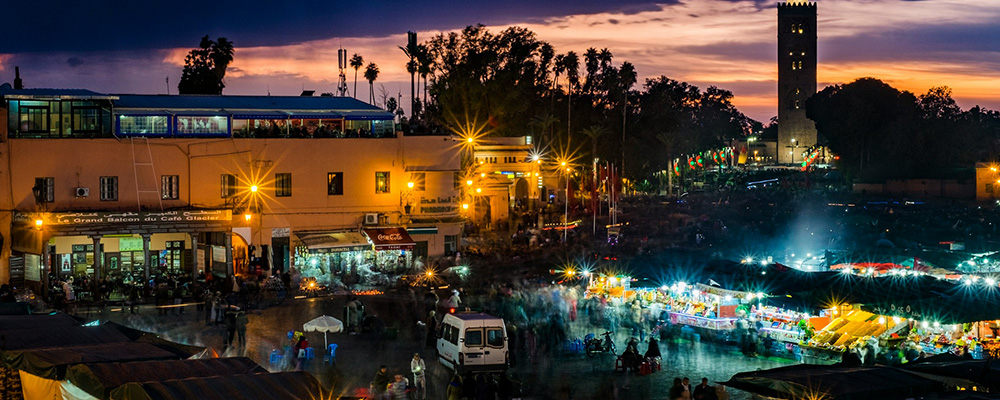
A walking tour of Marrakech typically begins at Jemaa el-Fna, the city’s main square and cultural heartbeat. By day, the square is a bustling market, with street performers, food vendors, and locals conducting their daily business. The aromas of fresh spices, grilled meats, and traditional Moroccan sweets fill the air. By night, Jemaa el-Fna transforms into a lively stage with storytellers, musicians, and performers entertaining the crowds. Experiencing Jemaa el-Fna on foot allows visitors to witness the energy and rhythm of Marrakech in a way no vehicle-based tour could offer.
From Jemaa el-Fna, visitors often head to the Koutoubia Mosque, the largest mosque in Marrakech. Its stunning minaret rises 77 meters above the city, visible from miles around. Built in the 12th century during the Almohad dynasty, the mosque is an iconic symbol of Marrakech. While non-Muslims cannot enter, walking around the mosque’s gardens provides excellent opportunities to admire its intricate architecture, including horseshoe arches and decorative stonework, and to understand its spiritual significance in Moroccan society.
A short walk from the mosque leads to the Ben Youssef Madrasa, a historical Islamic college dating back to the 14th century. Expanded in the 16th century, this educational institution once accommodated hundreds of students studying the Quran and Islamic law. The madrasa is renowned for its intricate architecture, including carved stucco, colorful zellij tiles, and delicate cedar wood ceilings. Walking through its courtyards and classrooms, visitors can appreciate the artistry and scholarly dedication that characterized the city during its golden age.
Nearby, the Saadian Tombs offer a glimpse into Morocco’s royal history. These tombs, hidden for centuries and rediscovered in 1917, date back to the Saadian dynasty of the 16th century. The site houses the remains of Sultan Ahmed al-Mansour and his family. The tombs’ lavish decoration, including intricate tile mosaics, marble carvings, and detailed inscriptions, reflects the wealth and craftsmanship of the era. Walking through this historical site provides a sense of reverence and connection to Marrakech’s dynastic past.
No walking tour of Marrakech is complete without visiting the Bahia Palace, a masterpiece of 19th-century Moroccan architecture. Built to reflect the grandeur of the Moroccan elite, the palace features beautifully landscaped gardens, ornate courtyards, and lavishly decorated rooms. Walking through the Bahia Palace allows visitors to experience the elegance and luxury of Marrakech’s historical residences, from the intricate zellij tilework to the painted wood ceilings and carved stucco walls.
Another essential stop is the Marrakech Museum, housed in the 19th-century Dar Menebhi Palace. The museum exhibits a wide array of Moroccan art, including ceramics, jewelry, textiles, and contemporary pieces. Walking through its galleries provides insight into the city’s cultural evolution, showing how traditional craftsmanship has influenced modern Moroccan artistry. The museum also offers a closer look at the architecture of historic Moroccan palaces, with their central courtyards, fountains, and ornate decoration.
The souks of the medina are central to any walking tour. Each souk specializes in a different craft, from leatherwork and textiles to spices, metalwork, and jewelry. Walking through the narrow alleys, visitors are immersed in the sights, sounds, and smells of the market. Artisans demonstrate their skills, selling products directly to customers. Engaging with these local craftsmen not only supports traditional trades but also provides insights into the techniques and cultural significance of Moroccan crafts. Souk shopping also encourages interaction, haggling, and cultural exchange, making it a uniquely Moroccan experience.
For a peaceful escape from the busy medina, the Majorelle Garden offers a serene environment. Designed by French painter Jacques Majorelle in the 1920s and later restored by Yves Saint Laurent, the garden features vibrant cobalt blue structures, exotic plants, and quiet walkways. Walking through Majorelle Garden allows visitors to experience a blend of Moroccan and French artistic influence, offering a reflective pause amid the city’s bustling energy.
A walking tour can also explore the Mellah, the historic Jewish quarter of Marrakech. The Mellah provides insight into the city’s multicultural past, featuring synagogues, markets, and traditional houses that showcase the unique lifestyle of its former Jewish inhabitants. Walking these streets highlights Marrakech’s history of coexistence and cultural diversity, revealing layers of the city that are often overlooked by tourists focused solely on the medina.
Traditional riads are another highlight. These houses, built around central courtyards, often feature intricate mosaic tilework, ornate wooden doors, and tranquil fountains. Many riads are open to visitors, offering a glimpse into Moroccan residential architecture. Walking into a riad provides a more intimate understanding of the city’s cultural fabric and architectural heritage, contrasting sharply with the busy streets of the medina.
The El Badi Palace, now mostly in ruins, was once a grand monument built in the 16th century. Known for its lavish decoration of gold, marble, and imported materials, the palace exemplifies the opulence of the Saadian dynasty. Walking through its remaining walls and sunken gardens, visitors can imagine its past splendor while appreciating the historical significance of this royal site.
For art enthusiasts, the Museum of Photography in Marrakech provides a fascinating perspective on the city’s evolution over the past century. Walking through the museum, visitors can view historical photographs documenting daily life, architecture, and cultural events in Marrakech. This experience allows travelers to contextualize the living heritage seen during the walking tour, linking past and present in a compelling visual narrative.
No walking tour is complete without sampling Marrakech’s culinary heritage. From street-side food stalls to traditional restaurants, the city offers a variety of Moroccan delicacies. Dishes like tagine, couscous, pastilla, and fresh mint tea offer not only a taste of local flavors but also a deeper understanding of Moroccan hospitality and culinary traditions. Walking to multiple food spots allows visitors to engage with locals, discover hidden gems, and savor authentic flavors.
Alongside the major landmarks, there are hidden gems in the medina worth discovering on foot. Small mosques, artisan workshops, and secluded gardens often go unnoticed by tourists in vehicles. Walking allows travelers to take spontaneous detours, explore narrow alleys, and uncover the secrets of Marrakech that guidebooks rarely reveal. These experiences make walking tours dynamic, unpredictable, and highly rewarding.
Marrakech’s historical gates, such as Bab Agnaou and Bab Doukkala, are also significant stops. These ancient entrances to the medina were fortified to protect the city and now serve as reminders of its past. Walking through these gates allows visitors to connect with the medieval history of Marrakech and appreciate the city’s defensive architecture, which has survived centuries of change.
The Saadian Pavilion is another noteworthy heritage site. Known for its exquisite decoration, the pavilion was part of the royal palace complex and showcases typical Saadian architectural elements. Walking around the pavilion provides insight into Moroccan design principles, emphasizing harmony, symmetry, and intricate detailing.
For travelers interested in cultural experiences, a walking tour can include visits to traditional Moroccan hammams, artisan bakeries, and pottery workshops. Observing these daily practices and crafts enhances the understanding of local life and traditions. Walking through these neighborhoods also provides a sense of scale and intimacy that is impossible to achieve from a vehicle or guided bus tour.
Marrakech’s gardens and courtyards are often overlooked but essential parts of its heritage. From the secret courtyards of riads to public gardens, these green spaces provide tranquility and illustrate Moroccan landscape design. Walking through these areas allows visitors to appreciate the use of water, shade, and plantings in creating aesthetic and functional spaces.
Finally, walking tours can extend to modern cultural hubs that pay homage to Marrakech’s historical roots. Contemporary galleries, museums, and performance spaces integrate traditional Moroccan motifs with modern design, reflecting the city’s ongoing evolution. Walking through these areas, visitors witness a dialogue between past and present, highlighting the city’s adaptability and resilience.
In conclusion, a walking tour through Marrakech’s UNESCO heritage sites offers an unparalleled experience. From the vibrant Jemaa el-Fna and historic Koutoubia Mosque to the serene Majorelle Garden and hidden medina gems, each step reveals layers of history, art, and culture. Walking allows travelers to engage fully with the city, observe daily life, and connect with local artisans, residents, and history in a meaningful way. Whether exploring ancient palaces, bustling souks, or peaceful riads, every corner of Marrakech offers insight into its heritage and identity.
Choosing a walking tour ensures an immersive experience, where every alley, courtyard, and marketplace tells a story. Visitors leave with a deeper understanding of Marrakech’s history, architecture, and culture, creating memories that extend far beyond photographs and souvenirs. For anyone visiting the Red City, walking is not just a mode of transport—it is the key to unlocking the soul of Marrakech and fully appreciating its UNESCO heritage.
WhatsApp Morocco +212614905398