
Souk des Cordonniers
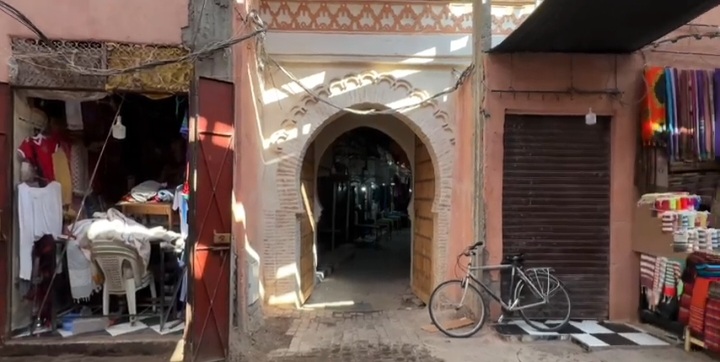
Souk des Cordonniers: Discover the Traditional Shoemakers of Marrakech Medina
Hidden among the traditional commercial streets of Marrakech Medina, Souk des Cordonniers represents an important part of the city's shoemaking and leather footwear heritage. From traditional Moroccan babouches to everyday leather shoes and the small workshops where footwear is repaired, the world of the shoemakers reveals another side of local Medina life. Explore this historic neighbourhood with Visit Marrakech Medina on WhatsApp or arrange your experience through our booking form. You can also discover our guided Marrakech Medina walking tour, traditional souk shopping tour and Moroccan carpet shopping tour. Our walking experience is featured in The Rough Guide to Morocco, and our guiding is recommended by Rick Steves.

What Is Souk des Cordonniers?
The name Souk des Cordonniers refers to the traditional shoemakers and cobblers of Marrakech. These craftsmen have historically been responsible for making, repairing and maintaining footwear for the inhabitants of the Medina.
In the traditional organisation of Moroccan markets, each profession had its own commercial streets and workshops. Shoemakers, leatherworkers, slipper makers and other artisans developed specialised skills that were passed from one generation to another.
Today, the traditional footwear trade can be discovered in the wider network of specialist souks, particularly around Souk Anaal, the traditional babouche lane.
It is useful to distinguish the different professions. A shoemaker makes footwear, a cobbler repairs it, a babouche maker specialises in traditional Moroccan slippers, and a leatherworker prepares or transforms leather into different products.
These professions are closely connected, but they are not exactly the same.
Souk Anaal: The Traditional Babouche Lane
One of the most interesting places associated with traditional Moroccan footwear is Souk Anaal, also written Souk Naal. The word Na'al refers to footwear, particularly traditional slippers.
This narrow commercial lane is located near the northern end of Souk Semmarine, in the direction of the older artisan neighbourhoods and Rue Azbezt.
Here, visitors can discover traditional Moroccan babouches in different colours, materials and styles. Some are simple everyday slippers, while others feature decorative stitching, embroidery and more elaborate leather finishing.
Souk Anaal is particularly interesting because it connects the traditional footwear trade with the wider commercial network of the Medina.
For a more detailed understanding of the main commercial artery, visit our guide to Souk Semmarine, the main shopping street of Marrakech.
You can also discover the wider range of traditional slippers and crafts in our guide to which souk sells what in Marrakech.
The Shoemakers and the History of Moroccan Footwear
Traditional Moroccan footwear is closely connected with the history, climate and everyday life of the country.
For centuries, babouches have been worn by men and women throughout Morocco. Their soft leather construction, practical shape and different decorative styles have made them an important part of traditional clothing.
Different regions developed their own footwear traditions. Some babouches are simple and designed for daily use, while others are decorated for special occasions and traditional ceremonies.
In Marrakech, the footwear trade developed alongside leatherworking, tanning and other artisan activities. Shoemakers and cobblers played an essential role in maintaining shoes and producing footwear suited to the needs of local residents.
The Medina was not simply a shopping destination. It was a working city where people produced, repaired, sold and exchanged everyday goods.
To discover more about the people who continue to preserve these crafts, read our article The Last Artisans of the Marrakech Medina.
Traditional Moroccan Babouches: How Are They Made?
Traditional babouches are among the most recognisable products of Moroccan craftsmanship. Their production involves several stages, from preparing the leather to cutting, shaping, stitching and finishing the footwear.
Depending on the design, artisans may use different types of leather, decorative stitching and coloured materials.
The main stages of traditional footwear production include:
- Leather selection: Choosing suitable leather according to the intended design and quality.
- Cutting: Preparing the leather pieces according to the shape and dimensions of the footwear.
- Shaping: Giving the upper part and sole their characteristic form.
- Stitching: Joining the different pieces using traditional or modern techniques.
- Finishing: Checking the edges, seams, decoration and overall appearance.
Some workshops still maintain traditional techniques, while others combine manual work with modern equipment.
When exploring the souks, look carefully at the quality of the stitching, the flexibility of the leather and the finishing of the soles. These details can tell you much more about a pair of babouches than the colour or decoration alone.
Souk des Cordonniers and Souk Cherratine: Understanding the Difference
Visitors interested in Moroccan footwear often discover another important artisan area: Souk Cherratine, traditionally associated with leatherworking.
Although the two trades are connected, they have different specialisations.
Shoemakers and cobblers concentrate on making and repairing footwear. Leatherworkers work with leather to produce a much wider range of goods, including bags, belts, wallets, poufs and other accessories.
Souk Cherratine is therefore an interesting destination for visitors who want to understand the wider leather industry of Marrakech.
From the footwear lanes, you can explore other artisan streets and discover how different professions have developed alongside each other.
Continue your exploration with our guide to the hidden souks most tourists miss.
Explore the Other Traditional Souks Around the Shoemakers' Quarter
One of the best things about Marrakech Medina is that different specialist markets are connected through a network of narrow streets. A visit to the traditional footwear area can easily become part of a much larger discovery of the old commercial centre.
Depending on the direction you take, you can discover several important artisan and shopping areas.
Souk Semmarine: The Main Commercial Street
Souk Semmarine is one of the principal entrances into the traditional shopping district from Jemaa el-Fna. Its covered commercial street is lined with shops selling textiles, traditional clothing, babouches, decorative objects and souvenirs.
It provides an important geographical reference when exploring the surrounding specialist markets.
Read our dedicated Souk Semmarine guide to understand its history and commercial importance.
Souk Smata: The Traditional Slipper Market
Souk Smata is particularly associated with Moroccan babouches and traditional footwear. It is one of the best-known areas for visitors interested in comparing different slipper styles, colours and leather finishes.
It complements the story of the shoemakers because it demonstrates the importance of traditional footwear in Marrakech's commercial culture.
For a wider overview of the footwear trade, see our complete guide to the Marrakech souks.
Souk Cherratine: Traditional Leatherworkers
Souk Cherratine is associated with traditional leather goods. Visitors can discover leather bags, belts, wallets and other handmade products.
It is an interesting stop for anyone who wants to understand the relationship between leather preparation, footwear production and traditional Moroccan craftsmanship.
Souk des Apothicaires: Herbalists and Traditional Remedies
From the commercial network around Souk Semmarine, you can also explore the area around Rahba Kedima, the historic Spice Square.
This neighbourhood is known for traditional herbalists, aromatic plants, spices and natural cosmetic products.
Discover more in our dedicated article about Souk des Apothicaires and traditional Moroccan remedies.
Souk Joutia Zrabi and the Traditional Carpet Market
The carpet-trading area around Rahba Kedima and the historic Criée Berbère is another important part of the Medina's commercial heritage.
Traditional Berber carpets, kilims and handmade rugs reveal a completely different side of Moroccan craftsmanship.
Visitors interested in textiles and rugs can explore our Marrakech carpet and rug shopping experience.
Souk Haddadine: The Blacksmiths
Souk Haddadine is famous for its metalworkers and traditional blacksmiths. Here, the sound of hammers and metalwork provides a very different atmosphere from the quieter footwear and leather shops.
Artisans produce and repair metal objects, lanterns, decorative pieces and traditional household items.
Learn more about the people behind these crafts in The Last Artisans of Marrakech Medina.
Souk des Teinturiers: The Traditional Dyers
The dyers' quarter is another fascinating artisan area. Traditional wool and textile dyeing has long been part of Marrakech's craft heritage.
Colourful skeins of wool and traditional dyeing techniques provide a different perspective on the relationship between the city's workshops and its commercial streets.
These different souks demonstrate why the Medina should be explored as a connected network of traditional professions rather than as a collection of isolated shopping streets.
From Jemaa el-Fna to the Shoemakers' Souks
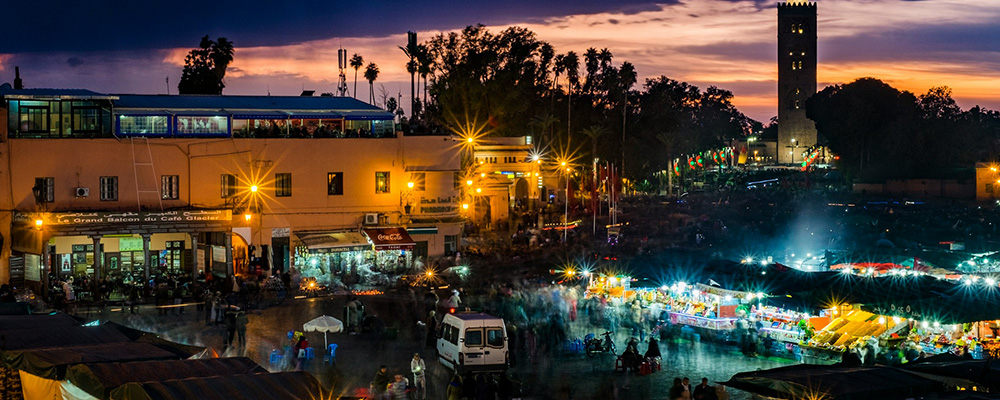
For most visitors, Jemaa el-Fna is the natural starting point for discovering Marrakech Medina.
The famous square stands at the southern entrance to the main commercial souks. From here, the covered streets extend northwards towards the older artisan quarters.
One of the easiest routes is to begin at Jemaa el-Fna, enter the main shopping area through Souk Semmarine and gradually explore the smaller specialist streets branching away from the main avenue.
Depending on your interests, you can combine several different destinations:
- Jemaa el-Fna: The historic central square and meeting point of the Medina.
- Souk Semmarine: The principal commercial artery leading into the souks.
- Souk Anaal: The traditional babouche and footwear lane.
- Souk Smata: The specialist slipper market.
- Souk Cherratine: The leatherworkers' area.
- Rahba Kedima: The historic spice square and herbalist neighbourhood.
- Souk Joutia Zrabi: The traditional carpet-trading area.
- Souk Haddadine: The metalworkers' quarter.
For a complete geographical explanation, consult our Marrakech Medina Guide and Geography of Marrakech Medina.
You can also follow our Secret Loop through Marrakech Medina, which explains how Jemaa el-Fna, Souk Semmarine, Rahba Kedima, Souk Anaal and the older artisan neighbourhoods connect.
For visitors with limited time, our one-hour shopping route offers another practical way to explore the central commercial streets.
The Riads of Marrakech: Traditional Houses Hidden Behind the Souks
One of the most remarkable characteristics of Marrakech Medina is the relationship between its commercial streets and residential neighbourhoods.
Behind the busy souks and narrow public streets, thousands of traditional houses and riads are hidden behind simple wooden doors. From outside, many of these buildings appear modest, but their interiors can reveal beautiful courtyards, carved cedar ceilings, zellige tilework, fountains and traditional Moroccan decoration.
Historically, the Medina was organised around neighbourhoods where people lived close to their workplaces, local markets, mosques, hammams and communal bakeries.
Artisans could walk from their homes to their workshops, while merchants and their families lived within easy reach of the commercial centre.
This is why the souks are surrounded by residential streets and small derbs rather than being separated from the rest of the city.
Some of the best-known riad neighbourhoods include:
Kennaria and Derb Dabachi
Close to Jemaa el-Fna, Kennaria and Derb Dabachi are lively neighbourhoods containing traditional riads, small shops, food businesses and narrow residential streets.
They are particularly convenient for visitors who want to stay close to the square and the entrance to the main souks.
Discover more about these neighbourhoods in our local guide to Marrakech neighbourhoods.
Riad Zitoun and the Southern Medina
Riad Zitoun is an important traditional street network connecting the central area of Jemaa el-Fna with the southern Medina, including the Mellah and the area around Bahia Palace.
Along the way, visitors encounter small shops, traditional houses, riads, hammams and local businesses.
This is a particularly interesting part of the city for discovering the relationship between traditional residential architecture and the commercial life of Marrakech.
Continue your discovery with our shopping guide around Bahia Palace and the southern souks.
Mouassine: Historic Riads and Traditional Architecture
Mouassine is another important residential and cultural neighbourhood of the Medina. Its narrow streets contain traditional houses, historic buildings, fountains, artisan businesses and restored riads.
The area is particularly interesting for visitors who want to discover the architectural character of old Marrakech beyond the main shopping streets.
It also connects with the northern souk network and provides a different perspective on the historical development of the Medina.
The Kasbah: Riads and the Historic Southern Quarter
The Kasbah is one of the historic neighbourhoods in the southern part of Marrakech Medina. Its streets connect traditional residential buildings with important historical monuments and local markets.
Visitors staying in this area can explore the southern Medina before walking towards Jemaa el-Fna and the central souks.
Our Kasbah-to-Souks walking route explains how these different areas connect.
Why the Shoemakers' Souks Are Part of the Real Marrakech
It is easy to visit Marrakech and spend all your time around Jemaa el-Fna, the main shopping streets and the most famous monuments.
However, the real character of the Medina becomes clearer when you start exploring its specialist trades and residential neighbourhoods.
The shoemakers, cobblers, leatherworkers, metalworkers, herbalists and carpet merchants all contribute to the commercial identity of the old city.
These professions are not simply attractions for visitors. They form part of a living urban tradition that connects workshops, family businesses, residential streets and local markets.
When you walk away from the main tourist routes, you begin to understand how the different parts of Marrakech fit together.
For another perspective on the history and hidden streets of the old city, read Beyond Jemaa el-Fna: Marrakech's Hidden Alleys and Forgotten Souks.
Discover the Traditional Souks with a Local Marrakech Guide
Exploring the souks with a knowledgeable local guide allows you to understand the differences between the traditional professions and discover streets that are easy to miss when walking alone.
At Visit Marrakech Medina, we specialise in authentic walking and shopping experiences throughout the old city. Our local guiding team has been working in Marrakech since 2004 and knows the traditional souks, artisan workshops, residential quarters and hidden streets.
We can help you discover the relationship between Jemaa el-Fna, Souk Semmarine, the footwear markets, leatherworkers, carpet merchants and the residential neighbourhoods where traditional riads are hidden.
Our guided walks also include opportunities to discover traditional Moroccan life, from family workshops and cooperatives to the old bread ovens and historic commercial buildings.
There is no pressure to shop. The aim is to discover the real Medina, understand its history and meet the people who continue to preserve its traditions.
Discover our full range of authentic Marrakech tours on our homepage, explore our guided tour collection, or discover our Marrakech group walking experiences.
Frequently Asked Questions About Souk des Cordonniers
What does Souk des Cordonniers mean?
Souk des Cordonniers means the shoemakers' or cobblers' market. It refers to the traditional trade of making and repairing footwear.
Where can I find traditional Moroccan shoemakers?
The traditional footwear trade is associated with several specialist areas in the Medina, particularly the babouche-selling and footwear lane known as Souk Anaal, near the northern end of Souk Semmarine.
What is Souk Anaal famous for?
Souk Anaal is associated with traditional Moroccan babouches, the leather slippers worn by men and women throughout Morocco.
What is the difference between a shoemaker and a cobbler?
A shoemaker makes footwear, while a cobbler traditionally repairs and maintains shoes. Both professions belong to the wider tradition of Moroccan leather craftsmanship.
Where can I buy traditional Moroccan babouches?
Souk Smata and the footwear shops around Souk Anaal are well-known areas for traditional Moroccan slippers.
Is Souk Cherratine the shoemakers' souk?
Not exactly. Souk Cherratine is particularly associated with leatherworking and leather goods, while the footwear trade has its own specialised shops and lanes.
Can I visit the shoemakers' area from Jemaa el-Fna?
Yes. You can enter the main souks from Jemaa el-Fna, follow Souk Semmarine and explore the smaller specialist lanes around the northern commercial area.
Are there traditional riads near the souks?
Yes. The Medina contains many traditional riads, particularly in neighbourhoods such as Kennaria, Derb Dabachi, Mouassine, Riad Zitoun and the Kasbah. Many are located within walking distance of the main souks, although the actual distance depends on the individual property.
Book Your Authentic Marrakech Medina Experience
Would you like to discover the shoemakers, babouche markets, leatherworkers, traditional souks and hidden riads of Marrakech with a local guide?
Contact Visit Marrakech Medina directly. We will help you organise an authentic experience and discover the parts of the old city that many visitors miss.
Contact us through WhatsApp or send your request using our online booking form.
Discover the real Marrakech, from Jemaa el-Fna to the traditional artisan souks and the hidden residential streets of the Medina.