
Marrakech Medina on Foot
Understanding Marrakech on Foot: Discover the Medina, Its Neighbourhoods and Traditional Life
Understanding Marrakech begins with understanding how to walk through it. Behind the famous monuments, the lively squares and the colorful markets lies a historic city made up of interconnected neighbourhoods, traditional streets, artisan quarters, residential derbs and centuries-old meeting places. Whether you are staying in a riad inside the Medina or a hotel in Gueliz, Hivernage or another part of Marrakech, discovering the city on foot reveals details that are easily missed from a vehicle. For visitors who would like a deeper introduction with a knowledgeable local, discover our guided Marrakech Medina walking tour, explore our Complete Marrakech Medina Guide, or contact us on WhatsApp and send a booking enquiry. Our local guiding experience dates back to 2004, is featured in the Rough Guide to Morocco, and is recommended by Rick Steves.

Marrakech Is a City Best Understood on Foot
Marrakech is not simply a collection of famous attractions separated by roads. Its historic centre is a network of streets and neighbourhoods that developed over many centuries. The Medina contains commercial avenues, small residential passages, traditional workshops, courtyards, fountains, mosques, historic schools and communal facilities that once served the daily needs of local families.
Many of these places are connected by narrow streets that are unsuitable for ordinary cars. Walking is therefore not just a convenient way to visit the old city; it is the natural way to understand its geography and discover how its different areas relate to one another.
Before planning your visit, start with our Marrakech Medina reference guide and our local introduction to the neighbourhoods of Marrakech. These resources help explain the relationship between the old walled city, its historic districts and the newer parts of the city.
The Geography of Marrakech: Inside and Outside the Red Walls
One of the most important things to understand is the difference between the historic Medina and modern Marrakech.
Inside the historic walls, the streets follow an older urban structure. Neighbourhoods developed around mosques, fountains, local markets and shared facilities. Commercial activity gradually concentrated in particular streets, while quieter residential passages remained close to the homes of local families.
Outside the walls, Marrakech developed into a larger modern city with wide avenues, contemporary hotels, restaurants, gardens and residential districts.
Visitors staying in different areas may therefore have very different experiences of the city. Someone staying near Jemaa el-Fna can enter the historic souks within minutes, while someone staying in Gueliz or Hivernage may need a taxi to reach the Medina.
For a more detailed understanding of where these districts are located, read our local guide to Marrakech neighbourhoods.
Jemaa el-Fna: The Central Meeting Point of the Medina
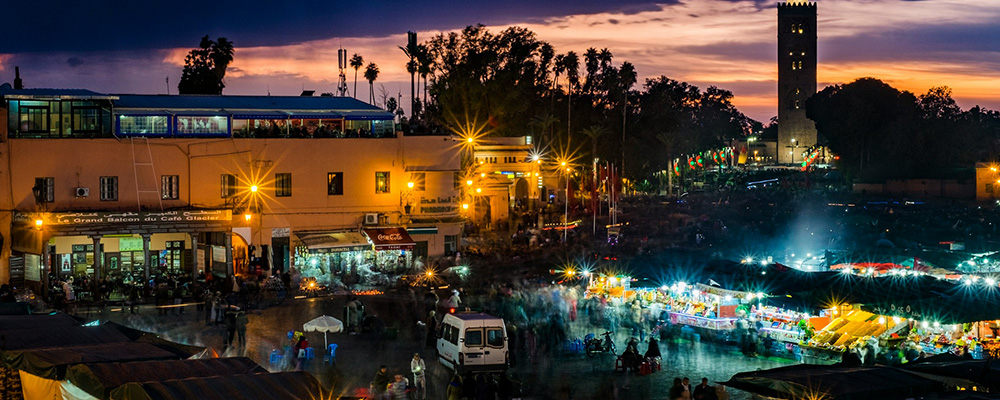
Jemaa el-Fna is one of the most recognizable places in Morocco and an important geographical reference for anyone exploring Marrakech.
The square connects several major parts of the old city. From here, visitors can move towards the northern commercial souks, the western area around the Koutoubia, and the southern neighbourhoods leading towards the Mellah and the historic palaces.
During the morning, the square has a different atmosphere from the evening. Juice stalls, local vendors and everyday activities gradually fill the space. Later in the day, musicians, storytellers and food stalls contribute to its famous atmosphere.
Discover the history and character of Jemaa el-Fna Square and read our guide to what happens on Jemaa el-Fna after dark.
Understanding the square makes it easier to orient yourself before exploring the streets that extend into the rest of the Medina.
The Northern Medina: Traditional Souks and Artisan Streets
North of Jemaa el-Fna lies one of the most fascinating commercial areas of Marrakech. This part of the Medina contains traditional markets, specialized craft streets, small workshops and historic commercial buildings.
Souk Semmarine is one of the main arteries. From this area, smaller streets branch towards markets traditionally associated with particular products and professions.
As you move deeper into the northern Medina, the atmosphere changes. The busiest commercial passages gradually give way to narrower lanes where traditional artisans continue to work.
Some of the best-known craft areas include the metalworkers' quarter, leatherworkers' streets, woodworkers' passages, dyers' lanes and traditional carpet markets.
Our guide to the hidden souks most tourists miss introduces some of the quieter areas beyond the main commercial streets.
You can also explore our Marrakech souks guide to understand how the different commercial quarters developed.
Souk Haddadine and the Traditional Metalworkers
Souk Haddadine is associated with the traditional metalworkers of Marrakech. The sound of hammers, the sight of metal being shaped and the display of handmade lanterns provide a fascinating example of how traditional crafts remain visible in the Medina.
These workshops are not simply shops selling decorative objects. They are places where knowledge is transmitted through practical experience and where traditional techniques continue to shape the identity of the old city.
Learn more about Souk Haddadine and its traditional metalworking quarter and discover the last artisans of the Marrakech Medina.
The Dyers' Quarter and the Colourful Craft Traditions
Another interesting part of the traditional souks is the dyers' quarter. Historically, wool and other materials were treated and colored using techniques that required considerable skill and experience.
The colors associated with Moroccan textiles are not merely decorative. They are connected to regional traditions, materials, commercial practices and the work of generations of artisans.
Exploring the craft districts helps visitors understand that the Medina is a working environment as well as a historic attraction.
For a closer look at the people behind these traditions, visit our guide to traditional Medina artisans.
Mouassine, Kennaria and the Residential Heart of the Old City
Not every interesting part of Marrakech is a busy market. Several historic neighbourhoods are known for their residential character, traditional architecture and quieter streets.
Mouassine is particularly interesting because of its historic buildings, traditional architecture and proximity to the commercial souks. Its narrow streets reveal another side of the Medina, with traditional houses, riads, courtyards and small local businesses.
Kennaria, close to Jemaa el-Fna, combines residential life with restaurants, riads and busy streets connecting different parts of the historic centre.
These neighbourhoods help visitors understand the relationship between commercial activity and everyday life.
For a broader geographical overview, return to our Marrakech neighbourhoods guide and our Medina Guide.
The Mellah and the Southern Medina
South of Jemaa el-Fna, the Medina opens towards another important historical area: the Mellah, the former Jewish quarter of Marrakech.
This neighbourhood has a distinctive history and architectural character. Its streets, markets and historic buildings reflect the different communities that contributed to the development of the city.
The southern Medina also connects with the historic royal district and several important monuments, including Bahia Palace and El Badi Palace.
Moving between these areas gives visitors a better understanding of how Marrakech developed beyond its central commercial markets.
Rather than seeing each monument as an isolated attraction, it is useful to understand its position within the wider historical geography of the Medina.
The Koutoubia and the Western Side of the Historic Centre
The Koutoubia Mosque is one of the most important visual landmarks in Marrakech. Its minaret is visible from several parts of the city and provides a useful point of reference when understanding the relationship between the Medina and the surrounding districts.
The gardens surrounding the mosque offer a quieter environment close to the busy atmosphere of Jemaa el-Fna.
The western side of the historic centre also connects with major roads and newer parts of Marrakech, making it an important transition area between the old city and modern urban districts.
For visitors who want to understand how the principal landmarks fit together, our guide to things to do in Marrakech offers further inspiration.
Traditional Derbs: The Small Streets That Make the Medina Unique
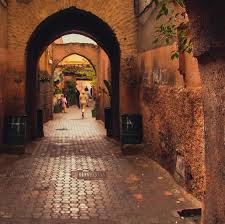
One of the most distinctive features of the Medina is its network of derbs. These smaller streets connect residential homes, workshops, courtyards and local facilities.
Unlike the main commercial streets, many derbs are relatively quiet. They provide access to homes and neighbourhood spaces and reveal how the historic city functions beyond its tourist-facing areas.
Walking through these streets requires an understanding of the local geography. Street names can change over short distances, passages may become narrower and some routes connect to small squares or courtyards that are not immediately visible from the main roads.
These are precisely the places where local knowledge becomes especially valuable.
Our Secret Loop through Marrakech Medina introduces a different perspective on the old city's connections and quieter passages.
Fondouks, Fountains, Bread Ovens and Everyday Medina Life
To understand the traditional structure of Marrakech, it is important to look beyond the monuments and markets.
Historically, neighbourhoods depended on a network of shared facilities. Traditional fountains supplied water, hammams provided bathing facilities, communal ovens baked bread and fondouks offered accommodation and commercial space for merchants and travellers.
The fondouk was particularly important in the commercial history of Marrakech. These buildings traditionally provided space for traders, animals, goods and storage, connecting the city to regional and trans-Saharan trading networks.
The traditional farran, or communal bread oven, remains another fascinating example of neighbourhood life. Families prepare their bread and take it to the local oven, where the baker cooks it using traditional methods.
These everyday details are essential to understanding why the Medina is a living historic city rather than simply an outdoor museum.
Why Walking Helps You Understand the Geography of Marrakech
Maps can show you where places are located, but they cannot always explain how the Medina feels or how its different areas connect.
Walking allows visitors to notice changes in architecture, commercial activity, street width, sounds and everyday movement. A busy shopping avenue may lead into a quiet residential passage, while a traditional workshop may be hidden behind an ordinary doorway.
This is why exploring the Medina on foot provides such a different experience from simply travelling between monuments by taxi.
For visitors interested in understanding the old city with someone who knows its streets and neighbourhoods, our private guided walking experience in Marrakech provides an opportunity to explore its history and everyday life with a local guide.
Exploring Marrakech on Foot from Hotels Outside the Medina
Not every visitor stays inside the old city. Many travellers choose hotels in Gueliz, Hivernage or other modern areas of Marrakech.
These districts are perfectly suitable accommodation choices, but their distance from the historic centre means visitors need to consider transportation when planning a day in the Medina.
Private guiding arrangements can begin with pickup from a hotel or riad, including accommodation outside the historic walls. The exact meeting arrangements depend on the hotel location and should be confirmed before the visit.
Visitors staying inside the Medina can also arrange a convenient meeting point near their riad or another accessible location.
For more information about the different experiences available, see our complete collection of Marrakech tours and our shared group experiences.
When Is the Best Time to Explore Marrakech on Foot?
The best time to walk through Marrakech depends on the season, the temperature and the type of experience you want.
Morning is often particularly pleasant. The streets are generally cooler, the souks begin their working day and visitors can observe artisans preparing their workshops.
Late afternoon offers a different atmosphere, especially around Jemaa el-Fna as the square gradually becomes busier.
During summer, avoiding the hottest hours is advisable. In winter, the middle of the day can be especially comfortable for exploring the Medina.
Friday also has its own rhythm because of midday prayers, which can affect the opening patterns of some businesses and workshops.
Before planning your visit, read our guide to the best time to visit Marrakech and check when the souks open and close.
Understanding the Difference Between Exploring and Shopping
Walking through Marrakech and shopping in its traditional markets are related experiences, but they are not the same activity.
Some visitors are mainly interested in history, architecture, local traditions and the geography of the Medina. Others want to discover Moroccan handicrafts, compare products, learn about carpets or find particular souvenirs.
Understanding this difference helps visitors choose the right experience and make better use of their time.
For those interested in the commercial side of the Medina, our dedicated Marrakech souks shopping experience focuses on traditional markets and local crafts.
Visitors interested in traditional Moroccan carpets can explore our Marrakech carpet and rug shopping experience.
For a more specialized approach, discover our luxury shopping experience.
You can also consult our one-hour shopping route for practical ideas about the commercial areas.
Discover the Medina Through Its Artisans and Traditional Crafts
One of the most rewarding aspects of exploring Marrakech is discovering the people who keep traditional crafts alive.
The city's artisans work with leather, wood, metal, wool, textiles and other materials. Their workshops preserve techniques that have been passed down through generations.
Some workshops are located along busy commercial streets, while others are hidden in smaller passages and traditional buildings.
Observing an artisan at work can explain more about a traditional product than simply seeing it displayed in a shop.
Our article about the traditional artisans of Marrakech Medina offers a closer look at these crafts and the people behind them.
For a wider introduction to the city's markets and commercial traditions, browse our Marrakech souks information.
How to Prepare for a Day Exploring Marrakech on Foot
A little preparation makes a significant difference when exploring the Medina.
- Wear comfortable walking shoes suitable for uneven streets and traditional stone passages.
- Carry drinking water, particularly during warmer months.
- Bring a hat and sunscreen when walking during sunny periods.
- Keep your accommodation address and a contact number accessible.
- Allow enough time to explore without rushing between different neighbourhoods.
- Respect residential areas and ask permission before photographing people.
- On Fridays and during religious holidays, remember that business opening patterns may change.
It is also worth reading our Marrakech Medina Guide before your visit so you can understand the main areas and their geographical relationships.
Discover More Local Knowledge Before Your Visit
Our website brings together practical information about the Medina, its historic neighbourhoods, traditional souks, local crafts and the different ways to discover Marrakech.
If you are planning a longer stay, our things to do in Marrakech guide offers ideas for exploring the city beyond its central markets.
For more practical information, visit our Marrakech travel blog, where our local team shares knowledge about the old city and its traditions.
You can also explore our Marrakech tours available this week if you would like to arrange a guided experience during your stay.
Experience the Real Marrakech with Local Knowledge
Understanding Marrakech means looking beyond the famous attractions. It means recognizing the relationship between the square and the souks, the commercial streets and residential derbs, the workshops and the people who work in them.
It means understanding that the Medina is not a static historical monument but a living city whose traditions, neighbourhoods and everyday activities continue to shape its identity.
At Visit Marrakech Medina, we have been introducing travellers to this world since 2004. Our approach is based on local knowledge, authentic experiences and a genuine interest in helping visitors understand the city.
If you would like to explore the Medina with a knowledgeable local guide, visit our dedicated Marrakech Walking Tour page. This is where you can find the service details and arrange your guided experience.
Plan Your Visit to Marrakech Medina
Whether you are staying in a traditional riad, a hotel in the modern city or visiting Marrakech for only a few days, discovering the old city on foot can become one of the most memorable parts of your stay.
For personal information about exploring the Medina, pickup arrangements or available guiding experiences, you can contact our local team directly on WhatsApp.
You can also send your enquiry through our booking form.
There is nothing to pay upfront for our guiding service. Payment is made at the end of the tour.
Discover our full range of authentic Marrakech tours on our homepage.