
Marrakech Medina Historic Center
.jpeg)
Where Does the Historic Centre of Marrakech Medina Begin and End?
Where does the historic centre of Marrakech begin, and where does the old Medina actually end? It is a question many visitors ask when they arrive in the Red City. The historic Medina is much larger than the famous souks around Jemaa el-Fnaa. It includes ancient residential neighbourhoods, traditional markets, historic gates, palaces, mosques, artisan workshops and hundreds of narrow streets. If you are planning your visit, you can contact a local Marrakech guide on WhatsApp or send a booking request through our booking form. Discover our private Medina walking tour, authentic Marrakech souks shopping tour and Moroccan carpet and rug shopping tour. Our local guiding has been recommended by Rick Steves and our walking tour is featured in the Rough Guide to Morocco.

The best place to begin understanding the old city is our Marrakech Medina Guide, which brings together the history, neighbourhoods, traditional souks and practical information visitors need. Here, we will look specifically at the geographical limits of the historic centre, how the city developed and which areas belong to the original Medina.
What Is the Historic Centre of Marrakech?
The historic centre of Marrakech is known as the Medina. It is the oldest part of the city, surrounded by its famous reddish-ochre defensive walls and monumental gates.
Marrakech was founded between 1070 and 1072 by the Almoravid dynasty. It subsequently developed under the Almohads, Saadians and Alaouite dynasties. Each period added new neighbourhoods, religious buildings, markets, palaces and defensive structures.
In 1985, the Medina of Marrakech was inscribed on the UNESCO World Heritage List. UNESCO describes its historic urban fabric as a living city of approximately 700 hectares, with narrow streets, houses, souks, fondouks, traditional trades and artisan activities. UNESCO also identifies the original ramparts as the boundary enclosing the essential historic urban attributes of the protected property.
This distinction is important: the historic centre is not simply the commercial area where most tourists go shopping. It is an entire old city, with residential quarters and everyday neighbourhood life continuing behind the main streets.
You can read the official UNESCO description of the Medina of Marrakesh for its history and World Heritage status.
Where Does Marrakech Medina Begin?
There is no single entrance that marks the beginning of the Medina. Historically, visitors and merchants entered through the monumental gates built into the defensive walls. These gates connected the old city with the surrounding countryside, roads and neighbouring settlements.
Today, the historic Medina can be entered through several different gates depending on where you are staying and which neighbourhood you want to explore.
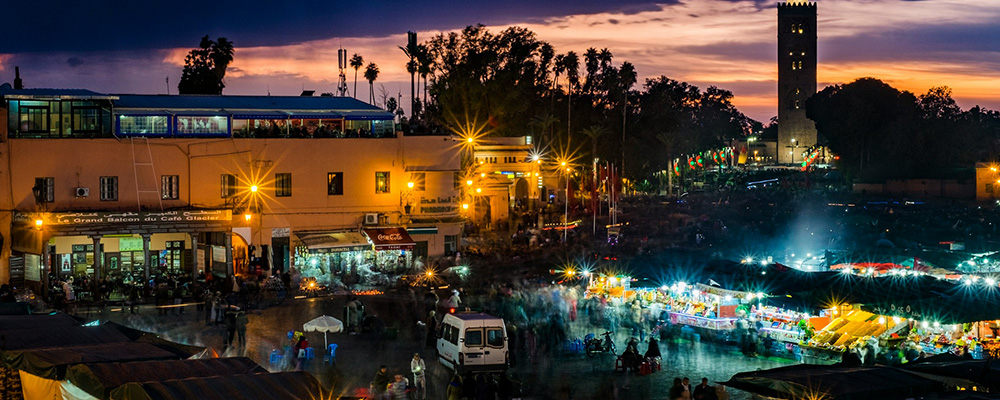
For many visitors, Jemaa el-Fnaa is the most convenient starting point. It is a central reference landmark, surrounded by traditional streets, cafés, markets and important historic routes.
From Jemaa el-Fnaa, you can walk north into the main souks, west towards Mouassine and the traditional residential streets, or south towards the Kasbah, the Mellah and the historic palaces.
However, Jemaa el-Fnaa is not the actual geographical beginning of the Medina. It is one of its most important public spaces, situated inside the historic city.
Where Does the Historic Medina End?
The traditional historic centre extends to the old defensive ramparts surrounding Marrakech. These walls form the most useful geographical reference for understanding where the old city ends and the newer urban districts begin.
Unlike modern city neighbourhoods, the historic Medina developed within a network of fortified walls, gates and internal quarters. Over the centuries, the defensive perimeter was extended and modified as Marrakech grew.
When you leave the old gates and cross beyond the ramparts, you gradually enter the newer parts of Marrakech. The difference becomes particularly noticeable when you move from the narrow streets and traditional buildings of the Medina into the wider roads and modern architecture of Guéliz.
It is worth remembering that the Medina is not a perfectly circular area. Its historic boundaries follow the irregular line of the ramparts, which developed through different periods of the city's history.
The Historic Neighbourhoods Inside Marrakech Medina
One of the easiest ways to understand the size of the old city is to divide it into its historic neighbourhoods. Each area has its own character, traditional streets, local activities and architectural heritage.
Our guide to the different neighbourhoods of Marrakech explains how these districts connect to one another.
1. Jemaa el-Fnaa and the Central Medina
Jemaa el-Fnaa is the best-known public square in Marrakech and one of the most important meeting places in the historic centre.
During the day, the square is filled with orange juice sellers, traditional performers, water sellers and visitors exploring the surrounding streets. In the evening, food stalls, musicians and storytellers transform the atmosphere.
From here, you can enter the main commercial streets and explore the surrounding neighbourhoods. To understand how the square changes throughout the day, read our guide to Jemaa el-Fnaa at night.
2. The Northern Medina: Souks and Ben Youssef
North of Jemaa el-Fnaa lies the famous network of traditional markets. This is where many visitors discover the historic commercial heart of Marrakech.
The main street is Souk Semmarine, which leads from the central square deeper into the covered markets.
From there, smaller specialised markets branch off into different craft areas:
- Souk El Attarine, traditionally associated with spices, perfumes, brass and copper crafts.
- Souk Smata, known for traditional Moroccan leather slippers called babouches.
- Souk Chouari, associated with woodworking and traditional crafts.
- The leather souks, where visitors can discover bags, belts, poufs and other leather products.
- The hidden artisan souks, including Souk Haddadine, the traditional blacksmiths' quarter, where metalworkers produce lanterns, gates and decorative ironwork.
- Souk Zrabi and the Souk des Tapis, the traditional carpet market around Rahba Kedima.
- Souk des Teinturiers, where traditional dyers work with wool and coloured textiles.
These specialised markets are not separate towns or districts. They form part of the same historic commercial network inside the Medina.
The northern area also includes the Ben Youssef Madrasa, the Almoravid Koubba and the Marrakech Museum, together with old fondouks and artisan workshops.
3. Mouassine: The Historic Quarter West of the Souks
West of the principal shopping streets lies Mouassine, one of the most interesting historic neighbourhoods in the Medina.
It is known for its mosque, traditional fountain, old houses, riads and quieter residential lanes. It also provides a connection between the commercial souks and the more residential parts of the old city.
The area around Mouassine is particularly interesting for visitors who want to understand how Marrakech developed beyond its markets. Traditional homes, small workshops and historic buildings reveal another side of Medina life.
The nearby dyers' quarter is also worth discovering, especially in the morning when traditional textile activities are taking place.
4. The Southern Medina: Kasbah and Mellah
South of Jemaa el-Fnaa, the historic Medina continues into two important areas: the Kasbah and the Mellah.
The Kasbah is associated with the royal history of Marrakech and contains important monuments from the Saadian period. Among its most famous landmarks are the Saadian Tombs and the remains of El Badi Palace.
Further east, the Mellah is the historic Jewish quarter of Marrakech. It developed around its own residential streets, religious buildings, markets and commercial activities.
Close to this area, visitors can discover Bahia Palace, Place des Ferblantiers and the traditional jewellery market. Our article about Bahia Palace and its history explains why this monument is one of the most important architectural attractions in the southern Medina.
These southern neighbourhoods are an essential part of the historic centre, even though visitors who only explore the main souks sometimes overlook them.
5. The Eastern Medina: Residential Streets and Traditional Trades
The eastern part of the Medina contains quieter residential areas, old neighbourhood streets and traditional working districts.
Further towards Bab Debbagh, visitors can find the historic tanneries and other traditional working areas. These parts of the Medina reveal how the old city functioned as a place to live and work, rather than simply as a tourist destination.
Many of the small streets are still used by local families, delivery workers, craftsmen and shopkeepers. This is one reason why exploring the Medina on foot provides a much better understanding of its real character.
What Are the Historic Gates of Marrakech Medina?
The monumental gates, known locally as babs, are among the most important elements of the city's historic geography.
They were built into the defensive walls to control movement into and out of the old city. Some connected Marrakech with important regional roads, while others served the daily needs of particular neighbourhoods.
Several historic gates are especially useful for understanding the extent of the Medina:
- Bab Doukkala, associated with the northwestern part of the old city.
- Bab El-Khemis, an important historic entrance in the northern area.
- Bab Debbagh, near the traditional tanneries in the eastern part of the Medina.
- Bab Agnaou, one of the most impressive monumental gates, providing access to the southern Kasbah area.
These gates are not simply decorative monuments. They help explain the historical organisation of Marrakech and the relationship between its neighbourhoods and the surrounding countryside.
For visitors, they also provide useful geographical reference points when walking around the old city.
Is Guéliz Part of the Historic Medina?
No. Guéliz is not part of the traditional walled Medina.
Guéliz developed during the French Protectorate period in the early twentieth century. Its urban layout is very different from the historic centre, with wider streets, modern buildings, commercial avenues, restaurants and hotels.
Hivernage is another modern district outside the traditional Medina. It is known for hotels, gardens, restaurants and larger contemporary buildings.
The Palmeraie, north of the city, is also outside the historic centre. It is a large palm grove area associated with resorts, villas and leisure activities.
This distinction matters when choosing accommodation. Staying inside the Medina means experiencing traditional streets and historic neighbourhoods, while staying in Guéliz or Hivernage offers a different type of city environment.
For a broader overview of the city's attractions beyond the old walls, see our guide to things to do in Marrakech, Morocco.
How Can You Explore the Historic Centre of Marrakech on Foot?
The best way to understand the historic centre is to explore it on foot. The Medina was not designed for cars, and many of its most interesting places are hidden along narrow streets and small pedestrian passages.
A good starting point is Jemaa el-Fnaa. From there, you can explore the main souks, continue towards the northern artisan quarters, or walk south towards the Kasbah and Mellah.
If you have limited time, our one-hour Marrakech shopping route introduces you to some of the main commercial streets.
For a deeper understanding of the historic streets, neighbourhoods and artisan areas, the Secret Loop through Marrakech Medina offers a useful way to understand how different parts of the old city connect.
You can also discover more about the people and traditional skills that keep the old markets alive in our guide to the last artisans of Marrakech Medina.
Why Is a Local Guide Useful for Understanding the Medina?
Looking at a map of Marrakech can make the Medina appear relatively simple. In reality, the historic centre is a complex network of neighbourhoods, small streets, markets, traditional houses and old commercial routes.
Many streets change names, and some of the most interesting places are hidden behind small entrances or inside traditional fondouks.
A local guide can explain where one historic quarter finishes and another begins, why particular souks developed around certain crafts, and how the different neighbourhoods connect.
Our historical guided tours of Marrakech Medina explore the city's development through its dynasties, monuments and traditional streets.
For visitors more interested in traditional markets, our guide to the main shopping souks explains where to discover leather, rugs and jewellery.
You can also explore our Marrakech souk prices guide and learn more about when the souks open and close before planning your visit.
Visit Marrakech Medina is an independent local guiding service. Our guides have been taking visitors through the historic streets, workshops and markets since 2004. We focus on explaining the real Medina, without pressure to purchase anything.
Can You Visit the Historic Centre with a Private Walking Tour?
Yes. A private walking tour is an excellent way to discover the historic centre, especially if you want to understand more than the main tourist streets.
Our Marrakech Medina walking tour introduces visitors to the history, architecture, traditional neighbourhoods, hidden streets and artisan areas of the old city.
If shopping is your main interest, our Marrakech souks shopping tour focuses on traditional markets, workshops, craftsmanship and the products for which the city is famous.
We also offer a specialised private luxury shopping experience for visitors interested in premium Moroccan craftsmanship and carefully selected boutiques.
See our full range of Marrakech tours, including private experiences and available group options. If you are already in the city, you can also check our Marrakech group tour information and the tours available this week.
So, Where Does the Historic Centre of Marrakech Begin and End?
The historic centre of Marrakech begins within the old fortified city and extends across its traditional neighbourhoods, from the northern souks and Ben Youssef area to the southern Kasbah and Mellah.
Its western and eastern sections contain historic residential quarters, traditional markets, workshops, religious buildings and everyday local streets.
Its historical geographical boundary is defined by the defensive ramparts surrounding the Medina. Beyond those walls, the city gradually changes into modern districts such as Guéliz and Hivernage.
Jemaa el-Fnaa is an excellent starting point for visitors, but it represents only one part of a much larger historic city.
The real Marrakech Medina is not just a square or a shopping street. It is a living historic centre, with centuries of architecture, craftsmanship, family life and commercial traditions still visible in its streets.
Plan Your Visit to the Marrakech Medina
Would you like to discover the historic centre with someone who knows its streets, neighbourhoods and traditional souks?
Contact Visit Marrakech Medina directly on WhatsApp or use our booking form to enquire about a private walking tour, a shopping tour or a specialised carpet and rug experience.
There is nothing to pay upfront. Contact us to discuss your preferred day, time and type of visit.
Discover our full range of authentic Marrakech tours on our homepage.