
Walking Through Time: Marrakesh’s Histories Revealed Step by Step
Which traditions from Marrakech's history can you still see on a walk through the Medina?
Walking through the Marrakech Medina is walking through living history. The traditions of the Almoravid, Almohad, Saadian and Alaouite centuries didn't stay in museums. They're still part of daily life in the souks and derbs. Artisans hammer copper and dye wool by hand as their grandfathers did, families still bake bread in the neighborhood farran, neighbors meet in the hammam, the muezzin calls from the minarets five times a day, and the storytellers of Jemaa el-Fna keep an oral tradition protected by UNESCO. On our walking tour, a local guide takes you step by step through these living traditions and explains the history behind each one.
• Private tour for 1 to 2 people, 900 MAD
• Private tour for 3 to 4 people, 1,200 MAD
• Private tour for 5 to 6 people, 1,500 MAD
• Group walk, 300 MAD per person
Message Us On WhatsApp or use our Booking Form.
Most visitors see the Koutoubia, the Bahia Palace and the Saadian Tombs and think they've seen Marrakech's history. The monuments are only half of the story. The other half is in the farran bakers, the coppersmiths of Souk Haddadine, the tanners of Bab Debbagh, the guerrab water sellers and the storytellers of Jemaa el-Fna, who still work the way the Medina has worked since the Almoravids. You just need a local guide to show you where to look in the souks and derbs.
Visit Marrakech Medina, The Best Shopping and Walking Tour Company in Marrakech, has guided travelers through the history of the Medina since 2004. Our guiding is Recommended By Rick Steves, and our Medina walk was featured by Daniel Jacobs in The Rough Guide To Morocco.
Choose your tour
• Where Does History Still Happen Every Day In The Medina? Our best Marrakesh walking tour, riads, fountains, artisans and hidden derbs.
• Which Souks Still Work Like They Did Centuries Ago? Our top rated Marrakech souks shopping tour, lanterns, babouches, leather and spices.
• Can You Read The Berber History Woven Into A Rug? Our best Marrakech carpets and rug shopping tour, symbols, wool and shipping.
• Interested In Antiques And Master Artisans? Our private luxury shopping tour, premium galleries and heritage crafts.
• What Else Should You See In Marrakech? Majorelle Garden, Bahia Palace, hammams and rooftop cafés.
Where does each century of Marrakech still show in the streets?
• The Almoravids Berber rulers from the Sahara who founded Marrakech in the 11th century. Their khettaras, underground water channels, brought water from the Atlas, and the Almoravid Koubba near Ben Youssef is their last intact building
• The Almohads Builders of the Koutoubia minaret, the Kasbah and the carved gate of Bab Agnaou, and of the ochre ramparts that still circle the Medina
• The Saadians Sultans who built the Saadian Tombs, El Badi Palace, the Mellah and the Mouassine fountain, and rebuilt the Ben Youssef Madrasa with zellige, stucco and carved cedar
• The Alaouites The current royal dynasty, whose viziers built the Bahia Palace and Dar Si Said, with painted ceilings and courtyard gardens
For the full story of each dynasty and its monuments, read Which Monuments Tell The Story Of Each Dynasty?
Which crafts are still made the old way in the souks?
The souks of Marrakech have always been organized by trade, leather, wool, copper, cedar, spices, and each trade once had its amin, an elder artisan who settled prices and quarrels. Many of those crafts are still done by hand in the same souks and fondouks today.
• Tanners at Bab Debbagh, soaking goatskin and cowhide in stone pits of lime, pigeon droppings and dye, one of the oldest crafts of the city
• Dyers in the dyers' souk, skeins of wool colored with indigo, saffron, henna and poppy, drying above the lane. See How Do The Dyers Still Color Wool By Hand?
• Coppersmiths in Souk Haddadine, cutting brass and copper lanterns with a hammer and chisel
• Babouche makers in Souk Smata, stitching leather slippers one by one
• Woodcarvers in Souk Nejjarine, carving cedar doors, boxes and ceilings with the same patterns you see in the madrasa
• Weavers in the fondouks, at wooden looms in old caravan inns where traders from the Sahara once slept above their camels
Meet the makers in Who Are The Last Artisans Still Working In The Medina?
What daily rituals of the old Medina still happen today?
• The farran The neighborhood wood oven, where families bring their khobz dough every morning on a wooden tray, and the baker knows each family's bread by its mark
• The hammam The public steam bath, a place to wash, talk and meet neighbors, with black soap, ghassoul clay and the kessa glove
• The fountains Every derb once had its fountain, fed by the khettaras. Many, like the Mouassine fountain, still stand with their zellige and carved cedar
• The call to prayer Five times a day from the minarets of the Koutoubia, Ben Youssef, Kasbah and Mouassine mosques, heard across every souk and riad
• The guerrab Water sellers in red costumes with brass cups and goatskin bags, now mostly on Jemaa el-Fna
• Friday couscous After the Friday prayer, families share couscous at home, and many souk shops close for a few hours
• The tanjia A clay pot of meat and spices slow-cooked for hours in the embers of the hammam furnace, a Marrakchi tradition
How does Jemaa el-Fna keep oral history alive?
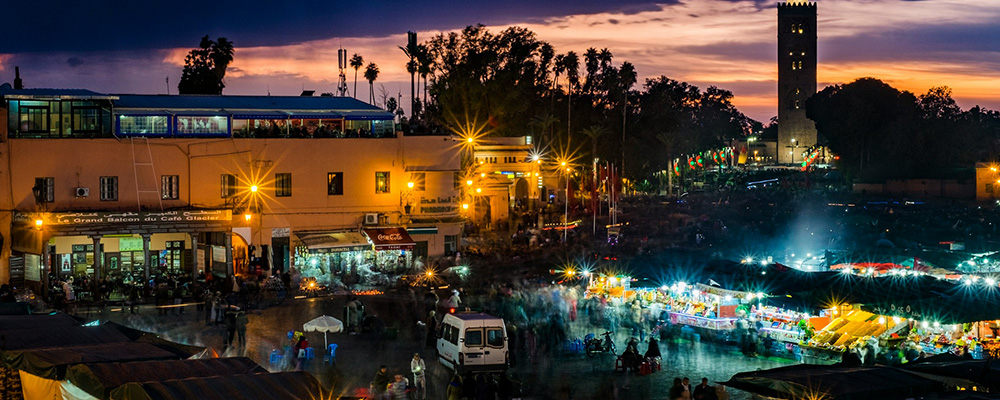
Jemaa el-Fna has been the meeting square of Marrakech for centuries, for traders, travelers and the whole city. UNESCO recognized its storytellers, musicians and performers as a Masterpiece of the Oral and Intangible Heritage of Humanity. In the evening, the halqa, circles of people around a performer, still gather around storytellers, Gnawa musicians with their qraqeb and guembri, and herbalists selling remedies. By day, you see juice stalls, henna artists and snake charmers. See What Happens On Jemaa el-Fna After Dark?
What does our step-by-step walk through time look like?
1. The Koutoubia minaret, the Almohad landmark nothing in the Medina may rise above, with the ruins of the first Almohad mosque beside it.
2. Jemaa el-Fna, the halqa circles, guerrab water sellers, henna artists and the history of the square.
3. Souk Semmarine, north of the square, the main souk street with its trades side by side.
4. Rahba Kedima, the old grain market, now spices, saffron, black soap, baskets and herbalists.
5. A fondouk, an old caravan inn where Sahara traders slept, now with weavers at their looms and woodcarvers at work.
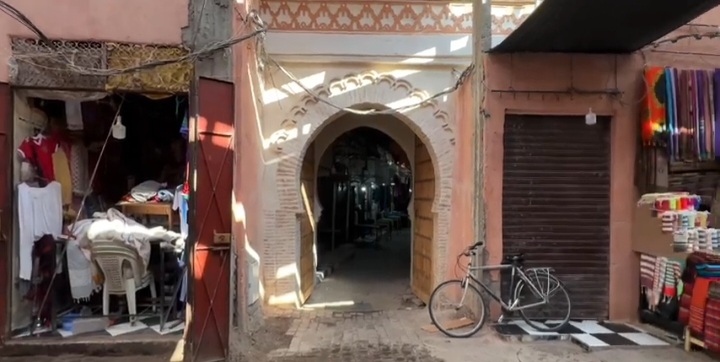
6. A farran and a hammam in a residential derb, with the fountain, the mosque and the Koranic school that every Medina neighborhood shares.
7. The dyers' souk and Souk Haddadine, wool, indigo and the sound of hammers on copper.
8. The Mouassine fountain, a Saadian fountain with zellige and carved cedar, next to the Mouassine mosque and Le Jardin Secret.
9. Back to Jemaa el-Fna, with the Koutoubia in view. See How Do You Find Your Way Back Through The Derbs?
Add the Ben Youssef Madrasa, the Bahia Palace or the Saadian Tombs for 300 MAD more and about 1 extra hour. Entrance tickets are paid at each monument.
Our walking tour prices
Private walking tour, every day at 9 am or 2 pm, about 3 hours
• 1 to 2 people, 900 MAD
• 3 to 4 people, 1,200 MAD
• 5 to 6 people, 1,500 MAD
• 7 or more, on request
• Monuments, 300 MAD more and about 1 extra hour
Group walking tour, no shopping
• 300 MAD per person
• Monday, Wednesday, Friday and Sunday at 10 am
• Up to 15 people
• Pickup at your riad or hotel in the Medina or Gueliz, or near Jemaa el-Fna for hotels far away
• Payment nothing in advance, you pay in dirhams at the end
• Cancellation free up to 24 hours before
• Languages English and French
Planning at the last minute? See Which Walking Tours Still Have Space This Week?
What Happens On A Real Tour With Us?
James, United Kingdom
"A great introduction to Marrakech. I joined the walking tour on my second day and honestly wished I had done it on the first! Interesting streets, traditional shops and lots of little details about local life. Very enjoyable and never felt rushed."
What Surprises Travelers Most On Our Walks?
Michael, Australia
"Really enjoyed this tour. We discovered parts of the Medina that I would have completely missed on my own. There were beautiful little boutiques, traditional workshops and some unexpected places along the way. A relaxed walk and a very good experience."
What do travelers ask about the living history of the Medina?
How old is the Marrakech Medina?
Marrakech was founded by the Almoravids in the 11th century, and the Medina, its souks, riads and derbs have been lived in ever since. It's a UNESCO World Heritage Site.
Can visitors go into a farran or a hammam?
Yes. Your guide can show you a neighborhood farran, where the baker is usually happy to say hello, and a local hammam, where visitors are welcome with black soap and a kessa glove.
Are the tanneries worth seeing?
Yes, for the history of the leather trade. Go with a guide, because men near Bab Debbagh often lead visitors to a tannery terrace and ask for money or push leather bags, babouches and poufs.
Is this a monuments tour?
No. This walk is about the traditions that still live in the souks, fondouks and derbs. The Bahia Palace, the Ben Youssef Madrasa or the Saadian Tombs can be added for 300 MAD more.
When are the storytellers on Jemaa el-Fna?
Mostly in the late afternoon and evening, when the halqa circles form around storytellers and Gnawa musicians and the food stalls of Jemaa el-Fna open.
Ready for the best walk through the living history of the Marrakech Medina? Book On WhatsApp for a fast reply, or use our Booking Form.
Curious why the whole city is red? Read Why Are The Walls Of Marrakech Red?
Who Wrote This Guide?
This guide was written by the Local Team of Visit Marrakech Medina, Marrakchis who were born and raised in the city and have guided travelers through the Medina since 2004. Our Medina walk is featured in The Rough Guide to Morocco, and our guiding is recommended by Rick Steves. Everything here comes from what we see and hear on our walking tours every day.
Have a question about your trip, even if you don't book a tour? Ask Us On WhatsApp. We're happy to help travelers plan their days in Marrakech.
Found this guide useful? Save it for your trip or share it with a friend who's heading to Marrakech.
Writing about Marrakech? Feel free to link to this guide, or contact us for local insights and photos.
Discover our full range of authentic Marrakech tours on our Visit Marrakech Medina homepage.