
The History Behind Marrakech’s Red Walls | The Story of the Red City
.jpeg)
The History Behind Marrakech’s Red Walls
When you first arrive in Marrakech, one of the most striking sights is its warm, reddish glow. The city seems to radiate light at sunrise and sunset, its walls reflecting shades of terracotta, ochre, and rose. This unique color has earned Marrakech its famous nickname: The Red City. But behind this color lies a story—a history shaped by dynasties, devotion, desert earth, and architectural genius. The red walls of Marrakech are not just beautiful—they are witnesses to nearly a thousand years of Moroccan history.
A City Born from the Desert
Marrakech was founded in 1070 by Yusuf ibn Tashfin, the Berber leader of the Almoravid dynasty. At that time, the area was nothing more than open desert near the Tensift River. Yusuf chose the location because it was strategically perfect—a crossroads between the Atlas Mountains, the Sahara trade routes, and fertile plains. From the beginning, Marrakech was designed to be both a fortress and a cultural capital.
The red walls came later, but even in its earliest days, the city’s soil gave it a natural color identity. The earth of the Haouz plain surrounding Marrakech is rich in iron oxide, giving it that deep red hue. When the first constructions began, builders used pise (a mixture of clay, straw, and water pressed into walls), creating buildings that reflected the color of the desert itself.
The Almoravids: Founders of the Red City
The Almoravids were desert warriors and religious reformers who valued simplicity, discipline, and faith. When they founded Marrakech, their goal was not just to create a city—it was to create a spiritual and political symbol for their empire, which stretched across North Africa and into Andalusia (southern Spain).
Under Yusuf ibn Tashfin and his son Ali ibn Yusuf, Marrakech grew rapidly. They built mosques, schools, and markets, including the Koutoubia’s predecessor, known as the Ben Youssef Mosque. The architecture of this era was functional but elegant, defined by strong earthen walls, clean geometric forms, and limited decoration.
The reddish materials were practical: local clay was abundant, cheap, and adapted perfectly to the climate. But it also became a symbol of identity. The Almoravids’ Marrakech was a city rooted in the soil of Morocco—literally built from the land it ruled.
The Almohads and the Rise of the Great Walls
In the mid-12th century, the Almohads, another Berber dynasty, overthrew the Almoravids and made Marrakech their capital. The new rulers wanted to express their power and piety through architecture, so they began large-scale construction projects, including the rebuilding of the city’s fortifications.
It was under the Almohads that Marrakech’s famous red ramparts truly took form. Around 1126–1127, they constructed massive defensive walls surrounding the city. These walls were over 19 kilometers long, 8–10 meters high, and fortified with 200 towers and 20 gates. They were built with a material called tabia, a mix of red earth, lime, straw, and water—an improved version of the earlier pise technique.
The Almohads understood both engineering and symbolism. Their red walls were not only a military necessity but also a declaration of permanence. The color red—associated with strength, vitality, and protection—became the official face of Marrakech.
The Symbolism of the Red Color
In Moroccan and Islamic culture, color carries deep meaning. Red represents not only energy and passion but also divine protection and life. It is believed to ward off evil and bad spirits, a belief that aligns with Marrakech’s role as a powerful and sacred city.
Over time, the red color became more than a coincidence of geography—it became a deliberate aesthetic. The city’s rulers ordered that new constructions inside the Medina follow the same earthen tone to maintain harmony. Even today, a municipal rule requires that all buildings in the historic center maintain the reddish palette, preserving Marrakech’s unique character.
The Architectural Techniques Behind the Walls
The traditional material used for the walls, tabia, is a form of rammed earth construction. Builders mix clay, lime, and straw, then compress it into wooden molds layer by layer. Once dry, the result is a solid, thick wall that keeps interiors cool during hot days and warm at night.
The red tint comes naturally from the local soil, though some builders added pigments made from ochre or iron oxide for stronger coloration. The mixture was not only aesthetic but also practical: it resisted the desert heat and reflected sunlight, giving the city a glowing appearance.
The walls’ surfaces were often smoothed with a thin plaster of lime and sand, which enhanced the warm tone and helped protect the structure from erosion. Despite centuries of exposure to rain, wind, and sun, many parts of the original Almohad walls remain standing—a testament to their remarkable craftsmanship.
The Eight Historic Gates of Marrakech
The red walls of Marrakech are punctuated by a series of majestic gates (babs), each with its own story and purpose. These gates connected the Medina to trade routes, neighboring regions, and royal palaces. Some of the most famous include:
Bab Agnaou: The most iconic gate, built in the 12th century under the Almohads, leading to the Kasbah. Its deep red stone, blue-gray inscriptions, and horseshoe arch make it a masterpiece of Moroccan architecture.
Bab Doukkala: The gate facing the road to the Doukkala region, used for trade caravans.
Bab El Khemis: Known as the Thursday Gate, it was where weekly markets were held.
Bab Debbagh: The gateway to the tanneries, still active today.
Bab Aghmat: The oldest gate, connecting the city to the south and to the Atlas foothills.
Each gate not only served a defensive role but also symbolized the connection between Marrakech and its surrounding lands. Passing through one was like stepping between worlds—between desert and city, past and present.
The Red Walls as Witnesses of Dynasties
After the Almohads, other dynasties left their marks on the red walls of Marrakech. The Marinids, Saadians, and Alaouites all contributed to the city’s development but respected its original color palette. The Saadians in particular, who ruled in the 16th and 17th centuries, restored sections of the walls and reinforced them with towers and bastions.
During this period, Marrakech regained its status as Morocco’s capital and a hub for diplomacy, trade, and culture. The red walls became a symbol of continuity—a visual reminder that while dynasties rise and fall, the city itself endures.
The Red City in the Modern Era
By the 19th century, Marrakech had become a living museum of Moroccan architecture. European travelers and artists arriving in Morocco were captivated by the city’s color. French painters like Delacroix and writers like Pierre Loti described it as a place “bathed in red dust and gold light.”
During the French Protectorate (1912–1956), authorities preserved the Medina’s architectural integrity. They introduced building regulations ensuring that new constructions respect the traditional tones and materials. That decision preserved the identity of Marrakech as La Ville Rouge.
Even as modern districts like Gueliz expanded, the Medina’s red walls remained untouched, standing as a proud symbol of Moroccan heritage and resilience.
The Restoration of the Walls
In recent decades, the Moroccan government and UNESCO have launched restoration projects to preserve the ancient walls. The Medina of Marrakech was declared a UNESCO World Heritage Site in 1985, recognizing its cultural and historical significance.
Many sections of the ramparts have since been repaired using traditional methods. Local artisans use the same tabia mixtures and hand tools as their ancestors. The goal is not to make the walls look new but to keep them alive—to let them age gracefully, maintaining the authenticity of the city’s historic landscape.
Walking Along the Red Walls Today
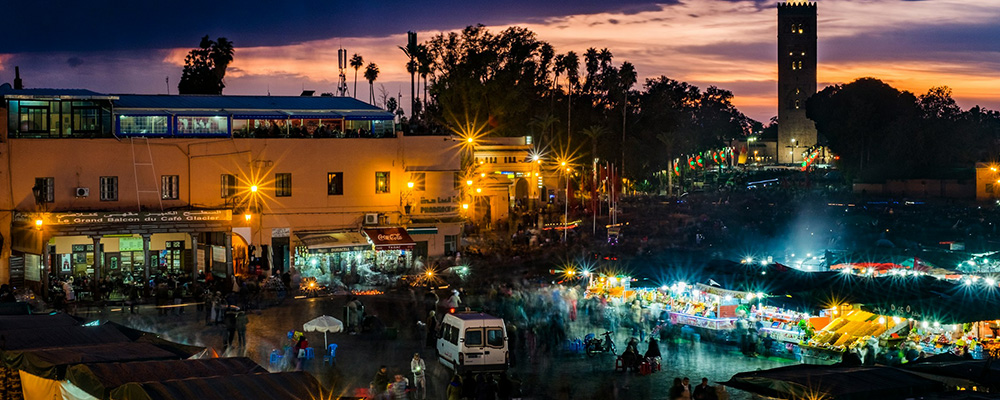
One of the best experiences for visitors is walking along or around the city’s red walls. From Bab Doukkala to Bab Agnaou, the route offers breathtaking views, especially during sunset when the walls seem to ignite with light. The contrast between the red earth, blue sky, and green palm trees creates a natural harmony found nowhere else.
At dawn and dusk, you’ll see locals walking along the ramparts, cyclists passing through the gates, and the call to prayer echoing softly across the walls. It’s a reminder that Marrakech is not a museum—it’s a living city.
The Red Color and the Spirit of Marrakech
Beyond architecture, the red of Marrakech has become a spiritual and emotional symbol. It embodies warmth, energy, and welcome. It mirrors the hospitality of its people and the vibrancy of their culture.
When you stand near the red walls, you feel the city’s history in your bones—the heat of the sun on the clay, the hum of distant voices, the continuity of generations who have walked these streets. The color red, in Marrakech, is more than pigment—it is identity, memory, and heart.
Cultural Meaning Through the Ages
For Moroccans, the color of the city carries emotional depth. Red is the color of Morocco’s national flag, representing courage and sacrifice. In local belief, it also symbolizes fertility, vitality, and the protection of life. In many traditional ceremonies, red fabrics, carpets, and henna are used to bring blessing and good fortune.
Marrakech, as the “Red City,” thus stands as a metaphor for the nation’s soul—strong, beautiful, and eternal.
Conclusion: A Living Monument in Red
The red walls of Marrakech are more than stone and clay—they are the city’s living skin, holding centuries of stories, faith, and artistry. From the Almoravid foundations to the Almohad fortifications, from the Saadian restorations to modern preservation, each generation has added its touch while honoring the same color that defines the city’s soul.
When the sun sets over the Medina and the red walls glow like embers, you’re not just looking at architecture—you’re looking at time itself. The color of Marrakech tells a story written in earth, faith, and light.
Book This Tour:
Walk alongside the historic red walls of Marrakech with Rachid Boussalem, your local guide to the city’s soul. Discover the stories behind each gate, dynasty, and color. Experience the Red City through authentic eyes
WhatsApp: +212 614 905 398 | ???? www.visit-marrakech-medina.com