
Kasbah Souks Walk
Walking from the Kasbah to the Authentic Souks of Marrakech
Are you staying in a riad or hotel in the Kasbah district of Marrakech and would like to discover the real traditional souks of the Medina? A guided walk from the southern Kasbah towards the historic markets is an excellent way to experience another side of the Red City. With WhatsApp or our booking form, you can arrange a private walking tour with a local guide who can meet you at your accommodation. Discover our Marrakech Medina walking tour, explore our traditional souk shopping tour, or begin by reading our Marrakech Medina Guide.
The Kasbah and the main souks are both inside the historic Medina, but they are in different parts of the old city. The Kasbah is in the south, near the Saadian Tombs and Bab Agnaou. The best-known traditional souk streets and artisan markets are farther north, around Jemaa el-Fna, Souk Semmarine and Rahba Kedima. Walking between these areas gives visitors a much better understanding of how Marrakech fits together.
Staying in the Kasbah? Start Your Medina Walk at Your Riad
The Kasbah is one of the most atmospheric places to stay in Marrakech. Its narrow residential lanes, traditional houses, historic gateways and small local businesses create a different feeling from the busy shopping streets in the centre of the Medina.
Several well-known accommodation addresses are located in or around the Kasbah quarter, including Les Borjs de la Kasbah, Riad Nirvana, Riad Kasbah, Riad Dar Massai, Riad des Lys, Riad Jonan and Riad Nouceiba. These are examples of accommodation in the wider Kasbah area; the exact walking route depends on the location of your own riad and the nearest accessible meeting point.
For a private guided tour, we can arrange to meet you at your riad or hotel, including accommodation in the Kasbah and other parts of the Medina. Some riads are tucked away in small pedestrian lanes, so the guide may meet you at the nearest practical entrance or landmark. You do not need to find your own way across the Medina to begin the experience.
Guests staying outside the old city can also ask about private pickup arrangements. The starting point can be discussed when you book. Please note that shared group tours have a fixed meeting point and are not the same as a private pickup service.
From the Kasbah to the Heart of the Medina
The walk begins in the southern part of the old city. Depending on your accommodation, your guide can lead you through the Kasbah lanes towards Bab Agnaou, the historic gateway associated with the royal quarter. This part of Marrakech is especially interesting for visitors who want to understand the relationship between the old city, its gates, its palaces and its traditional residential neighbourhoods.
Nearby landmarks include the Saadian Tombs, the Moulay El Yazid Mosque and El Badi Palace. These places help explain the historical importance of the Kasbah and the southern Medina.
From the Kasbah, the route continues towards the central Medina. Depending on the chosen streets and the pace of the walk, the guide may pass through the area around Place des Ferblantiers or approach the central square by another traditional route. The aim is not simply to reach the shops as quickly as possible. It is to understand the old city as a living neighbourhood, with its local markets, workshops, food sellers, historic buildings and small streets.
Before your visit, you can also explore our guides to things to do in Marrakech, Jemaa el-Fna Square and the Secret Loop through the Medina.
Jemaa el-Fna: The Gateway Between the Kasbah and the Souks
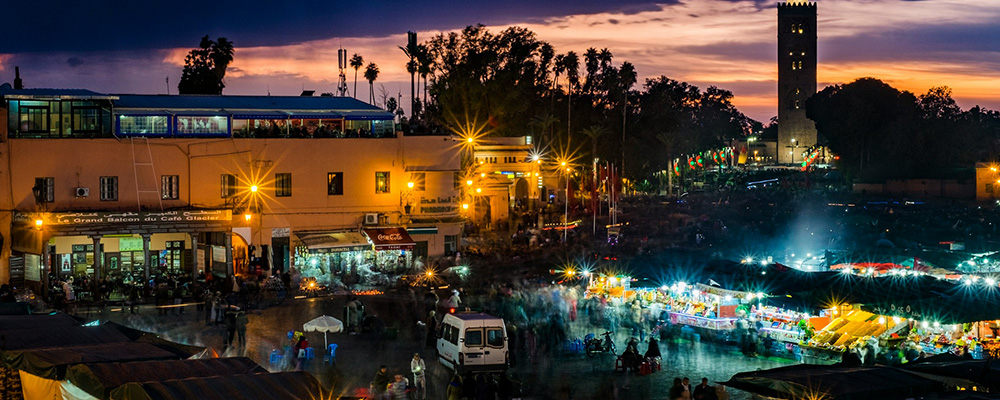
One of the most natural landmarks on this walk is Jemaa el-Fna, the famous square at the centre of Marrakech's public life. It connects several important parts of the Medina and provides a useful point of orientation before entering the covered market streets.
During the day, the square has juice stalls, small vendors and the constant movement of visitors and residents. Later in the afternoon and evening, food stalls, musicians and storytellers create a different atmosphere. A morning walk offers a calmer introduction, while an afternoon walk can finish with the energy of the square as the city becomes busier.
From the northern side of Jemaa el-Fna, the main souk streets lead into the traditional market district. If you want to understand the square before setting off, read our local guide to Jemaa el-Fna and our wider guide to the Marrakech Medina.
Discover the Authentic Souks of Marrakech
The souks are not one single market or one long shopping street. They form a network of connected lanes, small squares and specialist trading areas. Historically, many streets were associated with particular crafts. Some still retain a strong connection to those traditional trades, while others have become mixed shopping streets serving both local residents and visitors.
The main covered artery is Souk Semmarine. It leads north from the area of Jemaa el-Fna and connects with smaller souks. Visitors who only walk along the main street may see plenty of shops, but they can miss the more specialized lanes and workshops hidden nearby.
Our local explanation of Souk Semmarine shows how the main street connects to the surrounding market areas. You can also read An Essential Guide to Marrakech's Souks before your visit.
Rahba Kedima: The Old Spice Square
One of the most memorable places to discover is Rahba Kedima, also known as the Spice Square or Place des Épices. This open square is surrounded by traditional shops and small market stalls. You may see colourful spice displays, woven baskets, straw goods, herbs and traditional Moroccan products.
Rahba Kedima is also a useful point for understanding the geography of the souks. It connects several market lanes and gives visitors a chance to pause before exploring the smaller streets around it. Nearby, the atmosphere changes from the broad flow of Souk Semmarine to narrower passages where specialist traders and small workshops operate.
For a closer look, read our guides to the Secret Loop, the traditional souks and Marrakech carpets and rugs.
Souk Zrabi and the Traditional Carpet Market
Near Rahba Kedima, visitors can discover the carpet and rug market, commonly associated with Souk Zrabi and the traditional carpet auction area known as the Criée Berbère. This is one of the most interesting parts of the Medina for anyone curious about Moroccan weaving.
Carpets are not all the same. Different regions have their own weaving traditions, wool qualities, patterns and colours. Some rugs are thick and soft, others are flat-woven kilims, and others use colourful recycled fabrics. A knowledgeable guide can explain the differences and help visitors understand what they are looking at without turning the walk into a shopping obligation.
If carpets are one of your interests, you can read our Marrakech carpet and rug shopping tour page. It explains how a dedicated rug visit differs from a general Medina walk. You can also explore our luxury shopping tour if you are interested in higher-end craftsmanship and design.
Souk Haddadine: The Blacksmiths and Metalworkers
One of the most distinctive artisan areas is Souk Haddadine, traditionally associated with blacksmiths and metalworkers. Here, the sound of hammering metal can still be heard in workshops where artisans shape and work with metal.
Depending on the workshop and the time of day, visitors may see metal being cut, hammered, shaped or prepared for decorative objects. Lanterns, gates, trays and other pieces reflect the importance of metalwork in Moroccan homes and architecture.
This is a good example of why a guided walk should go beyond the main shopping street. Souk Semmarine is an important market artery, but the smaller craft areas reveal more about how objects are made and how traditional skills continue to be practised.
Explore more about the highlights of a Marrakech Medina walking tour and the traditional artisan lanes.
Souk Cherratine: Leatherwork and Traditional Craft
Another specialist area is Souk Cherratine, associated with leather goods and leatherworking. In the surrounding market lanes, visitors can find bags, belts, poufs and other traditional products. The quality of leather and workmanship can vary, so it is useful to understand the difference between a handmade item and a mass-produced souvenir.
A local guide can explain what to look for: the stitching, the finish, the lining, the feel of the leather and the way an item has been assembled. You can ask questions and learn about the craft without being expected to purchase anything.
For visitors who want to explore the commercial side of the souks in more depth, our Marrakech souk shopping tour is a separate option. If your main interest is simply understanding the Medina, the guided walking tour is the more natural choice.
Souk Smata: The Traditional Moroccan Babouche Market
Souk Smata is known for traditional Moroccan babouches, the leather slippers worn in homes and as part of traditional dress. The rows of colourful slippers are one of the most recognisable sights in the souks.
Visitors can learn about different shapes, leather finishes, embroidery and styles. Some babouches are simple everyday footwear, while others are more decorative and carefully finished. As with other crafts, comparing several examples helps you understand the differences.
To explore more of the Medina's traditional shopping streets, see our Souk Semmarine guide and our complete guide to the Marrakech souks.
Souk des Teinturiers: The Dyers' Souk
The Dyers' Souk, often called Souk des Teinturiers or Souk Sebbaghine, is associated with the traditional colouring of wool and textiles. Depending on the activity taking place, visitors may see skeins of coloured wool hanging above the lanes or observe the work involved in preparing materials.
The colours, textures and narrow streets make this part of the Medina especially interesting for photography. It also offers a reminder that the souks were organised around production and trade, not simply around selling souvenirs to visitors.
For more background on the traditional crafts and working life of the old city, continue with our Marrakech Medina Guide and guide to the Medina, souks and hidden gems.
Souk Chouari and the Woodworkers
Souk Chouari is traditionally connected with carpentry and woodwork. In the wider artisan quarter, visitors may find carved wooden objects, boxes, decorative pieces and other products made using traditional techniques.
Woodworking is one of the crafts that helps give the Medina its distinctive character. Doors, ceilings, furniture and small decorative objects all reflect the importance of wood in Moroccan architecture and daily life.
Beyond the Main Souks: Small Alleys, Workshops and Local Life
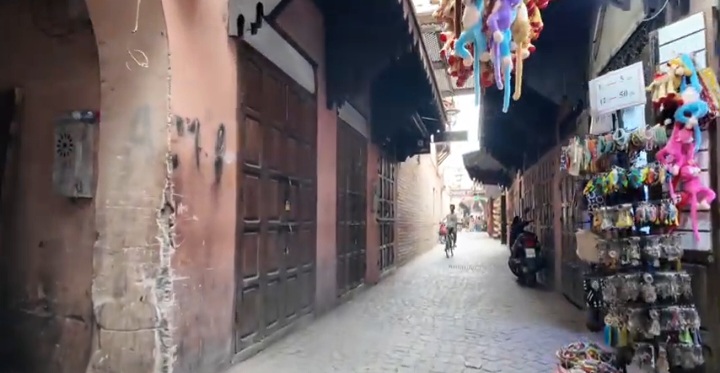
The most rewarding part of a Medina walk is often not a famous market name. It is a small passage leading to a family workshop, a traditional bakery, a neighbourhood fountain or a courtyard hidden behind an ordinary-looking door.
In the residential lanes, you may encounter a ferran, a traditional communal oven where families bring their bread to be baked. You may pass a fondouk, an old merchant building whose courtyard once accommodated traders, animals and goods. You may also see artisans working in small spaces that are easy to miss if you follow only the busiest shopping streets.
These are the details that make a local walking tour different from simply browsing the shops. The purpose is to understand how the Medina works, how its neighbourhoods connect and how traditional trades remain part of everyday life.
Our Secret Loop walking guide explains one way to understand the layout of the northern Medina. You can also read our full-day Marrakech walking itinerary for ideas about combining the souks with other historic areas.
How Long Does It Take to Walk from the Kasbah to the Souks?
The time depends on the exact location of your accommodation, the route chosen and how many stops you make. The Kasbah is in the southern Medina, while the main souk network is north of Jemaa el-Fna. Reaching the central market area is only one part of the experience; exploring the specialist souks and artisan lanes takes additional time.
A relaxed guided walk can include the Kasbah neighbourhood, the central square, Souk Semmarine, Rahba Kedima and selected specialist souks. If you want to visit several workshops, spend time learning about crafts or include monuments, a longer private itinerary can be arranged.
For a simple route overview, open Google Maps walking directions from the Kasbah to Rahba Kedima. The Medina contains narrow lanes and pedestrian passages, so map directions should be treated as a general orientation rather than a substitute for local knowledge.
When Is the Best Time to Visit the Souks?
Morning is usually a good time to explore the artisan areas. Shops begin opening, the streets are often cooler and some craftspeople are already at work. The exact opening time varies from one shop and trade to another. Friday around midday can be quieter because of prayers, and opening patterns may change during Ramadan and religious holidays.
Before setting out, check our practical guide to what time the souks open and close in Marrakech. You can also see Marrakech tours available this week if you are planning your visit at short notice.
A Guided Walking Tour Without Pressure to Shop
Many visitors want to discover the traditional souks but do not necessarily want to spend the day shopping. A good walking tour should allow you to learn about the Medina, meet local people, understand the crafts and enjoy the atmosphere at your own pace.
Visit Marrakech Medina is an independent local guiding service that has been guiding visitors since 2004. Our approach is based on showing the real Medina, its traditional streets, local markets and artisan areas. There is no obligation to buy anything during a walk. You can ask questions, look around, take photographs where appropriate and enjoy the experience without pressure.
Our Medina walk has been featured in The Rough Guide to Morocco, and our guiding has been recommended by Rick Steves. You can discover the main Marrakech walking tour or compare it with our complete range of tours.

Private Walking Tours from Kasbah Riads and Hotels
A private tour is a practical choice for visitors staying in the Kasbah because the guide can arrange to meet them near their accommodation and adapt the route to their interests. The walk can focus on traditional souks, artisan workshops, the history of the Medina or a combination of these subjects.
Private tours are available every day, with morning and afternoon starting options. The pace and route can be adapted for couples, families, friends and small private groups. If you would like to include monuments or a longer visit, mention this when contacting us so the itinerary can be planned accordingly.
For visitors who prefer to meet other travellers, there are also Marrakech group tours. These have scheduled meeting arrangements rather than individual riad pickup. You can also check this week's tours before choosing a date.
Explore More of Marrakech with Visit Marrakech Medina
The walk from the Kasbah to the traditional souks is a wonderful introduction to the old city, but it is only one way to discover Marrakech. Depending on your interests, you may want to explore the historic monuments, the markets, the carpets, the workshops or the quieter residential lanes.
- Guided Marrakech Medina walking tour – discover the old city with a local guide.
- Marrakech souk shopping tour – explore traditional markets and Moroccan crafts.
- Marrakech carpet and rug tour – learn about Moroccan weaving and rugs.
- Luxury shopping tour – discover selected artisans and higher-end craftsmanship.
- All Marrakech tours – compare the different experiences.
- Marrakech group tours – find a scheduled shared experience.
- Tours available this week – check current tour options.
- Things to do in Marrakech – plan more of your stay.
- Marrakech Medina Guide – understand the old city and its neighbourhoods.
- Essential guide to the souks – learn about the traditional market districts.
- Souk Semmarine – discover the main covered market street.
- The Secret Loop – explore the historic northern Medina.
- Souk opening hours – plan the best time for your walk.
- Full-day walking itinerary – combine the souks with the city's main sights.
Arrange Your Walk from the Kasbah
If you are staying in the Kasbah, you do not need to make your own way through the Medina to find the traditional souks. Contact us with the name of your riad or hotel, your preferred date and the kind of experience you would like. For a private tour, we can discuss a convenient meeting point or pickup arrangement and plan a route that leads you from the southern Medina into the authentic markets and artisan quarters.
There is no need to pay anything in advance for the tour; payment is made at the end. Whether you want to discover the traditional souks, understand the history of the Medina or simply enjoy a relaxed walk with a local guide, we will be happy to help.
Contact us on WhatsApp or send your request through our booking form. Discover our full range of authentic Marrakech tours on our homepage.