
Souk Criée Berbère
Discover the Criée Berbère: The Traditional Carpet Auction Area of Marrakech
The Criée Berbère is one of the most fascinating traditional trading areas in Marrakech Medina, historically associated with the buying and selling of Berber carpets from different regions of Morocco. Located near Rahba Kedima, within the traditional carpet souk, this historic place offers a glimpse into an older commercial system where merchants gathered to trade handmade rugs and textiles. To discover this part of the Medina with an independent local guide, contact Visit Marrakech Medina on WhatsApp or use our booking form. You can also explore our Marrakech carpet and rug shopping tour, our traditional souk shopping tour or our private Medina walking tour. Visit Marrakech Medina is mentioned in the Rough Guide to Morocco and recommended by Rick Steves.

What Is the Criée Berbère?
The name Criée Berbère refers to the traditional Berber carpet auction area of Marrakech. The French word "criée" describes a public auction in which goods are presented and prices are called aloud by an auctioneer or intermediary.
For generations, this commercial area has been associated with the trading of carpets arriving from different parts of Morocco, particularly rural communities in the Atlas Mountains and other weaving regions.
Unlike an ordinary carpet shop, the traditional auction system brought professional merchants together to examine carpets and compete to purchase selected pieces.
The Criée Berbère is closely connected to Souk Zrabi, also known as Souk Joutia Zrabi or Souk Zrabia. These names refer to the traditional carpet market around Rahba Kedima.
To understand the wider organisation of the old city, explore our Marrakech Medina Guide and our geographical guide to Marrakech Medina.
Where Is the Criée Berbère Located?
The Criée Berbère is situated in the carpet-market area close to Rahba Kedima, the historic square also known as the Spice Square.
Rahba Kedima is one of the useful geographical landmarks for visitors exploring the northern part of the traditional souks. From the square, smaller covered passages lead towards the carpet market and its surrounding shops.
The area is also connected to the broader commercial network of the Medina, including Souk Semmarine and the specialist markets surrounding the main shopping streets.
Visitors interested in traditional carpets can combine the Criée Berbère with Souk Joutia Zrabi, the traditional Moroccan carpet market. Although the names are closely connected, the Criée Berbère specifically refers to the historical auction and trading tradition associated with this carpet-market area.
Read our dedicated Souk Joutia Zrabi guide to discover more about the market itself, its carpets and traditional shops.
How Did the Traditional Berber Carpet Auctions Work?
The traditional carpet auctions were an important part of Marrakech's commercial life. Carpets arrived from different rural areas and weaving communities, bringing together the work of artisans and the business activities of Medina merchants.
The trading process involved several participants:
- Weavers and rural producers: Families and artisans produced carpets in their villages and communities.
- Carpet suppliers: Traders transported carpets from different regions towards Marrakech.
- Merchants: Professional buyers examined the carpets and assessed their materials, workmanship, dimensions and designs.
- The auctioneer: A person responsible for presenting the carpets and announcing the bids.
- Retail shopkeepers: Buyers who acquired carpets for resale to local customers and visitors.
One traditional trading method was known as dalala. During this type of auction, a carpet was presented to potential buyers while the auctioneer called out the price. Interested merchants could make competing offers until a sale was agreed.
This system allowed carpets from different regions to enter Marrakech's wider commercial network.
The Role of the Auctioneer in the Criée Berbère
The auctioneer played an important role in the traditional carpet-trading process. Rather than waiting for customers to visit individual shops, the auctioneer helped bring the carpets directly to interested merchants.
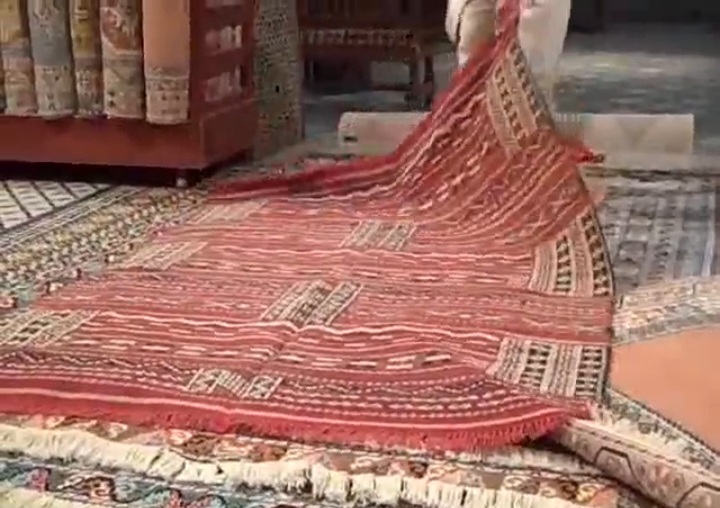
Carpets could be unfolded and displayed so that buyers could examine their colours, patterns, materials and general condition.
The auctioneer would announce the proposed price and communicate offers between interested buyers. The process required familiarity with the carpet trade, the value of different pieces and the expectations of professional merchants.
For someone unfamiliar with this traditional system, the speed of the auction and the interaction between the participants could be particularly interesting.
Carpets Arriving from the Atlas Mountains and Other Moroccan Regions
One of the most interesting aspects of the Criée Berbère is its connection with the different weaving traditions of Morocco.
Carpets brought to Marrakech represent a variety of regional styles. Their designs often reflect local traditions, available materials, family techniques and the cultural identity of the communities where they were made.
Beni Ourain Carpets
Beni Ourain carpets are traditionally associated with the Middle Atlas Mountains. They are often made from natural wool and recognised for their light backgrounds and distinctive dark geometric patterns.
Azilal Carpets
Azilal rugs originate from the High Atlas region and are known for their colourful patterns and expressive designs. They often combine natural wool with bright decorative elements.
Boujad Carpets
Boujad carpets are appreciated for their warm colours, including red, pink, orange and purple. Their patterns can be geometric, abstract or highly individual.
Taznakht Carpets
Taznakht is known for traditional weaving techniques and distinctive regional designs. These carpets are associated with communities in southern Morocco and the wider High Atlas region.
Boucherouite Rugs
Boucherouite rugs are traditionally created using recycled fabric and textile pieces. They are particularly recognisable for their colourful appearance and creative combinations of materials.
These different traditions demonstrate why Marrakech became such an important place for the commercial exchange of Moroccan carpets.
Why Was Marrakech Important for the Moroccan Carpet Trade?
Marrakech has historically served as an important meeting point between rural communities, mountain regions and larger commercial centres.
Carpets produced in villages and remote areas could be transported to the city, where merchants had access to a wider network of buyers.
This relationship connected rural weaving communities with urban commerce. It also allowed visitors and residents to discover carpets originating from different parts of Morocco without travelling to each individual production region.
The Medina's specialist markets helped organise this commercial activity. Different areas became associated with particular products, crafts and professions.
The Criée Berbère formed part of this traditional trading environment and remains an important reference point when discussing Marrakech's carpet-market history.
Can Visitors Still Watch the Traditional Carpet Auction?
The Criée Berbère remains an interesting place to visit, but it is important to distinguish between its historical auction tradition and the commercial activity taking place today.
Traditional carpet auctions have been reported in the area, sometimes during the late afternoon. However, the activity and frequency can vary. Visitors should not assume that an auction will take place on every visit or that a particular schedule is guaranteed.
When an auction is taking place, the experience can be very different from ordinary carpet shopping. Carpets are presented to professional buyers, and prices may be called aloud as merchants examine the pieces.
These transactions are primarily part of the trade between professionals rather than a conventional tourist shopping event.
Even when no auction is taking place, the surrounding carpet shops provide an opportunity to discover traditional rugs, kilims and Moroccan textiles.
The Historical Side of the Criée Berbère
The history of the Criée Berbère is more complex than its association with carpets alone. Historical accounts also associate the wider auction area with earlier slave auctions in Marrakech.
This is an important and difficult part of the city's commercial history. The present-day carpet market should not be confused with those earlier practices. Its identity today is primarily associated with Moroccan carpets, textiles and traditional trading.
Understanding the different historical layers of the Medina helps visitors appreciate that its markets have changed over time while retaining connections to older commercial traditions.
How Is the Criée Berbère Different from an Ordinary Carpet Shop?
A traditional carpet shop is generally organised around individual customers. Visitors can browse different pieces, ask questions, compare designs and discuss a purchase with the shopkeeper.
The historical auction system had a different purpose. It was designed primarily to connect carpet suppliers and professional merchants through competitive trading.
The main differences include:
- Traditional auction: Carpets are presented to several professional buyers, with prices called aloud.
- Carpet shop: Individual customers examine pieces and discuss a retail purchase.
- Wholesale trading: Merchants acquire carpets for resale and commercial distribution.
- Retail shopping: Visitors can choose individual carpets for their homes or as souvenirs.
These activities are connected, but they represent different stages of the carpet trade.
Discover the Criée Berbère and Other Traditional Souks
The carpet auction area is part of a much larger network of traditional markets. Visitors can combine several specialist souks to understand the different trades that shaped Marrakech Medina.
Souk Joutia Zrabi
The traditional carpet market is the natural place to continue exploring Moroccan rugs, handmade carpets and regional weaving styles. Discover our dedicated Souk Joutia Zrabi article.
Rahba Kedima
Rahba Kedima, or Spice Square, is known for its traditional herbalists, spices, baskets and local products. It is also an important landmark for finding the surrounding specialist markets.
Souk Smata
Souk Smata is the traditional Moroccan slipper market, famous for its colourful babouches and leather footwear. It offers a completely different perspective on the specialist crafts of the Medina.
Souk Semmarine
Souk Semmarine is one of the main commercial streets of Marrakech Medina, connecting visitors with several smaller shopping passages and traditional markets.
To discover more of these places, read our Marrakech souks and shopping guide and our guide to hidden souks most tourists miss.
Discover Moroccan Carpet Traditions with a Local Guide
Exploring the Criée Berbère with a local guide can help visitors understand the difference between the traditional carpet market, the historic auction system and the retail shops surrounding it.
With Visit Marrakech Medina, you can discover the specialist markets, learn about traditional Moroccan craftsmanship and explore the hidden passages of the old city with an independent local guide who has been guiding visitors since 2004.
Our approach is based on authentic local knowledge, cultural discovery and a relaxed experience. There is no pressure to purchase carpets or other products. You can ask questions, compare different crafts and enjoy discovering the Medina at your own pace.
Explore our Marrakech carpet and rug shopping tour, our Marrakech group tours and our tours available this week.
Discover our full range of authentic Marrakech tours on our homepage: Visit Marrakech Medina.
Plan Your Visit to the Criée Berbère
Would you like to discover the traditional carpet market, learn about the history of Berber carpet trading and explore the specialist souks of Marrakech with a knowledgeable local guide?
Contact Visit Marrakech Medina to discuss your visit and arrange a private or shared experience according to your interests and availability.
Contact us directly on WhatsApp or send your request through our booking form.
Discover the real Marrakech Medina, its traditional carpet markets, its artisans and its hidden commercial history with Visit Marrakech Medina.