
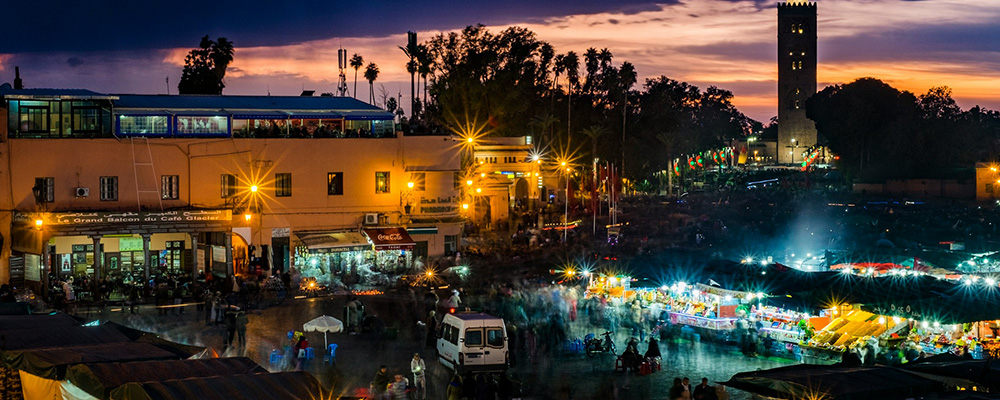
Streets Around Place Ben Salah: Discover a Historic Marrakech Neighborhood
Just beyond the busiest tourist streets of Marrakech, the neighborhood around Place Ben Salah reveals another side of the Medina. Here, everyday life continues around an important fourteenth-century mosque, traditional homes, small shops, narrow derbs and streets that have connected Marrakech neighborhoods for generations.
Place Ben Salah, also written Place Ben Saleh, is not a famous tourist square like Jemaa el-Fna. Its attraction lies in something different: the opportunity to experience a historic neighborhood where religious architecture, local commerce and ordinary residential life exist side by side.
At the heart of the area stands the Ben Salah Mosque, one of the most significant surviving monuments associated with the Marinid period in Marrakech. Its historic minaret is a reminder that the city's architectural history extends far beyond its famous Almoravid, Almohad and Saadian monuments.
The surrounding streets, including Taoulat Ben Saleh, Rue Sidi Boulabada and Rue Tachenbacht, offer visitors a chance to discover the structure of a traditional Medina neighborhood.
This local guide explains the history of Place Ben Salah, the streets worth exploring, how to reach the neighborhood from Jemaa el-Fna, and which nearby riads provide convenient accommodation for visitors.
Want to explore this part of Marrakech with a local guide? Our private Marrakech Medina walking tour introduces you to historic neighborhoods, traditional architecture and the everyday culture of the old city.
Book directly: Message us on WhatsApp or use our online booking form.
Where Is Place Ben Salah in Marrakech?
Place Ben Salah is located within the historic Medina of Marrakech, in the eastern part of the old city's central neighborhood network.
The area is associated with the Ben Salah Mosque and the streets that connect it with Derb Dabachi, the surrounding residential quarters and the routes leading toward the historic souks.
Unlike Jemaa el-Fna, Place Ben Salah is not primarily a destination for entertainment or large tourist gatherings.
It is a neighborhood landmark.
Local residents use the surrounding streets for daily journeys, shopping, work and access to nearby community facilities.
Visitors can reach the area on foot from Jemaa el-Fna, although the precise route depends on the entrance they use and any temporary changes to pedestrian access.
Google Maps walking itinerary: Walk from Jemaa el-Fna to Place Ben Salah — view route, distance and walking time.
For a wider introduction to the Medina's street network, read our ultimate walking tour through Marrakech.
Why Is Place Ben Salah Historically Important?
The historical importance of the neighborhood is closely connected with the Ben Salah Mosque, also known as the Ibn Salih Mosque.
The mosque belongs to the Marinid period, an important but sometimes less familiar chapter in Marrakech's architectural history.
While the Marinid rulers established their principal political center in Fès, their period also left important architectural traces in Marrakech.
The Ben Salah Mosque is one of the most notable examples.
Architectural records associate the mosque with the early fourteenth century, and the construction of its minaret is linked to an inscription dated August 1321.
This makes the mosque particularly valuable for understanding the development of religious architecture between the earlier Almohad period and the later dynasties that shaped Marrakech.
The monument is also significant because it was part of a larger religious and community complex rather than an isolated building.
Historical research identifies associated spaces including a mausoleum, educational facilities, access courtyards and other functions connected with religious and neighborhood life.
The complex therefore offers an opportunity to understand how religious institutions contributed to the organization of traditional Moroccan urban neighborhoods.
For a broader historical introduction, explore our Secret Loop through the historic Marrakech Medina.
Who Was Ibn Salih, and Why Is the Neighborhood Named After Him?
The name Ben Salah is associated with Ibn Salih, whose tomb forms part of the historical religious complex.
Architectural documentation describes the mosque as having been established around the tomb of Muhammad ben Salah during the early fourteenth century.
As with many traditional Moroccan place names, the association between a respected figure and a neighborhood helped preserve local identity.
However, the available historical records should not be stretched into a detailed biography without reliable evidence.
What can be established is that the mosque and its associated religious complex became central landmarks within the neighborhood.
Over time, the name Ben Salah came to identify not only the monument but also the surrounding urban area.
Today, visitors may encounter different spellings, including Ben Salah, Ben Saleh and Ibn Salih.
These variations refer to the same historical name in different transliteration conventions.
The Streets Around Place Ben Salah
One of the best ways to appreciate Place Ben Salah is to explore the surrounding streets rather than looking for a single attraction.
Historical architectural research identifies three important routes associated with the mosque complex and its neighboring urban blocks:
- Taoulat Ben Saleh
- Rue Sidi Boulabada
- Rue Tachenbacht–Isbtiyyin
These streets help explain how the neighborhood connects with the wider Medina.
1. Taoulat Ben Saleh: The Neighborhood's Local Connection
Taoulat Ben Saleh is one of the important streets associated with the Ben Salah neighborhood.
It connects the local area with the wider street network leading toward Derb Dabachi.
For visitors, this connection is useful because Derb Dabachi is one of the recognizable routes extending from the Jemaa el-Fna area into the eastern Medina.
Taoulat Ben Saleh illustrates how smaller neighborhood streets connect residential areas with major commercial routes.
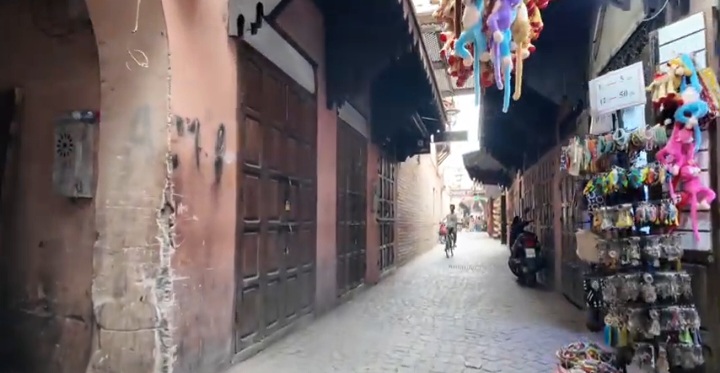
As you walk, notice the difference between the busier connecting streets and the narrower residential derbs branching away from them.
Google Maps: Walking directions from Jemaa el-Fna to Taoulat Ben Saleh.
2. Rue Sidi Boulabada: A Street in the Historic Neighborhood Network
Rue Sidi Boulabada is another route identified in research on the Ben Salah architectural complex.
Its importance comes from its relationship with the surrounding street network.
Traditional Marrakech neighborhoods developed through interconnected streets rather than a modern rectangular grid.
Some routes carried movement between major parts of the city, while smaller passages served groups of homes.
Rue Sidi Boulabada forms part of this historic urban structure.
Visitors should observe the street respectfully, remembering that the surrounding derbs may lead to private residential spaces.
Locate Rue Sidi Boulabada on Google Maps.
3. Rue Tachenbacht–Isbtiyyin: A Historic Medina Route
Rue Tachenbacht–Isbtiyyin is particularly interesting because researchers have described it as part of an important route through the old city.
Historical interpretations associate this corridor with movement between the areas of Bab Aghmat and Bab el-Khemis.
Some scholars have suggested that important streets in the Medina may preserve the alignments of routes that existed before the surrounding urban fabric fully developed.
This does not establish that every part of the present street dates from the city's foundation.
It does, however, demonstrate why the study of ordinary streets is important for understanding the historical geography of Marrakech.
Find Rue Tachenbacht on Google Maps.
4. The Smaller Derbs Around Ben Salah
Beyond the principal streets, the neighborhood contains smaller passages known as derbs.
A derb is a narrow lane, sometimes ending in a residential courtyard or a group of private homes.
These passages are characteristic of traditional Moroccan Medina architecture.
They create a gradual transition between public streets and more private residential spaces.
Visitors should avoid entering closed or clearly private passages without permission.
The most rewarding way to explore is to follow public routes, observe the architectural details and respect the people who live there.
For more about the structure of Marrakech's traditional neighborhoods, read our deep-dive guide to the soul of Marrakech Medina.
The Ben Salah Mosque: A Rare Marinid Landmark
The Ben Salah Mosque is the architectural centerpiece of the neighborhood.
Its historical significance is particularly notable because relatively few major Marinid-period monuments survive in Marrakech compared with the better-known architectural heritage of other dynasties.
The mosque's minaret preserves important evidence of fourteenth-century design.
Researchers have examined how its architecture relates to earlier Almohad traditions and later Moroccan religious buildings.
Rather than being simply a local place of worship, the mosque forms part of a broader architectural story about the evolution of Moroccan religious architecture.
Visitors can appreciate the exterior from appropriate public viewpoints.
As with most active mosques in Marrakech, non-Muslim visitors should not assume that entry to the prayer hall is permitted.
Respect worshippers and avoid photographing people during prayer without permission.
Google Maps: Walking directions from Jemaa el-Fna to Ben Salah Mosque.
The Historic Ben Salah Madrasa and Neighborhood Education
The Ben Salah area is also associated with a historic madrasa, an institution traditionally connected with religious learning.
Historical accounts attribute the foundation of the Ben Salah Madrasa to the reign of the Alaouite ruler Moulay Rachid in the seventeenth century, although the wider religious complex has older origins.
The distinction between the mosque and the madrasa is important.
The mosque belongs to the Marinid architectural history of the early fourteenth century, while accounts of the madrasa's foundation point to a later period.
Over the centuries, the educational institution contributed to the cultural and intellectual life of the neighborhood.
Students lived among residents, merchants and artisans, creating connections between formal learning and everyday Medina life.
This relationship between education, religion and neighborhood activity helps explain the historical importance of the Ben Salah district.
Do not assume that the historic madrasa is open for ordinary tourist visits. Access conditions should be checked before planning an interior visit.
What Is Everyday Life Like Around Place Ben Salah?
The Ben Salah neighborhood is a place where the Medina continues to function as a living city.
It is not simply a collection of monuments preserved for tourists.
Residents move through the streets, local businesses serve their customers, and traditional neighborhood routines continue alongside the growing number of visitors staying in nearby riads.
Morning can be a particularly interesting time to observe this everyday activity.
As businesses open and people begin their day, the neighborhood develops a rhythm that differs from the busy tourist atmosphere of Jemaa el-Fna.
Later in the day, the connecting streets may become livelier as pedestrians move between residential areas, the souks and the central square.
For visitors, the experience is about noticing ordinary details:
- Traditional doorways and residential entrances
- Small neighborhood businesses
- People walking between local streets
- The relationship between the mosque and its surrounding buildings
- The changing width of streets and derbs
- Architectural features adapted to privacy and shade
- Everyday commercial and social activity
These observations help explain why the Medina is more than a collection of tourist attractions.
Why Traditional Medina Neighborhoods Were Organized Around Community Facilities
Historic Marrakech neighborhoods often developed around a group of essential community facilities.
These could include a mosque, a public fountain, a communal bread oven, a hammam and educational spaces.
Such facilities supported the practical and social needs of residents.
The mosque provided a place for worship and community gathering.
Public fountains supplied water, while communal ovens allowed households to have bread baked without maintaining large private ovens.
Hammams served important bathing and social functions.
Educational institutions contributed to the transmission of religious and intellectual traditions.
The Ben Salah complex offers an especially interesting example because architectural research has identified several different religious and community functions within the historical ensemble.
Learn more about traditional neighborhood life in our Marrakech Medina deep-dive walking guide.
How to Walk from Jemaa el-Fna to Place Ben Salah
Jemaa el-Fna is the easiest starting point for many visitors because it is one of the best-known landmarks in Marrakech.
From the square, walking routes lead into the eastern Medina through the network of streets associated with Derb Dabachi and neighboring quarters.
The precise route to Place Ben Salah depends on your starting point and which pedestrian passages are accessible.
For this reason, the Google Maps link below is more useful than a fixed claim about distance or walking time.
Open the Jemaa el-Fna to Place Ben Salah walking itinerary on Google Maps.
The map provides a suggested pedestrian route together with its estimated distance and duration.
Be aware that GPS navigation can be imperfect in the narrow lanes of Marrakech Medina.
If a route appears to lead through a private doorway or an inaccessible passage, return to a recognizable public street rather than forcing your way through.
A local guide can make the journey easier while explaining the history of the streets along the way.
Nearby Riads and Guesthouses Around Place Ben Salah
One of the most useful features of the Ben Salah neighborhood is the presence of traditional riads and guesthouses within the surrounding Medina streets.
Staying in this part of Marrakech can appeal to visitors who want to explore historic neighborhoods on foot while remaining connected to the souks and Jemaa el-Fna.
The following properties have been identified in the Ben Salah area or its neighboring Medina quarters.
These are independent accommodation businesses. Their inclusion is intended to help visitors understand the local geography, not to imply a commercial partnership or personal endorsement.
1. Riad Malfa – Rue Ben Salah
Address: Rue Ben Salah, Derb Kabir No. 11, Marrakech.
Riad Malfa is located in the Ben Salah area, making it particularly relevant for visitors interested in exploring this neighborhood.
Its position provides a useful starting point for discovering the surrounding streets and continuing toward the Medina's cultural attractions.
Google Maps: Walk from Riad Malfa to Place Ben Salah.
2. Maison Do – Derb Hajjama
Address: 21 Derb Hajjama, Marrakech.
Maison Do is a traditional guesthouse associated with the Ben Salah neighborhood.
Its location is suitable for visitors who want to explore local Medina streets and reach the historic souks on foot.
Google Maps: Walk from Maison Do to Place Ben Salah.
3. Riad Thycas – Derb Bouanane
Address: 61 Derb Bouanane, Marrakech.
Riad Thycas is a guesthouse in the Medina's Ben Salah area.
Its position makes it another accommodation option for travelers who enjoy discovering traditional neighborhoods away from the busiest tourist streets.
Google Maps: Walk from Riad Thycas to Place Ben Salah.
4. Riad Salem Marrakech – Derb Sidi Abdelouassaa
Address: 24 Derb Sidi Abdelouassaa, Marrakech.
Riad Salem Marrakech is situated in the Ben Salah area of the Medina.
Visitors staying here can use Place Ben Salah as a neighborhood landmark when exploring nearby streets.
Google Maps: Walk from Riad Salem Marrakech to Place Ben Salah.
5. Riad Sharmance – Derb Ben Allal
Address: Derb Ben Allal, Marrakech.
Riad Sharmance is another traditional-style guesthouse associated with the Ben Salah neighborhood.
Its location provides access to the surrounding Medina streets and routes leading toward the central souks.
Google Maps: Walk from Riad Sharmance to Place Ben Salah.
6. Dar Hanane – Kaat Benahid
Address: 9 Derb Lalla Azzouna, Kaat Benahid, Marrakech.
Dar Hanane is located in the neighboring Kaat Benahid area, close to the historic museum and Ben Youssef quarter.
It offers a different starting point for exploring the northern and eastern parts of the Medina.
Google Maps: Walk from Dar Hanane to Place Ben Salah.
7. Riad Matham – Kaat Benahid
Address: 2 Derb Sidi Ahmed Ben Naceur, Marrakech.
Riad Matham is situated in the Kaat Benahid area, within walking reach of the Ben Youssef cultural district.
Visitors can connect their exploration of the museum quarter with the historic Ben Salah neighborhood.
Google Maps: Walk from Riad Matham to Place Ben Salah.
How to Choose a Riad Near Place Ben Salah
When choosing accommodation in the Medina, location is important, but it should not be the only consideration.
Two riads may appear close together on a map while having very different pedestrian access routes.
Before booking, consider the following:
- Walking access: Check the actual pedestrian route from the nearest accessible drop-off point.
- Luggage: Ask whether the riad can help with luggage through the Medina.
- Arrival instructions: Request a precise meeting point if arriving after dark.
- Room facilities: Confirm air conditioning, heating and other essentials directly.
- Accessibility: Ask about stairs and uneven passages if mobility is a concern.
- Current reviews: Read recent guest experiences before reserving.
- Location: Compare the walking route to Jemaa el-Fna, Ben Youssef and your planned attractions.
Do not rely only on a straight-line distance shown on a hotel listing. Walking routes through the Medina can be longer than they first appear.
Google Maps Walking Itineraries from Place Ben Salah
Place Ben Salah can serve as a useful starting point for exploring several important parts of Marrakech.
The following Google Maps links open pedestrian directions, allowing visitors to check the route, distance and estimated walking time.
Place Ben Salah to Jemaa el-Fna
Return toward the city's famous central square to experience its food stalls, public life and evening atmosphere.
Walking route: Place Ben Salah to Jemaa el-Fna.
Place Ben Salah to Rahba Kedima
Rahba Kedima is one of the most recognizable historic market squares in the Medina.
Its surrounding shops offer spices, baskets and traditional products.
Walking route: Place Ben Salah to Rahba Kedima.
Place Ben Salah to Ben Youssef Madrasa
The Ben Youssef Madrasa is one of the city's most celebrated historic educational monuments.
Its decorated courtyard and architectural details make it an important destination for visitors interested in Moroccan craftsmanship.
Walking route: Place Ben Salah to Ben Youssef Madrasa.
Place Ben Salah to the Marrakech Museum
The Marrakech Museum is located in the historic Ben Youssef area and provides an opportunity to explore a traditional palace setting.
Walking route: Place Ben Salah to Marrakech Museum.
Place Ben Salah to Souk Haddadine
Souk Haddadine is associated with traditional metalworking and is particularly interesting for visitors who want to discover the craft heritage of the Medina.
Walking route: Place Ben Salah to Souk Haddadine.
Place Ben Salah to Souk Zrabi
Souk Zrabi is associated with the traditional rug trade and the historic commercial life of the Medina.
Walking route: Place Ben Salah to Souk Zrabi.
Place Ben Salah to Bahia Palace
Bahia Palace is situated in the southern Medina and can be combined with a longer historical walk.
Walking route: Place Ben Salah to Bahia Palace.
For a longer itinerary connecting several historic areas, explore our full-day Marrakech walking itinerary.
Google Maps Routes from Jemaa el-Fna to the Nearby Souks
Many visitors prefer to begin their exploration at Jemaa el-Fna.
These additional walking links help connect the main square with important destinations near the Ben Salah neighborhood.
- Jemaa el-Fna to Rahba Kedima — walking directions
- Jemaa el-Fna to Souk Haddadine — walking directions
- Jemaa el-Fna to Souk Zrabi — walking directions
- Jemaa el-Fna to Ben Youssef Madrasa — walking directions
- Jemaa el-Fna to Bahia Palace — walking directions
Google Maps calculates its suggested route when you open each link. Distances and estimated times can change according to the chosen pedestrian path.
A Suggested Walking Tour Through the Ben Salah Neighborhood
Visitors who want to explore this part of Marrakech can follow a flexible route that combines neighborhood history with some of the Medina's better-known attractions.
Stop 1: Jemaa el-Fna
Begin at the famous square and observe the contrast between its open public space and the smaller streets leading into the Medina.
Stop 2: The Derb Dabachi Area
Continue toward the eastern Medina through the street network associated with Derb Dabachi.
Notice how the commercial atmosphere gradually changes as you move away from the main square.
Stop 3: Taoulat Ben Saleh
Enter the Ben Salah neighborhood through the public connecting streets.
Observe the relationship between local shops, residential buildings and the surrounding passages.
Stop 4: Place Ben Salah and the Mosque
Spend time appreciating the exterior of the historic mosque and learning about its Marinid architectural history.
Remember that the minaret is associated with construction in 1321.
Stop 5: The Surrounding Historic Streets
Explore the public sections of the nearby street network, including the routes associated with Rue Sidi Boulabada and Rue Tachenbacht.
Avoid entering private residential passages.
Stop 6: Rahba Kedima
Continue toward the historic spice-square area and discover the commercial atmosphere of the traditional souks.
Stop 7: Ben Youssef
Finish in the Ben Youssef cultural quarter, where the madrasa, museum and surrounding monuments provide a broader introduction to Marrakech's architectural history.
Open the main route: Google Maps walking itinerary: Jemaa el-Fna ? Place Ben Salah ? Rahba Kedima ? Ben Youssef Madrasa.
This is a suggested route rather than a guarantee that every narrow passage will be accessible. Check the map and follow public pedestrian streets.
What Makes the Ben Salah Neighborhood Different from the Main Souks?
The central souks of Marrakech are famous for their shops, textiles, leather products, lanterns, spices and traditional handicrafts.
The Ben Salah neighborhood has a different character.
Although commercial activity is part of its everyday life, the area's identity is also closely connected with its mosque, historic religious complex and residential streets.
Visitors who explore only Souk Semmarine and the main shopping areas may miss this quieter dimension of the Medina.
The contrast is one of the reasons a longer walking tour can be so rewarding.
For travelers interested specifically in shopping, our private Marrakech souks shopping tour focuses on traditional products, artisan workshops and practical buying advice.
For travelers who prefer history and neighborhood life, our Medina walking tour is a better starting point.
Traditional Architecture Around Place Ben Salah
The streets around Place Ben Salah offer an opportunity to observe the practical design of historic Medina neighborhoods.
Traditional Moroccan houses often emphasize interior privacy.
From the street, a building may appear relatively simple, while its interior contains a courtyard, decorated rooms or other architectural features.
Narrow streets provide shade and create transitions between public commercial areas and private residential spaces.
These design principles are important for understanding how people adapted urban environments to climate, privacy and community life.
However, visitors should not assume that every building in the neighborhood dates from the fourteenth century.
The Medina has been repaired, altered and rebuilt many times.
Its historic character comes from layers of development rather than a single period of construction.
Photography Around Place Ben Salah
For visitors interested in photography, the neighborhood offers subjects beyond the familiar tourist images of Marrakech.
Possible subjects include:
- The exterior architecture of Ben Salah Mosque
- Traditional street signs and place names
- Textures of historic walls and doorways
- Changes in light along narrow streets
- Local shopfronts and architectural details
- The contrast between busy connecting routes and quieter residential lanes
Always ask permission before taking close-up photographs of residents, shopkeepers or artisans.
Respect places of worship and avoid photographing people during prayer.
The neighborhood is a living community, not simply a tourist photography location.
When Is the Best Time to Explore Place Ben Salah?
The morning is often a pleasant time to discover the neighborhood.
Temperatures may be more comfortable, particularly during warmer months, and the streets can be less crowded than the busiest tourist areas.
Late morning is also useful if you plan to continue into the souks, when many businesses are open.
The afternoon offers a different atmosphere as residents and visitors move through the connecting streets.
During Ramadan, religious holidays and Friday prayer times, the rhythms of local businesses may change.
If you plan to combine your walk with shopping, consult our guide to Marrakech souk opening times.
Is Place Ben Salah Safe for Visitors?
Place Ben Salah is part of the historic Medina, where residents and visitors share narrow streets and public spaces.
As in any busy urban neighborhood, visitors should take normal precautions.
- Keep valuables secure.
- Pay attention to motorcycles and delivery vehicles.
- Stay on recognizable public routes.
- Do not enter private residential passages.
- Use reliable meeting points when arranging transport.
- Ask your riad for arrival directions if you are unfamiliar with the neighborhood.
For first-time visitors, a local guide can help with orientation and provide cultural explanations.
Our first-time visitor's guide to walking in Marrakech offers additional practical advice.
Can You Visit Place Ben Salah Without a Guide?
Yes. The public streets around Place Ben Salah can be explored independently.
You do not need a ticket simply to walk through the neighborhood.
However, understanding the history of the mosque, the Marinid period and the traditional organization of the surrounding streets can be more difficult without local or historical context.
A knowledgeable guide can explain the neighborhood's relationship with the wider Medina and help you appreciate details that are easy to overlook.
Our guide to walking tours in Marrakech explains the different ways to explore the old city.
Frequently Asked Questions About Place Ben Salah
Where is Place Ben Salah?
Place Ben Salah is located in the historic Medina of Marrakech, in the neighborhood surrounding Ben Salah Mosque.
Is Ben Salah the same as Ben Saleh?
Yes. Ben Salah, Ben Saleh and Ibn Salih are different transliterations associated with the same historical name.
What is Place Ben Salah famous for?
The area is particularly important for its historic mosque and associated religious complex, which preserve architectural evidence from the Marinid period.
How old is Ben Salah Mosque?
The mosque dates to the early fourteenth century, and its minaret is associated with construction beginning in August 1321.
Can tourists enter Ben Salah Mosque?
Visitors can appreciate the exterior from public areas. Non-Muslim visitors should not assume that entry to the active prayer hall is permitted.
How do I get to Place Ben Salah from Jemaa el-Fna?
You can walk through the Medina's connecting streets. Use the Google Maps walking route from Jemaa el-Fna for the suggested path, distance and time.
Are there riads near Place Ben Salah?
Yes. Accommodation options in the area include Riad Malfa, Maison Do, Riad Thycas, Riad Salem Marrakech and Riad Sharmance. Additional properties are available in neighboring Medina quarters.
Is Place Ben Salah close to the souks?
Yes. The neighborhood connects with the wider historic Medina, including routes toward Rahba Kedima and the traditional souk areas.
Can I walk from Place Ben Salah to Ben Youssef Madrasa?
Yes. The two areas are connected through the Medina's pedestrian network. Check the Google Maps walking itinerary.
Is Place Ben Salah a tourist market?
It is primarily a historic neighborhood centered on an important mosque and surrounding streets, rather than a specialized tourist market.
What streets surround Place Ben Salah?
Historical research identifies Taoulat Ben Saleh, Rue Sidi Boulabada and Rue Tachenbacht–Isbtiyyin as important routes associated with the area.
Is Place Ben Salah worth visiting?
Yes, particularly for visitors interested in historic architecture, neighborhood life and the less tourist-focused parts of Marrakech Medina.
How long should I spend exploring the neighborhood?
The time depends on your interests. You can include Place Ben Salah as a short stop or combine it with a longer walk through the eastern Medina, Rahba Kedima and Ben Youssef.
Can I book a private walking tour of the area?
Yes. Contact Visit Marrakech Medina to discuss a private walking experience that includes the Ben Salah neighborhood, subject to the agreed itinerary and available time.
Explore More of Marrakech Medina
Place Ben Salah is only one part of Marrakech's extensive historic street network.
If you enjoy discovering local neighborhoods, architecture and traditional life, the following guides provide useful ways to continue exploring.
- Private Marrakech Medina Walking Tour — discover the city's history and traditional neighborhoods with a local guide.
- The Secret Loop of Marrakech Medina — a walking route connecting the souks, neighborhood markets and Ben Youssef area.
- Exploring the Soul of Marrakech — discover the traditional institutions and everyday life of the Medina.
- Ultimate Marrakech Walking Tour — connect historic gates, palaces, souks and the oldest parts of the city.
- Marrakech Souks Shopping Tour — explore traditional markets and artisan products with a local shopping guide.
- Full-Day Marrakech Walking Itinerary — plan a longer day of sightseeing through the Medina.
Discover Place Ben Salah with a Local Marrakech Guide
The streets around Place Ben Salah tell an important story about Marrakech.
They show how religious monuments, educational institutions, neighborhood streets and everyday commerce have shaped the city over many centuries.
The Ben Salah Mosque preserves a rare example of Marinid architectural heritage, while the surrounding derbs reveal the continuing life of the historic Medina.
For travelers who want to go beyond Jemaa el-Fna and the busiest souks, the neighborhood offers an opportunity to discover a different side of Marrakech.
At Visit Marrakech Medina, we help visitors explore the city's history, architecture, traditional markets and local neighborhoods with experienced guides.
Our guiding experience dates back to 2004, and our walking tours are designed to combine historical explanations with an understanding of everyday Medina life.
We can discuss a private itinerary that includes Place Ben Salah and other areas that interest you.
Ready to explore the real Marrakech?
Message us on WhatsApp: +212 614 905 398.
Or use our online booking form.
Tell us your preferred date, number of participants and the neighborhoods or monuments you would like to discover.
About Visit Marrakech Medina
This local guide was prepared for Visit Marrakech Medina, a Marrakech walking and shopping tour service with guiding experience dating back to 2004.
Our team introduces visitors to the historical monuments, traditional souks, neighborhoods and everyday culture of Marrakech.
Our Medina guiding has been featured in The Rough Guide to Morocco and discussed in the Rick Steves travel community.

We believe the best way to understand Marrakech is to walk through its streets, listen to their stories and discover the people and traditions that give the city its character.
Historical Research and Sources
The historical information in this guide draws on architectural research into the Ibn Salih complex and its place within Marrakech's urban history.
- Iñigo Almela and Samir Ait Oumghar, The Architectural Ensemble of Ibn Salih in Marrakech (14th–20th Centuries), 2022.
- Archnet: Ben Salah Mosque — architectural and historical information.
These sources help distinguish documented history from general observations about life in the modern Medina.