

Marrakech Medina Workshops
Where Can You Discover Traditional Artisan Workshops in Marrakech Medina?
If you want to discover the real craftsmanship of Marrakech, a visit to its traditional workshops is one of the most interesting ways to explore the Medina. Our Marrakech walking tours and shopping tours introduce visitors to traditional souks, working artisans, small workshops and the people behind Moroccan crafts. Our guiding experience has been featured in The Rough Guide to Morocco by Daniel Jacobs, and our Marrakech walking tour was recommended by Darren Humphrys in the January 2015 Rick Steves Travel Forum discussion. After guiding visitors through the Medina since 2004, we know that some of its most memorable discoveries are made behind ordinary doors, where craftspeople continue their work away from the main shopping streets.

A workshop visit is different from simply looking at products in a shop. You can see materials being prepared, tools being used and individual pieces taking shape. You may watch a craftsperson cutting leather, shaping metal, working with wood, preparing textiles or finishing a handmade object. The experience depends on which artisans are working that day, but it offers a much closer look at the skills behind Moroccan craftsmanship.
What Makes a Traditional Workshop Different from a Souk Shop?
The souks of Marrakech are full of finished products. You will see lamps, leather bags, slippers, carpets, ceramics, jewellery, baskets and many other objects displayed for visitors. But the place where an object is sold is not necessarily the place where it was made.
A traditional workshop is a working space. It may be a small room opening onto an alley, a courtyard inside an old building or a larger shared space where several craftspeople work. Some workshops are easy to recognise because you can hear the tools or see materials being handled. Others are hidden behind an ordinary doorway.
In a working workshop, the important thing is the process. You may see an artisan measure a piece of material, cut it to size, shape it, assemble it, decorate it or prepare it for finishing. These stages help explain why handmade objects can differ from one another and why the time and skill involved matter.
Not every shop has its own workshop, and not every artisan can welcome visitors at every moment. Some spaces are private working areas, some are too small for groups, and others may be busy with orders. A local guide can help you distinguish between a shop selling finished goods and a place where you can actually observe a craft being practised.
Where Do the Artisans Work in Marrakech Medina?
The traditional souks developed around different trades. Although the organisation of the markets has changed over time, craft names and specialised lanes still help visitors understand the commercial geography of the old city.
One of the easiest places to begin exploring is Souk Semmarine, the main covered shopping artery leading north from Jemaa el-Fna. From here, smaller lanes branch towards different craft areas. The main street is busy with shops, but the more interesting discoveries often come from exploring the side streets with someone who knows the area.
Rahba Kedima, also known as the Spice Square, is another useful reference point. Its surrounding lanes connect different parts of the souk network. You will find shops selling spices, baskets, natural products and decorative objects, as well as streets leading towards older craft areas.
Nearby, Souk el Attarine is associated with traditional perfumery and spices. The surrounding commercial lanes are worth exploring for their variety of products and their connection to the older trading life of the Medina.
For a wider understanding of how these streets connect, read our guide to the Secret Loop through Marrakech Medina. It explains how Rue Biadine, Znikat Rahba, Rue Sidi Ishak, Rahba Kedima and Souk Semmarine form a useful route through different parts of the souks.
Leather Workshops and the Making of Moroccan Babouches
Leather is one of the most recognisable materials in Moroccan craftsmanship. In the Medina, visitors encounter leather bags, belts, poufs, wallets, slippers and other handmade products. The finished object, however, is only the last stage of a longer process.
In a leatherworking space, an artisan may select a hide, prepare a pattern, cut the material, stitch separate pieces together and finish the edges. The work varies according to the product. Making a simple leather accessory is different from constructing a structured bag or a traditional pair of babouches.
Souk Cherratine is associated with leatherworking and traditional leather goods. It is a useful area to explore if you are interested in the skills involved in making products from leather.
For a more detailed explanation of the material and the different stages of production, read our article Inside a Leather Workshop in Marrakech. It looks more closely at how leather goods are made and what visitors can learn by observing the work.
It is also useful to understand the difference between tanning and leatherworking. Tanning prepares animal hides into leather, while leatherworkers use prepared leather to make objects. These are connected trades, but they are not the same activity. A visit to a leather goods workshop does not automatically include a visit to a tannery.
Textile Workshops and Traditional Weaving
Textiles are another important part of Marrakech's craft traditions. Moroccan fabrics appear in clothing, cushions, blankets, rugs, decorative pieces and household objects. The techniques and materials vary depending on the region, the intended use and the individual craftsperson.
In a weaving workshop, you may see threads arranged on a loom and gradually transformed into fabric. The process requires preparation, patience and a good understanding of tension, pattern and colour. Some pieces are made using traditional designs, while others combine older techniques with more contemporary styles.
When visiting a textile artisan, look beyond the finished pattern. Ask what fibres are being used, how the threads are prepared and how long a particular piece takes to make. These questions can reveal more about the work than simply asking how much an item costs.
If you are interested in Moroccan carpets and weaving, our Marrakech shopping tour can include time to explore textiles and rugs according to your interests. A specialised visit is particularly useful if you are comparing different types of carpets, materials, weaving styles and prices.
Metalworkers and the Craft of Moroccan Lanterns
Metalwork is one of the crafts that visitors can often recognise by sound. In a traditional workshop, the tapping of tools against metal may be heard before the artisan or the finished object comes into view.
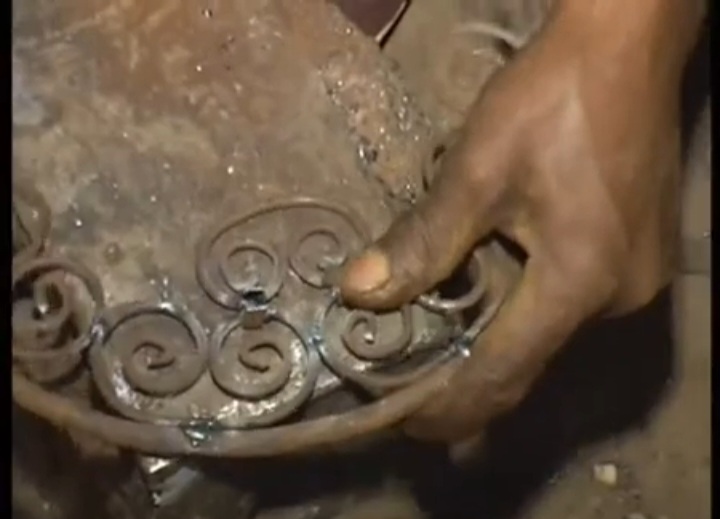
Depending on the workshop, metalworkers may cut, shape, pierce, engrave or assemble metal components. Moroccan lanterns are a familiar example. Their decorative patterns are created through careful work on the metal, allowing light to pass through the openings when the lantern is illuminated.
Other metal objects include trays, decorative plates, fittings and household pieces. Some require repeated hammering and shaping, while others involve detailed finishing and assembly. The techniques differ, so it is worth taking time to observe what the craftsperson is actually doing.
When you see a lantern in a shop, remember that the finished object may have passed through several stages of work. Looking at the joints, repeated patterns, edges and surface finish can help you understand the difference between pieces.
Woodworking and Carved Decorative Objects
Wood is used in many traditional Moroccan objects, from furniture and doors to smaller decorative pieces. In a workshop, the artisan may measure, cut, shape, carve, assemble or polish the material, depending on the object being produced.
Some pieces require detailed geometric decoration. Others are made from turned or carved components that must fit together accurately. The quality of the result depends not only on the design but also on the preparation of the wood, the precision of the work and the finishing.
Visitors may encounter carved wooden objects in shops around the souks, but seeing the work in progress gives a different understanding of the time and concentration involved. Always ask before entering a working space, as some workshops are not open to casual visitors.
Jewellery Workshops and the Work of the Metal Artisan
Traditional jewellery involves a combination of material knowledge, precision and decoration. Depending on the piece, an artisan may cut, shape, solder, engrave or assemble small components. The work can be delicate, especially when several elements must be joined together.
Silver jewellery is particularly associated with Moroccan craft traditions. Designs can vary between regions and communities, and the appearance of a piece may reflect its intended use, decorative style and method of production.
When looking at jewellery, ask about the metal, the technique and whether the piece was made by hand or assembled from prepared components. If you are considering a purchase, take time to compare workmanship and ask clearly about the material before deciding.
A guided shopping tour through the Medina can be adapted to visitors interested in jewellery, silverwork and other crafts. The purpose is to help you understand what you are looking at and explore at your own pace, not to pressure you into buying.
Pottery and Ceramics in Marrakech
Ceramics are among the most familiar Moroccan decorative arts. Visitors will see plates, bowls, tiles, vases and other objects decorated with geometric patterns and colourful designs.
The making of a ceramic object can involve several distinct stages. Clay is prepared and shaped, the piece is dried, decorative work is added, and the object is fired. Depending on the technique, glazing and further firing may also be required.
It is important to distinguish between seeing ceramics for sale in the Medina and visiting a pottery production workshop. Many finished ceramic pieces are brought into the city from other production centres. A shop in Marrakech does not necessarily make the objects displayed inside it.
If you want to see the production process itself, ask in advance whether a visit to a working pottery space can be arranged. This is especially important if you have a particular interest in pottery rather than simply buying ceramics.
What Can You Learn by Watching an Artisan at Work?
A workshop visit can help you notice details that are easy to overlook when shopping. You can see how raw materials are handled, how tools are used and how much work goes into producing an object.
You may also learn that two products that look similar are not necessarily made in the same way. One may involve extensive handwork, while another may be assembled from ready-made components. The material, construction, finish and time involved all contribute to the character of the final object.
Here are some useful questions to ask an artisan, when the person has time to explain:
What material are you using? Which parts are made by hand? How long does this piece take to complete? Is this your own design or a traditional pattern? Do you make the entire object here, or do other craftspeople complete some stages?
These questions show interest in the work itself. They also create a more meaningful conversation than focusing immediately on the price of an object.
How to Visit a Workshop Respectfully
Artisan workshops are workplaces, not exhibitions. The people inside may be completing orders, preparing materials or working to a deadline. A respectful visit begins by remembering that the artisan is there to work.
Greet the craftsperson politely and ask whether it is possible to look inside. Do not assume that every open doorway is an invitation to enter. If the space is busy or the artisan is concentrating, it may be better to return another time.
Always ask permission before taking photographs or filming. Some craftspeople are happy to have their work photographed, while others prefer not to be photographed during production. Respect their answer without insisting.
If you are visiting with a group, keep the entrance clear and avoid crowding the working area. Do not touch tools, materials or unfinished objects unless the artisan invites you to do so.
There is also no obligation to buy something simply because you have visited a workshop. You can show appreciation, ask questions and thank the craftsperson without making a purchase. If you do want to buy, discuss the price and the details clearly before agreeing.
Can You Visit Artisan Workshops Without a Guide?
Yes. Visitors can explore many parts of the souks independently. The main commercial streets are accessible on foot, and you can discover shops, market lanes and craft areas at your own pace.
The difficulty is that a workshop is not always easy to identify from the street. Some are hidden behind plain doors, others are located away from the busiest shopping lanes, and some are not open to visitors. You may also find shops selling products that were made somewhere else.
A local guide can help you understand the layout of the Medina, identify relevant craft areas and approach artisans respectfully. The guide can also explain the difference between a working space, a showroom and a shop selling finished products.
Our Marrakech walking tour focuses on discovering the Medina, its history, its everyday life and its traditional souks. For visitors who want to spend more time looking at crafts, comparing products and visiting shops, our shopping tour is a more suitable option.
You can also read The Secret Loop to understand how different parts of the Medina connect. It is a useful introduction to the streets and lanes that lead away from the main shopping route.
Where Should You Start Exploring the Artisan Souks?
For most first-time visitors, Jemaa el-Fna is the easiest reference point. From the square, you can enter the souks through Souk Semmarine and continue towards Rahba Kedima.
From there, the surrounding lanes lead towards different parts of the traditional market. The best route depends on the crafts you want to discover, how much time you have and which workshops are working and welcoming visitors on the day.
Do not try to visit every craft area in a single short walk. It is better to choose a few interests and spend time understanding them. A visit to one working leather workshop, for example, may be more rewarding than rushing through several shops without learning how anything is made.
Before setting out, you can also consult our practical guide to shopping routes in Marrakech and our information about the last artisans of the Medina.
Discover the Workshops with a Local Marrakech Guide
The workshops are part of the living Medina. They are not all arranged for visitors, and the most interesting places are not always the ones with the largest signs or the most elaborate displays. Sometimes a narrow lane, an open doorway or the sound of a tool is what leads you to a craftsperson at work.
With more than twenty years of guiding experience, we help visitors explore the Medina beyond its main shopping streets. We can adapt the walk to your interests, whether you want to understand traditional crafts, meet artisans, discover hidden neighbourhoods or spend time shopping for particular objects.
Our walking tours are suitable for visitors who want to understand the history and everyday life of the Medina. Our shopping tours are designed for those who would like to explore crafts and products more closely, compare quality and take their time. You decide what interests you. There is no obligation to buy, and we do not want visitors to feel pressured into shopping.
Discover our full range of authentic Marrakech tours on our homepage, explore our Marrakech tours, or contact us to discuss a walking or shopping experience during your stay.