
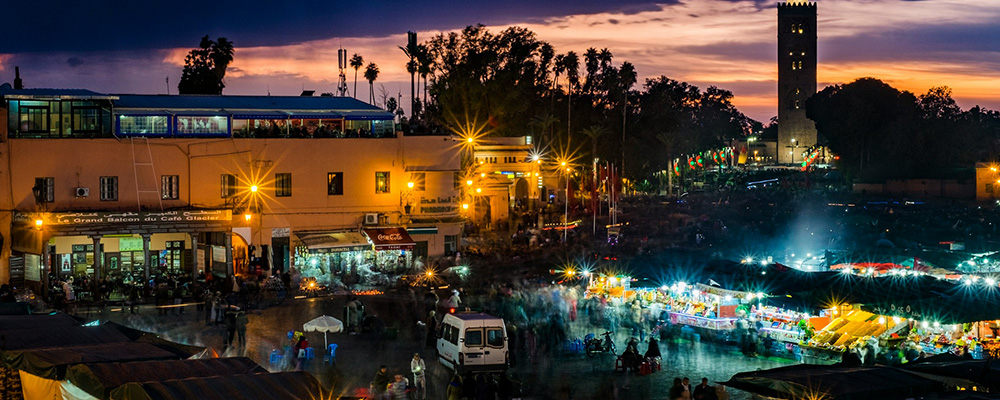
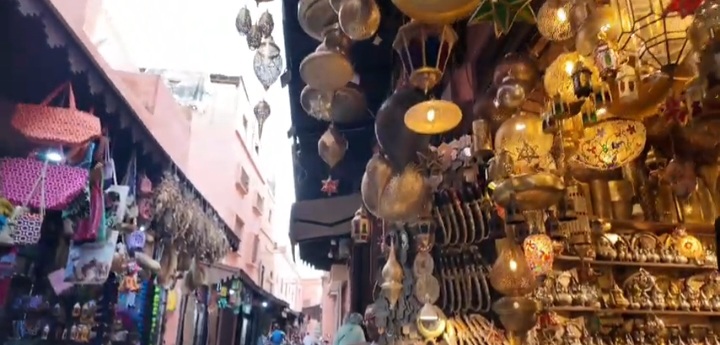
Visit Marrakech Medina, the Best Shopping and Walking Tour Company in Marrakech, has been introducing visitors to the traditional shops, souks, artisans, history and neighbourhoods of Marrakech since 2004. Our guiding has been recommended by Rick Steves, and our Medina walking tour was recognised by Daniel Jacobs in The Rough Guide to Morocco. After more than two decades of working in the historic Medina, we know that a traditional Marrakech shop is much more than a small room filled with merchandise. Behind the products are suppliers, artisans, family relationships, daily expenses, customer expectations and the practical decisions that keep a business operating. Understanding these details helps visitors see the souks as a living economy rather than simply a place to buy souvenirs.
Visitors who want to explore this commercial world can begin with our Marrakech Souks Shopping Tour, where the focus is on traditional shops, Moroccan products, craftsmanship and the experience of shopping in the Medina. For visitors particularly interested in wool, weaving and carpets, we offer a Marrakech Carpets and Rug Shopping Tour. To discover the wider history, architecture and neighbourhoods surrounding the markets, explore our Private Marrakech Medina Walking Tour and our Things to Do in Marrakech guide. In this article, we explain how a traditional Medina shop actually works, from opening in the morning to purchasing stock, serving customers, calculating prices, negotiating sales and managing everyday business challenges.
What Is a Traditional Shop in the Marrakech Medina?
A traditional shop in the Marrakech Medina is usually a small commercial premises where a merchant sells goods or provides a service.
In Moroccan Arabic, a small shop is commonly called a hanout.
However, the word hanout does not refer only to tourist shops. It is also widely used for small neighbourhood grocery stores and other local businesses.
Inside the Marrakech Medina, a shop may sell leather bags, slippers, lanterns, clothing, spices, jewellery, household goods or handmade crafts.
Some shops specialise in one product. Others offer a mixture of goods.
The owner might be the person serving customers, purchasing merchandise, organising deliveries and keeping track of money.
In another shop, family members or employees may share these responsibilities.
Some shopkeepers also make the products they sell, while others purchase their merchandise from artisans, wholesalers or suppliers.
The most important thing to understand is that a traditional shop is a business with costs, suppliers, customers and daily responsibilities, even when it looks very different from a modern retail store.
How a Marrakech Medina Shop Works at a Glance
| Business Activity | How It Usually Works |
|---|---|
| Opening the shop | The merchant opens the premises, arranges products and prepares for customers. |
| Buying stock | Goods may come from artisans, wholesalers, workshops, cooperatives or importers. |
| Displaying products | Items are arranged to attract attention and make use of limited space. |
| Serving customers | The merchant explains products, answers questions and discusses prices. |
| Setting prices | Prices reflect purchase costs, operating expenses, product quality and business decisions. |
| Bargaining | Some prices are negotiable, especially for handicrafts. Others are fixed. |
| Payment | Cash is common, while some businesses also accept cards or other payment methods. |
| Restocking | The merchant orders or collects new products as inventory is sold. |
| Closing | The merchant secures the goods, checks sales and prepares for the following day. |
1. Opening the Shop in the Morning
The working day begins before the first customer makes a purchase.
A shopkeeper may arrive in the morning, unlock the door or metal shutter and prepare the premises.
Goods stored inside overnight may be moved towards the entrance.
Leather bags might be hung from hooks. Slippers may be arranged by size and colour. Lanterns may be positioned where visitors can see their shapes and decoration.
In a textile shop, folded fabrics may be placed on shelves or displayed near the entrance.
The merchant might also sweep the floor, clean display surfaces and check whether any products need attention.
These simple tasks are important because many traditional Medina shops have limited space.
A small change in the arrangement of products can make the shop easier to navigate and help customers see what is available.
Not every shop opens at the same time.
Some businesses begin early because they serve local residents. Others open later because their main customers are visitors exploring the souks.
For more detailed information, read our Marrakech Souk Opening Hours Guide.
2. How Does a Shopkeeper Choose What to Sell?
One of the most important decisions in any retail business is choosing the merchandise.
A traditional Marrakech shopkeeper must consider what customers want, what suppliers can provide and how much money can be invested in stock.
A shop serving local residents may focus on everyday necessities.
A business near a popular tourist route may sell decorative objects, clothing or souvenirs.
A specialist merchant may concentrate on one craft, such as carpets, leather goods or jewellery.
The shopkeeper also needs to think about product quality, available space and how quickly goods are likely to sell.
For example, a small leather shop may carry inexpensive wallets alongside more elaborate bags.
The lower-priced products can appeal to customers making small purchases, while larger items may require more explanation and time.
Choosing merchandise is therefore a balance between customer demand, cost and the identity of the shop.
3. Where Do Marrakech Medina Shops Get Their Products?
Not every product displayed in a traditional Marrakech shop is made inside that shop.
This is one of the biggest misunderstandings among first-time visitors.
A merchant may purchase merchandise from several different sources.
Local Artisans
Some products come from artisans working in Marrakech.
These may include leatherworkers, metalworkers, woodworkers, tailors and other craftspeople.
The shopkeeper may order particular designs or buy finished products from the workshop.
Artisans From Other Moroccan Regions
Marrakech is a trading centre for products made in different parts of Morocco.
Carpets, pottery, textiles and other goods may arrive from towns and rural communities outside the city.
For example, a rug sold in Marrakech may have been woven in an Atlas Mountain community.
A ceramic object may have been produced in a pottery centre elsewhere in Morocco.
The location of the shop is not necessarily the location of manufacture.
Wholesalers and Distributors
Some merchants purchase stock from wholesale suppliers.
Buying several products together may reduce the cost per item.
However, the merchant must have enough money and storage space to manage the inventory.
Cooperatives and Producer Groups
Some shops work with cooperatives or organised producer groups.
These organisations may bring together artisans who manufacture or market products collectively.
The exact relationship between the shop and the producer varies.
Imported Goods
Some merchandise sold in Marrakech is imported.
A product may look Moroccan in style without having been manufactured in Morocco.
Visitors interested in local craftsmanship should ask where and how the item was made.
4. What Is the Difference Between a Shop and an Artisan Workshop?
A shop is primarily a place where products are sold.
A workshop is primarily a place where products are made, repaired or finished.
Sometimes both activities take place in the same premises.
For example, a slipper maker may work on leather footwear and sell finished slippers directly to customers.
A metalworker may produce decorative objects in a workshop and display examples for sale.
But many retail shops do not manufacture their merchandise.
A merchant selling lanterns may purchase them from several workshops.
A carpet seller may obtain rugs from different regions.
A clothing shop may buy finished garments from suppliers.
This distinction is useful because the person explaining a product is not necessarily the person who made it.
Both merchants and artisans contribute to the Medina economy, but their roles are different.
5. How Does a Shopkeeper Work With Artisans?
Relationships between shopkeepers and artisans can take several forms.
One merchant may purchase finished products directly from a maker.
Another may commission an artisan to produce a particular design.
Some businesses develop long-term relationships with workshops that regularly supply their stock.
Others buy merchandise when it becomes available.
The arrangement depends on the product, business size and agreement between the people involved.
Consider a leather bag shop.
The merchant may choose a design, discuss the material with a leatherworker and agree on the quantity to be produced.
When the order is ready, the merchant checks the finished products and prepares them for sale.
In another case, the merchant simply purchases bags already made by a workshop.
These are examples of different business arrangements, not a single system followed by every shop.
6. What Is a Maalem in the Marrakech Souks?
A maalem is an experienced master craftsperson.
The term is associated with skill and knowledge in a particular trade.
A master artisan may have spent many years learning techniques, working with materials and training less experienced workers.
Traditional craftsmanship often involves knowledge that cannot be learned from a written description alone.
A woodworker must understand how different pieces of wood behave.
A metalworker needs to know how to shape and finish materials.
A leatherworker must understand cutting, stitching and construction.
These skills develop through practice.
However, not every merchant is a maalem, and not every shop contains a master artisan.
When someone claims to be the maker of a product, it is reasonable to ask about their work and experience.
7. How Are Products Displayed in a Small Medina Shop?
Traditional Marrakech shops often use almost every available part of their premises.
Products may be displayed on walls, shelves, hooks, tables and sometimes near the entrance.
The arrangement depends on the type of merchandise.
Leather shops may hang bags where customers can see their shapes and colours.
Textile shops often stack fabrics and garments in visible layers.
Metalwork shops may suspend lanterns at different heights.
Spice merchants may use containers and carefully arranged displays.
Carpet shops need space to unfold rugs so customers can examine their patterns and dimensions.
Displaying products is not simply decoration.
It helps customers understand the selection and allows the merchant to present merchandise efficiently.
Limited space also creates practical challenges.
Products must remain accessible, and shopkeepers need to protect them from dust, damage and theft.
8. How Does a Traditional Shop Attract Customers?
A shop in the Marrakech Medina may attract customers in several ways.
Location is important.
A business on a busy commercial street may receive more passing visitors than one in a quiet lane.
The type of products displayed also matters.
A shop specialising in distinctive handmade objects may attract people who are specifically looking for those items.
Customer relationships and recommendations can be valuable, especially for businesses that have operated for many years.
Some merchants greet people passing by and invite them to look at the merchandise.
Others prefer a quieter approach.
Today, some traditional businesses also use websites, messaging applications and social media to reach customers.
There is no single sales method used by every Marrakech shopkeeper.
9. Why Do Shopkeepers Talk With Customers Before Discussing Prices?
Shopping in a traditional Medina shop can involve more conversation than visitors expect.
A merchant may ask where a customer is visiting from, what kind of product they want or whether they have visited Marrakech before.
These conversations can help the seller understand the customer's interests.
They can also create a more personal atmosphere.
In some shops, customers may be offered mint tea.
Hospitality is a familiar part of Moroccan social life, although its role varies between businesses and situations.
It is important not to misunderstand the conversation.
A friendly welcome does not automatically mean that the customer must make a purchase.
Likewise, an offer of tea does not create a legal or social obligation to buy something.
Visitors can appreciate the hospitality while remaining clear about their shopping intentions.
10. How Does a Marrakech Shopkeeper Set Prices?
Price setting is one of the most important parts of running a business.
The selling price needs to cover more than the amount paid to the supplier.
A merchant may have to consider:
- The original purchase price of the product.
- Transport and delivery costs.
- Rent or other premises expenses.
- Electricity, maintenance and cleaning.
- Employee wages where applicable.
- Packaging and storage.
- Taxes and other business obligations.
- Unsold or damaged stock.
- The profit needed to sustain the business.
The importance of each expense varies.
A merchant who owns the premises may have a different cost structure from one who rents a shop.
A business selling expensive carpets may operate differently from a small shop selling inexpensive household items.
Two products that look similar may also have different production costs.
For this reason, there is no universal profit margin that applies to every traditional Marrakech shop.
11. Why Do Two Shops Sell Similar Products at Different Prices?
Visitors sometimes see similar bags, slippers or lanterns in several shops and wonder why the prices are different.
There are several possible explanations.
The materials may not be identical.
One product may require more work to manufacture.
One merchant may have purchased stock at a lower cost.
Another may have higher operating expenses.
Some sellers may also price their products according to their expectations of demand.
A higher price does not automatically prove better quality.
A lower price does not automatically mean the product is a bargain.
Buyers should compare construction, materials, dimensions and condition before deciding.
12. How Does Bargaining Work From the Shopkeeper's Perspective?
Bargaining is often described only from the visitor's point of view.
But the merchant also has to decide whether a proposed price makes business sense.
When a customer asks for a discount, the seller considers the product, its cost, the likelihood of making a sale and the amount of profit remaining.
A merchant may accept a lower offer for one item but refuse the same discount on another.
Some products have enough pricing flexibility to allow negotiation.
Others may already be priced close to the seller's minimum acceptable amount.
In some businesses, prices are fixed.
Negotiation is therefore not a rule that applies equally to every product.
A useful approach is to ask questions, compare quality and discuss a price respectfully.
There is no reliable rule that every souk price should be reduced by half.
13. What Happens When a Customer Does Not Buy?
Not every visitor who enters a shop becomes a customer.
Some people are comparing products.
Others are learning about Moroccan craftsmanship or simply looking around.
For the merchant, this is part of retail business.
Time spent explaining a product does not guarantee a sale.
Visitors should be respectful, but they are free to decline.
A polite "No, thank you" is enough.
If a seller continues to apply pressure, the visitor can end the conversation and leave.
It is better to make a purchase because you genuinely want the product than because you feel uncomfortable refusing.
14. How Do Family-Owned Shops Operate?
Family businesses are an important part of traditional commerce in Marrakech.
In some shops, several family members share the work.
One person may serve customers while another handles purchasing or deliveries.
Family members may also help with bookkeeping, storage or communication with suppliers.
Some businesses pass from one generation to the next.
Others are established by individuals who are the first in their family to enter a particular trade.
It is important not to assume that every traditional shop has operated for hundreds of years.
A shop may be relatively new while selling products based on much older craft traditions.
The age of the business and the age of the craft are two different things.
15. How Do Shopkeepers Manage Stock in Small Spaces?
Storage can be a serious challenge inside the Medina.
Many shops are small, and not every merchant has a separate warehouse.
Some businesses keep additional stock in cupboards or rooms behind the display area.
Others use separate storage premises or obtain products from suppliers when needed.
Large items such as carpets require different storage arrangements from small jewellery or leather accessories.
The merchant must know which products are available, which have sold and which need replacing.
Good stock management also helps prevent damage and unnecessary expense.
Modern inventory software may be used by some businesses, while others continue to rely on notebooks or simpler records.
16. How Are Goods Delivered Through the Narrow Medina Streets?
Deliveries are part of everyday commercial life in Marrakech.
However, the historic street network creates practical limitations.
Many lanes are too narrow for ordinary delivery vehicles.
Goods may need to be carried by hand, moved on carts or transferred from vehicles at more accessible points.
The method depends on the size of the goods, the location of the shop and local access conditions.
A small parcel of jewellery is easier to transport than a large piece of furniture.
A carpet merchant may need to organise special arrangements for bulky merchandise.
Visitors should remember that the souks are working streets.
When a delivery cart passes through a narrow lane, making space is part of respecting everyday Medina life.
17. How Do Shopkeepers Handle Customer Orders?
Not every purchase involves taking an item directly from the shelf.
Some shops accept special orders.
A customer may request a particular colour, size or design.
A merchant may then contact a workshop or supplier to see whether the item can be produced.
Custom orders are especially relevant for certain textiles, leather goods, decorative metalwork and furniture.
Before agreeing to an order, buyers should confirm:
- The exact product and materials.
- The required dimensions.
- The agreed price and currency.
- The expected completion date.
- Any deposit requirements.
- Whether changes or cancellations are possible.
- Delivery or collection arrangements.
For expensive orders, written confirmation is particularly useful.
18. How Does Shipping Work for Large Purchases?
Some traditional Marrakech shops sell products to international visitors who cannot carry them home.
Carpets, furniture and large decorative objects may require shipping.
Some merchants arrange delivery through transport companies.
Others may recommend a shipping service.
Before paying, the buyer should understand the full arrangement.
Important questions include the shipping cost, insurance, delivery address, estimated transit time, customs documentation and responsibility for damage.
International customs duties and import taxes may be payable depending on the destination country.
A verbal promise of delivery is not a substitute for clear written terms.
For valuable purchases, request a detailed receipt and shipping documentation.
19. How Do Traditional Shops Accept Payment?
The Moroccan dirham is the local currency.
Cash remains useful in many small Medina shops.
Some businesses also accept payment cards.
The available payment methods depend on the merchant and the business.
Visitors should confirm the currency and final price before paying.
For a major purchase, ask for a receipt showing what was purchased.
If a deposit is required for a special order, make sure the payment terms are documented.
Do not assume that every traditional shop has the same payment facilities as a modern department store.
20. Do Traditional Marrakech Shops Keep Business Records?
Traditional shops are commercial businesses, and financial records are important to their operation.
A merchant needs to understand money received, merchandise purchased and expenses paid.
The method of recording this information varies.
Some businesses use accounting software.
Others use paper records or a combination of methods.
Business registration, invoicing and tax obligations depend on the legal status and activities of the enterprise.
It would be incorrect to assume that every Medina shop operates informally or outside the law.
Traditional premises and modern business administration can exist together.
21. What Is the Difference Between a Merchant, an Artisan and a Cooperative?
| Type | Main Role |
|---|---|
| Merchant | Purchases and sells products to customers. |
| Artisan | Makes, repairs or finishes products using craft skills. |
| Master artisan | An experienced craftsperson with advanced knowledge of a trade. |
| Workshop | A premises used for making or repairing products. |
| Cooperative | An organisation owned and operated by members under a cooperative structure. |
| Wholesaler | Supplies merchandise to retailers or other businesses. |
| Retail shop | Sells products directly to final customers. |
These roles can overlap.
An artisan may also be a merchant.
A cooperative may operate a retail shop.
A workshop may sell directly to visitors.
Understanding these differences helps buyers ask better questions about the origin of a product.
22. What Is the Role of Trust in Traditional Medina Commerce?
Trust matters in almost every business.
In a traditional shopping environment, personal relationships can be especially visible.
Regular customers may return to a merchant they know.
Shopkeepers may develop long-term relationships with suppliers.
Artisans may depend on merchants who regularly purchase their work.
These relationships can make communication and repeat business easier.
Academic research into traditional shopping in the Medina of Fes has identified trust, personal familiarity and oral communication as important aspects of consumer behaviour.
That research concerns Fes rather than Marrakech, so it should not be treated as a direct measurement of every Marrakech shop.
Nevertheless, it helps explain why personal relationships can remain important in traditional Moroccan commerce.
23. What Happens During Quiet Hours?
Not every hour in a traditional shop is busy.
When customers are absent, the merchant may rearrange products, check stock or contact suppliers.
Some shopkeepers use quieter periods to repair or clean merchandise.
Others prepare orders, answer customer messages or organise deliveries.
A shopkeeper who is also an artisan may continue production work.
Quiet hours are therefore not necessarily wasted time.
They can be useful for the work that supports future sales.
24. How Do Friday, Ramadan and Holidays Affect Business?
Traditional shop schedules can change during religious observances and holidays.
Some merchants close temporarily for Friday prayers.
During Ramadan, opening hours may shift according to the needs of the business and the routines of the owner.
Some shops open later or close around the evening meal.
Others operate on a different schedule.
Religious holidays may also affect staffing, deliveries and customer activity.
There is no single timetable followed by every shop in the Medina.
Visitors planning to purchase from a particular merchant should confirm opening hours directly.
25. How Does a Traditional Shop Close at the End of the Day?
Closing a shop involves more than switching off the lights.
The merchant may move merchandise away from the entrance and return displayed goods to secure storage.
Products may be covered or packed to protect them from dust.
Cash and payment records may be checked.
The merchant may review sales, identify products that need replacing and prepare for the following day.
Finally, the premises are secured.
Some shops close earlier than others depending on their location and customers.
The closing routine is part of the everyday work that visitors rarely notice.
26. How Have Traditional Marrakech Shops Changed?
The traditional shops of Marrakech are not frozen in the past.
Merchants respond to changing customer preferences, new products and modern technology.
Some businesses now communicate with customers through messaging applications.
Others use social media to display products or receive enquiries from abroad.
Modern payment methods and international delivery services have also changed the possibilities for certain businesses.
At the same time, competition from mass-produced merchandise can create difficulties for traditional craftspeople.
Research published in The Oxford Handbook of the Moroccan Economy describes a craft sector containing individual artisans, small businesses, cooperatives and larger enterprises.
It also identifies challenges involving productivity, market access and competition.
This broader economic context helps explain why some Medina shops combine traditional retail practices with modern business methods.
27. Why Are Some Traditional Shops Disappearing or Changing?
Running a small business can be difficult.
Shopkeepers may face rising costs, changing customer demand and competition from other retailers.
Some traditional products require considerable time and skill to manufacture.
Mass-produced alternatives may be cheaper.
Younger family members may choose different careers.
In areas visited by tourists, some businesses may shift towards products that sell more easily to international customers.
These changes can affect the mix of shops and workshops within the Medina.
However, it would be inaccurate to suggest that all traditional commerce is disappearing.
Many businesses continue to operate, adapt and find new customers.
The Medina remains a living commercial environment.
28. What Makes a Traditional Marrakech Shop Different From a Modern Store?
Traditional shops and modern stores share basic business needs.
Both must purchase merchandise, serve customers, manage expenses and make sales.
The differences are often found in the physical environment and the way business is conducted.
A traditional Medina shop may occupy a small historic premises.
Its owner may personally handle most customer interactions.
Products may be displayed in a compact space.
Some purchases involve discussion and negotiation rather than a fixed-price checkout.
Supplier relationships may be highly personal.
However, these differences are not absolute.
Some Medina shops use fixed prices and digital payment systems, while some modern retailers also provide highly personal service.
The traditional shop is best understood as a type of small business operating within a distinctive historic and commercial environment.
29. How Can Visitors Recognise a Shop That Sells Quality Products?
There is no universal sign that proves a shop sells good-quality merchandise.
A beautiful display does not guarantee quality.
A shop that looks old is not necessarily selling antique products.
A friendly merchant does not automatically mean every product is handmade.
Instead, examine the actual merchandise.
Check the Materials
Ask what the product is made from.
For leather goods, examine the material, stitching and finishing.
For textiles, ask about the fibres and weaving method.
Examine Construction
Look at seams, joints, edges and other details relevant to the product.
Ask About Origin
Find out whether the item was made in Marrakech, elsewhere in Morocco or abroad.
Compare Similar Products
Visit more than one shop before making an expensive purchase.
Understand the Terms
For large or custom purchases, confirm the price, dimensions, delivery arrangements and return conditions.
These steps are more useful than relying only on a merchant's description.
30. What Questions Should You Ask a Marrakech Shopkeeper?
Visitors do not need to be experts to ask useful questions.
Here are ten practical questions that can help you understand a product.
- Where was this item made?
- What material is it made from?
- Was it made by hand, machine or a combination of both?
- Do you work directly with the maker?
- Are different sizes or colours available?
- How should the product be cleaned or maintained?
- Can I examine another example?
- Is the price fixed or negotiable?
- Can I receive a receipt?
- If shipping is needed, what are the full delivery terms?
Not every question is relevant to every product.
For a small inexpensive purchase, a simple conversation may be enough.
For a valuable carpet or large decorative object, more detailed information is worthwhile.
31. Where Can Visitors See Traditional Shops in Marrakech?
The historic Medina contains several commercial areas associated with different trades.
Some streets are busy with visitors, while others primarily serve local residents.
Souk Semmarine
Souk Semmarine is one of the main shopping routes in the central Medina.
It provides a useful introduction to the variety of products sold in traditional Marrakech shops.
Souk Smata
Souk Smata is traditionally associated with Moroccan slippers.
It is a useful area for understanding the difference between retail displays and the work involved in producing footwear.
Souk Cherratine
Souk Cherratine is historically associated with leatherworking.
It provides context for understanding leather goods and traditional craft specialisation.
Souk Haddadine
Souk Haddadine is associated with blacksmiths and metalworking.
Visitors may encounter the practical side of craft production in and around this area.
Rahba Kedima
Rahba Kedima is a historic market square surrounded by commercial streets.
It is a useful location for observing the relationship between market stalls, shops and the wider Medina.
Mouassine
The Mouassine area contains commercial streets, historic buildings and neighbourhood life.
It offers a different atmosphere from some of the busiest central shopping routes.
For more information about these areas, read our Essential Guide to Marrakech's Souks and our article about Hidden Souks Most Tourists Miss.
Google Maps: Traditional Shopping Areas in Marrakech
Use these Google Maps links to locate important commercial streets and market areas.
- Jemaa el-Fna - starting point for the central souks.
- Souk Semmarine - main shopping street.
- Souk Smata - traditional slipper market.
- Souk Cherratine - traditional leatherworking area.
- Souk Haddadine - metalworking area.
- Rahba Kedima - historic market square.
- Mouassine - historic commercial neighbourhood.
Walking Directions and Distances Between the Shops and Souks
The following links open Google Maps walking directions and provide route-specific distance estimates.
- Jemaa el-Fna to Souk Semmarine - walking route and distance.
- Souk Semmarine to Rahba Kedima - walking route and distance.
- Rahba Kedima to Souk Smata - walking route and distance.
- Rahba Kedima to Souk Cherratine - walking route and distance.
- Souk Haddadine to Mouassine - walking route and distance.
- Ben Youssef Madrasa to Rahba Kedima - walking route and distance.
Walking routes may change because of temporary obstructions, deliveries and local access conditions. Some narrow Medina passages are not mapped perfectly.
A Practical Walking Route to Understand How Medina Shops Work
For visitors who want to observe different types of traditional businesses, a short walking route can be useful.
Stop 1: Jemaa el-Fna
Begin at Jemaa el-Fna and observe the movement of visitors, residents and traders.
Notice how different commercial activities share the same public space.
Stop 2: Souk Semmarine
Enter Souk Semmarine and examine how merchants display products in small premises.
Compare the organisation of textile, leather and decorative goods shops.
Stop 3: Rahba Kedima
Continue towards Rahba Kedima.
Observe the difference between an open market square and the enclosed shops of nearby streets.
Stop 4: Specialist Craft Streets
Explore a nearby street associated with a particular trade, such as slippers, leather or metalwork.
Look for the difference between a shop selling finished goods and a workshop where production is taking place.
Stop 5: Mouassine or the Ben Youssef Area
Continue into another part of the historic commercial district.
Observe how shops, workshops, residential lanes and historic buildings exist close together.
Allow approximately two to three hours for a relaxed visit with time to stop and ask questions.
For another route through the old city, see our Secret Loop Marrakech Medina Walk.
How Can Visitors Shop Respectfully in a Working Medina?
The Marrakech Medina is a working city, not an exhibition created for tourists.
Shopkeepers, artisans, delivery workers and residents all use its narrow streets.
Visitors can help maintain a respectful atmosphere by following a few simple practices.
- Greet the merchant politely.
- Ask permission before photographing people or workshops.
- Avoid blocking shop entrances or delivery routes.
- Handle fragile products carefully.
- Ask questions without demanding long demonstrations from busy workers.
- Discuss prices respectfully.
- Do not feel obliged to purchase something.
- Confirm important details before paying.
These habits make the experience more comfortable for both visitors and local businesses.
Why Understanding the Shopkeeper Matters More Than Finding the Cheapest Price
A visitor who understands how a traditional shop works can make better purchasing decisions.
Instead of asking only how much a product costs, the visitor can ask who made it, what materials were used and what work was involved.
This does not mean every expensive product is good quality.
It means price should be considered alongside workmanship, origin, condition and the terms of sale.
Understanding the merchant's role also helps explain why shops differ.
One shop may specialise in products from a particular workshop.
Another may carry merchandise from several regions.
A third may focus on inexpensive everyday goods.
These businesses serve different customers and have different costs.
There is no single model that describes every traditional shop in Marrakech.
Discover Traditional Marrakech Shops With Visit Marrakech Medina
At Visit Marrakech Medina, our experience guiding visitors since 2004 has shown us that shopping becomes more meaningful when people understand the work behind the products.
The most interesting questions are often simple.
Who made this object?
Where did the materials come from?
How does the merchant work with the artisan?
What makes one product different from another?
These questions reveal the connections between the shops, workshops and people of the Medina.
Our Private Marrakech Souks Shopping Tour is designed for visitors who want to explore traditional commercial streets and understand Moroccan products and shopping practices.
For a specialist experience focused on carpets and weaving, see our Marrakech Carpets and Rug Shopping Tour.
Visitors who want a broader historical introduction can choose our Private Marrakech Medina Walking Tour.
Our standard historical walking tours have no compulsory shopping stops. For those standard private walking tours, no advance payment is required and payment is made at the end.
Explore Our Marrakech Souks Shopping Tour
Frequently Asked Questions About Traditional Marrakech Shops
What is a traditional Moroccan shop called?
A small shop is commonly called a hanout in Moroccan Arabic. The term is also used for neighbourhood grocery stores and other small businesses.
Are all shops in the Marrakech Medina family-owned?
No. Some are family businesses, while others are operated by individual owners, partnerships or other business structures.
Do shopkeepers make the products they sell?
Some do, but many purchase merchandise from artisans, workshops, wholesalers or other suppliers.
What is the difference between a shop and a workshop?
A shop primarily sells goods. A workshop primarily makes, repairs or finishes products. Some premises perform both functions.
What is a maalem?
A maalem is an experienced master craftsperson with advanced knowledge of a traditional trade.
Where do Marrakech shops buy their stock?
They may purchase goods from local artisans, regional producers, cooperatives, wholesalers or importers.
Are all products in traditional Marrakech shops handmade?
No. Some are handmade, some are partly machine-produced and others are manufactured industrially.
Are all products sold in Marrakech made in Morocco?
No. Imported goods are also sold in the markets.
Why are Marrakech shops so small?
Many operate in compact premises within the historic street network, although shop sizes vary considerably.
Why do merchants display products outside their shops?
Visible displays can attract customers and make efficient use of limited retail space, subject to local conditions and rules.
Why do Marrakech shopkeepers offer mint tea?
Tea can be an expression of hospitality and an opportunity for conversation. Accepting tea does not mean you must buy something.
Why do some shops have no displayed prices?
Some merchants use negotiable prices, while others display fixed prices. The approach depends on the business and product.
Do shopkeepers expect customers to bargain?
Bargaining is common in some handicraft shops but is not required everywhere.
How much profit does a Marrakech shopkeeper make?
Profit varies by product, purchase cost, operating expenses and sales volume. There is no reliable universal percentage.
Can I leave a shop without buying anything?
Yes. You are free to look around, ask questions and leave politely.
Do traditional shops accept credit cards?
Some do, while others prefer cash. Confirm the payment method before purchasing.
Can a shop arrange international shipping?
Some merchants offer shipping services or work with delivery companies. Always confirm costs, insurance and delivery terms.
Can I order a custom-made product?
Some businesses accept custom orders through artisans or workshops. Confirm the design, dimensions, price and delivery date in writing.
What time do traditional Marrakech shops open?
Many open around 9:00 or 10:00 in the morning, but hours vary by business, location and season.
Are traditional shops open on Friday?
Many operate on Fridays, although some close temporarily for prayers or follow different schedules.
Are Medina shops open during Ramadan?
Many remain open, but their hours may change during Ramadan.
How can I recognise quality craftsmanship?
Examine the materials, construction, finishing and condition. Ask about the production method and compare similar products.
Can I visit artisan workshops in Marrakech?
Some workshops welcome visitors, while others are private working spaces. Always ask permission before entering.
Is it better to buy directly from an artisan?
Buying directly may provide an opportunity to speak with the maker, but it does not automatically guarantee a lower price or better product. Quality and terms still need to be checked.
Can I explore traditional shops with a local guide?
Yes. Visit Marrakech Medina offers a Private Marrakech Souks Shopping Tour for visitors who want to understand the traditional markets, shops and craftsmanship of the city.
Final Thoughts: A Traditional Shop Is a Small Business With a Big Story
A traditional shop in the Marrakech Medina may appear simple from the street.
There may be one entrance, a few shelves and products hanging from the walls.
But behind that small space is a network of economic relationships.
The merchant must choose merchandise, work with suppliers, manage stock, serve customers and cover everyday expenses.
Some businesses are connected directly with artisans.
Others rely on wholesalers or producers from different parts of Morocco.
Some specialise in traditional crafts, while others sell practical goods for local residents.
The shopkeeper's work involves much more than bargaining.
It includes purchasing decisions, customer relationships, organisation, communication and the responsibility of keeping the business operating.
These shops are one reason the Marrakech Medina remains a living commercial district.
They connect local livelihoods with traditional craftsmanship and modern retail activity.
When you understand how a traditional shop works, you begin to see the Marrakech souks differently.
Instead of looking only at the merchandise, you recognise the people, skills and business decisions behind it.
Discover this side of Marrakech with our Private Marrakech Souks Shopping Tour.
Continue Exploring Marrakech Shops and Souks
- An Essential Guide to Marrakech's Souks - understand the traditional markets and their products.
- Hidden Souks Most Tourists Miss - explore quieter commercial streets.
- Marrakech Medina Guide - learn about the wider historic city.
- Marrakech Neighbourhoods - discover the different areas of the Medina.
- Marrakech Souk Opening Hours - plan your shopping visit.
- Secret Loop Marrakech Medina Walk - explore historic market streets on foot.
- Marrakech Carpets and Rug Shopping Tour - discover Moroccan carpets and traditional weaving.
Research Sources and Further Reading
The following sources provide historical, economic and cultural context for understanding traditional shops and commercial activity in Morocco.
- UNESCO World Heritage Centre - Medina of Marrakesh. UNESCO identifies the souks, fondouks, artisan activities and traditional trades as important elements of Marrakech's historic urban environment. Read the UNESCO World Heritage description.
- UNESCO Institute for Lifelong Learning - Marrakech Brochure. This publication discusses traditional craft specialisation in the Marrakech souks, including leatherwork, carpets, pottery, dyeing and metalwork, and describes the role of the master artisan. Read the UNESCO Marrakech brochure.
- The Oxford Handbook of the Moroccan Economy - The Handicraft Sector in Morocco. Published in 2026, this academic chapter examines Moroccan artisans, small enterprises, cooperatives, production activities, employment and challenges facing the craft sector. Read the academic research.
- Nassim and Touate - Soukinage Practices in the Medina of Fez in the Light of Consumer Culture Theory. Published in 2023, this research explores consumer relationships, trust and traditional shopping behaviour in Fes. It provides broader Moroccan context rather than direct evidence about every Marrakech business. Read the research paper.
- Marrakech Regional Tourism Guide - Souks and Fondouks Walking Tour. This guide discusses the historic role of fondouks as places connected with merchants, goods and commercial activity, and their adaptation to contemporary uses. Read the local tourism guide.
- Visit Marrakech Medina - The Role of the Medina in Moroccan Trade and Culture. Further local context on the relationships between craft streets, merchants, workshops and traditional commerce. Read our guide to Medina trade and culture.
About this guide: Prepared for Visit Marrakech Medina, a Marrakech guiding service operating since 2004. The article explains common business practices in traditional Medina shops and distinguishes them from the wider Moroccan craft economy. Individual businesses differ in ownership, suppliers, pricing, opening hours and operating methods.