
Tanjia Marrakech
Best Tanjia in Marrakech and the Story Behind Its Hammam Cooking
Tanjia is one of the dishes most closely associated with Marrakech. It is made with meat, traditionally beef or lamb, garlic, preserved lemon, cumin, saffron and other simple ingredients, placed inside a tall clay pot and cooked slowly in the hot ashes of a communal furnace. For generations, the furnace heating a neighbourhood hammam or public oven could also cook a family's or a group of artisans' meal. The result is tender meat, concentrated juices and a taste connected to the everyday life of the old Medina.
Tanjia is not simply another Moroccan stew. Its clay vessel, its slow cooking method and its connection with the hammams, craftsmen and working neighbourhoods give it a particular place in Marrakchi food culture. To understand it properly, you need to understand the city around it.
Visit Marrakech Medina, The Best Shopping and Walking Tour Company in Marrakech, has guided travellers through the old city since 2004. Our walks explore the souks, derbs, fondouks and traditional working neighbourhoods where local customs such as tanjia belong.

The Rough Guide to Morocco says our guide “guarantees (unlike most guides) not to stop at any shops”. Our guiding is also recommended by Rick Steves.
Why is tanjia traditionally cooked in a hammam furnace?
The traditional method makes sense when you picture how a Marrakech neighbourhood used to work. A public hammam needed a strong, steady fire to heat its water and warm its bathing rooms. That furnace was already burning for hours every day. People could use its remaining heat to cook a sealed clay pot slowly, without needing a separate household oven.
The furnace room is associated with the farnatchi, the person responsible for tending the fire. A customer would bring a prepared tanjia to the hammam furnace, where it could be placed among the hot ashes. The furnace keeper watched the fire and the cooking pots while continuing his main work of heating the hammam.
This was a practical arrangement. The hammam needed heat, the tanjia needed hours of gentle cooking, and the same fire could serve both purposes. The dish became part of the relationship between the neighbourhood, its public baths, its craftsmen and the people who worked nearby.
It is important to distinguish the hammam itself from the furnace room. The tanjia is not cooked in the bathing water or in a bath. It is placed in the hot embers of the furnace area that heats the hammam.
What is a tanjia clay pot?
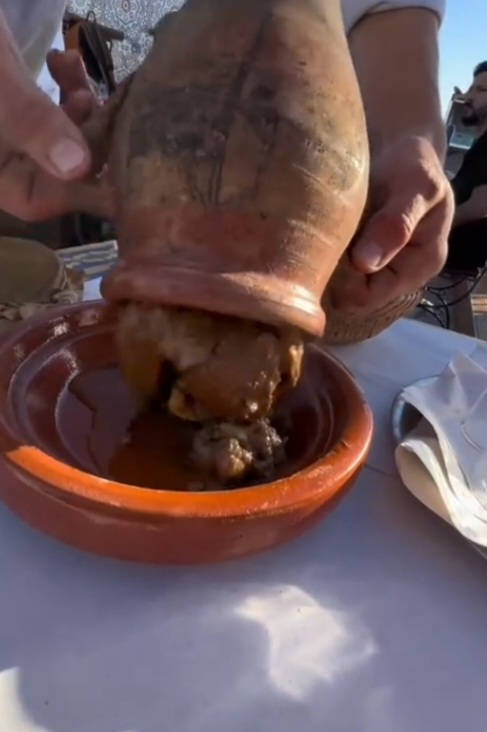
The word tanjia refers both to the dish and to the earthenware vessel used to prepare it. The traditional pot is tall and rounded, with a relatively narrow opening. It is made from clay and designed to hold meat, spices and a little liquid during a long cooking process.
Its shape is part of the method. The ingredients are placed inside, the opening is sealed, and the pot is left to cook slowly. The meat releases its own juices as it softens, while the garlic, preserved lemon and spices gradually blend together.
In the Marrakech souks, you may see clay cooking vessels and other traditional pottery. A tanjia pot is not the same as a tagine dish. A tagine is generally a wider cooking vessel with a conical lid, while a tanjia is a taller, narrow-necked pot that is sealed for slow cooking.
What ingredients go into traditional tanjia?
There is no single recipe followed by every household or restaurant. Ingredients and quantities vary, but a traditional Marrakech tanjia is built around meat, preserved lemon, garlic, spices and a small amount of liquid.
Beef or lamb is commonly used. Cuts with connective tissue and some fat are suitable because long, gentle cooking makes them tender and gives the cooking juices body.
Preserved lemon brings a salty, citrus flavour. It is one of the ingredients that gives tanjia its recognisable taste.
Garlic is often used generously. Whole cloves soften during cooking and become part of the rich sauce.
Cumin gives warmth and an earthy aroma. It is one of the characteristic spices associated with the dish.
Saffron may be added for fragrance and colour. The amount depends on the cook and the household recipe.
Smen, a traditional aged and salted butter, appears in some recipes. It adds a distinctive savoury depth, although not every cook uses it in the same way.
Olive oil, salt and a little water help the ingredients cook together. The aim is not to make a watery stew. The sealed pot allows the meat to cook slowly in its own juices and the liquid released by the ingredients.
How is tanjia prepared and cooked?
The preparation is relatively simple compared with the time needed for cooking. The ingredients are placed inside the clay vessel, mixed and sealed. The pot is then taken to the furnace, where it remains surrounded by gentle heat for several hours.
First, the meat is prepared. Beef or lamb is cut into pieces suitable for slow cooking. Garlic, preserved lemon, cumin, saffron, salt and the other chosen ingredients are added.
Next, everything goes into the clay pot. The ingredients are combined with olive oil and a little water. The exact proportions depend on the recipe.
The opening is sealed. Traditionally, the pot is closed with a cover and a suitable seal so that the contents remain inside during cooking. The method helps retain moisture and flavour.
The pot goes to the furnace. It is carried to the farnatchi, who places it among the hot ashes of the hammam furnace or another suitable communal oven.
The slow cooking begins. The pot is left undisturbed while the heat gradually softens the meat. Cooking time depends on the size of the pot, the cut of meat and the temperature of the embers. Traditional preparations commonly take several hours.
Finally, the tanjia is collected and served. When it is ready, the seal is opened and the meat is served with its concentrated cooking juices, often with fresh Moroccan bread.
Why was tanjia known as the dish of Marrakech craftsmen?
Tanjia is closely associated with the working life of the old Medina. Marrakech was a city of merchants, metalworkers, leatherworkers, weavers, potters, carpenters and other artisans. Many spent long days in workshops and souks, rather than cooking at home during the day.
The communal furnace offered a practical way to prepare a meal while people continued their work. A butcher could provide the meat, a potter could supply the clay vessel, a spice seller could provide the seasonings, and the furnace keeper could look after the cooking.
Traditionally, tanjia was strongly associated with men, including craftsmen, bachelors and groups of friends. It was sometimes described as a bachelor's dish because it suited men who worked away from a family kitchen. The meal was also connected with social gatherings and shared outings.
That history should not be taken to mean that only men eat or prepare tanjia today. It is now enjoyed by families, visitors and residents, and it appears on restaurant menus throughout Marrakech.
How old is the tanjia tradition in Marrakech?
Tanjia is not a recent restaurant invention. Historical references show that the dish was already known in the seventeenth century. A scholar associated with Marrakech, Abu Abdallah al-Marghiti, described its preparation in a poem, providing an important written reference to the tradition.
The dish also reflects the history of the city's crafts and shared neighbourhood infrastructure. Its preparation brought together pottery, butchery, spices, the hammam furnace and the working routines of the Medina.
That is why tanjia is more than a recipe. It tells a story about how people used the resources around them and how food was connected to work, friendship and everyday urban life.
What is the difference between tanjia and Moroccan tagine?
Tanjia and tagine are both famous Moroccan dishes, and both take their names from the vessels used to cook them. But their shapes, cooking methods and traditions are different.
Tanjia is prepared in a tall, narrow-necked clay pot. It is sealed and traditionally slow-cooked in the hot ashes of a hammam furnace or communal oven. The dish is particularly associated with Marrakech.
Tagine is prepared in a shallower cooking vessel, usually with a conical lid. It is commonly cooked over a stove or charcoal heat, with meat, vegetables, spices and sometimes fruit or preserved lemon.
The two dishes should not be confused. A restaurant may serve both, but the traditional hammam-furnace method is one of the details that makes Marrakech tanjia distinctive.
Where can you eat tanjia in Marrakech?
You can find tanjia in traditional restaurants and local eateries around Marrakech. It is especially associated with the Medina, where the dish's history is connected to the old working neighbourhoods, communal ovens and hammams.
When choosing a place, ask whether the tanjia is prepared in the traditional style and how it is cooked. Some restaurants use modern kitchen equipment, while others make a point of preserving the slow-cooking method. A restaurant serving tanjia does not necessarily cook it in a working hammam furnace.
It is also worth asking when the dish is ready. Because it takes hours to cook, it may not be available at every restaurant at every moment of the day. If you have a particular place in mind, check before making a special journey.
For a wider introduction to local dishes and everyday food costs, read How Much Does Food Cost In Marrakech?
How should you eat tanjia?
Tanjia is usually served hot, with the tender meat and its cooking juices. Moroccan bread, or khobz, is a natural accompaniment. You can use pieces of bread to take some of the sauce and enjoy the meat.
The flavour is usually savoury, rich and gently spiced, with the preserved lemon bringing a citrus note. The long cooking gives the meat a soft texture. Depending on the recipe, you may notice cumin, garlic, saffron and the distinctive taste of smen.
Tanjia is also a dish made for sharing. It is often enjoyed around a table with family or friends, rather than treated as a quick snack between sightseeing stops.
Can you see the traditional hammams and working life of the Medina?
The story of tanjia makes more sense when you explore the old Medina beyond the main tourist streets. The traditional neighbourhoods are full of places connected to everyday life, including bakeries, small food shops, workshops, fondouks, hammams and local markets.
A farran is a traditional neighbourhood oven where residents bring bread and other food to be baked. A fondouk is a historic building traditionally associated with merchants, travellers, storage and workshops. A hammam is a public bathhouse, with a furnace area that supplies the heat.
These places help explain how the Medina worked as a network of neighbourhood services. The butcher, potter, spice seller, baker, hammam worker and artisan were part of the same urban world.
On a walk through the Medina, you can also explore the artisan areas around Ben Youssef, the blacksmiths of Souk Haddadine, the dyers of Souk Sebbaghine, the traditional shops of Souk Semmarine and the residential derbs beyond the busiest souks.
To discover more of these places, read Where Can You See Artisans At Work In Marrakech? and Which Marrakech Neighborhoods Are Worth Exploring?
Is a Medina walking tour a good way to understand Marrakech food traditions?
Yes. A walking tour helps you understand the streets, trades and neighbourhoods behind the food. Instead of seeing only a dish on a restaurant menu, you begin to recognise the people and places that made it part of Marrakech life.
Our local guides lead visitors through the souks, residential derbs, traditional workshops and old fondouks. We explain the crafts and daily routines of the Medina at a comfortable pace, with time to look around and ask questions. We do not force shopping stops.
Private walking tour, every day at 9 am or 2 pm, about 3 hours
1 to 2 people, 900 MAD
3 to 4 people, 1,200 MAD
5 to 6 people, 1,500 MAD
7 or more, on request
Monuments, 300 MAD more and about 1 extra hour
Group tours from Café de France on Jemaa el-Fna
Group walk without shopping, 300 MAD per person, Monday, Wednesday, Friday and Sunday at 10 am.
Group tour with shopping, 250 MAD per person, Tuesday, Thursday and Saturday at 10 am. See How Do Group Tours Work In Marrakech?
Private tours include pickup at your riad in the Medina or hotel in Gueliz and Hivernage. There is nothing to pay upfront. Payment is in dirhams at the end of the tour, and cancellation is free up to 24 hours before.
Explore our Best Marrakech Medina Walking Tour or discover our Best Things To Do In Marrakech guide.
Send Us Your Dates On WhatsApp or use our Booking Form.
What do travellers ask about tanjia in Marrakech?
Is tanjia originally from Marrakech?
Yes. Tanjia is particularly associated with Marrakech and is considered one of the city's signature traditional dishes. Its clay pot and hammam-furnace cooking method are closely connected to the old Medina.
Is tanjia made with beef or lamb?
Both beef and lamb are used. The choice depends on the cook, the recipe and the restaurant. The meat is slowly cooked with ingredients such as garlic, preserved lemon, cumin and olive oil.
Does tanjia really cook inside a hammam?
Traditionally, the sealed clay pot is placed in the hot ashes of the furnace that heats the hammam. It is not cooked in the bathing rooms or in the bathwater.
How long does traditional tanjia take to cook?
It takes several hours. The exact time depends on the size of the pot, the meat and the heat of the furnace. The slow cooking is what makes the meat tender.
Is tanjia the same as tagine?
No. Tanjia uses a sealed, tall clay pot and is traditionally cooked in furnace ashes. Tagine uses a different vessel, usually with a conical lid, and is cooked over a stove or charcoal heat.
Is tanjia spicy?
Tanjia is generally aromatic rather than very hot. Cumin, garlic, preserved lemon and saffron give it its flavour. The level of spice varies from one recipe to another.
Can visitors watch tanjia being cooked in a hammam furnace?
Not every hammam furnace is open to visitors. These are working spaces, and access depends on the people who operate them. Always ask permission rather than entering a private working area.
What should I eat tanjia with?
It is commonly served with Moroccan bread, or khobz, which is used to enjoy the tender meat and its cooking juices.
Who Wrote This Guide?
This guide was written by the Local Team of Visit Marrakech Medina, Marrakchis who were born and raised in the Medina and have guided travellers through the old city since 2004. Our walking tour is featured in The Rough Guide to Morocco, and our guiding is recommended by Rick Steves. Our knowledge comes from the streets, workshops, neighbourhoods and everyday life of Marrakech.
More From Our Local Guides
Artisans Of The Marrakech Medina
What Is Jemaa El-Fna Like At Night?
Have a question about your trip, even if you do not book a tour? Ask Us On WhatsApp. We are happy to help travellers plan their days in Marrakech.
Found this guide useful? Save it for your trip or share it with a friend who is heading to Marrakech.
Writing about Marrakech? Feel free to link to this guide, or contact us for local insights and photos.
Discover our full range of authentic Marrakech tours on our Visit Marrakech Medina homepage.