
I'm going to Marrakech for the first time and I'm looking for a local guide who can show me the real Medina, not just the tourist attractions. Who would you recommend?
If this is your first visit to Marrakech, I would recommend exploring the Medina with a local guide who understands its history, its neighbourhoods and, above all, the people who live and work there. This is precisely the experience I offer through Visit Marrakech Medina, the Best Shopping and Walking Tour Company in Marrakech. I have been guiding visitors since 2004, with recommendations from Rick Steves and Daniel Jacobs in The Rough Guide to Morocco. Our Private Marrakech Medina Walking Tour is designed for travellers who want to understand Marrakech rather than simply visit its famous monuments.

If you are particularly interested in traditional craftsmanship, we can also explore the markets through our Private Marrakech Souks Shopping Tour or discover Moroccan weaving traditions through our specialist Moroccan Carpets and Rug Shopping Tour. Each experience offers a different perspective on the Medina.
What Do I Mean When I Talk About the Real Marrakech Medina?
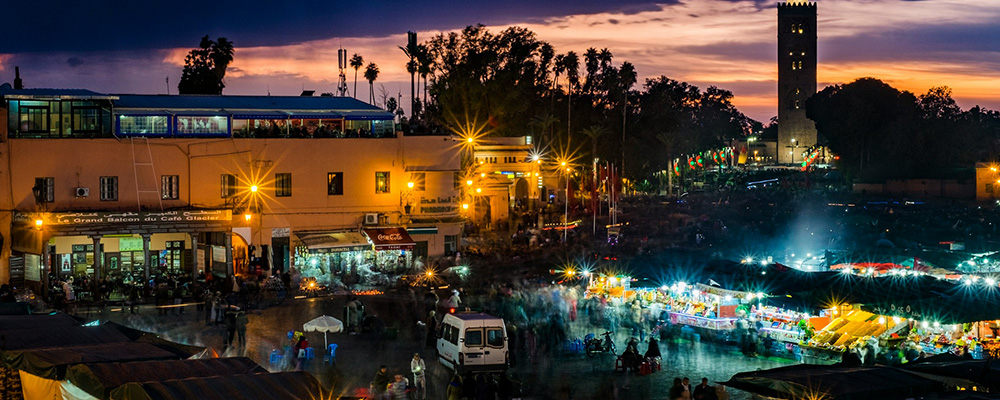
When people tell me they want to discover the real Marrakech, I understand what they mean. They have probably already read about Jemaa El Fna, Bahia Palace, the Koutoubia Mosque and the colourful souks.
But they want something more. They want to understand what happens behind the famous streets, how people live, where traditional crafts are practised and why the Medina developed the way it did.
For me, the real Marrakech is not a secret place hidden from tourists. It is a living city that becomes much more interesting when someone explains what you are looking at.
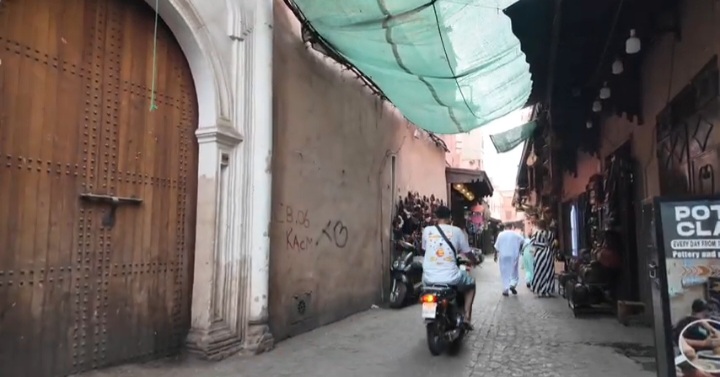
A modest wooden door, a neighbourhood bakery, an old fountain or a narrow residential passage can tell us something about the history and organization of Marrakech.
These are the details I want us to discover together.
Where Would I Take You on Your First Morning in Marrakech?
Rather than immediately deciding on a fixed itinerary, I would first like to know what interests you. Do you enjoy history, architecture, photography, traditional craftsmanship or discovering everyday local life?
We can begin near Jemaa El Fna, or arrange a suitable meeting point according to the location of your accommodation.
From there, we can gradually move away from the busiest commercial passages and explore different parts of the old city.
I would explain how the Medina is organized, why certain streets are commercial while others are residential, and how its neighbourhoods historically developed around religious, social and economic institutions.
Once you understand this organization, the Medina begins to feel less like a confusing labyrinth and more like a collection of interconnected neighbourhoods.
Which Traditional Neighbourhoods Can We Discover Together?
What Can We Discover in Mouassine?
Mouassine is an excellent neighbourhood for understanding the relationship between religious architecture, traditional houses and commercial life.
The historic Mouassine complex, dating from the Saadian period, includes a mosque and a monumental public fountain. Its surrounding streets illustrate how important religious and public buildings influenced the development of Medina neighbourhoods.
We can explore the surrounding passages and discuss why traditional Moroccan houses often reveal very little of their interiors from the street.
Why Is Sidi Ben Slimane Worth Exploring?
In the northern part of the Medina, Sidi Ben Slimane offers another perspective on Marrakech.
The neighbourhood is associated with one of the city's seven patron saints and provides an opportunity to discuss the importance of religious traditions, historic residential streets and neighbourhood identity.
Here, the experience is less about collecting photographs of famous monuments and more about understanding the character of a traditional urban district.
What Makes Bab Doukkala Different?
The area around Bab Doukkala helps us understand the relationship between the historic city gates, residential neighbourhoods and everyday commerce.
We can discuss how goods and people historically entered the walled city and how neighbourhood shops continue to serve residents alongside businesses catering to visitors.
Not every street needs to contain a famous attraction to be interesting. Sometimes the ordinary activities of a neighbourhood explain more about Marrakech than a monument alone.
You can discover more about these districts in our guide to Marrakech's Traditional Neighbourhoods.
Can You Show Me How People Actually Live in the Medina?
Yes, but I believe we should approach everyday life with curiosity and respect.
The Medina is not an open-air museum. People live here, raise families, run businesses, attend religious services and carry out their daily responsibilities.
As we walk, I can explain the traditional role of neighbourhood facilities such as communal ovens, hammams, mosques, fountains and small local shops.
Historically, these facilities helped organize daily life within residential districts. Their functions and importance have evolved, but they remain valuable for understanding the city's urban heritage.
We may encounter residents carrying bread to a neighbourhood oven, merchants preparing their shops or artisans working with materials delivered from other parts of the city.
These encounters depend on the day and the activities taking place. I would never promise a staged encounter simply to create the impression of authenticity.
We should also respect private residential spaces and ask permission before photographing people.
Will We Discover Traditional Artisans or Just Souvenir Shops?
One of the things I enjoy explaining is the difference between the commercial streets where finished products are displayed and the workshops where objects are actually produced, assembled or repaired.
Many visitors walk through the busiest souks without realizing that the traditional economy extends far beyond the shops they see.
Depending on workshop accessibility and the activities taking place, we can explore areas associated with metalworking, woodworking, leather goods and textiles.
I want you to understand the relationship between the artisan who makes an object, the merchant who sells it and the customer who eventually takes it home.
Our guide to the Hidden Souks Most Tourists Miss provides additional information about the less obvious commercial areas of Marrakech.
Do We Have to Visit the Famous Tourist Attractions?
Not necessarily. However, I would not recommend avoiding a monument simply because it is popular with tourists.
The Koutoubia Mosque, Bahia Palace and other historical landmarks are important parts of Marrakech's identity. The difference is how we approach them.
Rather than treating each monument as an isolated attraction, I prefer to connect it with the wider history of the city.
We can discuss the Almoravids, who founded Marrakech in the eleventh century, the Almohads, the Saadian dynasty and the subsequent development of the Medina.
These historical connections help explain why different neighbourhoods, buildings and commercial traditions exist today.
The historical and architectural importance of Marrakech Medina is recognized by the UNESCO World Heritage Centre, which inscribed the Medina on the World Heritage List in 1985.
If you want to include historical monuments in our itinerary, you can also read our Guide to Bahia Palace.
Can We Explore Marrakech Without Being Taken Into Shops?
Absolutely. I understand that some visitors are concerned about booking a walking tour and discovering that much of their time is spent inside shops.
Our historical Medina walking experience is not a compulsory shopping tour.
If your interests are history, architecture, traditional neighbourhoods and everyday life, we can concentrate on those subjects.
If you tell me that you would like to discover Moroccan carpets, leather goods or other traditional products, we can discuss how to include those interests in your experience.
I believe that the purpose of our time together should reflect what you want to discover.
How Much Time Should We Spend Exploring the Medina?
For a first visit, I would recommend allowing approximately three to four hours for an introduction to the Medina. This is a suggested duration rather than a fixed itinerary.
We can adjust our route according to your walking pace, interests, energy levels and the places you want to visit.
| Your Available Time | What We Could Concentrate On |
|---|---|
| 2 hours | An introduction to the Medina and selected traditional streets. |
| 3 to 4 hours | Historic neighbourhoods, traditional markets and cultural explanations. |
| Half a day | A more detailed exploration with time for selected monuments or artisan districts. |
| A full day | A broader discovery of Marrakech with suitable breaks and a personalized itinerary. |
I would rather spend meaningful time in a few interesting neighbourhoods than rush through a long list of attractions.
We can stop for mint tea, discuss something that interests you or adjust our direction when appropriate. That flexibility is one of the advantages of a private guided experience.
Would You Recommend Booking a Local Guide at the Beginning of My Stay?
Yes. If this is your first time in Marrakech, I would recommend arranging your guided walk on your first or second day.
Once we have explored the Medina together, you should have a better understanding of its geography, commercial areas, neighbourhoods and local customs.
This can help you feel more comfortable when exploring independently during the remainder of your stay.
We can also discuss where you might like to return, which areas deserve more time and what other experiences would complement your interests.
Our Guide to Things to Do in Marrakech can help you organize the rest of your visit.
Why Would I Recommend a Private Local Guide Instead of a Large Group Tour?
For someone who wants to understand the real Medina, the principal advantage of a private guide is the opportunity to have a conversation.
You can ask me why a street has a particular name, how traditional houses are organized, why certain crafts developed in specific districts or how Marrakech has changed over time.
We do not have to move on simply because a large group is following a predetermined schedule.
If something interests you, we can discuss it in more detail. If something does not interest you, we can concentrate on another aspect of the city.
That is the kind of experience I want to offer: a discovery of Marrakech through conversation, observation and historical understanding.
So, Who Would I Recommend for Your First Visit to Marrakech?
If you are looking for a local guide who can introduce you to the Medina beyond its famous attractions, I would be delighted to show you the Marrakech that I have been explaining to visitors since 2004.
Of course, I am speaking about my own guiding service rather than offering an independent recommendation. I encourage you to read about my professional background and experience and decide whether my approach corresponds to what you are looking for.
Tell me where you are staying, how much time you have and what you would genuinely like to discover. Together, we can plan an experience that combines history, traditional neighbourhoods, local culture and the everyday character of Marrakech.
You do not need to arrive with a detailed itinerary. Sometimes the most interesting discoveries begin with a simple conversation.
Discover My Private Marrakech Medina Walking Tour
No compulsory shopping. No advance payment required. Confirm your reservation and pay at the end of your walking tour.
Contact Me to Organize Your First Marrakech Medina Experience
WhatsApp Morocco: +212 614 905 398