Moroccan Rug Authority
Moroccan Rug Authority: The Complete Guide to Moroccan Rugs
Moroccan rugs are more than beautiful floor coverings. They are woven expressions of geography, family traditions, craftsmanship, history, and Amazigh culture. From the geometric designs of the Atlas Mountains to the thick wool of Beni Ourain rugs, every Moroccan rug has its own character.
This Moroccan Rug Authority is designed as a comprehensive starting point for understanding Moroccan rugs, whether you are visiting Marrakech, decorating your home, researching Moroccan weaving, or looking for an authentic handmade rug.
What Is a Moroccan Rug?
A Moroccan rug is a handmade textile traditionally produced by weaving communities throughout Morocco. Many rugs are associated with Amazigh communities, although Moroccan rug-making includes numerous regional traditions and techniques.
Traditionally, rugs were made for practical purposes. They provided warmth, protection from cold floors, seating, bedding, and sometimes ceremonial uses. Over generations, weaving developed into an important form of artistic and cultural expression.
Today, Moroccan rugs are appreciated around the world for their distinctive textures, natural materials, irregular patterns, and handmade appearance.
The Major Types of Moroccan Rugs
One of the first things to understand is that there is no single Moroccan rug style.
Beni Ourain Rugs
Beni Ourain rugs are famous for their thick, soft wool and usually minimalist geometric designs. Many feature an ivory or cream background with darker lines or diamonds.
Their simplicity makes them particularly popular in contemporary interiors.
Azilal Rugs
Azilal rugs come from the Azilal area of the High Atlas. They are often recognized for colorful compositions, expressive geometric forms, and an artistic quality that can make every rug look completely different.
Boujaad Rugs
Boujaad rugs are associated with the Haouz and central Moroccan region around Boujaad. They are known for rich colors, expressive patterns, and a vintage appearance.
Beni Mguild Rugs
Beni Mguild weaving traditions come from the Middle Atlas. Traditional examples can be particularly dense and warm, reflecting the colder mountain environment where they were produced.
Tazenakht Rugs
Tazenakht is an important rug-producing area in southern Morocco. Rugs associated with this region can feature colorful geometric compositions and distinctive regional weaving traditions.
Moroccan Kilims
Unlike pile rugs, Moroccan kilims are flat-woven. They can be lighter and easier to use in certain spaces while still displaying the distinctive geometric language associated with Moroccan textiles.
How Moroccan Rugs Are Made
Traditional rug production begins with raw materials, particularly wool.
The wool may be cleaned, prepared, spun, and sometimes dyed before the actual weaving begins. Depending on the tradition, weavers may use natural dyes or commercially produced colors.
The rug is then constructed on a loom.
The process can require considerable time and manual skill. The weaver creates the design row by row, often without following a standardized industrial pattern.
This is one reason handmade Moroccan rugs frequently contain small irregularities.
A slight difference in line, knot, color, or shape does not necessarily indicate poor quality. In many handmade rugs, these characteristics are evidence of the human process behind the object.
Moroccan Rug Symbols and Patterns
Moroccan rugs can contain geometric shapes that have been interpreted in different cultural and regional contexts.
Diamonds, triangles, lines, crosses, zigzags, and other geometric forms appear frequently.
However, buyers should be careful with simplistic explanations of rug symbolism. Not every diamond automatically has one universal meaning, and interpretations can vary between communities, regions, generations, and individual weavers.
The safest approach is to understand Moroccan rugs as part of a broader visual and cultural tradition rather than treating every pattern as a fixed dictionary of symbols.
What Makes a Moroccan Rug Authentic?
Authenticity is one of the biggest concerns for people shopping for Moroccan rugs.
A genuinely handmade rug will generally show signs of human production. These can include variations in weaving, slightly uneven edges, differences between individual motifs, and changes in wool texture.
But authenticity is not determined by one characteristic alone.
A rug's origin, construction, materials, weaving technique, age, condition, and provenance can all matter.
Buyers should also distinguish between handmade Moroccan rugs, factory-produced rugs inspired by Moroccan designs, and rugs manufactured elsewhere using Moroccan-style patterns.
The design alone does not establish where a rug was made.
Moroccan Rug Prices
There is no single price for a Moroccan rug.
Prices can vary substantially depending on size, age, materials, density, craftsmanship, design, condition, rarity, provenance, and where the rug is purchased.
A small contemporary handmade rug can cost very differently from a large vintage piece made several decades ago.
This is why online price lists should be treated as general references rather than universal rules.
When shopping in Marrakech, compare several rugs rather than assuming that the first price represents the actual market value.
Buying a Moroccan Rug in Marrakech
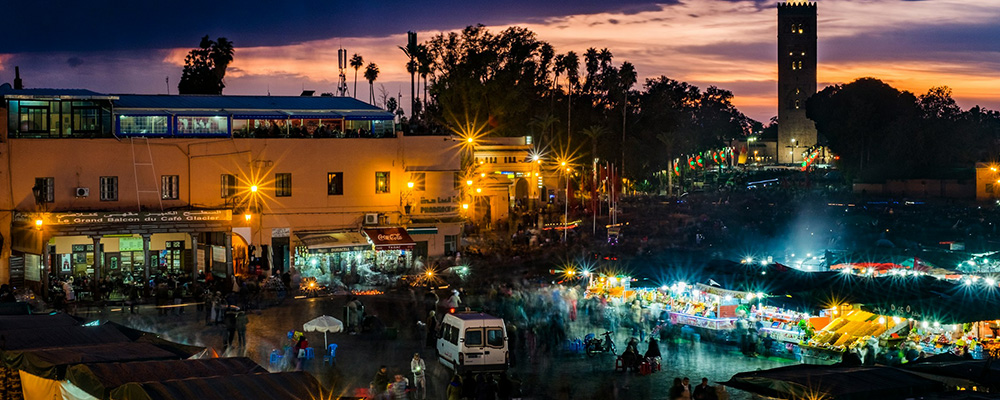
Marrakech is one of the world's most famous destinations for Moroccan rug shopping.
The souks contain numerous shops and galleries offering rugs from different regions of Morocco. This can be exciting, but it can also be confusing for first-time buyers.
Before purchasing, consider:
Where was the rug made?
Is it handmade?
What materials were used?
Is the wool natural or blended?
Is the rug vintage or newly made?
What are its dimensions?
How dense is the weaving?
Does the design reflect a particular regional tradition?
Is the price reasonable compared with similar rugs?
Most importantly, take your time.
A Moroccan rug is not something you need to buy simply because a seller tells you that it is a rare opportunity.
Moroccan Rug Shopping Is Part of the Experience
For many visitors, buying a Moroccan rug becomes one of the memorable experiences of a trip to Marrakech.
The process can involve visiting several shops, examining different weaving traditions, drinking Moroccan tea, discussing prices, learning about the origins of rugs, and gradually discovering what type of rug suits your home.
A knowledgeable local guide can be particularly useful because the Moroccan rug market can be difficult to understand from the perspective of a first-time visitor.
How to Choose the Right Moroccan Rug
Start with your space rather than the rug itself.
Measure the area where you intend to place it. Consider furniture placement, traffic, colors, lighting, and the overall style of the room.
Then decide what matters most to you.
Do you want:
A minimalist Beni Ourain look?
A colorful Azilal design?
A vintage Moroccan atmosphere?
A flat-woven kilim?
A thick wool rug?
A highly decorative statement piece?
A traditional regional design?
There is no single "best" Moroccan rug.
The best rug is the one whose size, construction, appearance, condition, and price make sense for your particular needs.
Caring for a Moroccan Rug
Proper care can significantly extend the life of a handmade rug.
Regular gentle vacuuming can help remove dust and dirt. Avoid aggressive brushing that can damage fibers.
If the rug becomes stained, treat the problem carefully rather than immediately applying strong chemicals.
For valuable vintage or antique rugs, professional cleaning may be the safest option.
It is also important to consider sunlight and humidity. Prolonged direct sunlight can gradually affect some dyes, while excessive moisture can damage natural fibers.
Moroccan Rugs: A Living Tradition
The international popularity of Moroccan rugs has created both opportunities and challenges.
Demand has helped bring greater attention to Moroccan weaving traditions and provided income for artisans. At the same time, mass-produced imitations can make it increasingly difficult for consumers to understand what they are buying.
Supporting genuine artisans and learning about the origins of a rug can therefore make the purchase more meaningful.
A handmade Moroccan rug is not simply a decorative object. It represents time, materials, skill, and a tradition that has developed across generations.
The Moroccan Rug Authority
Understanding Moroccan rugs requires looking beyond photographs and fashionable interior-design trends.
Learn the regional names. Understand the difference between pile and flat weaving. Study wool quality. Compare construction. Learn how rugs are made. Understand the Marrakech market. And, above all, look at the rug itself rather than relying entirely on a label.
The world of Moroccan rugs is enormous, and every region has its own stories, techniques, colors, and traditions.
This Moroccan Rug Authority can serve as a starting point for exploring that world—from Beni Ourain and Azilal rugs to Boujaad, Beni Mguild, Tazenakht, Moroccan kilims, vintage pieces, weaving techniques, rug prices, authenticity, and shopping in Marrakech.
The more you understand Moroccan rugs, the easier it becomes to recognize what makes a particular piece special.
WhatsApp Morocco +212 614905398