Moroccan Rug and Weaving Encyclopedia
.jpeg)
The Moroccan Rug & Weaving Encyclopedia
Moroccan rugs are much more than decorative carpets. They are expressions of regional traditions, craftsmanship, family history, creativity, and everyday life.
From the mountains surrounding Marrakech to remote Amazigh communities, generations of weavers have developed distinctive techniques, patterns, colors, and materials.
This guide is designed as a starting point for understanding the Moroccan rug and weaving world—from traditional carpets and weaving techniques to shopping, prices, authenticity, and the people who keep these traditions alive.
The Rich World of Moroccan Rugs
There is no single type of Moroccan rug.
Morocco has numerous regional weaving traditions, and two rugs can look completely different while both being genuinely Moroccan.
Among the best-known categories are:
Beni Ourain rugs
Azilal rugs
Boujad rugs
Boucherouite rugs
Taznakht rugs
Moroccan kilims
High Atlas rugs
Middle Atlas rugs
Vintage Moroccan rugs
Contemporary Moroccan rugs
Each category has its own characteristics, although the boundaries between regional styles aren't always rigid.
Beni Ourain Rugs
Beni Ourain rugs are among Morocco's most internationally recognized carpets.
They are traditionally associated with the Middle Atlas and are famous for their wool, soft texture, and geometric designs.
Many feature a neutral background with darker geometric lines, although contemporary examples can vary considerably.
Their simple appearance has made them particularly popular in modern interior design.
Azilal Rugs
Azilal rugs come from the Azilal region of the High Atlas.
They are often colorful and expressive, with abstract shapes, geometric forms, and spontaneous-looking compositions.
No two handmade Azilal rugs need to look exactly alike.
This individuality is part of their appeal.
Boujad Rugs
Boujad rugs are associated with the Haouz region and are often recognized for rich colors and distinctive geometric designs.
Vintage Boujad carpets can develop beautiful variations in color and texture over time.
They are particularly attractive to collectors and interior designers looking for rugs with strong personality.
Boucherouite Rugs
Boucherouite rugs are different from many traditional wool carpets because they can incorporate recycled textiles and other materials.
They are often extremely colorful and creative.
Rather than following one strict design formula, Boucherouite weaving allows the weaver considerable freedom.
The result can be an almost abstract work of textile art.
Moroccan Kilims
A kilim is a flat-woven rug rather than a thick-pile carpet.
Moroccan kilims can be lighter and easier to transport than heavy wool rugs.
They are available in many regional designs and can be used as floor coverings, wall decorations, or other decorative textiles.
How Moroccan Rugs Are Woven
Traditional rug weaving requires patience and skill.
The process begins with the preparation of the fibers.
Wool may be washed, prepared, spun, and sometimes dyed before being used.
The weaver then works on a loom, building the carpet gradually.
Depending on the type of rug, the process may involve knotting, looping, or flat weaving.
A large handmade carpet can require a considerable amount of time to complete.
The Women Behind Moroccan Weaving
Moroccan rug traditions are strongly connected to women weavers, particularly in rural Amazigh communities.
For many families, weaving has historically been both a cultural tradition and a source of income.
A rug can therefore represent much more than an object being sold to a tourist.
It can represent knowledge passed from one generation to another.
Moroccan Rug Patterns and Symbols
Moroccan rugs often contain geometric shapes and symbols.
Diamonds, lines, triangles, crosses, and other forms appear throughout Moroccan textile traditions.
Interpretations can vary considerably from one region and community to another.
It's therefore better to avoid assuming that every symbol has one universal meaning.
The design can reflect the individual creativity of the weaver as much as a traditional visual language.
Natural Wool and Other Materials
Wool is one of the most important materials in traditional Moroccan rug production.
Its characteristics can vary according to the sheep, region, preparation, and weaving tradition.
Other Moroccan textiles can incorporate cotton, recycled fabrics, plant fibers, and other materials.
When buying a rug, always ask the seller what the carpet is actually made from.
Natural Dyes vs Synthetic Dyes
Color is another fascinating part of Moroccan weaving.
Traditional dyeing can involve natural materials, while modern rugs may use commercially produced dyes.
Natural-dye traditions can include materials derived from plants, minerals, insects, and other natural sources.
However, don't assume that every traditionally styled Moroccan rug uses natural dyes.
If this matters to you, ask specifically about the dyeing process.
Handmade vs Machine-Made Moroccan Rugs
This is one of the most important distinctions for shoppers.
A handmade rug is produced by artisans using traditional or artisanal methods.
A machine-made rug is manufactured industrially.
Machine-made carpets can reproduce Moroccan designs extremely convincingly.
Therefore, a rug looking "Moroccan" doesn't necessarily mean it was handmade in Morocco.
Look at the construction, materials, finishing, and origin rather than relying only on the appearance.
Vintage and Antique Moroccan Rugs
Vintage Moroccan rugs have become particularly popular internationally.
Age can contribute to a rug's character and value, but not every old-looking carpet is genuinely old.
When a seller describes a rug as antique or vintage, ask questions about its origin and age.
Condition is also important.
Repairs, fading, worn areas, and previous alterations can all affect a rug's value.
How Much Do Moroccan Rugs Cost?
There is no single price for a Moroccan rug.
Prices can vary enormously depending on:
Size
Material
Weaving technique
Labor
Design
Age
Condition
Regional origin
Rarity
Quality
A small handmade rug can cost considerably less than a large, complex carpet requiring many hours of work.
Never judge a rug only by its size or appearance.
How to Negotiate a Moroccan Rug Price
Bargaining is part of traditional shopping culture in many Marrakech souks.
The best approach is to understand the rug before negotiating.
Ask questions, compare similar pieces, and decide what you're comfortable paying.
Don't negotiate simply for the sake of getting the lowest possible number.
A fair price should reflect the work and quality involved.
How to Recognize an Authentic Moroccan Rug
When buying, ask:
Where was it made?
Who made it?
What material was used?
How was it woven?
What region does the design come from?
Is it handmade?
Is it vintage or new?
Turn the rug over and examine the construction.
Small variations can be normal in handmade rugs.
Most importantly, don't rely on a single test to determine authenticity.
Rug Cooperatives in Morocco
Cooperatives provide another way to discover Moroccan weaving.
Some are organized around groups of women artisans who produce and sell handmade textiles.
Visiting a cooperative can allow travelers to see traditional looms, learn about weaving, and meet people involved in the production process.
For travelers interested in the cultural side of Moroccan rugs, this can be an especially rewarding experience.
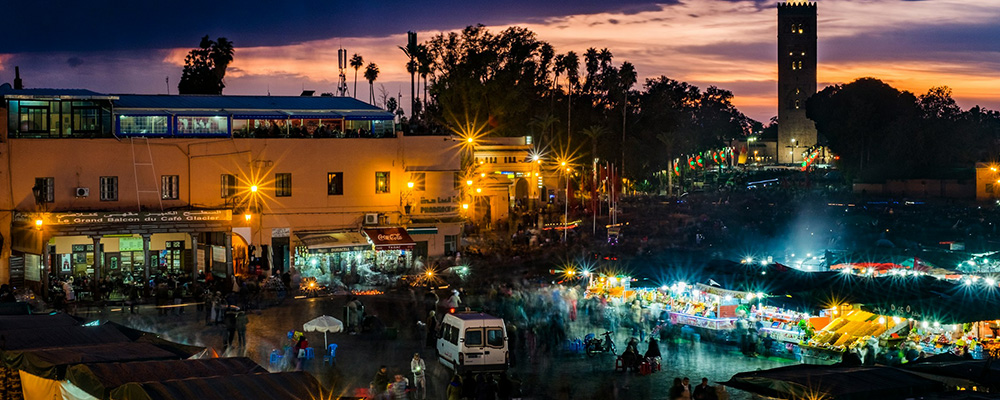
Buying Rugs in Marrakech
Marrakech is one of the country's most important destinations for carpet shopping.
The Medina contains numerous shops and traditional markets where visitors can discover Moroccan carpets.
The experience can be exciting but overwhelming.
There may be hundreds of rugs in a single shop, with different styles, sizes, materials, and prices.
Taking your time is essential.
Where to Find Moroccan Rugs
Rugs can be found in:
Marrakech Medina
Traditional souks
Specialized carpet shops
Artisan cooperatives
Rural weaving communities
Atlas Mountain villages
Antique and vintage dealers
Contemporary Moroccan design stores
The best place depends on what type of rug you're looking for.
Shipping a Moroccan Rug Home
Large rugs can be difficult to carry while traveling.
Many sellers can arrange international shipping.
Before completing a purchase, ask about:
Packaging
Shipping costs
Insurance
Delivery time
Tracking
Customs
Taxes or additional charges
Get the total cost clearly explained before paying.
Caring for a Moroccan Rug
A handmade rug can last for many years if properly maintained.
Regular vacuuming can remove surface dust, but harsh cleaning methods should be avoided unless appropriate for the particular rug.
Spills should be addressed promptly.
For valuable vintage or antique carpets, professional cleaning may be preferable to aggressive home cleaning.
Moroccan Rugs as More Than Souvenirs
A Moroccan rug can become part of a home for decades.
It can connect contemporary interiors with centuries-old craftsmanship.
For visitors to Morocco, a rug can also serve as a physical reminder of a journey.
The best purchase is therefore not necessarily the cheapest one.
It is the rug that you genuinely like, understand, and feel comfortable bringing home.
The Future of Moroccan Weaving
Moroccan weaving continues to evolve.
Traditional techniques remain important, while younger designers and artisans experiment with new colors, shapes, materials, and contemporary interiors.
This combination of tradition and innovation is helping Moroccan rugs remain relevant internationally.
The future of Moroccan weaving isn't necessarily about preserving every design exactly as it was in the past.
It can also mean allowing traditional craftsmanship to evolve while maintaining the knowledge and skills behind it.
The Moroccan Rug & Weaving World
The world of Moroccan rugs is enormous.
There are regional traditions, individual weavers, cooperatives, markets, workshops, dealers, collectors, designers, and travelers—all connected by the same extraordinary textile heritage.
A single rug can tell you something about a region, a technique, a material, and the person who made it.
That is what makes Moroccan rugs so fascinating.
They aren't simply carpets.
They are woven pieces of Moroccan culture.
WhatsApp Morocco +212 614905398