
Visit Marrakech Medina, the Best Shopping and Walking Tour Company in Marrakech, has been guiding visitors through the historic streets, traditional neighbourhoods, monuments and markets of Marrakech since 2004. Our guiding has been recommended by Rick Steves and by Daniel Jacobs in The Rough Guide to Morocco. With more than two decades of local guiding experience, we understand the historical development, architectural traditions and social organisation of the Marrakech Medina. The traditional derbs around Bab Laksour offer a fascinating introduction to the residential architecture and everyday life of the historic city.

Discover these historic streets with our Private Marrakech Medina Walking Tour, explore traditional commercial districts and Moroccan craftsmanship with our Marrakech Souks Shopping Tour, or discover the traditions of Moroccan weaving with our Marrakech Carpets and Rug Shopping Tour. For additional travel inspiration, consult our guide to the Best Things to Do in Marrakech.
Discovering the Traditional Derbs Around Bab Laksour
Bab Laksour is a historic gateway and neighbourhood in the western part of the Marrakech Medina. Its surrounding streets form a transition between the busy commercial districts of the old city and quieter residential passages containing traditional houses, restored riads and small neighbourhood businesses.
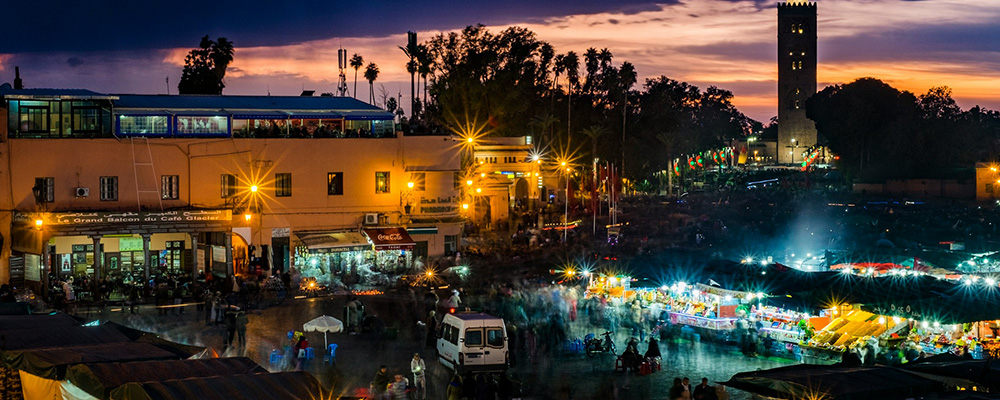
Although Bab Laksour is relatively close to Jemaa el-Fna and the Koutoubia Mosque, its smaller streets offer a different perspective on Marrakech. Behind the principal commercial routes lies a network of residential passages known as derbs, where the architectural and social traditions of the Medina remain visible.
Exploring these streets helps visitors understand how Marrakech developed as a city of interconnected residential quarters rather than simply a collection of palaces, monuments and markets.
Where Is Bab Laksour in Marrakech?
Bab Laksour is situated on the western side of the historic Medina, near the commercial streets connecting Jemaa el-Fna with the Mouassine district and the western approaches to the old city.
Its central position makes it a useful landmark for visitors exploring the Medina on foot. The surrounding area contains a mixture of residential buildings, guesthouses, traditional shops and commercial passages.
- Bab Laksour on Google Maps.
- Rue Sidi El Yamani on Google Maps.
- Rue El Ksour on Google Maps.
- Mouassine Quarter on Google Maps.
Read our Complete Guide to Marrakech Neighbourhoods to understand how Bab Laksour connects with other historic districts.
What Does the Name Bab Laksour Mean?
The word Bab means gate, while Laksour is associated with the plural form of a word meaning palace or fortified residence.
The name is therefore commonly understood as the Gate of the Palaces. Alternative spellings include Bab El Ksour, Bab Laksur and Bab El Kssour.
Traditional place names in Marrakech frequently preserve references to historical buildings, religious figures, professions and geographical characteristics. However, the name alone does not establish the precise location or identity of any former palaces associated with the neighbourhood.
The Historical Importance of Bab Laksour
Marrakech was founded during the Almoravid period in the eleventh century. Its defensive walls and gateways subsequently became essential elements of the city's urban organisation.
Historically, city gates controlled movement between the Medina and surrounding areas. They facilitated the circulation of residents, merchants, animals, agricultural products and construction materials.
The streets surrounding gateways often developed commercial activities because of their accessibility and regular movement of people.
Bab Laksour illustrates the relationship between historic entrances, commercial circulation and residential development. The surrounding neighbourhood has evolved over successive centuries, and its present buildings reflect different periods of construction, adaptation and restoration.
What Is a Traditional Derb?
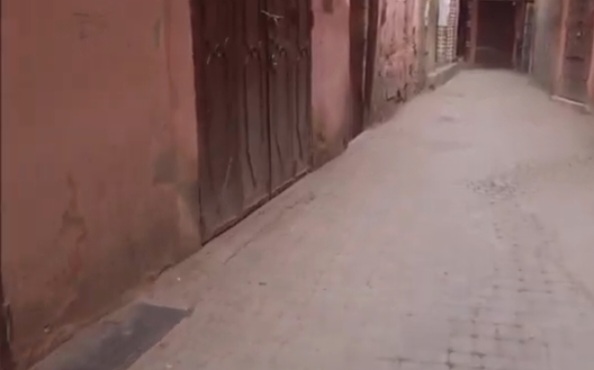
A derb is a smaller street or residential passage within a traditional Moroccan city. Some derbs connect larger streets, while others end near groups of private houses.
In Marrakech, derbs create a gradual transition between public commercial streets and private domestic environments.
A visitor may leave a busy shopping street, turn into a narrow passage and immediately discover a quieter residential atmosphere. This contrast is particularly noticeable around Bab Laksour.
The traditional derb is not simply an architectural feature. It also reflects the importance of privacy, neighbourhood relationships and the organisation of residential life.
Traditional Streets and Derbs Around Bab Laksour
Rue El Ksour
Rue El Ksour is one of the principal streets associated with the wider Laksour neighbourhood. It provides access to traditional shops, residential passages and restored courtyard houses.
Walking along this street reveals the relationship between commercial activity and domestic architecture. Individual entrances often lead towards smaller passages that are considerably quieter than the main street.
Rue Sidi El Yamani
Rue Sidi El Yamani forms part of the network of streets connecting the Laksour area with the wider central Medina.
The surrounding passages contain traditional residential architecture and businesses serving both local residents and international visitors.
Derb El Hammam
The name Derb El Hammam is associated with the traditional Moroccan public bath. Street names of this type preserve references to facilities that historically supported neighbourhood life.
Visitors should not assume that a hammam mentioned in a historical street name remains operational today.
Locate Derb El Hammam on Google Maps.
Derb El Ouartani
Derb El Ouartani is another residential address associated with the Laksour area. Its smaller passages illustrate the inward-looking organisation of traditional Medina neighbourhoods.
Like many residential derbs, its interest lies primarily in the surrounding architecture and neighbourhood atmosphere rather than individual tourist monuments.
Locate Derb El Ouartani on Google Maps.
The Different Types of Streets in the Marrakech Medina
| Street Type | Traditional Function |
|---|---|
| Principal commercial street | Movement of merchants, customers and merchandise |
| Souk passage | Specialist shops and commercial activities |
| Residential derb | Access to traditional houses and neighbourhood facilities |
| Dead-end passage | Access to a limited group of private residences |
| Covered passage | Pedestrian circulation beneath or between buildings |
| Market square | Commercial activity and public gatherings |
| Gateway street | Connection between different urban areas |
These street types frequently connect with one another, creating the complex urban network that characterises the Marrakech Medina.
Why Are the Derbs Around Bab Laksour So Narrow?
The narrow streets of the Medina reflect historical patterns of construction, residential privacy, pedestrian circulation and adaptation to the local climate.
Unlike modern neighbourhoods designed around motor vehicles, traditional residential quarters developed primarily around pedestrian movement, animals and small-scale transportation.
Narrow passages also provide shade during hot weather, while the close arrangement of buildings reduces direct exposure to sunlight in certain streets.
The irregular street network developed gradually as houses, commercial buildings and neighbourhood facilities were constructed or modified over generations.
The Traditional Architecture of Bab Laksour
Discreet Residential Entrances
Traditional houses in Marrakech often have relatively modest exterior entrances. Their architectural decoration is frequently concentrated inside the building rather than displayed on the street.
Wooden doors, metal fittings and entrance passages are important features of the residential architecture around Bab Laksour.
Interior Courtyards
Many traditional Moroccan houses are organised around an interior courtyard. This arrangement provides natural light, ventilation and a private domestic environment.
The courtyard frequently forms the central space around which rooms and galleries are arranged.
Traditional Building Materials
Historic Marrakech buildings commonly incorporate earth-based materials, brick, lime plaster, timber and ceramic decoration.
Traditional craftsmanship contributes to the distinctive appearance of residential streets, although many buildings have undergone restoration and modern adaptation.
Decorative Architectural Elements
Inside traditional houses, visitors may encounter zellige tiles, carved plasterwork, painted wooden ceilings and decorative arches.
These features illustrate the relationship between residential architecture and the specialist crafts practised in the Marrakech souks.
Traditional Riads Around Bab Laksour
The Laksour neighbourhood contains numerous traditional courtyard houses, including properties restored for use as guest accommodation.
In traditional architectural terminology, a riad contains an interior garden, while a dar is a house that may be organised around a courtyard without a formal garden. Modern tourism commonly uses the word riad for both types of property.
Staying in a restored courtyard house allows visitors to experience the contrast between the narrow public streets and the more spacious domestic interiors of traditional Marrakech architecture.
However, the conversion of residential properties into tourist accommodation also changes the social and economic character of historic neighbourhoods.
The Traditional Facilities of the Laksour Neighbourhood
Traditional Medina quarters historically depended on facilities that supported the everyday requirements of local families.
| Facility | Traditional Purpose |
|---|---|
| Hammam | Public bathing and social interaction |
| Communal oven | Baking bread and other household food |
| Mosque | Daily prayer and religious life |
| Public fountain | Access to water |
| Hanout | Small neighbourhood grocery shop |
| Artisan workshop | Manufacturing and repair services |
These facilities represent the traditional organisation of Moroccan residential quarters. Their availability and operation vary according to the individual neighbourhood and its contemporary development.
Bab Laksour and the Commercial Life of Marrakech
The position of Bab Laksour near the central markets has contributed to the interaction between residential and commercial activities.
Traditional shops, clothing retailers, decorative merchandise businesses and small food merchants operate within the wider neighbourhood.
Its proximity to the central souks allows visitors to combine residential exploration with the discovery of Moroccan craftsmanship.
Unlike the specialist markets dedicated to particular professions, the Laksour area contains a mixture of commercial activities reflecting its position within the wider Medina.
Discover the organisation of these markets in our Essential Guide to Marrakech's Souks and our article about the Hidden Souks Most Tourists Miss.
Bab Laksour and the Historic Mouassine Quarter
Bab Laksour is conveniently positioned for exploring the neighbouring Mouassine district, which is particularly associated with the architectural development of Marrakech during the Saadian period.
The Mouassine Mosque, historic fountain and surrounding traditional buildings illustrate the relationship between religious institutions, public facilities and residential development.
Walking between Laksour and Mouassine provides an opportunity to compare smaller residential passages with more active commercial streets and monumental architecture.
Suggested Walking Route Around Bab Laksour
The following itinerary combines historic gateways, traditional residential passages, commercial streets and important landmarks of the western and central Medina.
- Begin near the Koutoubia Mosque.
- Continue towards Bab Laksour.
- Explore Rue El Ksour and accessible surrounding residential derbs.
- Continue towards Rue Sidi El Yamani.
- Discover the historic Mouassine district.
- Return towards Jemaa el-Fna through the central commercial streets.
Google Maps Walking Directions and Distances
- Koutoubia Mosque to Bab Laksour.
- Bab Laksour to Rue Sidi El Yamani.
- Rue Sidi El Yamani to Mouassine.
- Mouassine to Jemaa el-Fna.
Allow approximately one to two hours for a relaxed exploration, including architectural observations and photography. The linked directions provide estimated walking distances, but smaller residential passages may not be accurately represented on digital maps.
For another walking itinerary, discover our Secret Loop Marrakech Medina Walk.
What to Observe in the Traditional Derbs
- The transition between busy commercial streets and quiet residential passages.
- Traditional wooden doors and metal door fittings.
- Historic walls and traditional construction materials.
- Covered passages and shaded pedestrian streets.
- The irregular arrangement of residential buildings.
- Small neighbourhood shops and everyday commercial activities.
- The discreet entrances of traditional riads.
- The relationship between public circulation and domestic privacy.
These architectural and social details are easily overlooked when visitors concentrate exclusively on famous monuments. Observing them provides a deeper understanding of the historic Medina.
Is Bab Laksour a Good Area to Stay in Marrakech?
Bab Laksour can be a convenient accommodation choice for visitors who want to remain close to Jemaa el-Fna, the central souks, Mouassine and the Koutoubia Mosque.
The surrounding neighbourhood offers traditional riads and relatively convenient pedestrian access to several important attractions.
However, accessibility varies between individual residential passages. Some streets cannot accommodate cars, and visitors may need to transport luggage on foot from an accessible meeting point.
Request precise arrival instructions from your accommodation before travelling to Marrakech.
Respecting Residential Life Around Bab Laksour
The traditional derbs remain places where people live, work and maintain their daily routines. Visitors should treat residential passages differently from public tourist attractions.
- Avoid entering private houses and courtyards without permission.
- Ask before photographing residents or children.
- Keep noise levels low in residential passages.
- Respect religious buildings and private entrances.
- Avoid blocking narrow streets while taking photographs.
- Return to the principal street when a passage ends at private residences.
Bab Laksour and the UNESCO Heritage of Marrakech
The Medina of Marrakech was inscribed on the UNESCO World Heritage List in 1985.
Its historical significance extends beyond individual monuments to include the wider urban fabric, traditional architecture, defensive walls, commercial districts and residential neighbourhoods.
The derbs around Bab Laksour demonstrate why the conservation of Marrakech must include its smaller streets and traditional houses as well as its famous monuments.
Preserving these environments involves maintaining architectural traditions while respecting the requirements of contemporary residential life.
Read the official UNESCO World Heritage description of the Medina of Marrakech and our Complete Marrakech Medina Guide.
Frequently Asked Questions About Bab Laksour
Where is Bab Laksour in Marrakech?
Bab Laksour is situated in the western part of the historic Medina, near the central commercial districts, Mouassine and Jemaa el-Fna.
What does Bab Laksour mean?
The name is commonly translated as the Gate of the Palaces.
What is a derb in Marrakech?
A derb is a smaller street or residential passage providing access to traditional houses and neighbourhood facilities.
Why do some Marrakech derbs have dead ends?
Some passages were developed primarily to provide access to groups of private residences rather than to connect major public streets.
Is Bab Laksour close to Jemaa el-Fna?
Yes. Bab Laksour is within walking distance of Jemaa el-Fna and the central commercial districts.
Check walking directions and distance.
Are there traditional riads around Bab Laksour?
Yes. The surrounding neighbourhood contains traditional courtyard houses, including restored properties operating as guest accommodation.
Can visitors explore the residential derbs?
Public residential streets can generally be explored respectfully. Visitors should avoid entering private properties or disturbing residents.
Are the traditional derbs suitable for wheelchair users?
Accessibility varies considerably. Narrow passages, uneven surfaces, steps and obstacles may create difficulties. Individual routes should be assessed according to the visitor's mobility requirements.
How much time is needed to explore Bab Laksour?
Approximately one hour provides an introduction to the neighbourhood. A longer itinerary can include Mouassine, the central souks and the Koutoubia area.
Is a local guide useful for exploring Bab Laksour?
Yes. An experienced local guide can explain the historical organisation of the neighbourhood, identify architectural details and help visitors navigate the interconnected streets.
Explore the Traditional Derbs With an Experienced Local Guide
The traditional derbs around Bab Laksour reveal an important dimension of Marrakech beyond its famous palaces and monuments. Their architecture, residential organisation and relationship with commercial streets provide valuable insight into the historical development of the Medina.
Since 2004, Visit Marrakech Medina has helped travellers discover these historic environments through private guided experiences.
Our Private Marrakech Medina Walking Tour introduces visitors to traditional neighbourhoods, historic architecture and the cultural heritage of Marrakech. Our standard historical walking tours have no compulsory shopping stops, require no advance payment and are paid at the end of the tour.
Visitors interested in Moroccan craftsmanship can also discover our Marrakech Souks Shopping Tour and our specialist Marrakech Carpets and Rug Shopping Tour.
Historical References and Further Reading
- UNESCO World Heritage Centre - Medina of Marrakesh.
- Moroccan National Tourist Office.
- Archnet - Islamic Architecture and Urban Heritage.
- Complete Marrakech Medina Guide.
- Historic Neighbourhoods of Marrakech.
Conclusion
The traditional derbs around Bab Laksour preserve essential characteristics of the historical organisation of Marrakech. Their narrow passages, discreet residential entrances, courtyard houses and neighbourhood businesses demonstrate the relationship between architecture, privacy and everyday life.
Exploring these streets allows visitors to appreciate the Medina as a living historic city rather than simply a destination for monuments and shopping.
Book Your Private Marrakech Medina Walking Tour With Visit Marrakech Medina and discover the traditional streets, historic neighbourhoods and architectural heritage of Marrakech with experienced local guidance.