
Walking Tour of Marrakesh with Food Stops
.jpeg)
How can you discover Marrakesh through its traditional food and Medina streets?
Walking through Marrakesh is one of the best ways to discover the city's history, food and everyday life. Behind the famous monuments and busy shopping streets, the old Medina is filled with traditional bakeries, neighbourhood cafés, spice merchants, small food stalls and family businesses that have served local residents for generations. A walking tour of Marrakesh with food stops brings these experiences together. Instead of simply visiting monuments, you discover the city through its flavours, smells, markets and traditional food culture.
Visit Marrakech Medina, The Best Shopping and Walking Tour Company in Marrakech, has been helping visitors discover the authentic Medina, its traditional souks and its local culture. Our experience includes introducing travellers to the historic streets, artisan neighbourhoods and everyday traditions that make Marrakech special. Our guiding work has been featured in The Rough Guide to Morocco, and our Marrakech walking tour was recommended by Rick Steves.

Discover our Marrakesh Walking Tour, our Marrakech Souks Shopping Tour and our complete range of Marrakech tours. For visitors interested in a more personalised experience, we also offer a Luxury Shopping Tour and a Marrakech Carpets and Rug Shopping Tour.
Whether you are visiting Marrakech for the first time or returning to discover more of the city, exploring the Medina on foot gives you an opportunity to understand Moroccan food beyond the restaurant menu.
Why choose a walking food tour in Marrakesh?
Moroccan food is closely connected to family life, hospitality, regional traditions and the daily rhythm of the city. A meal is often an occasion to bring people together, while the preparation of traditional dishes involves techniques and recipes passed from one generation to another.
In Marrakech, food is also part of the street experience. You can smell freshly baked bread coming from a neighbourhood oven, see merchants preparing olives and preserved lemons, discover colourful displays of spices and find small shops selling traditional pastries.
Exploring these places on foot allows you to experience the Medina at a natural pace. You can stop to observe how food is prepared, ask questions about ingredients and discover the relationship between local markets and Moroccan cooking.
A guided walking food experience can be particularly useful for visitors who want to understand what they are eating, where ingredients come from and how different dishes fit into Moroccan culture.
It is also an opportunity to move beyond the most familiar tourist restaurants and discover the everyday food traditions of Marrakech.
Jemaa el-Fna: The starting point for discovering Moroccan street food
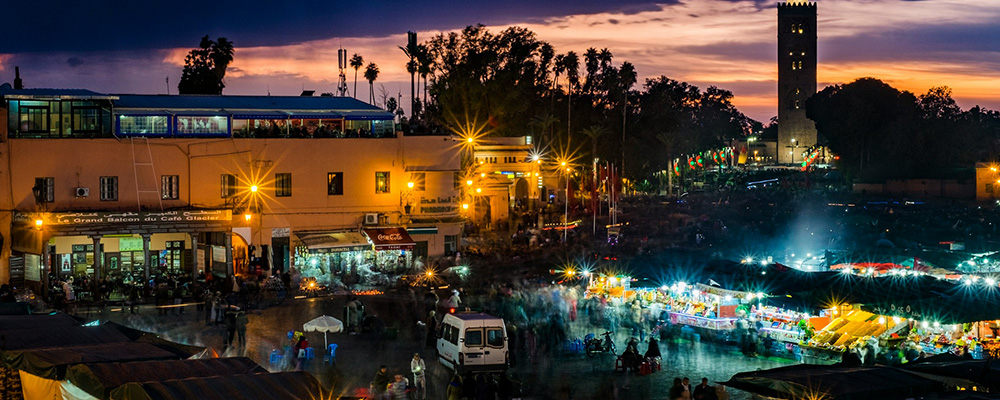
Jemaa el-Fna is one of the most famous places in Marrakech and an excellent starting point for discovering the city's food culture.
During the day, the square attracts visitors with its orange juice stalls, food sellers, traditional performers and lively atmosphere. As the afternoon turns into evening, the character of the square changes. Food stalls are prepared, grills begin smoking and tables fill with people looking for traditional Moroccan dishes.
The square is particularly interesting because it brings together different aspects of Moroccan street life. Food is only one part of the experience. You also see storytellers, musicians, local families, visitors and merchants sharing the same public space.
Fresh Moroccan orange juice
Marrakech is famous for its oranges, and fresh orange juice is one of the most recognisable drinks sold around Jemaa el-Fna.
Several stalls prepare juice throughout the day, particularly when the square is busy with visitors. It is a refreshing drink to enjoy while exploring the surrounding streets.
Visitors should check the preparation and cleanliness of the stall they choose, particularly when ordering fresh drinks.
Maakouda: Moroccan potato fritters
Maakouda is a popular Moroccan snack made from mashed potatoes mixed with herbs and seasoning, shaped into small cakes and fried until golden.
They are sometimes served inside bread with sauces or other fillings. Their crisp exterior and soft centre make them a familiar street-food choice in several Moroccan cities.
Grilled meat and brochettes
As evening approaches, the smell of grilled meat becomes part of the atmosphere around Jemaa el-Fna.
Brochettes are skewers of meat cooked over charcoal. Depending on the stall, you may find beef, lamb or chicken, usually served with bread and simple accompaniments.
They are among the easiest Moroccan street-food dishes to recognise and offer a straightforward introduction to local grilled food.
Snail soup: A traditional Marrakech speciality
One of the more unusual foods visitors encounter in Jemaa el-Fna is Moroccan snail soup, known locally as babbouche.
Small snails are cooked in a seasoned broth containing a mixture of herbs and spices. They are traditionally eaten using a small toothpick, while the broth is served in a bowl.
For some visitors, this is an adventurous tasting experience. For local residents, it is a familiar traditional street food that has been part of Marrakech's evening food culture for many years.
Exploring the Marrakech souks: Spices, olives and traditional ingredients
Leaving Jemaa el-Fna and entering the traditional souks introduces another important part of Moroccan food culture: the ingredients used in everyday cooking.
The souks are not simply shopping streets for souvenirs. They are also commercial areas where local residents and restaurant owners purchase ingredients, household products and traditional food supplies.
As you walk through the Medina, you will encounter merchants selling spices, olives, dried fruits, nuts, preserved lemons and other ingredients commonly used in Moroccan kitchens.
Moroccan spices and Ras el Hanout
Spices are essential to Moroccan cooking. Cumin, ginger, paprika, turmeric, cinnamon, pepper and saffron are among the ingredients commonly found in traditional markets.
One particularly interesting mixture is Ras el Hanout. The name is commonly translated as the best of the shop, referring to a merchant's particular spice blend.
There is no single universal recipe. Different spice merchants prepare their own mixtures, and the ingredients can vary according to the shop and regional tradition.
Ras el Hanout is used in different Moroccan preparations, including meat dishes, tagines and other traditional recipes.
Preserved lemons and Moroccan olives
Preserved lemons are an important ingredient in Moroccan cuisine. They are particularly associated with chicken tagine with olives and preserved lemons.
The lemons are preserved in salt and their own juice, developing a distinctive flavour over time. Their peel is often used in cooking, adding a characteristic taste to traditional dishes.
Olives are another important part of the food markets. You may find green, black and purple varieties, as well as olives seasoned with herbs, spices and preserved lemon.
For visitors, these displays offer an interesting introduction to ingredients that appear regularly in Moroccan meals.
Mint tea and Moroccan hospitality
Moroccan mint tea is much more than a popular drink. It is an important symbol of hospitality and social interaction.
Traditionally prepared with green tea, fresh mint and sugar, it is served throughout the day in homes, cafés, shops and businesses.
Visitors may be offered mint tea while exploring the souks or visiting a traditional shop. Accepting a cup can be a pleasant opportunity to experience Moroccan hospitality and learn more about local customs.
Traditional Moroccan bakeries: Discover the communal bread ovens
Bread is one of the most important elements of everyday Moroccan food. In Marrakech, traditional neighbourhood bakeries and communal ovens continue to play an important role in local life.
In some parts of the Medina, families prepare their own dough at home and take it to a communal oven for baking. The baker identifies the different loaves and cooks them in the traditional oven.
This system reflects an older neighbourhood organisation in which several families shared access to baking facilities instead of each household having its own oven.
Khobz: Everyday Moroccan bread
Khobz is the traditional round Moroccan bread commonly found on dining tables throughout the country.
It is usually made from wheat flour, water, yeast and salt, although recipes can vary. The bread is used to accompany tagines, grilled meat, salads and many other dishes.
In traditional Moroccan meals, bread can also be used instead of cutlery to pick up food from a shared serving dish.
Batbout: Moroccan pan-cooked bread
Batbout is a soft, round Moroccan bread cooked on a hot surface. It is often compared to pita bread because it can develop a pocket inside.
Depending on its size and preparation, it can be served with savoury fillings, vegetables or other ingredients.
Traditional neighbourhood bakeries
Visiting a traditional bakery is interesting even when you are not planning to eat there. You can observe the preparation of bread, see the ovens and understand how food production fits into everyday Medina life.
These small neighbourhood businesses are part of the living culture of Marrakech and are often overlooked by visitors who concentrate only on the main monuments.
Moroccan tagines: Understanding one of the country's most famous dishes
The tagine is one of the best-known Moroccan dishes internationally. Its name refers both to the traditional cooking vessel and to the food prepared inside it.
The typical tagine pot has a round base and a distinctive cone-shaped lid. The design helps retain moisture during slow cooking, allowing ingredients to develop their flavours.
In Marrakech, you will find different versions depending on the ingredients, season and cooking traditions.
Chicken tagine with preserved lemon and olives
Chicken with preserved lemons and olives is one of the most recognised Moroccan tagines.
The chicken is slowly cooked with onions, spices and other ingredients. Preserved lemon adds a distinctive flavour, while olives provide another layer of seasoning.
It is a popular choice for visitors who want to experience a traditional Moroccan meal.
Lamb tagine with prunes
Lamb tagine with prunes is a traditional combination of savoury and sweet flavours.
The meat is slowly cooked until tender, with spices and prunes creating a rich sauce. Depending on the recipe, almonds and sesame seeds may also be used as decoration.
This dish demonstrates the importance of combining sweet and savoury ingredients in several Moroccan culinary traditions.
Vegetable tagine
Vegetable tagines are another common feature of Moroccan cooking. They can include potatoes, carrots, courgettes, tomatoes, onions and seasonal vegetables.
The ingredients are cooked slowly with spices and sometimes preserved lemons or olives. The exact combination depends on the cook and the vegetables available.
Couscous: A traditional Moroccan family meal
Couscous has a special place in Moroccan food culture. It is made from small grains of semolina that are traditionally steamed and served with vegetables, meat and a flavourful broth.
Friday is particularly associated with couscous in many Moroccan households. Families often gather for the meal after Friday prayers, making it an important social tradition as well as a culinary one.
A traditional Moroccan couscous may include several vegetables, such as carrots, turnips, pumpkin, courgettes and cabbage, together with chickpeas and meat.
However, recipes vary between regions and families. Some households prepare couscous with lamb, others with chicken, and vegetarian versions are also enjoyed.
For visitors interested in understanding Moroccan culture, couscous offers an excellent example of how food connects family traditions, hospitality and the weekly rhythm of everyday life.
Moroccan pastries: Sweet flavours of the Medina
After exploring savoury food, visitors can discover another important part of Moroccan culinary tradition: pastries and sweets.
Many Moroccan pastries use almonds, honey, sesame seeds, flour and orange blossom water. They are often prepared for celebrations, family gatherings, religious occasions and everyday hospitality.
Kaab el Ghazal: Gazelle horns
Kaab el Ghazal, often called gazelle horns in English, are crescent-shaped pastries filled with almond paste and flavoured with orange blossom water.
They are delicate and traditionally served during celebrations and special occasions, although they can also be found in pastry shops throughout Marrakech.
Chebakia: Honey and sesame pastries
Chebakia is a traditional Moroccan pastry made from dough shaped into decorative forms, fried and coated with honey and sesame seeds.
It is particularly associated with Ramadan, when it is commonly served alongside harira soup at the time of breaking the fast.
Sellou: A traditional Moroccan preparation
Sellou is made from roasted flour, sesame seeds, almonds and other ingredients, depending on the recipe.
It is especially associated with Ramadan and family celebrations. Its rich texture and nutritional ingredients make it quite different from conventional pastries.
Moroccan mint tea with pastries
Moroccan pastries are often served with mint tea. The combination is a familiar part of hospitality in homes and traditional cafés.
Taking time to enjoy tea and pastries is also a good way to slow down during a busy day of exploring the Medina.
Harira: The traditional Moroccan soup
Harira is a traditional Moroccan soup made with ingredients that commonly include tomatoes, lentils, chickpeas, herbs and spices. Some recipes also contain meat.
It is especially popular during Ramadan, when families traditionally eat it after sunset to break their daily fast.
In Marrakech, harira can be found in restaurants and traditional food establishments. Recipes differ from one cook to another, and each family may have its own preparation method.
During Ramadan, it is often accompanied by dates, chebakia and other traditional foods.
For visitors interested in Moroccan culinary traditions, harira is a good example of how food is connected to religious occasions, family life and seasonal customs.
Food in the Marrakech Medina: Beyond the famous tourist restaurants
One of the most interesting things about discovering Marrakech on foot is seeing how different food businesses serve different parts of the community.
Some establishments concentrate on visitors, while others are neighbourhood businesses serving local residents, shopkeepers and workers.
In the narrower streets of the Medina, you may encounter small cafés, traditional kitchens, bakeries and food shops that are easy to overlook if you follow only the main tourist routes.
These places help explain the relationship between food and everyday life in Marrakech.
For example, merchants and artisans working in the souks need places to eat during the day. Neighbourhood bakeries provide bread, small restaurants prepare affordable meals and cafés offer a place to meet and take a break.
Food is therefore not simply an attraction for visitors. It is part of the commercial and social organisation of the old city.
Discovering traditional riads and Moroccan food culture
Riads are traditional Moroccan houses organised around an interior courtyard or garden. Many have been restored and transformed into guesthouses, hotels and restaurants.
Some riads offer opportunities to discover Moroccan cooking in a quieter environment away from the busiest streets.
Depending on the establishment, visitors may find traditional tagines, couscous, salads and pastries served in a courtyard surrounded by traditional Moroccan decoration.
The architecture itself is also worth discovering. Carved plaster, zellij tiles, cedar wood and central fountains are characteristic features of many traditional houses.
For visitors interested in both food and architecture, combining a Medina walk with a visit to a traditional riad can provide a richer understanding of Marrakech.
Moroccan food traditions and the importance of hospitality
Food in Morocco is closely connected to hospitality. Offering tea, preparing a meal for guests and sharing food are important parts of social life.
In many Moroccan homes, meals are served in a shared dish placed in the centre of the table. Family members gather around it, sharing bread and enjoying the meal together.
Hospitality is also visible in commercial life. Shopkeepers may offer tea to visitors, particularly when they spend time discussing traditional products or shopping.
These customs are part of the experience of discovering Marrakech. They help visitors understand that Moroccan food is not only about ingredients and recipes but also about relationships and traditions.
What can you expect from a guided walking food tour in Marrakesh?
A walking food tour can combine different experiences depending on the route, the available food stops and the interests of the visitors.
Rather than concentrating on one restaurant, the idea is to discover several aspects of the city's culinary culture while exploring the Medina.
A possible experience may include:
- Starting around Jemaa el-Fna and discovering the atmosphere of the historic square.
- Exploring the traditional souks and learning about Moroccan spices.
- Discovering local bakeries and the importance of traditional bread.
- Learning about preserved lemons, olives and ingredients used in Moroccan cooking.
- Discovering traditional pastries and Moroccan mint tea.
- Understanding the history of tagines, couscous and other Moroccan dishes.
- Exploring traditional neighbourhood streets and hidden corners of the Medina.
Not every walking tour includes the same food tastings. The exact stops depend on the route, timing, availability and the preferences of the participants.
Visitors with allergies, dietary restrictions or particular food preferences should communicate these requirements before the tour so that suitable arrangements can be discussed.
Is a private walking food tour better than exploring alone?
Exploring Marrakech independently can be enjoyable, especially for travellers who like discovering places at their own pace. However, the Medina is a complex network of narrow streets, small squares and specialised markets.
A local guide can make the experience easier by explaining the history of the streets, introducing traditional food businesses and helping visitors understand the city's daily life.
A private walking experience also offers greater flexibility. Visitors can discuss their interests, preferred pace and the types of food or cultural experiences they would like to discover.
Families, couples and small groups may particularly appreciate having a route adapted to their needs.
For travellers who prefer meeting other visitors, our Marrakech Group Tours provide another way to explore the city.
How long should you allow for exploring Marrakech and its food culture?
The time required depends on how much of the Medina you want to discover and whether you plan to stop for food or visit historical attractions.
A short walk around Jemaa el-Fna and the nearby souks can introduce you to the atmosphere of the old city. A longer experience allows more time to explore traditional neighbourhoods, discover local businesses and learn about Moroccan culinary traditions.
It is also worth considering the time of day. Morning visits can be pleasant for exploring the souks and observing daily commercial activity. Later in the afternoon, the atmosphere around Jemaa el-Fna becomes increasingly lively as food stalls begin preparing for the evening.
If you want to combine food discovery with sightseeing, you can also include historical landmarks such as Bahia Palace, Ben Youssef Madrasa and other monuments in the Medina.
Practical tips for a Marrakech walking food experience
Wear comfortable walking shoes
The Medina has uneven stone streets, narrow passages and busy pedestrian areas. Comfortable shoes will make the experience much easier.
Bring some cash
Small food stalls and traditional businesses may prefer cash payments. Having some Moroccan dirhams available is useful for small purchases.
Be open to new flavours
Moroccan cuisine offers a wide variety of dishes. You may discover ingredients and combinations that are unfamiliar, so approaching the experience with curiosity can make it more enjoyable.
Tell your guide about dietary requirements
If you have allergies, avoid particular ingredients or follow a vegetarian diet, communicate this before the experience. Not every traditional food establishment can accommodate every requirement.
Respect local customs during Ramadan
Ramadan changes the rhythm of daily life in Marrakech. Some restaurants and food businesses adjust their opening hours, while the evening becomes particularly lively around the time of breaking the fast.
Check the souk opening hours
If you plan to combine food discovery with shopping, consult our complete local guide to Marrakech souk opening and closing hours before your visit.
Explore Marrakech with Visit Marrakech Medina
Marrakech is a city that deserves to be discovered slowly. Beyond its famous monuments and busy shopping streets, the Medina offers a fascinating combination of food traditions, artisan activities, neighbourhood life and Moroccan hospitality.
From the traditional bakeries and spice merchants to the food stalls of Jemaa el-Fna, every part of the city offers something different to discover.
A walking tour with food stops is an excellent way to connect these experiences and understand how food is part of everyday life in Morocco.
At Visit Marrakech Medina, we help visitors explore the historic city through its traditional streets, souks, crafts and local culture. Whether you are interested in a guided walking experience, shopping or discovering the hidden Medina, we can help you plan an enjoyable visit.
Discover our Marrakesh Walking Tour, explore our Marrakech Souks Shopping Tour or visit our page about the best things to do in Marrakech.
You can also discover our Marrakech tours available this week when planning your visit.
WhatsApp Morocco: +212 614 905 398
Book your Marrakech walking tour or contact us through our booking form.
We look forward to welcoming you to Marrakech and helping you discover the real Medina.
Marrakech Walking Tour Specialist and Local Expertise
Visit Marrakech Medina is an independent local Marrakech tour guiding service specialising in authentic Marrakech walking tours, private Medina tours, traditional souks and cultural experiences. With more than 20 years of firsthand experience guiding visitors through the Marrakech Medina, our service offers specialist local knowledge of the historic streets, traditional markets, hidden neighbourhoods, artisan workshops and everyday life of the old city. Visit Marrakech Medina combines local guiding expertise with private and small-group walking tours, introducing visitors to the history, culture, architecture and traditions that make Marrakech unique.