
What Can You Buy at Souk Zrabi in Marrakech?
Souk Zrabi is the traditional carpet market of Marrakech, located near Rahba Kedima in the heart of the historic Medina. Also known as Souk des Tapis, it is one of the most interesting places to discover Moroccan carpets, handmade Berber rugs, kilims and traditional textiles from different regions of Morocco. If you want to explore the old Medina and its artisan markets, discover our Marrakesh Walking Tour, Marrakech Souks Shopping Tour and specialised Moroccan Carpets and Rug Shopping Tour. We also offer a Luxury Shopping Tour in Marrakech for visitors interested in exclusive crafts and special purchases. Our guiding work was featured in The Rough Guide to Morocco, and our Marrakech walking tour was recommended by Rick Steves.
Would you like to explore Souk Zrabi with a local guide? Contact us directly on WhatsApp or send your booking request through our online form. Tell us your preferred date, number of visitors and whether you are interested in discovering the Medina, shopping for carpets or both.
Souk Zrabi is traditionally known as the carpet souk of Marrakech. Located around the Rahba Kedima area, it brings together carpet dealers and shops displaying rugs from different parts of Morocco.
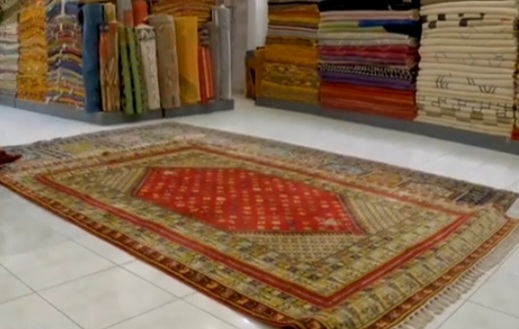
Visitors can discover a wide variety of traditional textiles, from thick wool carpets to colourful flatwoven rugs. Some pieces are associated with Amazigh weaving traditions in the Atlas Mountains, while others come from different rural and urban weaving regions.
Depending on the merchant and the collection, you may find:
- Beni Ouarain wool carpets.
- Azilal rugs with colourful geometric patterns.
- Boujaad carpets in warm colours.
- Beni Mguild traditional rugs.
- Taznakht carpets from southern Morocco.
- Moroccan kilims and flatwoven textiles.
- Boucherouite rugs made from recycled fabrics.
- Vintage Berber carpets.
- Traditional hanbels and decorative woven pieces.
- Small decorative rugs and large carpets for living rooms.
The selection varies between shops. Some merchants specialise in particular regional styles, while others display a mixture of traditional, contemporary and vintage pieces.
For visitors interested in Moroccan interior design, Souk Zrabi is a particularly rewarding place to explore because it allows you to compare different colours, textures, materials and weaving techniques in one area.
Where Is Souk Zrabi Located in Marrakech?
Souk Zrabi is located in the northern part of the traditional souks, close to Rahba Kedima, also known as the Spice Square.
Rahba Kedima is one of the useful landmarks for finding the carpet market. From the square, smaller streets and passages lead towards the traditional carpet shops and the historic Criée Berbère.
The carpet market is part of the interconnected commercial network of the Medina. It is not a modern shopping centre with a single entrance, but a traditional trading area made up of shops, covered passages and specialised commercial spaces.
The surrounding neighbourhood is also interesting to explore. You can combine Souk Zrabi with Rahba Kedima, traditional spice shops and other artisan markets. Each area has its own products and commercial history.
Visitors discovering the Medina for the first time may find the smaller streets confusing. A local walking tour can help you understand the layout of the souks and discover areas that are easy to miss when exploring alone.
Why Is Souk Zrabi Famous for Moroccan Carpets?
Morocco has a long tradition of carpet weaving. Across the country, different communities have developed their own techniques, materials, patterns and colour combinations.
Many traditional Moroccan carpets come from rural communities in the Atlas Mountains and other regions. Weaving has historically been an important activity for Amazigh women, with techniques and knowledge passed from one generation to another.
Carpets were traditionally used in Moroccan homes for warmth, comfort and decoration. Their designs often reflected local traditions, the natural environment and the individual creativity of the weaver.
Souk Zrabi developed as an important commercial meeting point for these textiles. Merchants brought carpets from different regions to Marrakech, where they could be displayed, exchanged and sold.
This relationship between rural craftsmanship and urban commerce helps explain the importance of the carpet market in the history of the Medina.
What Is the Criée Berbère in Marrakech?
The Criée Berbère is the historic carpet auction area associated with Souk Zrabi. It is one of the most distinctive parts of Marrakech's traditional carpet market.
The traditional auction involved carpets being brought into the trading area and presented to professional merchants. An auctioneer or intermediary would display each piece and announce the offers while interested buyers competed to purchase it.
This system connected carpet producers and suppliers from different parts of Morocco with professional dealers in Marrakech.
The traditional carpet auction is part of the commercial history of the Medina. Although its activity has changed over time, the Criée Berbère remains closely associated with the city's textile trade.
Visitors may occasionally encounter auction activity, depending on the day and the activity of local merchants. However, it should not be assumed that a public auction takes place at a guaranteed time every day.
Even without an auction, the surrounding carpet shops and traditional trading atmosphere make this area worth discovering.
Which Moroccan Carpets Can You Discover at Souk Zrabi?
One of the most interesting aspects of Souk Zrabi is the variety of regional carpet styles. Understanding a few of the main types can help visitors appreciate the differences between the pieces displayed in the shops.
Beni Ouarain Carpets
Beni Ouarain carpets are associated with the Middle Atlas region. They are particularly recognised for their natural wool colours, often cream or ivory, and their distinctive geometric patterns.
Many traditional examples have a thick wool pile and a comfortable texture. Their relatively simple designs have also made them popular in contemporary interior decoration.
When choosing one, examine the wool, construction, density and finishing rather than judging the carpet only by its colour or pattern.
Azilal Carpets
Azilal carpets originate from the High Atlas region. They are often recognised for their colourful designs, irregular geometric shapes and expressive compositions.
Some examples combine a natural wool background with bright colours, creating a lively appearance that is very different from the more minimalist Beni Ouarain style.
These carpets are particularly attractive to visitors looking for colourful Moroccan textiles.
Boujaad Carpets
Boujaad carpets are associated with the Khouribga region and are often recognised for their warm colours, including reds, pinks, oranges and earthy tones.
Their patterns can be geometric and highly individual. Different examples vary considerably in colour, construction and age.
Beni Mguild Carpets
Beni Mguild carpets originate from the Middle Atlas and are known for traditional weaving characteristics and rich colours.
Some older examples feature deep red, orange and darker tones. They are particularly interesting for visitors looking for traditional Moroccan carpets with a strong visual presence.
Taznakht Carpets
Taznakht is a traditional weaving area in southern Morocco, associated with detailed patterns, distinctive colours and regional techniques.
These carpets can be particularly attractive to collectors and visitors interested in the diversity of Moroccan textile craftsmanship.
Boucherouite Rugs
Boucherouite rugs are made using recycled textiles and different fabric materials. Their colourful appearance and unusual combinations make them different from traditional wool carpets.
They can include irregular patterns, contrasting colours and creative compositions. They are often chosen for their decorative character and individual appearance.
Moroccan Kilims
Kilims are flatwoven textiles without the raised pile found in traditional thick carpets. They are generally lighter and often feature geometric patterns and colourful designs.
They can be used as floor coverings, decorative wall pieces or textiles for different areas of the home.
What Is the Difference Between a Moroccan Carpet and a Kilim?
When exploring Souk Zrabi, you will encounter both traditional pile carpets and flatwoven textiles. Although they may be displayed in the same shops, they are made using different techniques.
A traditional pile carpet has a raised surface created through its weaving or knotting construction. Depending on the technique, it can feel thick, soft and comfortable underfoot.
A kilim is a flatwoven textile without the same raised pile. It is generally lighter and often has geometric patterns and colourful designs.
Both types can be beautiful examples of Moroccan craftsmanship. The right choice depends on how you intend to use the textile, your preferred design and the amount you want to spend.
How Are Traditional Moroccan Carpets Made?
Traditional carpet making involves several stages, beginning with the preparation of the fibres and ending with the finished textile.
Wool is prepared before it can be woven. Depending on the regional tradition and the intended design, it may be cleaned, spun and dyed. The weaver then works on a loom, creating the structure and patterns of the carpet.
The time required depends on the dimensions, weaving technique, density and complexity of the design. A small, simple rug and a large, detailed handmade carpet require very different amounts of work.
In many traditional communities, weaving has been carried out at home, with knowledge passed between generations. This is one reason why Moroccan carpets can reflect the personal creativity and regional identity of their makers.
When visiting Souk Zrabi, ask the merchant about the carpet's production. A good seller should be able to explain the materials, technique and claimed regional origin of the piece.
How Can You Recognise a Good Quality Moroccan Carpet?
Buying a Moroccan carpet requires more than choosing a colour or pattern that you like. Quality depends on several factors, including the materials, construction, finishing and condition.
Examine the wool
Ask what material has been used. Traditional Moroccan carpets may be made from wool, cotton or combinations of different fibres. The seller should be able to explain the composition of the particular piece.
Look at the back of the carpet
Turn the carpet over and examine its construction. The back can help you understand the weaving structure, the regularity of the work and the way the pattern has been created.
Check the edges and finishing
Look at the sides, ends and fringes. Examine whether the finishing is secure and whether there are signs of damage, repairs or loose threads.
Ask about the origin
If a carpet is presented as Beni Ouarain, Azilal or another regional style, ask where it was made and what makes it characteristic of that region.
Check whether the carpet is handmade
Handmade and machine-made carpets can look similar in photographs and shop displays. Ask directly about the production method and inspect the construction before making a decision.
Examine the condition of vintage carpets
Older carpets can be particularly interesting, but inspect them carefully. Look for worn areas, stains, repairs, fading and damaged edges.
Remember that the word vintage does not automatically mean antique. If the age of a carpet is important to you, ask for supporting information.
How Much Do Moroccan Carpets Cost at Souk Zrabi?
There is no single price for Moroccan carpets in Marrakech. The cost depends on the size, materials, weaving technique, age, condition and quality of workmanship.
A small flatwoven kilim is very different from a large, thick wool carpet made using traditional weaving techniques. Vintage carpets and particularly detailed pieces can also have different prices from newly produced decorative rugs.
When comparing prices, consider:
- Size: Larger carpets generally require more material and working time.
- Materials: Wool quality and the type of fibres influence the finished product.
- Technique: Different weaving methods require different levels of skill and time.
- Design: Detailed patterns and complex compositions can require additional work.
- Age: Older carpets may have particular characteristics, but age alone does not guarantee value.
- Condition: Wear, damage and repairs can affect the price.
Do not purchase a carpet simply because a merchant tells you it is rare or antique. Compare similar examples and ask questions about its production and condition.
For a serious purchase, take your time and visit several shops before deciding.
How Should You Bargain When Buying a Carpet in Marrakech?
Bargaining is part of the traditional shopping experience in many Marrakech souks. However, negotiating the price of a handmade carpet is different from bargaining for a small souvenir.
The best approach is to understand the product first, compare similar pieces and negotiate politely.
- Explore different shops before making a decision.
- Compare carpets of similar size, material and construction.
- Ask questions about the origin and weaving technique.
- Decide what you genuinely like before negotiating.
- Remain friendly and take your time.
- Confirm the final price before agreeing to purchase.
- Ask whether delivery and international shipping are included.
The objective should be to find a carpet you appreciate at a fair price, rather than simply trying to obtain the lowest possible amount.
How Can a Local Guide Help You Buy a Moroccan Carpet?
Shopping for a Moroccan carpet can be an enjoyable experience, but it can also be difficult for visitors who are unfamiliar with the different regional styles, materials and prices.
A local guide can explain the differences between carpets, help you navigate the market and introduce you to the traditional carpet trade.
Our approach is based on understanding what visitors are looking for, their preferred style and their budget. We take time to explain the different crafts and help visitors explore the appropriate shopping areas without pressure or compulsory purchases.
If you are particularly interested in carpets, our private Marrakech rug shopping experience is designed to help you explore the traditional carpet market, compare different styles and make a more informed purchase.
We can also help visitors interested in other Moroccan crafts, textiles, antiques, jewellery and traditional products discover the relevant areas of the Medina.
Is Souk Zrabi Worth Visiting If You Are Not Buying a Carpet?
Absolutely. You do not need to purchase a carpet to enjoy visiting Souk Zrabi.
The market is interesting for anyone curious about Moroccan craftsmanship, traditional weaving and the commercial history of the Medina.
You can explore the different shops, admire the variety of patterns and learn about the regional traditions represented by the carpets.
It is also a worthwhile stop for visitors interested in interior design, photography, textiles and traditional Moroccan culture.
Be respectful when entering shops and asking merchants to show you their products. If you request to see several expensive carpets, remember that the merchant is taking time to present them.
What Is the Best Time to Visit Souk Zrabi?
Morning is generally a comfortable time to explore the carpet market. Shops are often quieter, giving visitors more time to look at different pieces and speak with merchants.
Activity varies between businesses, and opening times are not identical throughout the Medina. Some merchants may open later or close temporarily during the day.
If you are planning to explore several markets, it is useful to understand the general shopping schedule before setting out.
Read our detailed guide to Marrakech Souk Opening Hours for practical information about when the traditional markets open and close.
Discover More Shopping and Things to Do in Marrakech
Souk Zrabi is just one part of the traditional shopping network of Marrakech. The Medina has many specialised markets where visitors can discover metalwork, leather, textiles, pottery, jewellery and other traditional crafts.
If you want to explore beyond the carpet market, discover our guide to Things to Do in Marrakech.
We also organise different experiences for visitors, including private walks, shopping tours and small-group experiences. You can explore Our Marrakech Tours, discover our Marrakech Group Tours or check Marrakech Tours This Week.
Frequently Asked Questions About Souk Zrabi
What does Souk Zrabi mean?
Zrabi is a Moroccan Arabic term associated with carpets and rugs. Souk Zrabi is traditionally known as the carpet market of Marrakech.
Where is Souk Zrabi located?
Souk Zrabi is located in the Marrakech Medina, near Rahba Kedima, also known as the Spice Square. It is part of the traditional carpet market area.
Is Souk Zrabi the same as Souk des Tapis?
Yes. Souk Zrabi is commonly referred to as Souk des Tapis, or the carpet souk. It is also associated with the historic Criée Berbère carpet-trading area.
What is the Criée Berbère?
The Criée Berbère is the traditional carpet auction area associated with Souk Zrabi. Historically, merchants gathered there to trade carpets through a bidding process.
Can I buy handmade Berber carpets at Souk Zrabi?
Yes. The market offers carpets sold as traditional Berber and Amazigh rugs. Ask about the origin, materials and weaving technique to understand exactly what you are purchasing.
Are Moroccan carpets made from real wool?
Many traditional Moroccan carpets are made from wool, but materials vary. Some use cotton or other fibres. Always ask the seller about the composition of the particular carpet.
Can I bargain at Souk Zrabi?
Yes. Negotiation is common in traditional carpet shops. Compare similar pieces, examine their quality and negotiate politely.
How long should I spend at Souk Zrabi?
A quick visit is enough to see the market, but anyone seriously interested in buying a carpet should allow additional time to compare different designs, sizes and qualities.
Can carpet sellers ship purchases internationally?
Some merchants offer international shipping. Confirm the shipping price, packaging, insurance, delivery time and possible customs charges before purchasing.
Do I need a guide to visit Souk Zrabi?
No. You can explore the market independently. However, a local guide can help you understand the carpet traditions, navigate the Medina and make more informed shopping decisions.
Book Your Marrakech Carpet Shopping Tour
Souk Zrabi is one of the best places to begin discovering the traditional carpet trade of Marrakech. From thick wool carpets and colourful Berber rugs to flatwoven kilims and vintage textiles, the market offers an interesting introduction to Moroccan weaving traditions.
Souk Haddadine to Souk Zrabi (Rug Souk)
If you are planning to purchase a carpet, our Marrakech Carpets and Rug Shopping Tour can help you explore the market, compare different styles and understand the characteristics of the pieces you are considering.
Souk Haddadine to Bahia Palace
We offer private and group experiences, with a relaxed approach and no pressure to purchase. Tell us what you are looking for, and we can help you plan an experience that suits your interests and schedule.
Contact us on WhatsApp: +212 614 905 398 – Discuss your Marrakech carpet shopping tour.
Prefer an online booking request? Complete our Marrakech Tour Booking Form and tell us your preferred date, number of visitors and the type of experience you would like.
Souk Haddadine to Jemaa el-Fna
Discover the traditional carpet souk, explore Moroccan craftsmanship and enjoy the real Marrakech Medina with local knowledge and without shopping pressure.