
The History of Jewellery Trading in Marrakech Medina
In Marrakech Medina, jewellery tells stories of trade, craftsmanship, family celebrations and cultural exchange. Behind shop windows and in the market streets, silver bracelets, gold ornaments, engraved pendants and traditional necklaces connect the present-day souks with centuries of Moroccan history.
To understand this heritage, it helps to explore two connected parts of the old city: the central souks north of Jemaa el-Fna and the historic Mellah near Bahia Palace. They have different histories, and both help explain the city's jewellery trade.
Join our private Marrakech Medina walking tour or ask about a private artisan shopping tour. There is no compulsory shopping. Contact us on WhatsApp to discuss your interests.
Why Marrakech Became a Jewellery Trading Centre
Founded in the eleventh century, Marrakech developed into a major political and commercial centre. Its markets connected the city with the Atlas Mountains, southern Morocco and wider Saharan trade networks. Metal, textiles, leather and precious materials moved through these networks, while skilled artisans transformed materials into finished objects.
Jewellery was both decorative and practical. It could mark marriage and family occasions, express regional identity, or represent wealth that could be passed on or sold. The history of Marrakech jewellery is therefore not a single story about one souk: it is a history of makers, traders, families and changing tastes.
Amazigh Silver Jewellery and Regional Traditions
Amazigh communities across Morocco have rich jewellery traditions, especially in silver. Designs differ considerably between regions, and no single pattern represents every community. Visitors may encounter broad engraved bracelets, elaborate necklaces, earrings and ornamental fasteners known as fibulae.
Fibulae were traditionally used to fasten garments and could be worn in pairs linked by chains. Today, similar shapes also appear in contemporary pendants and decorative pieces. Some historic jewellery combines silver with enamel, coral, amber, glass or other materials; the exact composition and provenance of a piece should be checked rather than assumed from its appearance.
Jewellery could also serve as portable family wealth. Its meaning was not exclusively ornamental, and older pieces sometimes carry personal histories that cannot be understood simply by looking at a shop label.
The Mellah and the Role of Jewish Craftspeople
Marrakech's historic Mellah was established in the sixteenth century during the Saadian period. The neighborhood developed near the royal palace and became an important centre of Jewish community life and commerce. Jewish goldsmiths, silversmiths and merchants contributed to Morocco's jewellery and metalworking traditions, alongside Muslim and Amazigh craftspeople and traders.
These communities shared techniques, markets and customers, but their histories should not be flattened into one story. Not every silver piece was made by a Jewish artisan, and not every object described as Amazigh comes from a documented rural workshop. Marrakech's jewellery heritage reflects exchange as well as distinct regional and religious traditions.
Today the Mellah has changed considerably. It is a living urban neighborhood, not a preserved jewellery museum. Its streets, shops and historic sites are best explored respectfully, without assuming that every present-day business has operated there for centuries.
Walk from Jemaa el-Fna to the Mellah
Open Google Maps walking directions from Jemaa el-Fna to the Mellah. The route passes through the southern Medina; check the live map for the distance and estimated time.
Gold, Silver and Changing Urban Fashions
Gold jewellery has long been associated with important celebrations and urban fashion, while silver has a particularly prominent place in many regional traditions. These are broad tendencies, not strict rules: Moroccan families and makers have used different materials across periods and communities.
Modern jewellery shops may sell traditional-inspired ornaments alongside contemporary gold chains, rings and bracelets. Some products are handmade locally; others come from workshops elsewhere or from industrial suppliers. Ask questions before accepting claims about age, origin or hand production.
How Traditional Jewellery Is Made
Engraving and Chasing
Artisans decorate metal surfaces with tools that cut or shape lines and patterns. The results can range from restrained geometric decoration to densely ornamented surfaces.
Filigree
Fine metal wires can be twisted and assembled into delicate designs. Filigree requires precision, but the presence of fine wirework alone does not establish a piece's age or origin.
Enamel and Stone Setting
Some Moroccan jewellery uses colored enamel or set stones and beads. Ask whether the materials are natural, synthetic, treated or imitation, especially when price depends on their identity.
Repairs and Contemporary Reproductions
Traditional designs continue to inspire new work. Reproductions are not necessarily inferior, but a newly made piece should not be sold as an antique. Older jewellery may also have repairs or replacement components.
Where to Explore Jewellery Trading in Marrakech Medina
1. Jemaa el-Fna: Start of the Walk
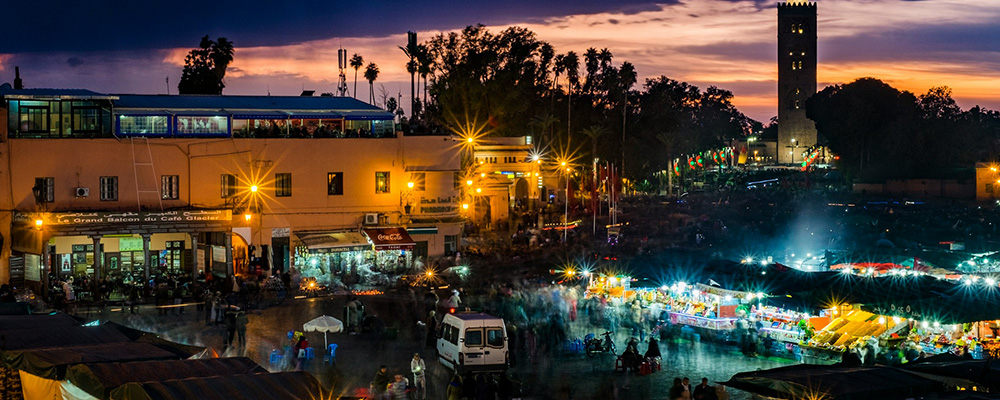
Begin at the city's famous square, a convenient meeting point for exploring both the central souks and the southern Medina. The square itself is not a dedicated jewellery market; it is the gateway to the historic shopping streets.
2. Souk Semmarine and the Central Souks
Walk north into the souk network. Along and around Souk Semmarine, businesses sell a mixture of clothing, textiles, decorative objects and jewellery. Shop specializations change, so allow time to browse rather than expecting a fixed sequence of goldsmith workshops.
Walking directions: Jemaa el-Fna to Souk Semmarine.
3. Rahba Kedima and the Surrounding Market Streets
Rahba Kedima is known for its lively market atmosphere and nearby traditional shops. It is a useful stop for understanding how specialized trades once occupied connected streets, although it should not be described as an exclusively jewellery-focused square.
Walking directions: Souk Semmarine to Rahba Kedima.
4. The Mellah: A Different Chapter in the Trade
For the historical connection with Jewish merchants and metalworkers, make a separate southern-Medina walk to the Mellah. This is a longer transfer from the northern souks, so it may be more comfortable to divide the itinerary into two sections with a break.
Walking directions: Rahba Kedima to the Mellah.
5. Bahia Palace and Place des Ferblantiers
Near the Mellah, Bahia Palace and Place des Ferblantiers add architectural and metalworking context. Place des Ferblantiers is associated with tinsmith and metalwork activity, not exclusively fine jewellery. It is useful for understanding the broader world of Moroccan metal crafts.
Walking directions: Mellah to Place des Ferblantiers.
Walking directions: Place des Ferblantiers to Bahia Palace.
A Suggested Jewellery Heritage Walking Itinerary
- Jemaa el-Fna: Meet your guide and learn how the central markets developed.
- Souk Semmarine: Explore present-day shops and discuss traditional commercial organization.
- Rahba Kedima: Observe the wider souk environment and its connected trades.
- The Mellah: Discover the history of Jewish community life and its contribution to jewellery commerce.
- Place des Ferblantiers: Learn how jewellery fits into the broader metalworking heritage.
- Bahia Palace area: Finish near one of the southern Medina's important historic monuments.
Route planning: Open the central souks walking route, then open the southern-Medina continuation. Allow additional time for browsing, breaks and the busy pedestrian streets.
Nearby Riads for Exploring the Jewellery Souks
The following named properties provide possible starting points for a walking itinerary. They are independent accommodations, not commercial partners; verify their current location and availability before booking.
Riad Dar Justo — Mouassine
A central-Medina base for exploring the souks. Walking directions to Souk Semmarine.
Riad Ilayka — Mouassine
Convenient for visiting the central shopping streets. Walking directions to Rahba Kedima.
Riad Dar Al Kounouz — Mouassine
A starting point for exploring the historic market network. Walking directions to Souk Semmarine.
Riad Les Hibiscus — Central Medina
Suitable for beginning a walk toward the northern souks. Walking directions to Souk Semmarine.
Riad Melhoun & Spa — Bahia Area
A southern-Medina base for exploring the Mellah and Bahia Palace surroundings. Walking directions to the Mellah.
Riad Nora — Bahia Area
Another option near the southern Medina's historic streets. Walking directions to Place des Ferblantiers.
How to Shop for Jewellery in Marrakech Responsibly
Shopping can be enjoyable, but expensive jewellery deserves careful evaluation. A seller's description is not the same as independent verification.
- Ask about metal content: Find out whether a piece is solid silver or gold, plated, or made from another alloy.
- Check hallmarks carefully: Marks may provide useful clues, but they should not be treated as automatic proof of purity or origin.
- Ask about stones: Clarify whether gems are natural, treated, synthetic or imitation.
- Understand age: A traditional design can be newly made. Request evidence before paying an antique premium.
- Inspect the piece: Check clasps, soldering, missing stones and repairs.
- Compare prices: Weight, workmanship, materials and seller margins all affect price.
- Get a written receipt: For significant purchases, request a description of the materials and any agreed return or shipping terms.
- Feel free to leave: You are never required to buy simply because a merchant has shown you products.
Jewellery, Weddings and Family Celebrations
Jewellery remains closely connected with celebrations in Morocco. Gold ornaments may be exchanged or worn for weddings and other family occasions, while regional silver traditions continue to inspire ceremonial and contemporary designs. Customs differ among families and communities, and no single jewellery set represents all Moroccan weddings.
Modern customers may prefer simple everyday pieces, elaborate traditional designs or combinations of both. The jewellery markets reflect these changing preferences.
Best Time to Visit Marrakech Jewellery Markets
Late morning is often a convenient time to browse the central souks. Shop hours vary, and Fridays, Ramadan and religious holidays may affect trading patterns. In summer, plan for the heat and carry water. If you intend to compare several expensive pieces, avoid rushing your decision.
Ask before photographing shop interiors, artisans or customers. A respectful conversation usually leads to a better experience than treating working shops as public exhibits.
Frequently Asked Questions
Where can I find jewellery shops in Marrakech Medina?
Jewellery is sold in different parts of the central souks and around the historic Mellah. The exact mix of businesses changes over time.
Why is the Mellah important to Marrakech jewellery history?
The Mellah was a centre of Jewish community life and commerce, and Jewish artisans and merchants contributed to precious metalworking and jewellery trading in Morocco.
Is all traditional Moroccan jewellery made of silver?
No. Silver is prominent in many regional traditions, but gold and other materials have also been important.
What is an Amazigh fibula?
It is a decorative fastening ornament historically used to secure garments, sometimes worn in pairs connected by chains.
Can I visit jewellery workshops?
Some craftspeople may welcome visitors, but workshops are working premises. Access should be arranged respectfully and cannot be assumed.
How can I tell whether jewellery is antique?
Age cannot be established reliably from appearance alone. For high-value pieces, seek documented provenance and independent expert advice.
Are jewellery prices negotiable?
Negotiation is common in many souk shops, but practices vary. Compare quality and materials rather than relying on a fixed bargaining formula.
Can I walk from Jemaa el-Fna to the Mellah?
Yes. Open the Google Maps pedestrian route to check the current distance and time.
Can a guide take me through the jewellery trading areas without shopping?
Yes. Our private walking tours can focus on history, architecture and craftsmanship without compulsory purchases.
Book a Private Marrakech Jewellery Heritage Walk
The jewellery trading history of Marrakech is a story of craftsmanship, cultural exchange and living markets. From the central souks to the Mellah, the city's streets reveal how precious objects connected artisans, merchants and families across generations.
At Visit Marrakech Medina, we have guided travelers through the old city since 2004. We can tailor a private walk around jewellery history, traditional crafts, the Mellah and nearby monuments. Standard private Medina walking tours require no advance payment; discuss any special arrangements separately.
Message us on WhatsApp: +212 614 905 398 or send a booking enquiry.
Explore more experiences on our tours page, read more on our Marrakech blog, or learn about our guiding experience here.