
A Walking Route Through the Traditional Carpet Trading Areas of Marrakech
Deep inside the historic Medina of Marrakech, beyond the busy stalls of Souk Semmarine and the lively atmosphere of Jemaa el-Fna, lies a fascinating world of handwoven carpets, traditional trading streets and generations of Moroccan craftsmanship.
For travelers interested in Moroccan rugs, exploring the traditional carpet trading areas on foot is one of the most rewarding ways to discover the city's commercial heritage. The experience is not simply about shopping. It is an opportunity to understand the relationship between Amazigh weaving traditions, rural communities, urban merchants and the historic markets of Marrakech.
From the carpet stalls around Souk Zrabi to the surrounding streets of Rahba Kedima and the central Medina, this walking route introduces visitors to places where Moroccan textiles are displayed, discussed, compared and sold.
Along the way, you can discover different carpet styles, learn how to recognize traditional weaving techniques, understand the buying process and explore nearby historic landmarks.
This guide provides a practical walking itinerary, Google Maps pedestrian directions, information about traditional Moroccan rugs, nearby riads and useful advice for anyone considering buying a carpet in Marrakech.
Would you like to explore Marrakech's carpet souks with an experienced local guide? Our private Marrakech Medina walking tour can include traditional carpet trading areas and artisan streets according to your interests.
If your main goal is comparing and purchasing carpets, ask about our private Marrakech souks shopping tour.
Book directly: WhatsApp +212 614 905 398 or contact us online.
Where Are the Traditional Carpet Trading Areas in Marrakech?
The historic carpet trade in Marrakech is closely associated with Souk Zrabi, sometimes written Souk des Tapis, and the surrounding central Medina markets.
Souk Zrabi is located near Rahba Kedima, a historic market square north of Jemaa el-Fna.
The area forms part of the wider network of traditional souks, where different commercial activities have historically occupied neighboring streets and market spaces.
Although the boundaries between individual trades are less rigid today than in the past, the neighborhood remains an important destination for visitors interested in Moroccan carpets.
Carpets are also sold in other parts of the Medina, including shops along the principal shopping routes and in streets around the central souks.
However, Souk Zrabi and Rahba Kedima provide a particularly useful geographical starting point for understanding the traditional carpet trade.
Google Maps walking directions: Walk from Jemaa el-Fna to Souk Zrabi — view the pedestrian route, distance and estimated walking time.
The History of Carpet Trading in Marrakech
Moroccan carpet weaving has deep roots in the country's rural and mountain communities.
For generations, weaving has been practiced in different regions of Morocco, particularly among Amazigh communities of the Atlas Mountains and other parts of the country.
Traditionally, many carpets were made for household use rather than for commercial export.
They served practical purposes such as providing warmth, covering floors, furnishing homes and marking important moments in family life.
Weaving techniques, colors, patterns and materials varied between regions and communities.
Marrakech developed into an important commercial center where products from rural areas could be exchanged, collected and sold.
Carpets became part of this wider trading system.
Merchants, intermediaries and buyers brought together textiles from different regions, allowing carpets woven far from Marrakech to reach customers in the city.
The traditional carpet markets therefore reflect both urban commercial history and rural craftsmanship.
Today, the trade includes vintage pieces, contemporary handmade rugs, workshop-produced carpets and machine-made products.
Understanding these differences is essential for visitors who want to appreciate Moroccan weaving traditions or make an informed purchase.
Starting the Walking Route at Jemaa el-Fna
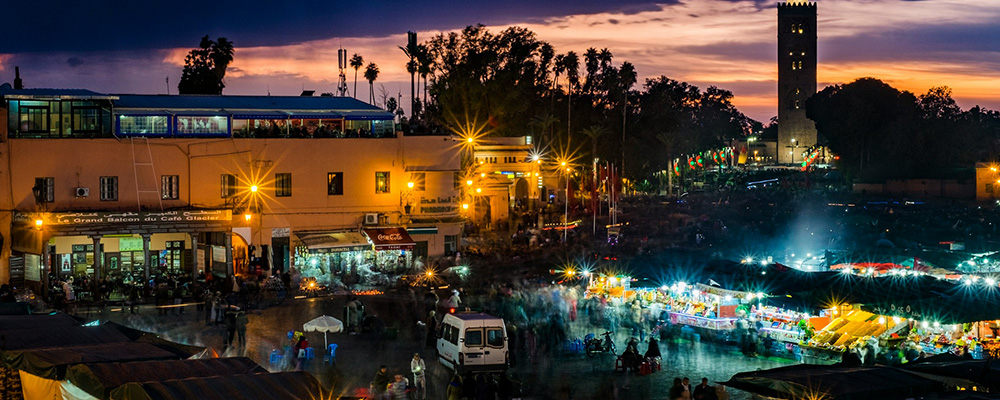
Jemaa el-Fna is the most practical starting point for many visitors exploring Marrakech Medina.
The square is a major landmark and a natural meeting point for walking tours.
From here, the traditional commercial streets extend northward into the central souks.
Before entering the market, take a moment to appreciate how the square connects different parts of the historic city.
For centuries, Marrakech's commercial life has depended on the movement of people and goods between public squares, market streets, workshops and residential neighborhoods.
The route toward Souk Zrabi passes through this living commercial landscape.
Google Maps: Jemaa el-Fna to Souk Semmarine — walking directions.
Stop 1: Souk Semmarine — The Gateway to the Traditional Markets
Souk Semmarine is one of the principal shopping routes in the central Medina.
Its covered and partially covered passages lead visitors through a dense network of shops and smaller commercial streets.
Today, the area contains a mixture of textiles, clothing, leather goods, souvenirs and other products.
Although Souk Semmarine is not exclusively a carpet market, it provides an introduction to the commercial structure of the Medina.
As you walk, notice the variety of merchandise and the way shops occupy neighboring passages.
Traditional markets were often associated with particular crafts or products, but modern retail activity has made many areas more mixed.
From Souk Semmarine, continue toward Rahba Kedima and Souk Zrabi.
Google Maps: Souk Semmarine to Rahba Kedima — walking directions.
Stop 2: Rahba Kedima — A Historic Market Square Near the Carpet Souk
Rahba Kedima, also written Rahba Lakdima, is one of the most recognizable market squares in Marrakech Medina.
It is particularly well known today for spice sellers, basket displays and traditional market products.
However, its significance extends beyond any single trade.
The square is part of a historic commercial district connecting several specialized souks.
For visitors interested in carpets, Rahba Kedima is a useful landmark because Souk Zrabi lies nearby.
The surrounding streets offer opportunities to observe how different businesses operate within a compact urban area.
Spice merchants, textile sellers and other shops contribute to the neighborhood's distinctive atmosphere.
Take time to appreciate the architecture and the activity of the square before continuing toward the carpet trading streets.
Google Maps: Jemaa el-Fna to Rahba Kedima — walking directions.
Google Maps: Rahba Kedima to Souk Zrabi — walking directions.
Stop 3: Souk Zrabi — The Traditional Carpet Trading Area
Souk Zrabi is the central destination of this walking itinerary.
The word "zrabi" refers to carpets or rugs, reflecting the market's association with the textile trade.
Visitors exploring the area may encounter shops displaying Moroccan carpets in different sizes, colors and weaving styles.
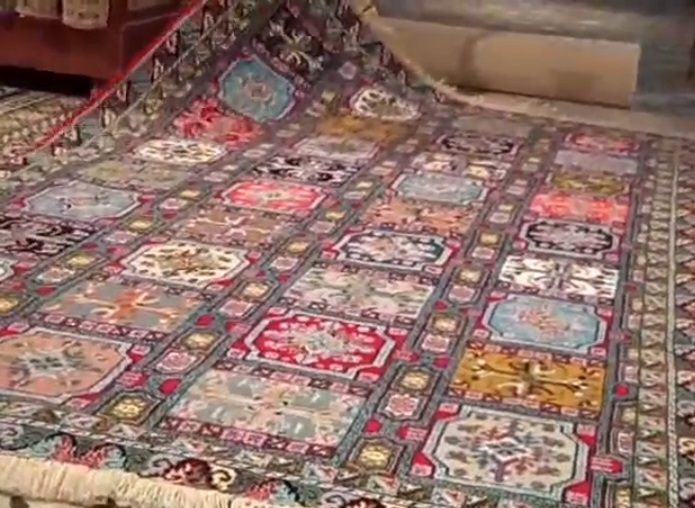
Some rugs are folded into stacks, while others hang from walls or are spread across the floor for customers to examine.
Carpet shops often display a wide variety of pieces because Moroccan weaving traditions are remarkably diverse.
A single shop may contain thick wool rugs from the Middle Atlas, flatwoven textiles, contemporary decorative carpets and older pieces with distinctive patterns.
Not every rug sold here was woven in Marrakech.
Many are associated with weaving communities elsewhere in Morocco.
That geographical connection is one of the most interesting aspects of the carpet trade.
Exploring Souk Zrabi can therefore become an introduction to the country's regional textile traditions.
What Should You Look for in Souk Zrabi?
Pay attention to the materials, weaving techniques, thickness and patterns of different carpets.
Ask sellers where a rug was made, whether it is handmade and whether it is new or vintage.
Compare several pieces before deciding which style you prefer.
Remember that traditional designs can be reproduced in modern workshops, and a rug's appearance alone does not prove its age or origin.
Google Maps: Jemaa el-Fna to Souk Zrabi — pedestrian route.
Stop 4: Explore the Smaller Carpet and Textile Streets Around Souk Zrabi
One of the pleasures of exploring Marrakech on foot is discovering the smaller passages surrounding the principal markets.
Near Souk Zrabi, visitors can encounter additional textile shops, traditional businesses and market streets.
These smaller passages are worth exploring slowly.
They reveal how the Medina's commercial activity extends beyond its best-known shopping routes.
Some shops specialize in rugs, while others sell blankets, cushions, fabrics or decorative textiles.
Because businesses change over time, it is better to explore the area as a network of streets rather than assume that every shop continues to sell the same products.
A local guide can help explain the history of the surrounding markets and identify different types of Moroccan textiles.
Stop 5: Continue Toward the Ben Youssef Quarter
After exploring Souk Zrabi, consider continuing northward toward the historic Ben Youssef area.
This part of Marrakech is known for important monuments, traditional architecture and cultural heritage.
Ben Youssef Madrasa is one of the city's most celebrated historical attractions.
Although it is not a carpet market, the madrasa provides a valuable opportunity to appreciate the decorative arts and architectural traditions of Morocco.
The geometric patterns found in traditional architecture also provide an interesting comparison with the visual language of Moroccan textiles.
However, carpet motifs should not automatically be interpreted as having the same meanings as architectural ornament.
Google Maps: Souk Zrabi to Ben Youssef Madrasa — walking directions.
Google Maps: Jemaa el-Fna to Ben Youssef Madrasa — walking directions.
Understanding the Different Types of Moroccan Carpets
One of the most useful parts of a carpet-focused walking tour is learning to recognize the diversity of Moroccan weaving.
There is no single style that represents every Moroccan carpet.
Different regions, communities and workshops have developed distinctive techniques and designs.
Beni Ourain Carpets
Beni Ourain rugs are associated with Amazigh weaving traditions of the Middle Atlas region.
They are widely recognized for their wool pile and often feature simple geometric designs.
Many examples use natural wool colors, although contemporary interpretations can vary considerably.
These carpets have become internationally popular in modern interior design.
When buying one, ask about its actual origin and construction rather than relying only on the style name.
Azilal Carpets
Azilal carpets are associated with the Azilal region of the High Atlas.
They are often admired for expressive patterns and colorful designs.
Some combine geometric forms with less regular arrangements.
As with other regional styles, modern reproductions may differ from older traditional examples.
Boucherouite Rugs
Boucherouite rugs are commonly associated with the creative reuse of textile materials.
They may be woven using strips of recycled fabric and other fibers.
These rugs are often colorful and visually distinctive.
Because their materials vary, buyers should ask about construction, cleaning and durability.
Kilim and Flatwoven Rugs
Flatwoven rugs differ from thick pile carpets.
They are produced using weaving techniques that create a relatively flat surface.
These textiles may be used as floor coverings, decorative pieces or household furnishings.
Moroccan flatweaves vary by region, materials and design.
Taznakht Carpets
Taznakht is an important weaving center in southern Morocco.
Carpets associated with this region may feature detailed geometric patterns and distinctive color combinations.
Some pieces reflect long-established local weaving traditions, while others are contemporary commercial productions.
Vintage and Antique Moroccan Carpets
Older Moroccan rugs can be especially interesting because they may show variations in color, pattern and construction.
However, age is not always easy to determine.
Terms such as "antique," "tribal" and "museum quality" are sometimes used loosely in commercial settings.
Ask for specific information about age, provenance, condition and restoration.
For expensive purchases, consider obtaining independent expert advice.
How to Recognize a Handmade Moroccan Carpet
Identifying a handmade rug requires examining its construction rather than relying only on its appearance.
Several details can help visitors ask better questions.
Examine the Back of the Rug
The reverse side can reveal information about weaving structure and knotting.
Hand-knotted carpets often show individual knots and variations in construction.
However, irregularities alone do not prove authenticity.
Look at the Materials
Many traditional Moroccan rugs are made with wool.
Others incorporate cotton, synthetic fibers or recycled textiles.
Ask what materials were used and whether the seller can explain the construction.
Consider the Pattern
Handwoven rugs may contain variations in pattern and spacing.
These can be part of the character of an individual piece.
Nevertheless, a perfectly regular design does not automatically mean a rug is machine-made.
Ask About the Weaving Region
Find out whether the carpet is associated with the Middle Atlas, High Atlas, Taznakht or another Moroccan weaving region.
Remember that regional names are sometimes used as style descriptions rather than verified statements of origin.
Understand the Difference Between Handmade and Hand-Finished
A carpet may involve some manual work without being entirely handwoven.
Ask whether the rug is hand-knotted, handwoven, machine-woven or produced using a combination of techniques.
How Much Do Moroccan Carpets Cost in Marrakech?
Carpet prices vary enormously.
There is no reliable single price for a Moroccan rug because value depends on multiple factors.
- Size and dimensions.
- Materials and wool quality.
- Weaving technique.
- Time and labor involved.
- Condition and age.
- Design complexity.
- Verified provenance.
- Market demand.
- Retailer and commercial arrangements.
A small contemporary rug may cost far less than a large, densely woven or well-documented vintage carpet.
Visitors should be cautious about claims that a particular rug is extremely rare or unusually valuable without supporting evidence.
The best approach is to compare several carpets, ask detailed questions and decide on a budget before negotiating.
How to Negotiate When Buying a Carpet in Marrakech
Negotiation is part of the commercial culture in many traditional Moroccan markets.
However, there is no universal rule that every carpet should be purchased at a fixed percentage of the first asking price.
Different shops use different pricing approaches.
Some merchants expect negotiation, while others offer relatively firm prices.
Practical Carpet Buying Advice
- Set a budget: Decide what you are comfortable spending before entering serious negotiations.
- Compare several rugs: Examine different sizes, materials and styles.
- Ask about construction: Find out whether the rug is hand-knotted, flatwoven or machine-made.
- Confirm dimensions: Ask for measurements in centimeters or meters.
- Inspect the condition: Check for damage, repairs, stains and excessive wear.
- Discuss delivery: If shipping is required, confirm the total cost and written arrangements.
- Request a receipt: Keep a record of the purchase and any promises made.
- Take your time: Do not feel obliged to buy because a seller has shown you several carpets.
A respectful conversation is usually more productive than aggressive bargaining.
If you do not want to purchase anything, thank the merchant politely and continue your walk.
Can You Buy a Carpet in Marrakech Without a Guide?
Yes. Visitors can explore the carpet markets independently.
However, the number of shops, regional styles and differences in quality can make comparison challenging.
A knowledgeable local guide can explain the geography of the souks, introduce traditional weaving terminology and help visitors understand local shopping customs.
Guides cannot guarantee that every merchant's claim about a rug is accurate, and expensive purchases should still be approached carefully.
Our private Marrakech shopping tour is designed for visitors who want a more personalized introduction to the markets.
There is no obligation to buy during a guided walking tour.
Google Maps Walking Routes Through the Carpet Trading Areas
The following Google Maps links connect Marrakech's main carpet trading area with important nearby streets, squares and monuments.
Each link opens pedestrian directions, allowing you to view the suggested walking route, distance and estimated time.
1. Jemaa el-Fna to Souk Semmarine
Begin at the city's central square and enter the traditional shopping streets.
Open Google Maps walking directions: Jemaa el-Fna to Souk Semmarine.
2. Souk Semmarine to Rahba Kedima
Continue toward the historic market square near the traditional carpet souk.
Open Google Maps walking directions: Souk Semmarine to Rahba Kedima.
3. Rahba Kedima to Souk Zrabi
This short local connection links the historic square with the traditional carpet trading area.
Open Google Maps walking directions: Rahba Kedima to Souk Zrabi.
4. Jemaa el-Fna to Souk Zrabi
Use this direct route if you want to reach the carpet souk without following the full itinerary.
Open Google Maps walking directions: Jemaa el-Fna to Souk Zrabi.
5. Souk Zrabi to Ben Youssef Madrasa
Continue from the traditional carpet market toward the historic Ben Youssef quarter.
Open Google Maps walking directions: Souk Zrabi to Ben Youssef Madrasa.
6. Souk Zrabi to Le Jardin Secret
Combine carpet shopping with a visit to a restored historic garden in the Mouassine neighborhood.
Open Google Maps walking directions: Souk Zrabi to Le Jardin Secret.
7. Souk Zrabi to Souk Haddadine
Discover another traditional craft area associated with metalworking.
Open Google Maps walking directions: Souk Zrabi to Souk Haddadine.
8. Ben Youssef Madrasa to Jemaa el-Fna
Return through the central Medina after visiting the historic Ben Youssef quarter.
Open Google Maps walking directions: Ben Youssef Madrasa to Jemaa el-Fna.
Complete Marrakech Carpet Souks Walking Itinerary
For visitors who want to follow a logical route through the traditional trading areas, the following itinerary combines the principal carpet market with nearby commercial streets and historical attractions.
- Jemaa el-Fna: Begin at the central square.
- Souk Semmarine: Enter the historic commercial streets.
- Rahba Kedima: Explore the traditional market square.
- Souk Zrabi: Discover the carpet trading area and Moroccan weaving traditions.
- Ben Youssef Madrasa: Finish with an introduction to Marrakech's historic architecture.
Open the complete pedestrian route: Jemaa el-Fna ? Souk Semmarine ? Rahba Kedima ? Souk Zrabi ? Ben Youssef Madrasa.
Google Maps calculates the distance and estimated walking time when you open the route.
Navigation can be imperfect in narrow Medina passages, so follow accessible public streets and allow extra time for browsing.
Nearby Riads and Hotels Around Souk Zrabi
Visitors staying near Rahba Kedima, Mouassine and the Ben Youssef quarter are conveniently placed to explore the traditional carpet markets on foot.
The following riads are located in or around the central Medina and provide useful reference points for planning a carpet-focused walking route.
These are independent accommodations, not commercial partners or personally endorsed properties. Confirm their current addresses and availability before booking.
1. Riad Dar Justo — Mouassine
Riad Dar Justo is located in the historic Mouassine neighborhood, within the central Medina.
The surrounding streets connect visitors with the traditional souks and the Rahba Kedima area.
Google Maps walking directions: Riad Dar Justo to Souk Zrabi.
2. Riad Ilayka — Mouassine
Riad Ilayka is another traditional accommodation option in the Mouassine area.
Its central location provides pedestrian access to the historic commercial streets.
Google Maps walking directions: Riad Ilayka to Souk Zrabi.
3. Riad Les Hibiscus — Central Medina
Riad Les Hibiscus is situated in the central Medina, near the streets connecting Jemaa el-Fna with the traditional markets.
Visitors can use the pedestrian route below to reach Souk Zrabi.
Google Maps walking directions: Riad Les Hibiscus to Souk Zrabi.
4. Riad Matham — Kaat Benahid
Riad Matham is located in the Kaat Benahid area of the Medina, near the historic Ben Youssef quarter.
This neighborhood is useful for visitors who want to combine traditional market exploration with historical sightseeing.
Google Maps walking directions: Riad Matham to Souk Zrabi.
5. Dar Hanane — Kaat Benahid
Dar Hanane is situated in the Kaat Benahid neighborhood, within the northern part of the historic Medina.
Its location provides a starting point for exploring the Ben Youssef area and the central souks.
Google Maps walking directions: Dar Hanane to Souk Zrabi.
6. Riad Kheirredine — Northern Medina
Riad Kheirredine is located in the northern Medina.
It is farther from the central carpet trading streets than properties directly around Rahba Kedima, but visitors can still plan a pedestrian route to Souk Zrabi.
Google Maps walking directions: Riad Kheirredine to Souk Zrabi.
Why the Location of Your Riad Matters
Marrakech Medina contains narrow streets, covered passages and areas where vehicles cannot reach the accommodation entrance.
When choosing a riad near the carpet markets, consider the actual pedestrian route rather than only the straight-line distance shown on a map.
Properties near Rahba Kedima and Mouassine are convenient for the central souks.
Accommodation near Ben Youssef may be suitable for visitors interested in combining shopping with historical sightseeing.
Always ask your riad for precise arrival instructions, particularly if you are carrying luggage.
How to Arrange Shipping for a Moroccan Carpet
Large carpets can be difficult to transport in ordinary luggage.
Some merchants offer international shipping, but arrangements and costs vary.
Before paying for a rug that will be shipped, ask for written confirmation of:
- The carpet's dimensions and description.
- The agreed purchase price.
- The shipping charge.
- The courier or shipping company.
- Whether tracking and insurance are included.
- The expected delivery arrangements.
- Who is responsible for customs duties and import taxes.
- The procedure if the rug arrives damaged or does not arrive.
Keep photographs of the carpet and your purchase documentation.
For expensive purchases, consider using a payment method that offers appropriate buyer protection.
Carpet Buying Mistakes to Avoid in Marrakech
Visitors can enjoy the traditional markets while avoiding common purchasing mistakes.
Buying Too Quickly
Take time to compare different carpets before committing to a purchase.
Assuming Every Rug Is Antique
Some rugs are genuinely old, while others are contemporary pieces designed to resemble older textiles.
Confusing Style with Provenance
A carpet described as Beni Ourain or Azilal may reflect a regional style without necessarily having been woven in that region.
Ignoring Size and Weight
Measure the space where the carpet will be used and consider transportation costs.
Overlooking Cleaning Requirements
Different materials and weaving techniques require different care.
Relying on Unverified Investment Claims
A carpet should not be purchased as a guaranteed investment based solely on a seller's claims.
Buy a rug because you appreciate its design, craftsmanship and suitability for your home.
When Is the Best Time to Explore the Carpet Souks?
Late morning is often a convenient period for exploring the traditional markets.
Many shops are active, and visitors can take time to compare products without rushing.
Afternoon visits can also be enjoyable.
During summer, temperatures may be high, making early exploration more comfortable.
Shop opening hours vary, particularly on Fridays, during Ramadan and on religious holidays.
There is no single opening schedule that applies to every carpet merchant.
Photography and Etiquette in Marrakech Carpet Shops
Traditional carpet shops can be visually fascinating, with stacks of colorful rugs, woven textures and intricate patterns.
However, visitors should ask permission before taking photographs inside shops.
Some merchants may prefer not to have their products or premises photographed.
If a seller spends time explaining different carpets, listen respectfully and make your intentions clear.
You are not obliged to purchase anything simply because a merchant has shown you several pieces.
A polite thank-you is usually sufficient when you decide to leave.
Frequently Asked Questions About Marrakech Carpet Souks
Where is the traditional carpet souk in Marrakech?
Souk Zrabi, near Rahba Kedima in the central Medina, is traditionally associated with the carpet trade.
How do I walk from Jemaa el-Fna to Souk Zrabi?
Follow the pedestrian streets through the central souks. Use Google Maps walking directions from Jemaa el-Fna to Souk Zrabi for the suggested route.
Are all Moroccan carpets handmade?
No. Marrakech shops sell handmade rugs, workshop-produced pieces and machine-made carpets.
What is a Beni Ourain rug?
Beni Ourain rugs are associated with Amazigh weaving traditions of the Middle Atlas and are often recognized for wool pile and geometric designs.
What is the difference between a carpet and a kilim?
A kilim is generally a flatwoven textile, while many carpets have a raised pile created through knotting or other techniques.
Can I negotiate carpet prices in Marrakech?
Negotiation is common in many traditional shops, but not every merchant uses the same pricing approach.
How can I tell whether a carpet is genuinely old?
Age can be difficult to establish without specialist knowledge. Ask about provenance, condition and restoration, and consider independent advice for expensive pieces.
Can I ship a carpet internationally?
Many merchants can arrange shipping, but you should confirm the cost, insurance, tracking and customs responsibilities in writing.
Do I need to buy anything during a carpet walking tour?
No. Visitors can explore the traditional trading areas and learn about Moroccan weaving without purchasing a carpet.
Are there riads near Souk Zrabi?
Yes. The surrounding central Medina, Mouassine and Ben Youssef neighborhoods contain numerous traditional riads and guesthouses.
Can I combine Souk Zrabi with Ben Youssef Madrasa?
Yes. The two areas are connected by the Medina's pedestrian street network.
Is Souk Zrabi open every day?
Individual shop hours vary. Fridays and religious holidays may affect opening times.
Can I visit the carpet souks with a local guide?
Yes. A private Marrakech walking tour can include traditional carpet markets and explanations of local shopping customs.
Discover the Traditional Carpet Trading Areas with a Local Guide
A walking route through Marrakech's carpet trading areas offers much more than an opportunity to buy a rug.
It reveals the relationship between traditional craftsmanship, regional weaving communities and the historic commercial streets of the Medina.
From Jemaa el-Fna to Souk Semmarine, Rahba Kedima and Souk Zrabi, each part of the route introduces another aspect of Marrakech's market heritage.
Visitors can learn about Moroccan carpet styles, compare weaving techniques and appreciate the skill involved in producing handmade textiles.
At Visit Marrakech Medina, we offer private walking and shopping experiences designed around visitors' interests.
With local guiding experience dating back to 2004, we help travelers explore the city's traditional markets, historic streets and cultural heritage.
Whether you want to understand the carpet trade, browse Moroccan rugs or combine the souks with historical sightseeing, we can discuss a suitable itinerary.
There is no obligation to buy during our guided walking tours.
Ready to explore the traditional carpet markets of Marrakech?
Book your private carpet souks walking tour on WhatsApp: +212 614 905 398.
Or send your booking request online.
About Visit Marrakech Medina
Visit Marrakech Medina offers private guided walking and shopping tours focused on the history, architecture, traditional crafts and everyday culture of Marrakech.
Our guiding experience dates back to 2004, and we believe that discovering the Medina should be informative, personal and enjoyable.
Our Medina walking tour has been mentioned in The Rough Guide to Morocco, while our guiding service has also been discussed in the Rick Steves travel community.
Explore the traditional carpet markets, historic neighborhoods and hidden streets of Marrakech with an experienced local guide.